

Article: Common Mistakes When Ordering Custom Made Dresses?
Common Mistakes When Ordering Custom Made Dresses?
Last Updated: November 3, 2026
Quick Summary
The most common mistakes when ordering custom made dresses are submitting inaccurate measurements, skipping key questions for the dressmaker, underestimating turnaround time, ignoring fitting and return terms, and overlooking fabric and construction details. Each is easy to prevent by confirming specifics in writing before paying a deposit.
- Measure twice, stand naturally, and use the designer's chart rather than your usual dress size.
- Remote buyers should ask for a physical fabric swatch and a written fit guarantee before ordering.
- Couture gowns can require six to nine months for production and delivery.
- Confirm deposit, fitting count, alteration costs, and return terms in the signed agreement, not verbally.
- Ask for swatches and confirm lining, closures, and finishing, since these affect comfort and durability.
Table of Contents
- Mistake 1: Submitting Inaccurate Custom Dress Measurements
- Mistake 2: Skipping the Questions to Ask a Dressmaker
- Mistake 3: Underestimating Custom Dress Turnaround Time
- Mistake 4: Ignoring Fittings, Alterations and Return Terms
- Mistake 5: Choosing Fabric and Construction Without Checking the Details
- Building Your Custom Dress Order Checklist Before You Pay
- Frequently Asked Questions
Ordering a custom made dress feels like the ultimate luxury. You choose the fabric, the print, the silhouette, and then a dressmaker builds it around your body. Each dress is one of a kind. But even the most beautiful custom order can go wrong when the details are missed.
Most problems don't come from bad craftsmanship. They come from small gaps between what you imagined and what was actually agreed on. Understanding those gaps is the first step to avoiding them.
We see the same five mistakes come up again and again. Each one is easy to prevent once you know what to look for.
Quick answer: The most common mistakes when ordering custom made dresses are wrong measurements, skipping key questions, underestimating lead times, ignoring fitting and return terms, and overlooking fabric and construction details.
Mistake 1: Submitting Inaccurate Custom Dress Measurements
Measurements are the foundation of every custom order. A small error at this stage becomes a big fit problem later.
Many buyers measure once, quickly, over clothing. Others guess based on their usual ready-to-wear size. Neither approach works for a dress that will be cut to your exact body.
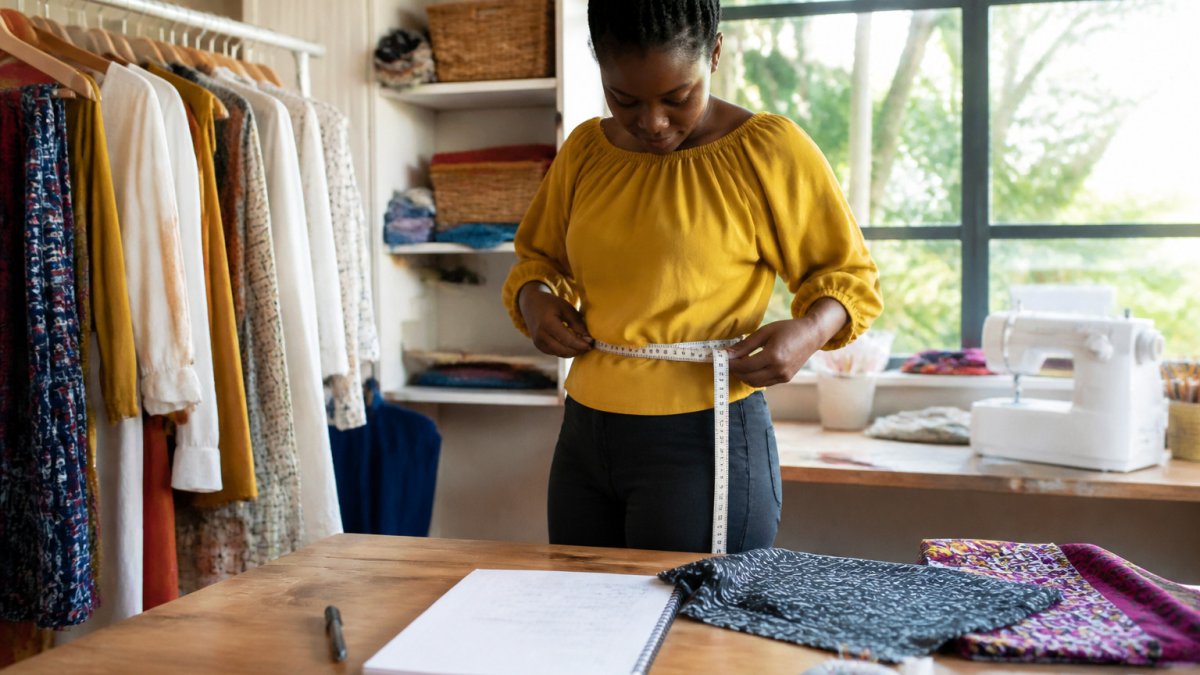
Take your measurements with a soft tape, against your skin or fitted underwear, and ask someone to help. Use this complete guide to bust, waist, hips and length if you need the full process for a formal dress. Follow step-by-step instructions for measuring correctly for each measurement point. Record bust, waist, hips, and length, then compare them to the designer's measurement chart before you order.
- Measure twice and write down both results
- Stand naturally, without holding your breath or sucking in
- Use the designer's chart, not your usual dress size
Mistake 2: Skipping the Questions to Ask a Dressmaker
A custom order is a conversation, not a checkout. The questions you ask before paying determine how much risk you carry, and the risk profile is very different depending on whether you are ordering from a local dressmaker you can visit or an online-only custom service that ships from another state or country.
If you are ordering in person, you can verify construction directly. Ask to see a finished garment, not just a sketch. Ask how the bodice is structured (boning, interfacing, lining), how seam allowances are finished, and whether the dressmaker does the work in-house or subcontracts it. Ask how many fittings are included and who attends them. Because you can return for adjustments, the main risk is timeline, not fit.
If you are ordering remotely, the risks multiply. You cannot feel the fabric, verify the construction, or return easily for a fitting. Before you pay, ask:
- Who takes the measurements? If you measure yourself, ask for a measurement guide with a diagram and a video, and confirm whether the dressmaker adds ease or cuts to your exact numbers. A common pattern is that remote buyers measure over clothing or hold the tape loosely, and the resulting dress is one to two inches off.
- What is the sample or swatch policy? Ask for a physical swatch of the actual fabric, not a screen image, and confirm the swatch is from the same dye lot as your order.
- What is the fit guarantee? Does the seller cover the cost of local alterations if the dress arrives off-measurement? Get the dollar cap and the claim window in writing.
- What is the return address and who pays return shipping? For cross-border orders, duties and return freight can exceed the cost of a local alteration, so confirm the policy before you commit.
- What is the production timeline in business days, and what is the ship date? Ask for the ship date, not just the delivery estimate, and confirm the carrier and tracking method.
- How will the design be adjusted if my measurements change? Ask whether there is a cut-off date after which changes are impossible, and what the change fee is.
Watch out: An online seller who will not provide a physical swatch, a written fit guarantee, or a named return address is asking you to absorb all the risk. Those three items are the minimum evidence that a remote custom order is worth placing.
For either channel, ask what happens if the first fit is not right. A dressmaker who answers with a specific process, a remake, a local alteration reimbursement, or a scheduled refitting, is telling you they have handled the problem before. A vague answer is the warning sign.
Federal Trade Commission guidance on mail, internet, and telephone order merchandise rules
Mistake 3: Underestimating Custom Dress Turnaround Time
Custom work takes time. Couture gowns often require six to nine months for production and delivery, according to Anna's Bridal Couture's lead time guidance on custom formal wear. Even simpler custom pieces need weeks of cutting, sewing, and finishing.
Plan backward from your event date. Leave room for at least one fitting and one round of alterations. If your wedding is six weeks away, ask directly whether the dress can be completed on that schedule before you place the order.
Watch out: Rush requests may not be possible for every design. Confirm the timeline in writing.
Mistake 4: Ignoring Fittings, Alterations and Return Terms
Most custom-dress disputes are not about craftsmanship. They are about what the contract did and did not say.
Treat the order form as a construction document, not a receipt. Before you sign or pay a deposit, confirm that these terms are written down, not just discussed:
- Deposit and payment schedule. How much is due at order, at the first fitting, and at delivery? Is the deposit refundable, and under what conditions?
- Fitting count and cost. How many fittings are included in the quoted price, and what is the hourly or flat rate for each additional fitting?
- Alteration scope. Are alterations to the custom garment included, or billed separately? Is there a cap on the number of alteration rounds?
- Delivery date and remedy. What is the promised delivery date, and what happens, refund, discount, or rush fee waiver, if the dress arrives late?
- Fit standard. What does "custom fit" mean in the contract: measured to your body, or built to a standard size with adjustments? Get the specific measurement tolerances in writing.
- Return and exchange policy. Custom garments are frequently non-returnable. If returns are allowed, what is the window, who pays shipping, and what condition must the dress be in?
- Cancellation terms. What happens if you cancel after cutting has begun? What happens if the dressmaker cancels?
Watch out: A verbal promise that "we'll make it right" is not a contract term. If a fit or timeline guarantee matters to you, it needs to appear in the signed agreement, because that is the document that governs the dispute.
State consumer-protection rules also apply to custom orders. The Federal Trade Commission's Mail, Internet, or Telephone Order Merchandise Rule requires sellers to ship within the time promised or, if no time is stated, within 30 days, and to offer a refund if they cannot (the FTC).
If the finished dress does not conform to the agreed measurements or materials, your first step is a written demand citing the specific contract term that was breached. Keep photos, the measurement chart, and all messages.
Before you sign or pay a deposit, the key terms to confirm in writing are summarised below.
| Term | What to confirm | Why it matters |
|---|---|---|
| Deposit | Amount, schedule, refund conditions | Determines what you lose if plans change |
| Fittings | Count included and cost of extra fittings | Avoids surprise charges |
| Alterations | Whether included or billed separately, and any round cap | Sets the real cost of a good fit |
| Delivery date | Promised date and remedy if late | Gives you recourse if the timeline slips |
| Fit standard | Measurement tolerances in writing | Defines what counts as a fit problem |
| Returns | Window, who pays shipping, condition required | Custom garments are often non-returnable |
| Cancellation | Terms after cutting begins | Protects both buyer and dressmaker |
Mistake 5: Choosing Fabric and Construction Without Checking the Details
Fabric and construction decide how a dress drapes, breathes, and holds up after several wears. Yet many buyers choose based on a photo alone.
Ask for fabric swatches when possible. Feel the weight and check how the print looks in natural light. If sustainability matters to you, follow these steps for sourcing and evaluating sustainable fabric before you choose. Ask about lining, closures, and finishing, since these affect comfort and durability.
Handmade garments are built closer to individual measurements than mass-produced items, which is part of their appeal, according to KAHINDO's industry trend research on custom garment fit. That only works well when the construction details are clear from the start.
Building Your Custom Dress Order Checklist Before You Pay
Use this checklist before you commit to any custom order:
- Measurements taken carefully and checked against the chart
- Production timeline confirmed in writing
- Number of fittings and alteration costs understood
- Return and exchange terms read and accepted
- Fabric swatches reviewed and construction details confirmed
- Deposit and payment schedule clear
Custom made dresses reward patience and preparation. When you ask the right questions and check the details, the result is a singular piece that fits your body, your story, and your event.
Ready to explore? Visit browse KAHINDO's occasion dresses to see how each design is built, or review the contract details before you order.
Frequently Asked Questions
How far in advance should you order a custom-made dress?
Custom orders that are built to individual measurements generally take longer than made-to-order or ready-to-wear pieces, so starting early protects you from rush fees and limited fitting time. Ask the dressmaker for a written production timeline that includes sampling, fittings and shipping, and build in a buffer of several weeks before your event. If your date is closer than the stated lead time, ask whether a faster option or a different style is available before you commit.
What measurements do you need to order a custom dress?
Most custom dress orders require bust, underbust, waist, high hip, hip, shoulder width, back length, sleeve length and height, plus any measurements specific to the silhouette, such as hemline length. Take each measurement over the undergarments you plan to wear with the dress, keep the tape snug but not tight, and have someone help you for accuracy. Measure at least twice and record the results in inches or centimeters, matching the unit the brand uses. Submit your measurement chart in writing and confirm it with the dressmaker before production begins.
What should you ask a dressmaker before ordering a custom dress?
Ask about lead time, deposit and payment terms, how many fittings are included, whether alterations after delivery are covered, and what the return or exchange policy says for custom pieces. Confirm the fabric, lining and seam allowances, and ask how the dressmaker handles fit issues discovered after delivery. Request the order terms in writing, including what happens if a deadline is missed. A reputable dressmaker will answer these questions directly and document the answers in your order confirmation.
Can you return or alter a custom-made dress if it does not fit?
Custom pieces are usually made to order and are often final sale, so returns are rarely available unless the brand's policy says otherwise. Many custom makers offer a fitting stage or minor alterations, but the scope and cost differ by brand. Read the return and alteration terms before you pay, and confirm in writing whether fit adjustments within a set period are included. Clarify who pays return shipping if a fit problem arises and how defects are handled.