

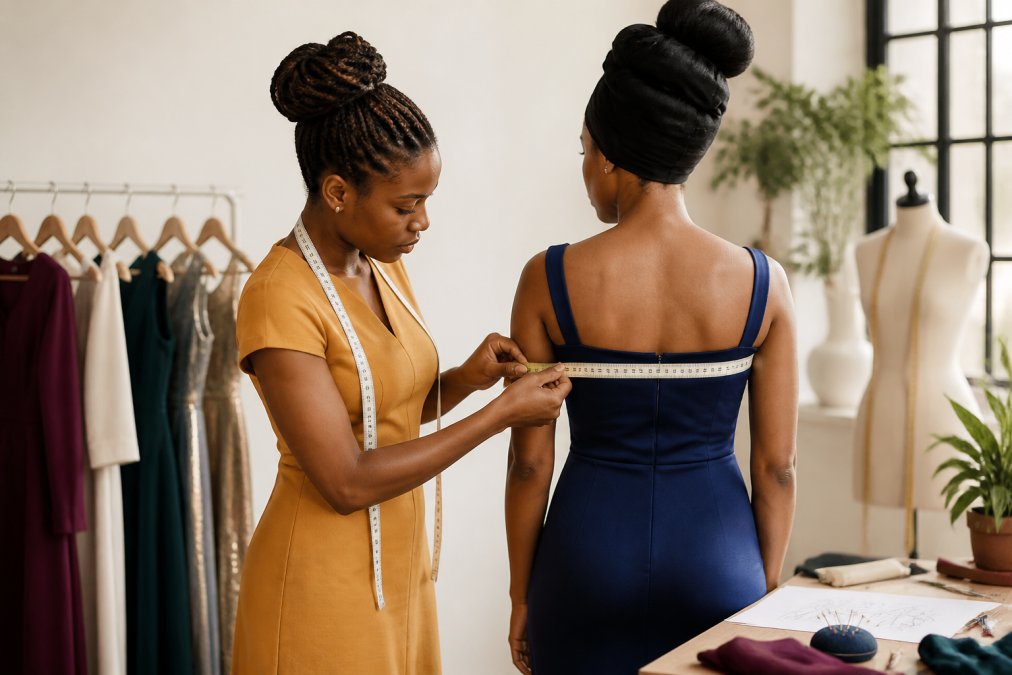
How to Measure for Dresses: A Step-by-Step Guide
Table of Contents
- What You Need Before You Measure for Dresses
- How to Measure Bust, Waist, and Hips for a Dress
- How to Measure Dress Length from the Shoulder
- Measuring Tape Tips for Clothing Accuracy
- How to Measure for Dresses by Body Type
- Reading a Size Chart and Handling Fit Discrepancies
- Self-Measurement vs. Professional Measurement
- Common Measurement Mistakes to Avoid
Last Updated: August 3, 2026
Getting dressed for a wedding, gala, or milestone event should feel exciting, not stressful. Knowing how to measure for dresses correctly is the single most reliable way to ensure a garment fits beautifully before it ever arrives at your door. This guide from KAHINDO covers every measurement you need, from bust to hem, so you can order with confidence and focus on showing up in something extraordinary.
Most guides stop at bust, waist, and hips. That's a problem, because vertical measurements like torso length and shoulder-to-hem determine whether a dress actually flatters your proportions, not just closes at the zipper. The five measurement categories we cover here address that gap directly.
What You Need Before You Measure for Dresses
A flexible tape measure is non-negotiable. Cloth or vinyl seamstress tape is ideal because it conforms to body contour without the rigidity of a metal tape.
Tools checklist:
- A flexible seamstress tape measure marked in both inches and centimeters
- A full-length mirror or a second person to assist
- Form-fitting undergarments or a thin base layer
- A pencil and notepad, or your phone's notes app
- A non-stretchy piece of string or ribbon (useful for finding your natural waistline)
Wear fitted underwear or a thin camisole while measuring, bulky clothing adds volume that skews every horizontal measurement. For occasion dresses, wear the bra or shapewear you plan to wear with the garment, since different undergarments shift your bust and torso measurements noticeably.
Stand upright with your weight evenly distributed, feet together, and shoulders relaxed. Slouching compresses torso length and creates a false waist measurement.
How to Measure Bust, Waist, and Hips for a Dress
These three horizontal measurements form the foundation of garment sizing. Getting them right is the difference between a dress that fits and one that pulls, gaps, or bunches.
How to Measure Your Bust
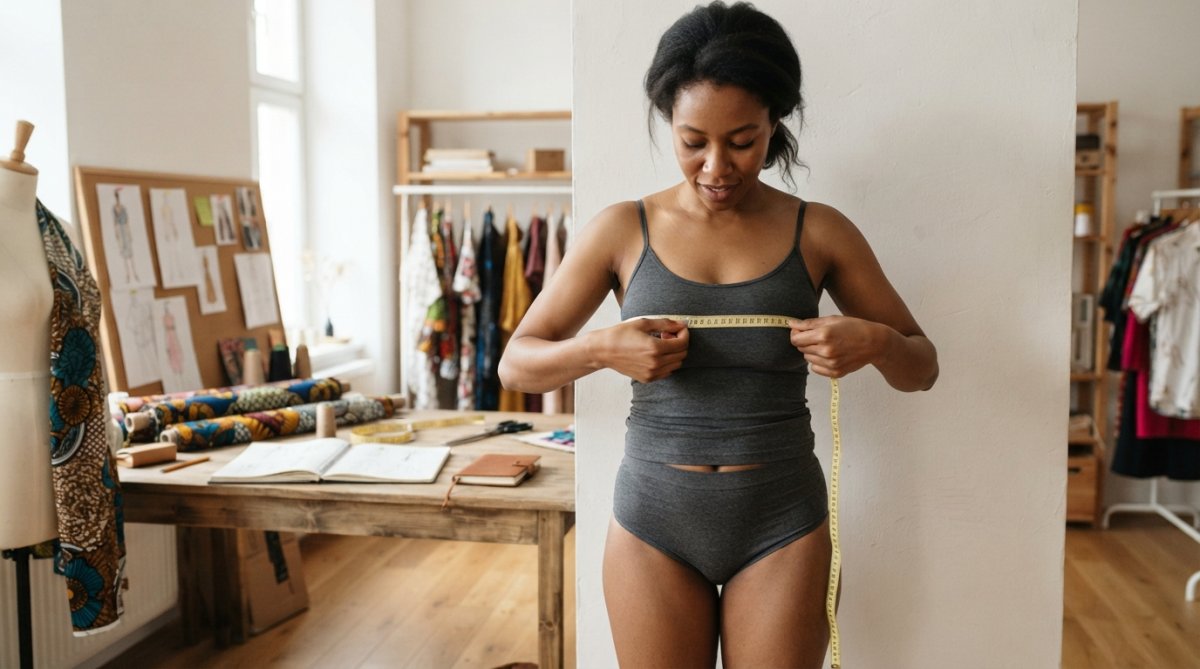
Your bust measurement is taken at the fullest part of bust, which is typically across the nipple line. Wrap the flexible tape measure around your torso at this point, keeping it parallel to the ground all the way around. The tape should be snug but not tight: you should be able to slide one finger underneath it comfortably.
- Wear the bra you plan to wear with the dress
- Wrap the tape at the fullest part of the bust
- Keep the tape parallel to the ground at the back
- Read the measurement while breathing normally, not holding your breath
- Record in both inches and centimeters
A common mistake: pulling the tape too tight across the back to compensate for fullness at the front. This compresses the measurement and results in a dress that is too small across the chest.
How to Measure Your Waist
Your natural waistline is the narrowest point of your torso, typically about an inch above your navel. To find it, tie a piece of string loosely around your midsection and let it settle naturally while you stand relaxed.
- Locate your natural waistline by bending slightly to the side; the crease that forms is the spot
- Wrap the tape measure around this point
- Keep the tape snug but not tight, with one finger's breathable space
- Stand straight and read the measurement
Many women measure at the hip bone rather than the true waist, which adds one to two inches to the reading and results in a dress that is loose at the bodice.
How to Measure Your Hips
Hip circumference is measured at the fullest point of your hips and seat, typically seven to nine inches below your natural waistline.
- Stand with feet together
- Wrap the tape around the widest point of your hips and seat
- Keep the tape parallel to the ground
- Ensure the tape passes over both hip bones evenly
How to Measure Dress Length from the Shoulder
Dress length is one of the most consequential measurements for fit. The shoulder-to-hem measurement tells you how long a dress will actually fall on your body, which determines whether a midi hits at the knee, mid-calf, or somewhere awkward in between.
To measure dress length from the shoulder:
- Have a helper hold the tape at the top of your shoulder seam
- Run the tape vertically down the front of your body to the point where you want the hem to fall
- Record this as your shoulder-to-hem measurement
Compare this to the brand's size guide. Many brands list their garment length measured from the center back neck or from the shoulder seam; confirm which reference point is used before comparing numbers.
Torso Length and Other Vertical Measurements
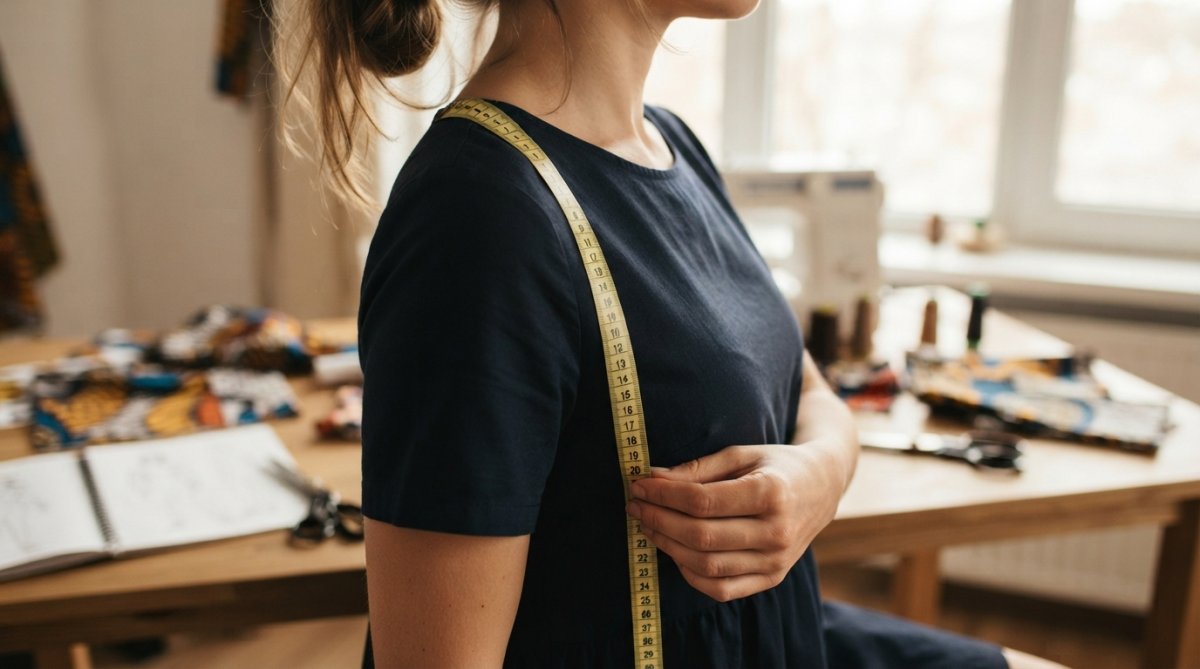
Torso length is the vertical measurement from the top of your shoulder to your natural waistline. This measurement matters most for fitted bodices, empire waists, and structured gowns. A dress designed for a standard torso length will place the waist seam at the wrong point on a petite or long-waisted frame, no matter how well the bust and hip measurements align.
To measure torso length: place the tape at the top of your shoulder seam and measure straight down to your natural waistline.
Additional vertical measurements worth recording:
- Shoulder to natural waist: determines bodice fit
- Natural waist to floor: determines skirt length for full-length gowns
- Underarm to natural waist: relevant for strapless and fitted bodice styles
- Center back neck to floor: the standard measurement many brands use for gown length
According to the American Sewing Guild's measurement guidance, vertical measurements are consistently the most overlooked dimension in online dress fitting, yet they account for a significant portion of alteration requests.
Measuring Tape Tips for Clothing Accuracy
The way you handle the tape measure is as important as where you place it. Tape tension is the most common source of measurement error.
Practical measuring tape tips for clothing accuracy:
- Always use a seamstress tape, not a metal contractor's tape
- Replace your tape measure if it has stretched or frayed
- Keep the tape flat against the skin at every point, not twisted or angled
- Read the measurement at eye level in a mirror to avoid parallax error
- Take each measurement twice and average the results if they differ
Record measurements in both inches and centimeters. Most US brands use inches in their size charts, but many international brands publish size guides in centimeters. Having both on hand prevents conversion errors.
How to Measure for Dresses by Body Type
Standard sizing assumes a proportional relationship between bust, waist, and hips. Most bodies do not follow that formula exactly, which is why knowing how to measure for dresses by body type helps you identify where you are likely to need adjustments before ordering.
| Body Type | Typical Fit Challenge | Measurement Priority |
|---|---|---|
| Hourglass | Waist-to-hip ratio exceeds standard sizing | Hip and waist |
| Apple | Bust and waist close in measurement | Waist and torso length |
| Pear | Hip measurement exceeds bust by 3+ inches | Hip and shoulder width |
| Petite | Torso length shorter than standard | Shoulder-to-hem and torso |
| Tall | Torso length longer than standard | Shoulder-to-hem and waist-to-floor |
Petite and Tall Frames
Petite frames, generally defined as 5'4" and under, often find that standard dress lengths fall too low and bodice waist seams sit below the natural waist. Ordering a petite size, when available, adjusts the vertical proportions while keeping horizontal measurements intact.
Tall frames face the opposite challenge: standard dress lengths that hit mid-thigh on a 5'9" frame were designed to fall at the knee. The shoulder-to-hem measurement is essential here.
Hourglass, Apple, and Pear Shapes
For hourglass shapes, the waist-to-hip ratio often exceeds what standard sizing accommodates. Order to the larger measurement, typically the hip, and plan for a waist alteration if needed.
Apple shapes carry more volume at the midsection, meaning the waist measurement approaches or exceeds the hip measurement. Prioritize dresses with empire waists or A-line silhouettes that do not require a defined waist measurement to fit correctly.
Pear shapes have hip measurements that significantly exceed bust measurements. Order to the hip and expect to take in the bodice, or look for brands that offer separate sizing for top and bottom.
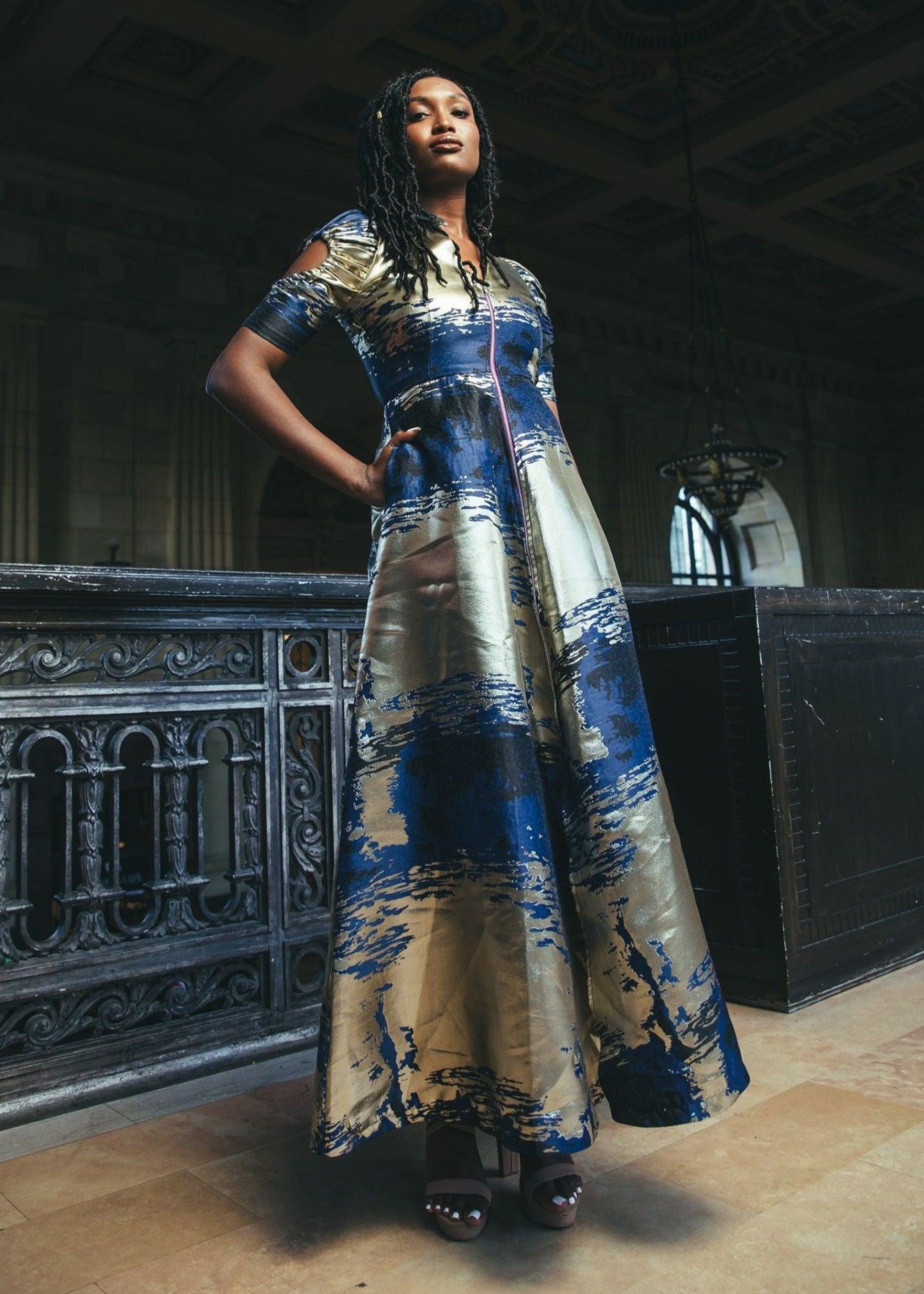
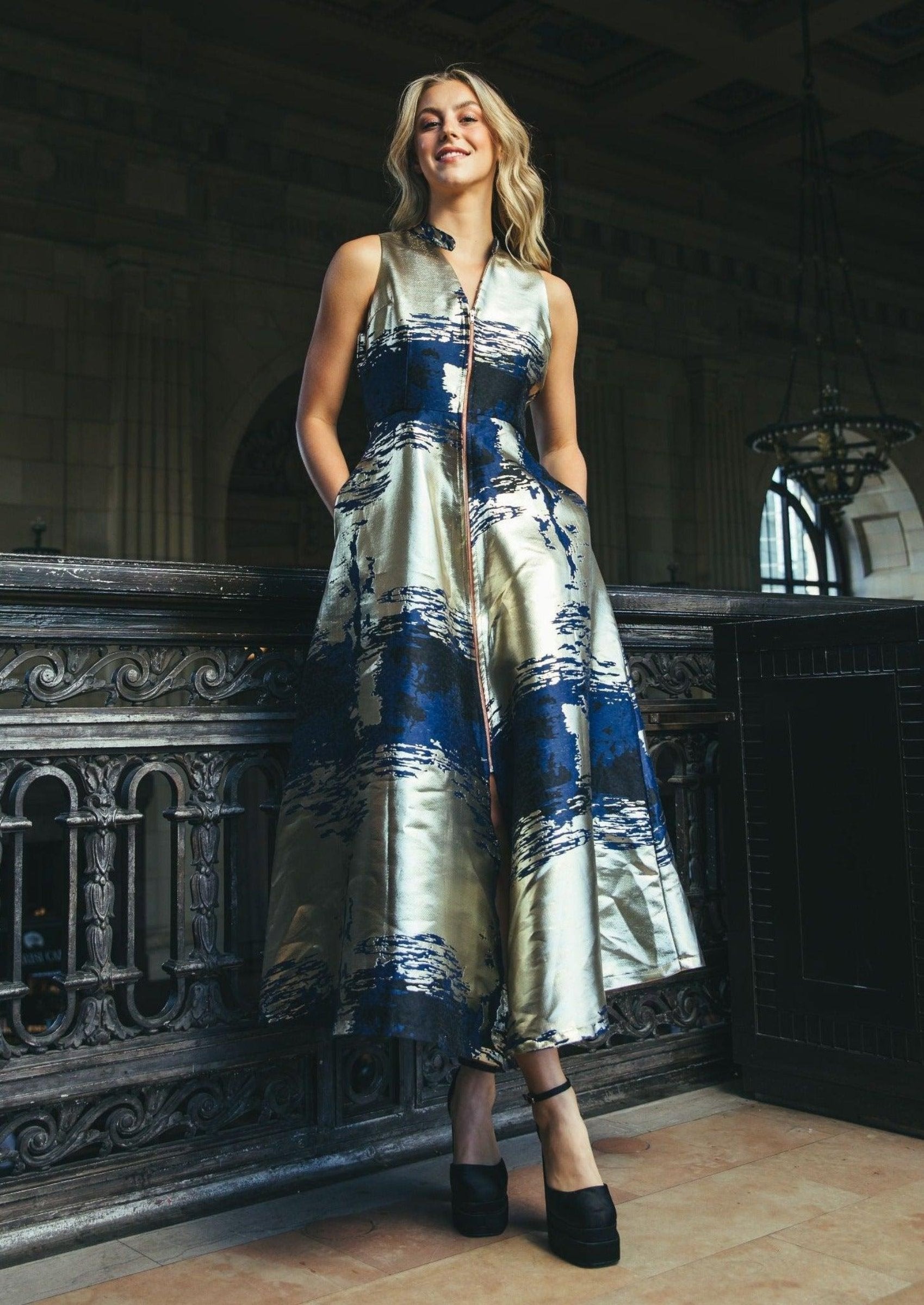
KAHINDO's occasion dresses are designed with real body diversity in mind, and the brand's size guide includes detailed measurement charts to help you identify the right size across silhouettes, from structured gowns to fluid wrap styles.
Reading a Size Chart and Handling Fit Discrepancies
Size charts are not universal. A size 10 at one brand is a size 8 at another. This is why body measurements, not size labels, should always drive your decision.
How to read a size chart correctly:
- Locate the brand's own measurement chart, not a generic size conversion guide
- Find the row that corresponds to your largest measurement
- Check whether all three measurements, bust, waist, and hip, fall within the same size row
- If they do not, identify which measurement is the most structurally critical for that garment style
When measurements fall across two sizes, order the size that fits your largest measurement and plan for a targeted alteration at the smaller measurement. A skilled tailor can take in a waist or adjust a shoulder seam; letting out a seam requires extra fabric that may not be available.
Self-Measurement vs. Professional Measurement
Professional measurement is more accurate. A trained seamstress or tailor can identify asymmetries, posture-related variations, and body contour details that self-measurement misses. For a high-investment garment, a single visit to a tailor for measurements is worth the time.
Self-measurement is workable when done carefully:
Self-measurement advantages:
- Convenient and free
- Can be repeated as body dimensions change
- Works well for standard silhouettes with forgiving construction
Professional measurement advantages:
- Accounts for posture and body asymmetry
- More accurate torso length and vertical measurements
- Identifies fit issues before ordering, not after
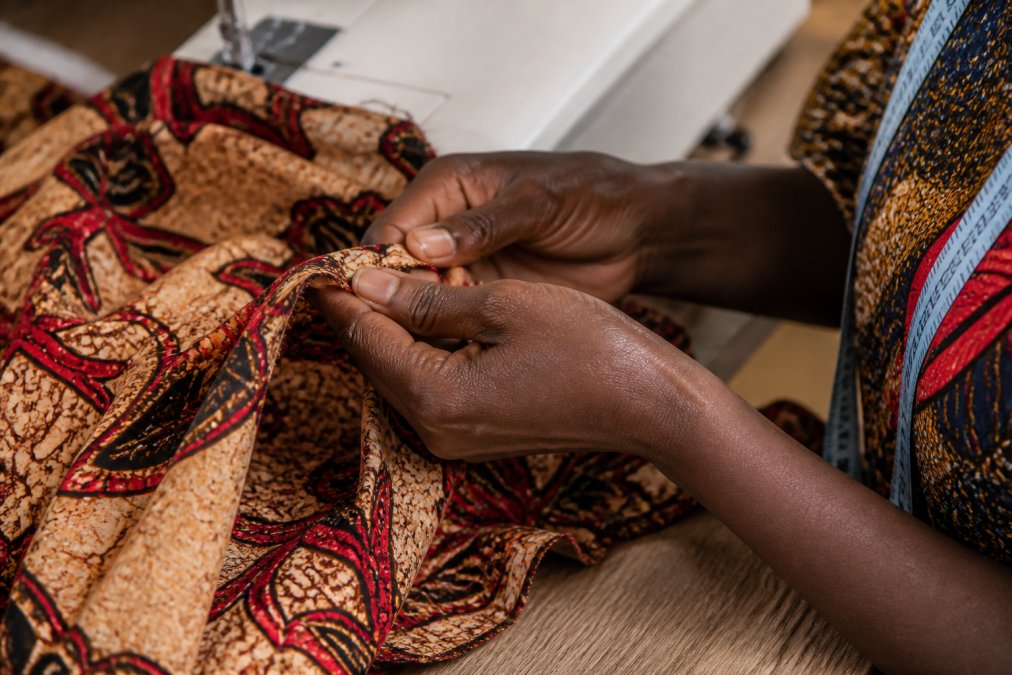
For artisan-made garments like those from KAHINDO, where each piece is handcrafted by female artisans in a Nairobi co-operative and produced in limited quantities, accurate measurements are especially important. The brand's size guide and customer service team can help you interpret your measurements against specific garment specs before you order.
According to the Textile Exchange's guidance on made-to-order and artisan garments, fit accuracy at the point of purchase significantly reduces return rates for handcrafted apparel, which benefits both the buyer and the artisan producer.
Common Measurement Mistakes to Avoid
Most fit problems trace back to one of a small number of recurring errors.
Measuring over the wrong clothing. Thick bras, padded shapewear, or structured layers all add volume. Measure in what you will actually wear under the dress.
Ignoring the natural waistline. Measuring at the hip bone instead of the true waist adds one to two inches and produces a dress that is loose through the bodice.
Skipping vertical measurements. Horizontal measurements alone cannot predict whether a dress will hit the right point on your body. Always record torso length and shoulder-to-hem.
Using a stretched tape measure. A cloth tape that has been used for years may have grown. Test it against a ruler before trusting it.
Rounding up instead of recording exactly. Record the exact measurement to the nearest quarter inch. Rounding up even half an inch across three measurements can push you into the wrong size.
Measuring alone. Self-measurement introduces tape tension errors that a second person eliminates.
Comparing measurements to the wrong chart. Always use the specific brand's size guide, not a generic size conversion chart.
Your measurements will change slightly depending on time of day, hydration, and where you are in your cycle. Take measurements in the morning for the most consistent results.
Frequently Asked Questions
Should I measure myself while wearing clothes or in my undergarments?
Always measure for dresses in your undergarments, or at most a thin fitted layer. Measuring over bulky clothing adds false inches and throws off your size chart comparison. Wear the same undergarments you plan to wear with the dress so your body dimensions reflect the actual fit. For strapless or backless styles, measure without a bra or with the specific undergarment you intend to wear.
How do I measure my waist and hips for a formal dress?
To measure your waist, locate your natural waistline, the narrowest point of your torso, typically an inch or two above your navel. Wrap a flexible tape measure around that point, keeping it snug but not tight and parallel to the ground. For hips, stand with feet together and wrap the tape around the fullest part of your hips and seat, usually 7 to 9 inches below your natural waistline. Record both measurements in inches.
How do I measure the length of a dress from the shoulder?
For dress length from shoulder, start the tape at the highest point of your shoulder seam, where a shoulder seam would naturally sit. Run the tape straight down, parallel to your body, to wherever you want the hem to fall: knee, midi, or floor. This shoulder-to-hem measurement tells you whether a dress's listed length will work for your height. Torso length and inseam measurements help with jumpsuits and fitted bodices specifically.
Why do dress sizes vary so much between brands?
Standard sizing in the US has no single enforced standard, so each brand sets its own size chart based on its target customer and fit model. A size 10 at one label may be cut differently from a size 10 at another. This is why taking your own body measurements in inches and comparing them directly to a brand's specific size guide is more reliable than going by size number alone. Always check the measurement chart, not just the size label.
Can I measure myself accurately without help?
Yes, with a few adjustments. Use a flexible seamstress tape measure and stand in front of a full-length mirror so you can check tape placement. For bust and hip measurements, the mirror helps confirm the tape stays parallel to the ground and doesn't dip at the back. The one measurement that genuinely benefits from a second person is dress length from shoulder to hem, since holding the tape straight down your own back is awkward. A door frame or wall can substitute in a pinch.
Does fabric type affect which size I should order?
Yes. Structured fabrics like brocade or stiff woven textiles hold their shape and leave little room for error, so size closer to your larger measurement if you fall between sizes. Stretchy or jersey fabrics have built-in breathable space and often size down. Artisan-made or handcrafted dresses in woven textiles typically follow the same rule as structured fabrics: match your measurements precisely to the size chart rather than relying on stretch.
Getting your measurements right before ordering is the most practical thing you can do to protect your investment in a special-occasion dress. For women ordering a KAHINDO piece, each garment comes with a provenance card documenting the artisan and labor hours, and the brand's customer service team is available to walk you through the size guide for any specific silhouette. Shop the current collection at kahindo.com, and bring your measurements with you.
This article was written using GrandRanker