

Article: 9 Tips for Finding Inclusive Sizing Wedding Guest Fashion
9 Tips for Finding Inclusive Sizing Wedding Guest Fashion
Last Updated: October 25, 2026
Quick Summary
Finding inclusive sizing for wedding guest fashion starts with your body measurements, not the size label, since sizing is not standardized across brands. Verify a brand's inclusive sizing by checking grading, model details, design parity and garment measurements across the full range.
- Measure your bust, waist and hip at home, keeping the tape level and snug, not tight.
- Read a size chart by matching your measurements to the closest row, not the size you wear elsewhere.
- Check that larger sizes keep the same fabric, trims, lining and colorways as smaller ones.
- Book your tailor as soon as the dress arrives, since a full re-fit can take two to three weeks.
- Buy for your largest measurement and take in, because seam allowances leave little fabric to let out.
Table of Contents
- Start With Your Measurements, Not the Size Label
- How to Read a Wedding Guest Dress Size Chart
- How to Judge Whether a Brand's Inclusive Sizing Is Real
- Choosing a Silhouette That Gives You Waist Definition
- Fabric, Lining and Stretch: What Keeps You Comfortable
- Plus-Size Wedding Guest Dresses: Fit Beyond the Number
- Wedding Guest Dress Alterations: Budget and Timing
- Shop Your Shortlist With Confidence
- Frequently Asked Questions
Start With Your Measurements, Not the Size Label
Finding wedding guest fashion with inclusive sizing starts with a tape measure, not a tag. At KAHINDO, we tell every shopper the same thing: the number on the label tells you almost nothing, because a size 14 from one brand can fit like a size 10 from another.
Here is the uncomfortable truth most fit guides skip. Sizing is not standardized across brands, so treating a label as fact is how good dresses end up in the back of the closet. Measure once, write it down, and shop from that list.
How to Take Bust, Waist and Hip Measurements at Home
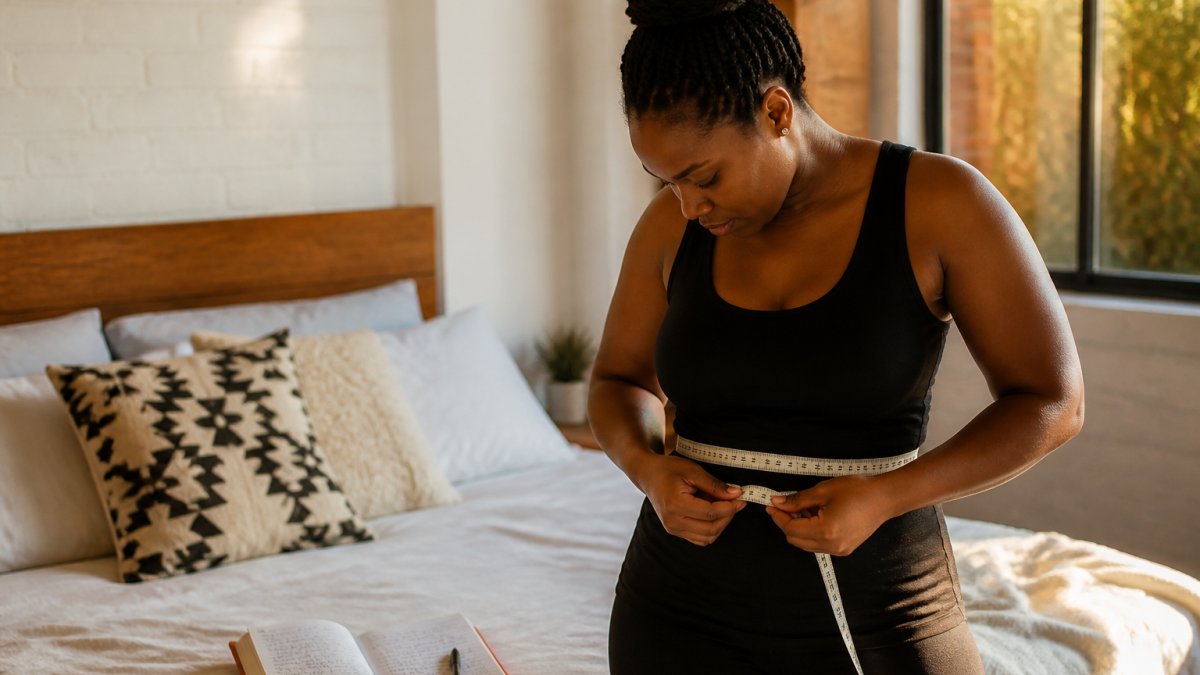
You need three numbers: bust, waist and hip. Wear light clothing or undergarments, stand relaxed, and keep the tape level and snug, not tight.
- Bust: measure around the fullest part, tape parallel to the floor
- Waist: measure the narrowest point, usually just above the navel
- Hip: measure around the fullest part, roughly 8 inches below the waist
For a full walkthrough, our guide on how to measure for dresses shows exactly where to place the tape for each number.
Check Garment Measurements Against Your Own
A size chart tells you the body a dress is cut for. Garment measurements tell you the dress itself. Compare the two before you buy. If a dress lists a 38-inch bust and your bust is 40, you know it will be snug before it ever ships. Our guide on how to ensure perfect dress fit covers how to line up both sets of numbers.
How to Read a Wedding Guest Dress Size Chart
A wedding guest dress size chart is a table that maps body measurements to a brand's size labels, and reading it correctly means matching your bust, waist and hip numbers to the closest row, not picking the size you wear elsewhere. Most charts list body measurements, while some also list the finished garment's measurements. Our own size guide translates your measurements into the right size for our dresses.
How to Judge Whether a Brand's Inclusive Sizing Is Real
Inclusive sizing is the practice of offering a genuinely broad range of sizes with the same design quality across all of them, not just adding a few larger options at the end of a line. The test is not how many sizes a brand lists. It is whether the larger sizes are designed with the same care. Most shoppers stop at the size range and call it done.
Step 1: Check the grading, not just the range
Grading is how a pattern scales from one size to the next. A brand that grades well adds consistent increments at the bust, waist and hip as sizes go up. A brand that grades poorly adds width everywhere and calls it a larger size, which is why some dresses fit at the shoulders and hang like a sack at the waist.
Step 2: Read the model details on every product page
A product page that shows one model at one size tells you almost nothing about how the dress fits across the range. Look for pages that list the model's height, the size she is wearing, and her body measurements. A common pattern among brands that take inclusive sizing seriously is to photograph the same style on two or three models of different heights and sizes, with the measurements printed beside each photo.
Step 3: Confirm design parity across sizes
A brand can carry a wide size range and still treat the larger sizes as a separate, plainer line. Check whether the same fabric, the same trims, the same lining and the same colorways are offered at the top of the range as at the bottom. If the plus-size version of a dress drops the silk detailing, swaps the lining for an unlined finish, or comes only in black, the brand is not offering inclusive sizing.
Step 4: Look for garment measurements at the top of the range
Body measurements tell you the body a dress is cut for. Garment measurements tell you the dress itself. A brand that publishes finished garment measurements for every size, bust, waist, hip, and length, is giving you the numbers you need to compare against your own. A brand that publishes garment measurements only for the smaller sizes is hiding the fit of the sizes most shoppers need to verify.
A brand that shows real garment measurements, lists model details across sizes, and keeps the same design quality at the top of the range is telling you something. One that hides the numbers is not.
Here is the four-step check we recommend before you spend money with any brand.
| Step | What to check | What good looks like |
|---|---|---|
| Step 1 | Grading, not just the range | Steady increments at bust, waist and hip across all sizes |
| Step 2 | Model details on product pages | Height, size and measurements listed beside each photo |
| Step 3 | Design parity across sizes | Same fabric, trims, lining and colorways at the top of the range |
| Step 4 | Garment measurements at the top of the range | Finished bust, waist, hip and length published for every size |
Choosing a Silhouette That Gives You Waist Definition
Waist definition comes from the cut, not the size. A wrap dress, a fit-and-flare, or a belted sheath pulls the eye to the narrowest part of your middle and lets the fabric skim the rest. For curves, these shapes create balance without squeezing.
- Wrap dress: adjustable tie, flatters most proportions
- Fit-and-flare: fitted bodice, roomy skirt, defines the waist
- Sheath with a seam: clean line, works with gentle stretch
The goal is a silhouette that works with your proportions. A defined waist reads as intentional. A boxy cut reads as an afterthought.
Fabric, Lining and Stretch: What Keeps You Comfortable
Comfort at a wedding comes down to three things: fabric drape, lining and stretch. A fabric with good drape moves with you instead of fighting your shape. A full lining keeps the dress opaque and smooth. A little stretch lets you sit, dance and eat without adjusting all night.
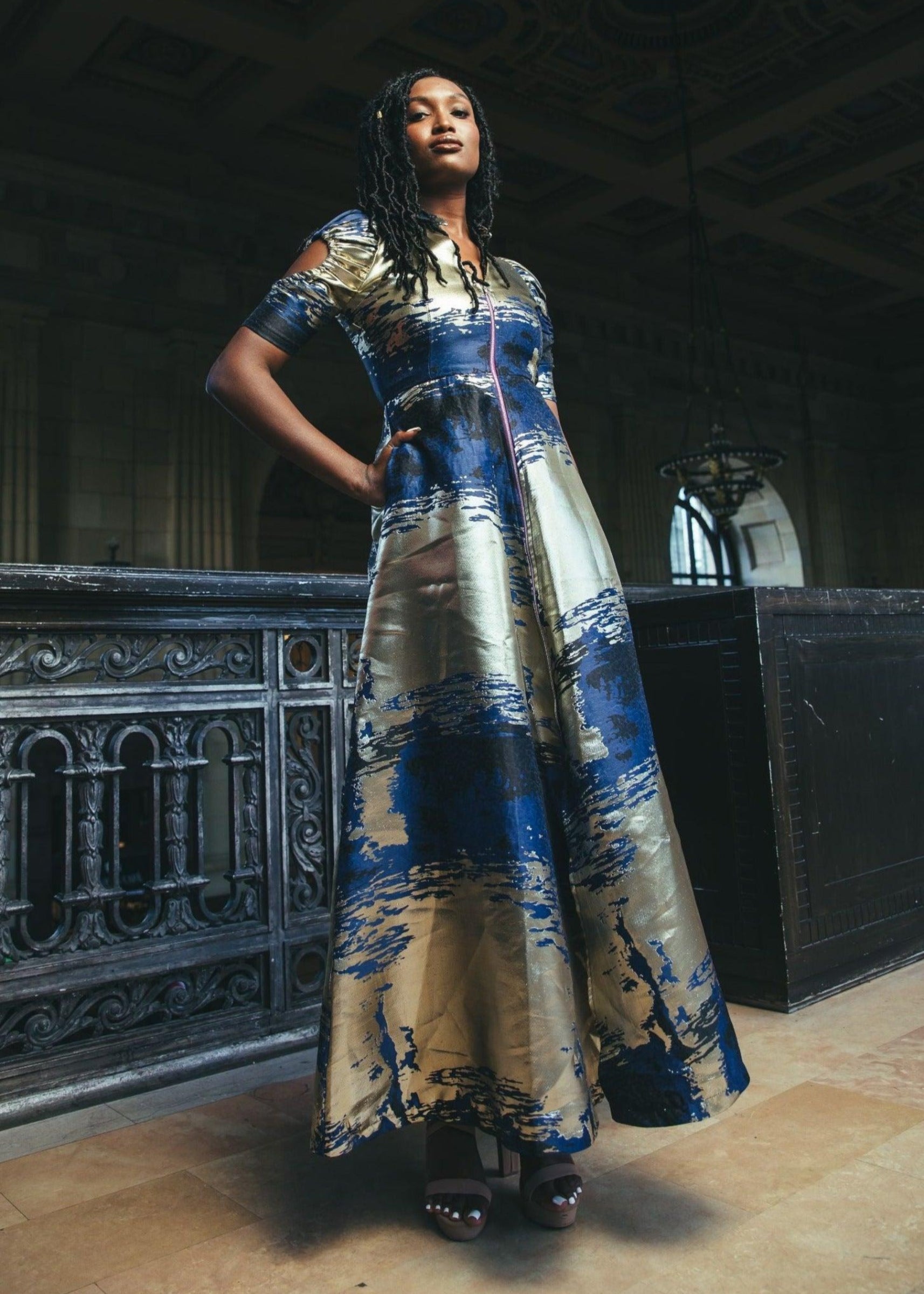
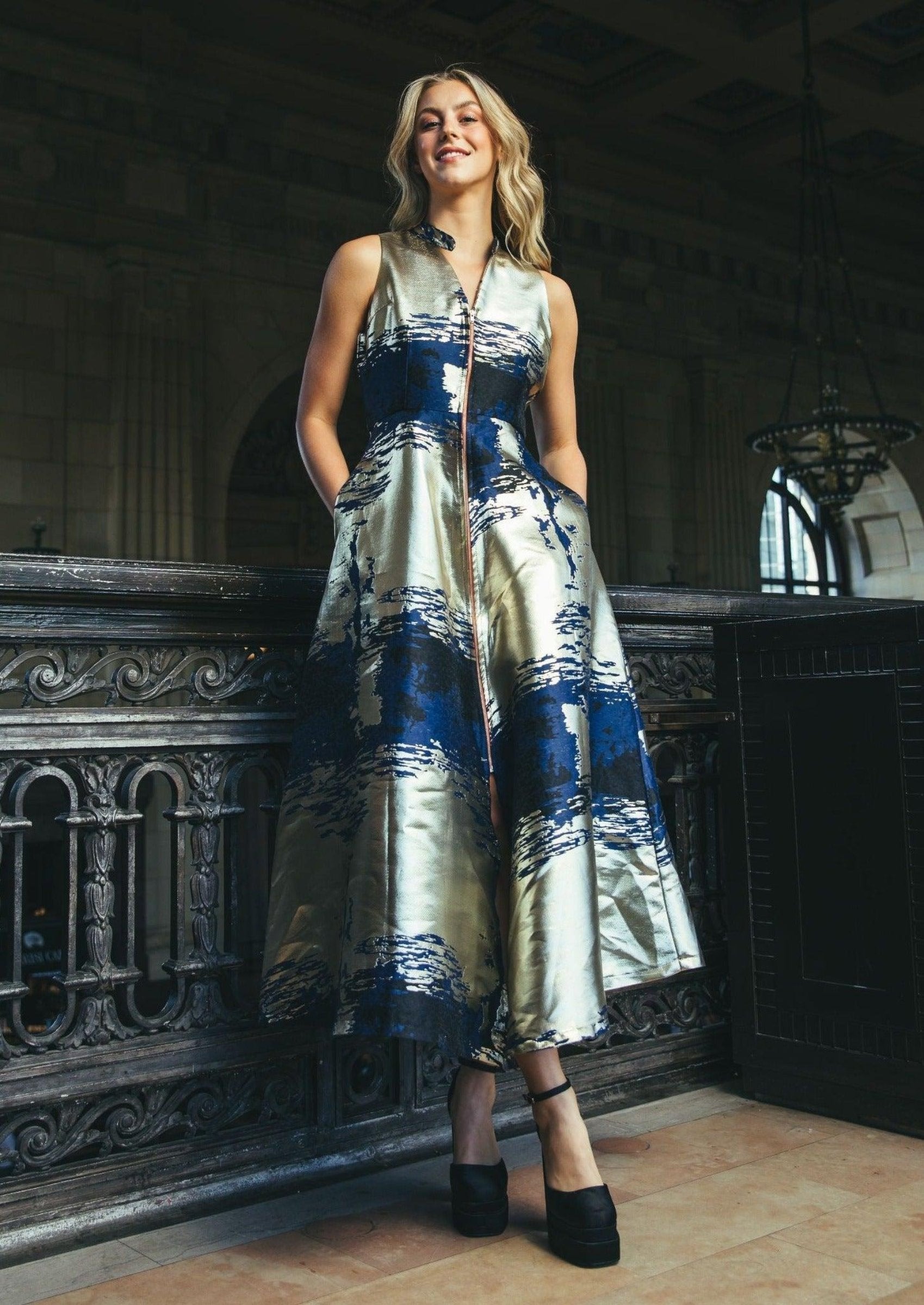
The Fiesta Gown shows how this works in practice. It blends 95% polyester with 5% spandex and adds Japanese silk detailing, so the fabric has gentle give and a fluid line. It is fully lined, which means no surprises in photos under bright lights.
Watch out: a dress with no lining and no stretch can look beautiful on the hanger and feel restrictive by the first dance. Check both before you commit.
Plus-Size Wedding Guest Dresses: Fit Beyond the Number
Plus-size wedding guest dresses should be judged on fit, not on the size printed inside. A good plus-size dress is designed around real proportions: a bodice that supports, a waist that sits where your waist actually is, and a hem that hits right for your height.
This is where we put our values to work. Our ethical luxury wedding guest dresses are designed in New York and handcrafted by female artisans in Kenya, with the same care across the range.
Wedding Guest Dress Alterations: Budget and Timing
Wedding guest dress alterations are small adjustments, like hemming a length or taking in a waist, that turn a close fit into a perfect one. Budget for them and start early. Most tailors need a few weeks, and a rushed job before a wedding is a stress you do not need. The mistake most shoppers make is treating alterations as an afterthought.
What alterations typically cost
Prices vary by market and by tailor, but a common pattern is that a simple hem runs in the range of a modest flat fee, while taking in a waist or adjusting straps costs more because it involves opening seams and re-fitting the bodice. A full re-fit of a lined dress, taking in the waist, shortening the hem, and adjusting the straps, is the most expensive common job because it touches three areas at once.
How long alterations take
A simple hem can often be turned around in under a week. A waist adjustment or a strap shortening usually takes one to two weeks. A full re-fit of a lined dress can take two to three weeks, and busy tailors book out further during wedding season. The practical rule is to book your tailor as soon as the dress arrives, not the week before the wedding.
The total outfit cost, not just the dress
A wedding guest outfit is more than the dress. The dress, the alterations, the undergarments, the shoes and the shipping all add up, and the dress is often the smallest line item after alterations. Build a simple budget before you shop:
- Dress: the listed price, plus shipping if you order online
- Alterations: a hem, a waist adjustment, or a full re-fit, quoted before you commit
- Undergarments: a supportive bra or shapewear that works with the neckline and back of the dress
A dress that fits 90% of the way is a dress worth altering. A dress that fights your measurements is not. The difference is whether the alteration is a small adjustment or a rebuild, and the quote from your tailor will tell you which one you are facing.
When to skip alterations entirely
Some dresses are cut to fit without a tailor. A wrap dress with an adjustable tie, a style with a defined waist seam and gentle stretch, or a dress with an elastic back panel can often be worn as-is if your measurements land inside the size chart. If you are short on time or budget, prioritize those styles. Our dresses are cut with adjustable and stretch elements in mind.
Shop Your Shortlist With Confidence
Once your measurements are set, your size chart is read and your silhouette is chosen, the last step is simple: buy the dress you have already vetted. Our dresses are made for exactly this moment, statement pieces designed to fit and flatter across the range.
Fit is not luck. It is a process, and you now have it.
Frequently Asked Questions
How do I find a wedding guest dress that fits well when I can't try it on?
Order by your largest measurement, not your usual size. Take your bust, waist and hip measurements over light clothing, then compare them to the brand's size chart rather than the label. Ask for flat garment measurements where they are published and check the fabric content for stretch. A dress that fits your widest point can be taken in at the waist; one that is too small at the bust or hip usually cannot be let out. Keep the return window in mind and try the dress on with the shoes and undergarments you plan to wear.
What should I look for in size-inclusive wedding guest fashion beyond the size range?
Look past the number of sizes offered and check how the brand presents them. A genuinely inclusive line shows model measurements and the size each model wears, publishes garment measurements as well as body measurements, and uses fit models across the range rather than grading everything up from a single sample. Read the return policy before you buy. Reviews that mention fit for your height and shape are more useful than star ratings, and a brand that answers sizing questions directly is usually more reliable than one that does not.
Can a wedding guest dress be altered if it does not fit perfectly?
Most dresses can be adjusted, but how much depends on the seams. Taking in a waist, shortening a hem or adjusting straps is routine and usually inexpensive. Letting a dress out is limited by the seam allowance, often under an inch on ready-to-wear pieces, so buying for your largest measurement is safer than hoping a tailor can expand a tight bodice. Beaded, metallic or heavily printed fabrics need a tailor who has worked with them before. Book alterations at least three weeks before the wedding and bring your shoes to the fitting.
What should I wear to a wedding if I am plus-size and the dress code is formal?
Start with the dress code, then choose a silhouette that gives you structure. A wrap or fit-and-flare shape defines the waist without clinging, and a lined crepe or jacquard holds its shape through a long ceremony. Floor-length or midi lengths work for black-tie and formal events; check the invitation for any guidance on color. Choose a dress with enough room through the bust and hip, then have the waist taken in for a clean line. Comfortable shoes and a light layer for the evening matter as much as the dress itself.
Ready to find a wedding guest dress that fits the way it should? At KAHINDO, every piece is designed in New York and handcrafted by female artisans in Kenya, with real garment measurements, considered silhouettes and fair-trade production behind it. Get started with KAHINDO and shop a dress you will actually wear with confidence.