



Article: How to Ensure Perfect Dress Fit: A Step-by-Step Guide

How to Ensure Perfect Dress Fit: A Step-by-Step Guide
Table of Contents
- Understanding Your Body Shape and Proportions
- How to Measure Yourself for a Dress
- Using a Size Chart to Select Your Dress Size
- How a Dress Should Fit: The Complete Fit Check
- How to Tell If a Dress Is Too Tight
- Dress Alterations for a Better Fit
- Fit Differences by Fabric and Dress Construction
- Achieving Perfect Dress Fit: Final Checklist
- Frequently Asked Questions
Last Updated: October 8, 2026
Understanding Your Body Shape and Proportions
Your shape, height, and proportions directly affect how a dress will fit, so understand your silhouette before you shop.
Stand straight and relaxed in front of a mirror. Notice your widest points: are your shoulders broader than your hips? Is your waist defined?
Research shows that dress fit is influenced by body posture, shoulder slope, and muscle asymmetry, factors that generic sizing cannot account for.
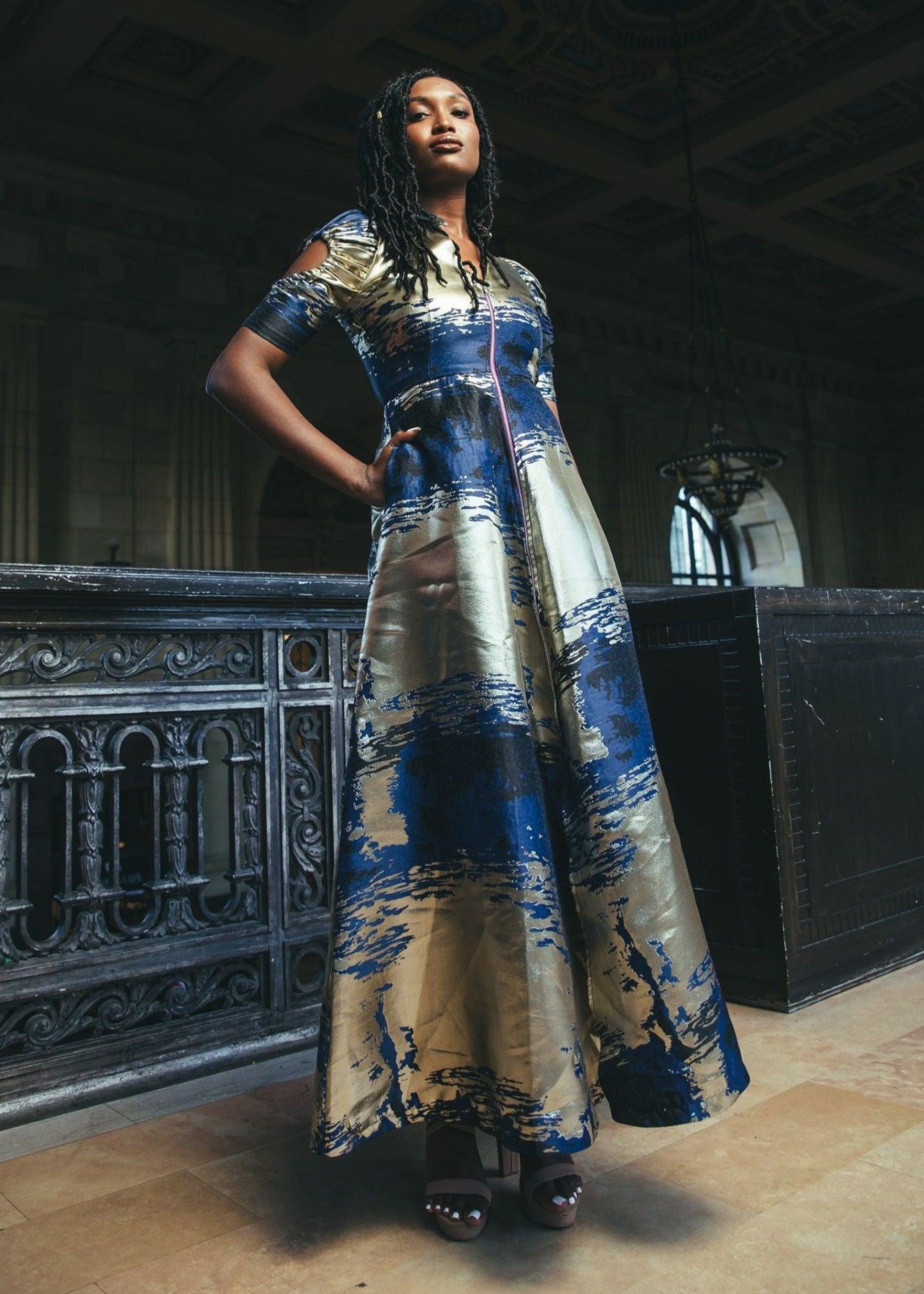
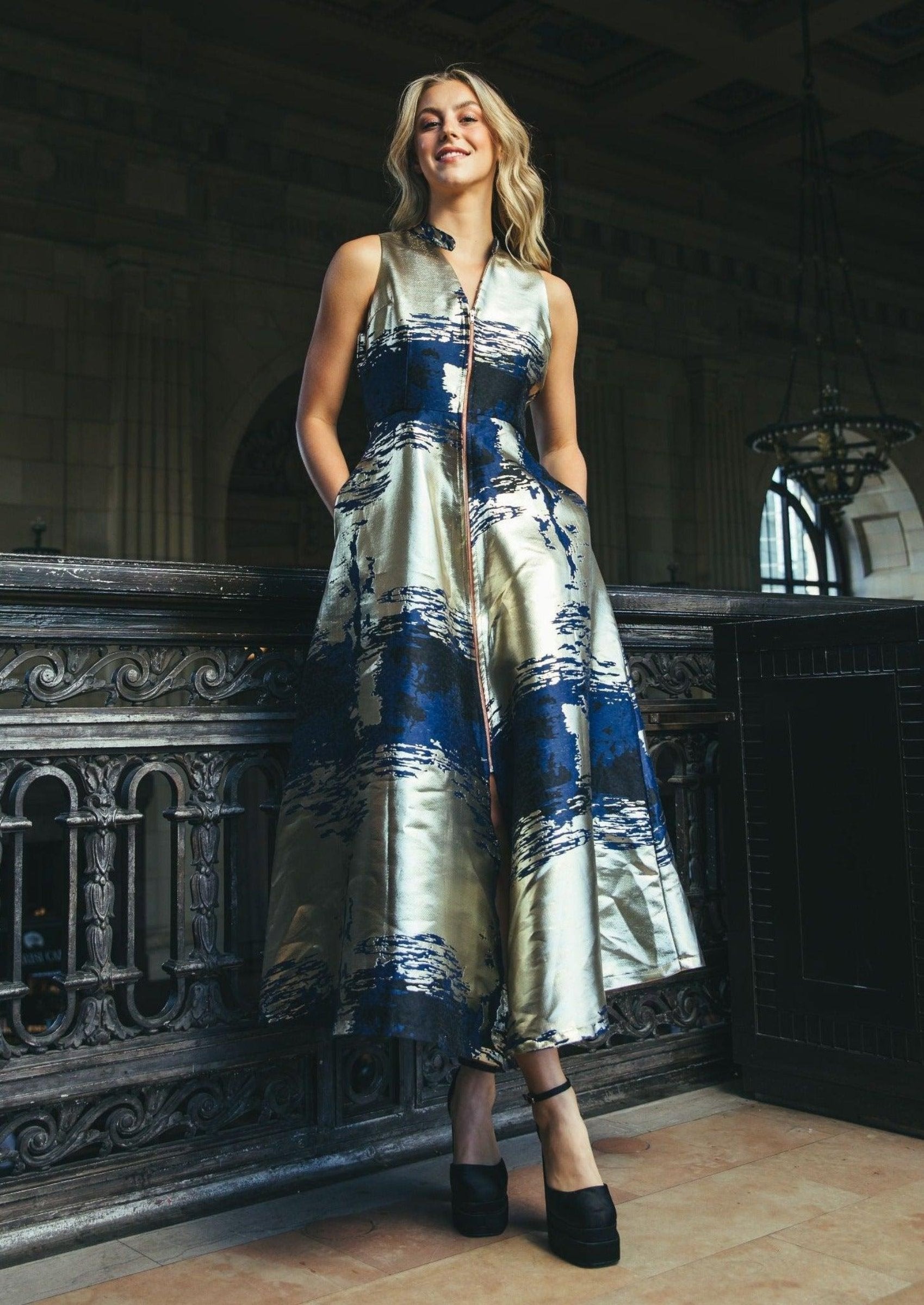
At KAHINDO, we design occasion dresses for diverse body types, with silhouettes like fitted bodices paired with flared skirts or structured pencil cuts.
Key things to notice about your body:
- Shoulder width compared to hip width
- Whether your waist is defined or straight
- Arm length relative to your torso
- Overall height and leg length
- Any asymmetries (one shoulder higher, uneven muscle development)
This self-awareness is the foundation for perfect dress fit.
How to Measure Yourself for a Dress
Accurate measurements are the first step toward a dress that fits well. Measure yourself or ask someone to help.
Key Measurements to Take
You need five core measurements:
Bust. Measure around the fullest part of your chest, tape snug but not tight and parallel to the ground.
Waist. Measure around your natural waist, the narrowest part of your torso, usually just above your belly button, without pulling tight.
Hip. Measure around the fullest part of your hips and seat, typically 8-9 inches below your waist.
Shoulder width. Measure from one shoulder tip to the other; this matters for dress fit and sleeve placement.
Length. Measure from your shoulder bone to where you want the dress to end: typically 20-24 inches for knee-length, 36-42 inches for midi.
Write down each number. You will use these when comparing to a size chart.
Recording Your Measurements Accurately
Measure in the morning in minimal clothing, like a thin tank top and underwear, standing in front of a mirror so the tape stays level and doesn't twist.
Take each measurement twice; if the numbers differ, take a third and use the average, since small variations affect how a dress fits.
Keep your measurements in a phone note and refer back to them before selecting a size online.
Using a Size Chart to Select Your Dress Size
A size chart translates your measurements into the right size. Every brand sizes differently, so never assume your usual size will fit.
Find the brand's size chart and compare your measurements to each column.
Between sizes, consider construction: a fitted style with no stretch needs more room, while elastic or ruching can work with a tighter fit.
Pay attention to notes like "runs small" or "runs large." KAHINDO pieces like the Hadiza Mini Dress are designed to run small, sizing up ensures the best fit.

How a Dress Should Fit: The Complete Fit Check
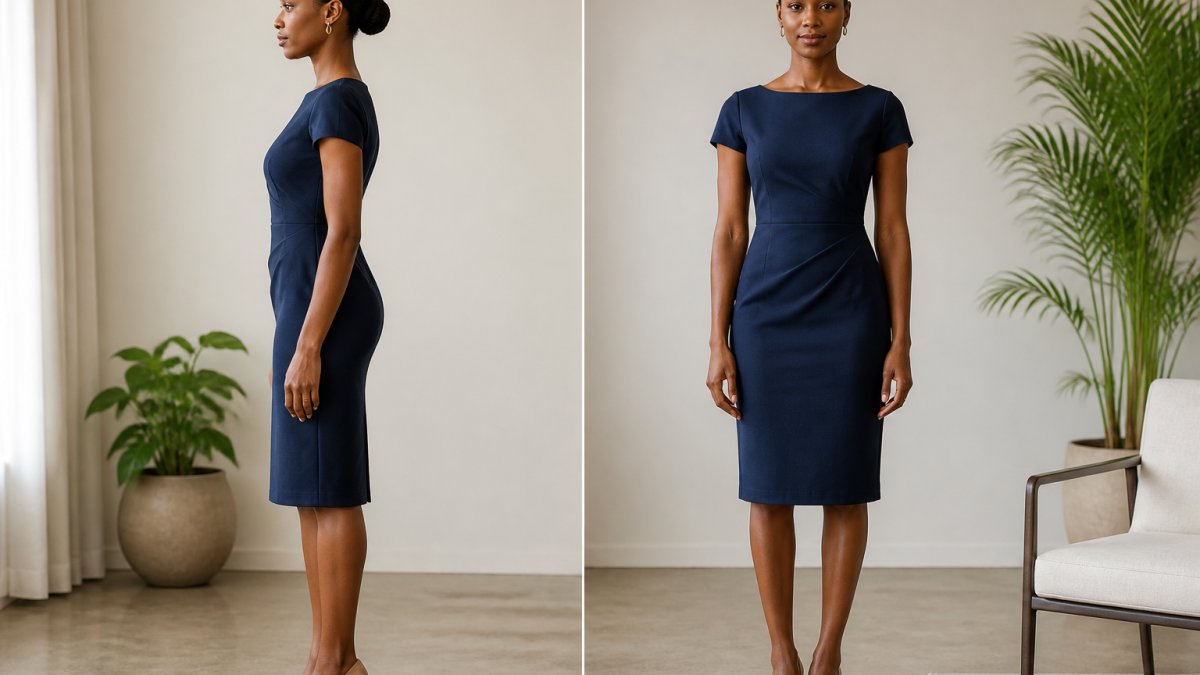
A perfectly fitting dress feels comfortable and looks intentional, allowing movement without pulling, gaping, or bunching. Here is how to evaluate fit across every part.
Checking Shoulder Seams and Shoulder Fit
The shoulder seam is the most important fit marker, sitting exactly where your shoulder ends and your arm begins. If it slides down your arm, the dress is too big; if it pinches or pulls toward your neck, it is too small.
Raise your arms in front of a mirror: the seam should stay in place and you should move freely without pulling across your back.
Shoulder fit affects how the entire dress hangs. When shoulders fit correctly, the rest of the dress drapes properly from that anchor point.
Assessing Bust Fit and Support
Your bust should feel supported without spilling over the neckline or creating gaps, and the fabric should sit smoothly without pulling or wrinkling.
Reach forward, across your body, and overhead. If the bust pulls tight when you move, the size is too small; if fabric gaps away, it is too large.
For dresses with structured cups or boning, the support should feel snug but not restrictive. You should be able to take a full breath without the dress tightening.
Checking Waist Fit and Defining the Waist
The waist seam or ruching should sit at your natural waist and gently define your shape, creating visual balance that flatters most body types.
Sit down: a well-fitted waist stays in place rather than riding up or sliding down when you move.
If the dress has ruching or gathering at the waist, this should smooth out any bulges without creating new ones. The fabric should skim your body, not cling or tent.
Evaluating Hip and Skirt Fit
The hip should sit smoothly without pulling or bunching. Stand, sit, and walk a few steps; the skirt should move with you without twisting or riding up.
For fitted skirts, there should be enough ease to sit comfortably and take a step without strain. For flared or A-line skirts, the fabric should have room to move freely. Check that the hem hangs evenly all the way around.
Ruching or seaming in the skirt can define your shape. Make sure any design elements sit where they flatter you, not where they create visual bulk.
Burgundy Gold Metallic Jacquard Halter Pencil Dress →
Sleeve Length and Hemline Alignment
Sleeves should end at your wrist bone with your arm relaxed at your side. Too short makes arms look longer and creates a gap; too long bunches at the wrist or covers your hand.
The hemline should be even all the way around, hitting the same point on both legs when you check the back in a mirror. Uneven hems can result from improper fit or posture.
For dresses with slits, check that they open at a comfortable height and don't gape when you walk or sit.
How to Tell If a Dress Is Too Tight
A dress that is too tight will show these signs:
- Pulling across the bust, waist, or hips
- Horizontal wrinkles or stress lines in the fabric
- Visible panty lines or undergarment edges
- Difficulty breathing or moving your arms
- Seams that twist or pucker
- Fabric that bunches or rides up when you sit or move
- Shoulder seams that pinch or ride up your neck
If you notice any of these, the dress is too small. Wearing a too-tight dress is uncomfortable and shortens the life of the garment. The fabric stretches and seams strain under pressure.
When a dress is too tight, size up. Do not try to force a smaller size. A well-fitted dress in the correct size will always look better and feel better than a tight dress in a smaller size.
Dress Alterations for a Better Fit
Not every fit issue requires a new dress. Many problems can be solved with tailoring. Understanding which alterations work saves you time and money.
Common Alterations and When to Use Them
Hemming. This is the most common alteration. A tailor can shorten or lengthen the hem to the correct length.
Adjusting shoulder seams. A tailor can move shoulder seams inward or outward slightly.
Adding darts or ruching. Darts and ruching define the waist and smooth out excess fabric.
Adjusting sleeve length. A tailor can shorten or lengthen sleeves.
Adding support. A tailor can add internal support like boning, cups, or elastic to improve fit and comfort.
When to Size Up, Size Down, or Tailor
Size up if:
- The shoulder seams sit too far down your arms
- The bust feels tight and you cannot move comfortably
- The waist feels restrictive
- You cannot zip or button the dress
Sizing up solves fundamental fit problems that tailoring cannot fix. A new size is worth it.
Size down if:
- The dress drowns you and fabric pools at your feet
- Seams twist or slide around your body
- There is excessive gaping at the bust or waist
- The dress slides off your shoulders
Tailor if:
- The dress fits well everywhere except the length
- The waist is slightly loose but the bust and shoulders fit
- The sleeves are close to the right length but need minor adjustment
- You want to add structure or support without changing the size
Tailoring works best for minor adjustments. Major fit problems require a different size.
Fit Differences by Fabric and Dress Construction
Different fabrics and construction methods affect how a dress fits and feels.
Stretch fabrics like spandex blends move with your body. They forgive minor fit issues and feel comfortable.
Woven fabrics like cotton or linen do not stretch. They require exact sizing.
Structured fabrics like jacquard or brocade hold their shape.

Lightweight fabrics like cotton batik drape softly.
Bodycon fabrics hug your shape. They require precise sizing and show every contour.
Ruching and seaming add visual interest and hide imperfections.
Understand your fabric and construction before you finalize your size.
Achieving Perfect Dress Fit: Final Checklist
Use this checklist before you wear your dress:
- Shoulder seams sit exactly where your shoulder ends
- Bust feels supported without spilling or gaping
- Waist seam or ruching sits at your natural waist
- Hip and skirt fit smoothly without pulling
- Sleeves end at your wrist bone
- Hemline is even all the way around
- You can move your arms and breathe comfortably
- No horizontal wrinkles or stress lines
- Seams lie flat and do not twist
- The dress makes you feel confident
If any item fails, consider sizing up, sizing down, or scheduling a tailor appointment. A dress that passes this checklist is ready to wear.
Perfect dress fit comes from knowing your body, taking accurate measurements, and choosing the right size. Research on person perception through dress demonstrates that proper fit is fundamental to how clothing is perceived, fit affects not just comfort but how you present yourself.
When you shop at KAHINDO, each piece is designed with occasion-ready silhouettes that work across body types.
Take time to measure yourself, consult the size chart, and understand your body. When fit is right, you feel confident. And confidence is what truly makes a dress perfect.
Frequently Asked Questions
How should a dress fit at the bust, waist, and hips?
A dress should fit snugly but not tightly at the bust, with support that feels secure without pulling. The waist seam or ruching should sit at your natural waist, skimming rather than gripping. Hips should have enough ease to move freely, typically 1 to 2 inches of room, without pulling, gaping, or creating unflattering bulk. Comfort and movement matter as much as silhouette; if you can't breathe or sit easily, the dress is too tight.
What should you do if a dress fits well in one area but not another?
Assess which fit issue is most noticeable and decide whether tailoring is worth the investment. Minor gaping at the bust can be fixed with darts or taking in seams; waist issues are among the easiest alterations. If the dress is constructed from delicate or hand-dyed fabric, like KAHINDO's batik cotton or metallic jacquard pieces, consult a tailor experienced with special fabrics before committing. Sometimes sizing up or down and accepting minor imperfections is more practical than extensive alterations.
How can you tell if a dress is too tight?
A dress is too tight if you see pulling across the bust, waist, or hips; if the fabric creates horizontal wrinkles; if you cannot sit, bend, or breathe comfortably; or if seams are straining. Check for pulling at the underarm, shoulder blades, and back. The dress should drape smoothly; if it clings in unflattering ways or restricts movement, it's too small. Trust your comfort, if you're constantly adjusting or holding your breath, the fit is wrong.
Can a tailor fix a dress that does not fit perfectly?
Most fit issues can be corrected through tailoring: taking in or letting out seams, adjusting waist placement, hemming, and adding darts for better shaping. However, tailoring costs vary and can be significant on luxury pieces. Some alterations, like shortening a pencil dress or taking in a side seam, are straightforward, while others, like reshaping the bust, are complex. Always consult your tailor first, especially with handcrafted or specialty fabrics, to understand cost and feasibility before purchasing.
Finding the perfect dress fit is about understanding your body and choosing the right size. At KAHINDO, we design occasion dresses in silhouettes that flatter diverse body types, from the structured metallic jacquard of the Amara Dress to the soft drape of the Lesotho Mini Dress. Each piece is handcrafted by female artisans in Kenya using fair-trade practices. Shop KAHINDO for statement pieces that fit beautifully and support women's economic empowerment through fashion.

