



How to Alter a Dress That Is Too Big at Home
Last Updated: November 4, 2026
Quick Summary
To alter a dress that is too big, pin equal amounts of excess fabric at the side seams, mark the fit, and baste the new seams before sewing permanently. Try the dress on and check comfort while sitting, walking, and raising your arms; keep the original fabric intact until the fit is confirmed.
- Wear the planned undergarments and shoes during the fit test.
- Check the waistline, bust, and hemline in a mirror.
- Sew lining and outer fabric as separate layers when needed.
- Use a belt, sash, or removable clip for a temporary waist adjustment.
- Choose a tailor for dresses with boning, delicate fabric, or a complicated neckline.
Table of Contents
- Essential Sewing Tools for Garment Alterations
- Step 1: Pin and Fit-Test a Dress That Is Too Big
- Step 2: Take In the Side Seams for a Dress That Is Too Big
- How to Alter a Dress That Is Too Big in the Bust
- How to Alter a Dress That Is Too Big Without Sewing
- Tailoring Costs for Dresses and When to Hire a Professional
- Choose a Fit Plan Before Your Next KAHINDO Occasion Dress
- Frequently Asked Questions
Essential Sewing Tools for Garment Alterations
A good fit starts with the right tools and a clear plan. This guide explains how to alter a dress that is too big at home, while showing when a tailor is the safer choice. A dress alteration is a change to a garment’s seams or shape to improve its fit. For a first project, focus on small, reversible changes before cutting fabric.
Gather these essentials:
- Measuring tape and full-length mirror
- Straight pins or fabric clips
- Tailor’s chalk and fabric scissors
- Matching thread and hand-sewing needles
- Seam ripper and sewing machine, if available
Start with a basting stitch, which is a loose temporary stitch, so you can test the shape and remove it with less risk.
For basic sewing guidance, the [Sewing and Craft Alliance’s sewing resources | sewing.org] offer background on sewing tools and techniques. Check that your fabric and garment care instructions allow pressing before using an iron (the FTC).
Step 1: Pin and Fit-Test a Dress That Is Too Big
Pin the extra fabric along the side seams, then check the fit while standing, sitting, and moving your arms. This fit test shows whether the dress needs a small waist adjustment or a broader change. Keep pins pointed down and away from your skin.
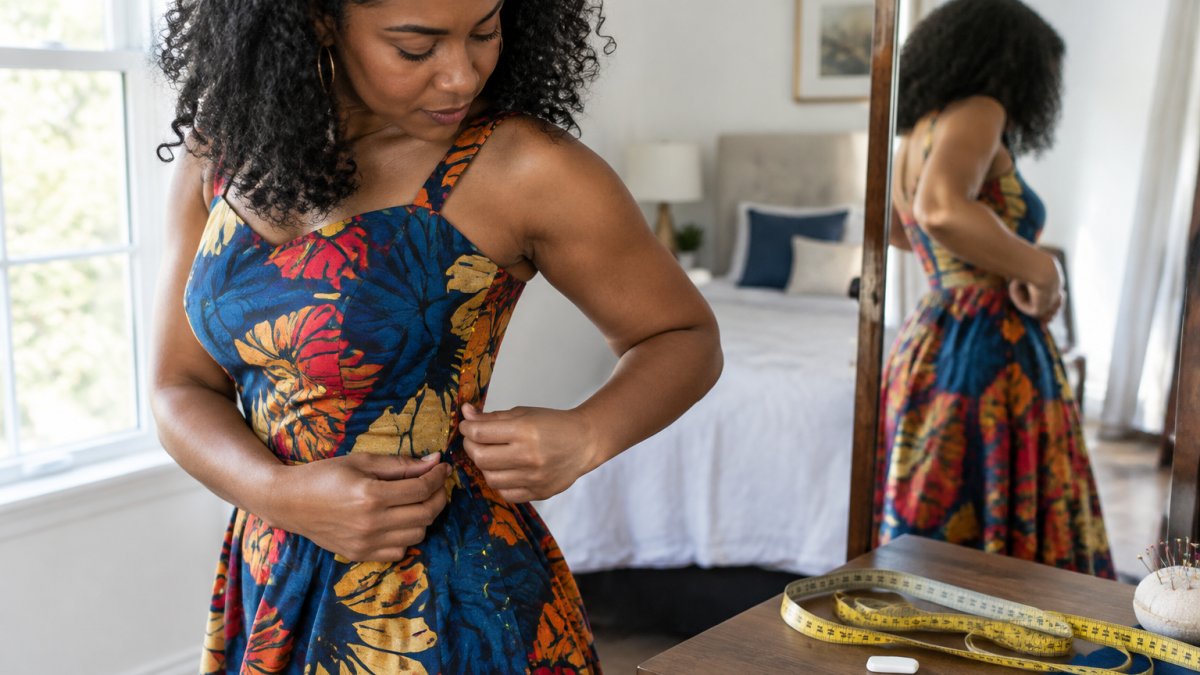
Use this order:
- Put on the dress with the undergarments and shoes planned for the event.
- Pin equal amounts at both side seams.
- Check the waistline, bust, and hemline in a mirror.
- Sit, walk, and raise your arms to test comfort.
- Mark the pin line with tailor’s chalk, then remove the dress.
Fit from the body outward. If the bust sits well but the waist feels loose, do not take in the whole bodice. That common shortcut can pull the armscye, or armhole, out of place.
Use this fit-test sequence to identify where the dress needs adjustment.
| Step | What to do | Check |
|---|---|---|
| 1 | Put on the dress with planned undergarments and shoes | Prepare for the event |
| 2 | Pin equal amounts at both side seams | Keep the adjustment balanced |
| 3 | Check waistline, bust, and hemline in a mirror | Spot fit issues |
| 4 | Sit, walk, and raise your arms | Test comfort and movement |
| 5 | Mark the pin line with tailor’s chalk | Remove the dress before sewing |
Step 2: Take In the Side Seams for a Dress That Is Too Big
To take in side seams, mark the pin line, sew a temporary basting stitch, and test the dress again before making a permanent seam. This approach suits simple dresses with enough seam allowance. Keep the change even on both sides for a balanced fit.
A sewing machine makes a straight stitch quickly, but hand sewing gives more control on delicate fabric. In either case, work slowly and keep the fabric layers flat.
- Turn the dress inside out and mark the new seam.
- Baste along the marks without trimming fabric.
- Try the dress on and check movement.
- Sew the final seam only after the fit feels right.
- Trim excess only when the new fit is confirmed.
Watch out: Do not sew through a lining and outer layer as if they were one piece. They may need separate seams to hang smoothly. The [University of Kentucky Cooperative Extension’s clothing care resources | uky.edu] provide general garment-care guidance.
How to Alter a Dress That Is Too Big in the Bust
First identify where the excess fabric is coming from: a loose bust, a gaping neckline, or an armhole that stands away from the body. These problems can look similar in a mirror, but taking in both side seams may fix one and make another worse. Keep the original seam allowance intact while you test changes.
- Put on the dress with the bra and undergarments you plan to wear with it. Smooth the fabric without pulling it tight.
- Check the bust, neckline, and armholes separately. Note where the fabric folds or gaps, and whether the waist fits already.
- Pin a small amount at the side seams only where the bodice is loose. Use matching amounts on both sides if the fit is even; if one side fits differently, pin each side to suit the body rather than forcing symmetry.
- Baste the marked change by hand, then try the dress on again. Sit, reach forward, and raise both arms to check that the neckline stays in place and the armholes do not bind.
- Remove the basting if the change pulls the neckline, shifts the waist seam, or restricts movement. Reassess the source of the gap before trying a different adjustment.
For a small neckline gap, a short, shallow dart may help if the fabric naturally folds toward the bust. Pin the fold first and check that the neckline remains smooth; a dart placed in the wrong direction can create a visible point or distort the garment. A removable fashion-tape strip can be a temporary test for a minor gap, but it will not correct a bodice that is too large overall.
Armhole gaping needs particular care. If the bust and waist fit but the armhole stands away, taking in the side seam below the armhole may not remove the gap and can make the bodice pull. The cause may involve the shoulder or armscye shape, which is harder to alter cleanly at home. A dress with a lining, boning, shaped cups, or a complicated neckline is a better candidate for a tailor.
Burgundy Gold Metallic Jacquard Halter Pencil Dress →
Watch out: Do not cut away fabric or sew a permanent dart until you have tested the change with basting and checked the fit in motion; a small bodice adjustment can alter the neckline, armhole, and waistline together.
How to Alter a Dress That Is Too Big Without Sewing
No-sew fixes are useful for a temporary event-day adjustment or a small fit problem, but they cannot reliably reshape a dress that is loose across the bust, waist, and hips. Choose a method based on where the extra fabric is and how the fabric handles pressure or adhesive. Test any product on a hidden area first, following its directions and the garment’s care label.
- Loose waist: Add a belt or sash, or gather excess fabric at the back with a removable dress clip. Check that the fabric is not pulled into sharp folds and that the clip does not show through the outer layer.
- Small neckline gap: Use fashion tape made for clothing to hold the neckline against the skin or underlayer. Apply it to clean, dry skin and fabric, and remove it as directed rather than pulling it off abruptly.
- A temporary gathered shape: Use a removable clip on an inside fold or at the back. Keep the fold broad and smooth; a tight pinch can create a visible lump and put stress on the fabric.
- A quick fit check: Pin excess fabric on the inside only if the pin can be kept away from skin and the fabric is sturdy enough to tolerate it. Remove the pins before washing or storing the dress.
For silk, lace, metallic fabric, or a delicate finish, avoid testing adhesive or pins on a visible area. Adhesive can leave residue or disturb a surface, while a pin can snag fine threads or leave a hole. A belt or sash that shapes the dress without attaching to it is often the lower-risk temporary option; for a valuable or fragile garment, ask a tailor or cleaner about safe handling.
These methods are reversible in the sense that they do not require cutting or permanent stitching, but they are not risk-free: clips can shift, tape can lose its hold, and pins can snag fabric. Walk, sit, and raise your arms while testing the fix, then check that it remains secure without pulling or restricting movement.
Watch out: Do not use household tape, glue, or a tight safety pin as a substitute for garment-safe products; they can damage fabric, leave residue, or create a sharp pressure point.
Tailoring Costs for Dresses and When to Hire a Professional
Tailoring costs for dresses depend on the work needed, the fabric, and the garment’s construction. We can’t give a reliable price without a tailor’s quote. Ask for an estimate after showing the dress and describing the fit issue.
A professional tailor is the better choice when:
- The dress has a lining, boning, or several fabric layers.
- The print or pattern must match across a seam.
- The neckline, shoulders, or armscye need reshaping.
- The fabric is delicate, metallic, or hard to unpick.
- You need a polished fit for a formal event.
The inside construction can make a change hard to reverse. The [Federal Trade Commission’s clothing care guidance | ftc.gov] is useful for understanding garment labels and care instructions.
Choose a Fit Plan Before Your Next KAHINDO Occasion Dress
The best fit plan starts before purchase: check the listed fit notes, choose a silhouette that suits your needs, and leave time to assess the dress before an event. KAHINDO occasionwear is designed in New York and handcrafted by female artisans in Kenya.
Before deciding how to alter a dress that is too big, check the garment’s fabric and construction. For example, the Amara Dress listing describes a metallic jacquard halter pencil dress that is dry clean only. The Hadiza Dress listing notes that its metallic jacquard mini dress runs small, so size up for the best fit.


If the challenge is balancing a special-occasion look with a comfortable fit, start with the garment’s fit notes and construction before reaching for scissors.
Frequently Asked Questions
Can a dress be altered if it is too big?
Yes. A dress that is too big can often be adjusted at the side seams, waist, or bust, depending on its construction and how much extra fabric is available. Check the seam allowance, lining, darts, and any print placement before unpicking stitches. Pin the garment evenly and test the fit while wearing the shoes and undergarments planned for the occasion. For intricate or delicate pieces, ask a tailor to assess the alteration first.
How do I fix a dress that is too big without sewing?
For a temporary fit adjustment, use fashion tape to secure a loose neckline or fold excess fabric into a discreet tuck and hold it with a belt or removable clip. These methods do not reshape the garment and may shift during movement, so test them while sitting, walking, and raising your arms. Avoid pins or adhesive on delicate, metallic, or hand-dyed fabric unless the care instructions allow it.
How do I alter a dress that is too big in the bust?
Pin the excess evenly at the side seams or existing darts, then check that the neckline and armholes still lie smoothly. A loose bust can also come from a bodice that is too long or straps that need adjusting, so identify where the excess fabric gathers before sewing. Baste the change first and try the dress on again. If it has a lining, structured cups, or a complex neckline, a tailor can protect the shape.
What tools do I need to alter a dress at home?
Basic essential sewing tools for garment alterations include a measuring tape, straight pins, hand-sewing needles, matching thread, fabric scissors, tailor's chalk, and a seam ripper. A sewing machine is useful for longer, straight seams, while hand basting lets you test the fit before making a permanent stitch. Keep the dress on a clean surface and check its care label before pressing or washing the fabric.