




How to Verify Ethical Fashion Claims: 7 Steps
Table of Contents
- Why Verifying Ethical Fashion Claims Matters
- How to Spot Greenwashing in Fashion
- Step 1: Check for Vague Marketing Language and Red Flags
- Step 2: Review Ethical Fashion Certification Lists
- Step 3: How to Research Clothing Brand Ethics and Supply Chain Transparency
- Step 4: Verify Audit Reports and Factory Disclosure
- Step 5: Contact Brands Directly for Proof and Documentation
- Step 6: Evaluate Second-Hand and Resale Platform Ethics
Last Updated: August 29, 2026
Why Verifying Ethical Fashion Claims Matters
The fashion industry has a credibility problem. According to Colorful Socks' 2025 Fashion Sustainability Claims Accuracy Statistics, approximately 60% of fashion brands' sustainability claims have been identified as unsubstantiated or misleading. Only one in five consumers trust brands' sustainability claims, and Woola's 2026 Greenwashing Statistics found that 54% of U.S. consumers mistrust brands' environmental assertions. When 88% of Gen Zers are skeptical of environmental, social, and governance (ESG) claims made by fashion brands, the gap between marketing language and reality is stark.
Yet 72% of U.S. consumers are aware of sustainability issues in fashion, and 55% want to buy sustainable clothing. The problem isn't awareness, it's verification. 48% of consumers don't know where to find brands they can trust. Learning how to verify ethical fashion claims transforms you from a passive buyer into an informed one.
How to Spot Greenwashing in Fashion
Greenwashing in fashion works through strategic vagueness. A brand claims to be "eco-friendly" without specifying what that means, or touts "sustainable practices" without naming them. Real greenwashing hides behind three tactics: making unverifiable claims, using emotional language and imagery instead of facts, and burying actual information while promoting the feeling of sustainability everywhere else.
The most dangerous greenwashing doesn't lie, it tells you part of the truth. A brand might genuinely use organic cotton in one collection while the rest of their line comes from conventional sources, highlighting the organic line in marketing while quietly selling conventional pieces.
Jason Kibbey, CEO at Higg, captured this perfectly: Forbes' 2021 report on sustainability verification quotes him saying, "We really need to use data to substantiate all of these green claims… consumers are tired of vague claims like 'eco-friendly', whatever that means."
Step 1: Check for Vague Marketing Language and Red Flags
Start by reading a brand's marketing copy with skepticism. Look for these red flags:
Vague terms without definition: "Eco-friendly," "sustainable," "ethical," "natural," or "responsibly made" without explaining what these mean.
Emotional language replacing facts: Heavy use of words like "love," "care," and "passion" without concrete actions, or beautiful imagery of nature or artisans without supply chain documentation.
Claims without attribution: "Most of our customers prefer sustainable fashion" (no source), "leading the way in ethical production" (compared to whom?), or "award-winning sustainability" (which awards?).
Missing information: No mention of where products are made, no names of factories or suppliers, no transparency reports or audit results, no third-party certifications.
Contradictions between claims and practices: Claiming sustainability while offering fast-fashion production cycles, or promoting fair labor while keeping supplier lists secret.
Elizabeth Joy, Founder at Conscious Life & Style, emphasizes: Project Cece's ethical fashion perspective defines ethical fashion as "the recognition that there are human beings behind the clothes that we wear." If a brand never mentions the people making their clothes, that's a red flag.
Step 2: Review Ethical Fashion Certification Lists
Third-party certifications provide independent verification that ethical claims are real. The most credible certifications in fashion include:
Fair Trade Certified verifies that workers earn living wages, work in safe conditions, and have the right to organize. B-Corp Certification requires companies to meet high standards for social and environmental performance and accountability. GOTS (Global Organic Textile Standard) certifies that textiles are made from organic fibers and produced without harmful chemicals. OEKO-TEX certifies that finished textiles are free from harmful substances. Cradle to Cradle Certified verifies that products are designed for continuous cycling through biological or technical cycles. SA8000 (Social Accountability International) audits factories for labor rights, safe working conditions, and fair wages.
According to Fashion Revolution's 2020 Consumer Survey, 72% of people think it is important that fashion brands have ethical certifications and 80% think sustainability certifications are important.
Look for brands with multiple certifications across their full product range. Also verify that certifications are current, they expire and require renewal.
Step 3: How to Research Clothing Brand Ethics and Supply Chain Transparency
Supply chain transparency is the operational foundation of ethical claims. Without traceability, the ability to track a product's journey from origin to consumer, transparency claims are unverifiable.
Start by visiting the brand's website and looking for a dedicated sustainability or ethics section. Look for these specific elements:
Named production locations: The brand should list specific factories, workshops, or cooperatives by name and location. "Made in Kenya" is vague. "Handcrafted by female artisans in our Nairobi cooperative" is specific.
Labor standards and wages: Does the brand explain how workers are paid? Do they mention living wages, minimum wage standards, or wage transparency? Do they disclose working conditions, hours, or benefits?
Material sourcing: Where do raw materials come from? Are they organic, recycled, or conventional? How are suppliers selected and monitored?
Audit and compliance information: Does the brand share audit reports? Which organizations conduct audits? How often? Are results public?
When you find this information, evaluate its specificity. Generic statements like "we work with ethical suppliers" mean nothing. Specific statements like "all cotton is GOTS certified" or "our production partners are audited annually by SA8000" mean something.
Step 4: Verify Audit Reports and Factory Disclosure
Audits are supposed to verify that factories meet labor and environmental standards. However, audits commissioned by brands or factories themselves create incentives for the audit company not to be too critical. Additionally, audits are often announced in advance, allowing factories to present a favorable situation.
Independent vs. internal audits: Independent audits conducted by third-party organizations are more credible than audits conducted by the brand itself or the factory. Look for audits from organizations like SA8000, Fair Trade International, or other established certification bodies.
Audit frequency: Legitimate brands conduct audits regularly, not once every five years. Annual or semi-annual audits are standard for ethical brands. If a brand's most recent audit is more than two years old, that's a red flag.
Public audit results: Ethical brands share audit results, at least in summary form. If a brand claims to be audited but won't show any results, that's suspicious.
Factory disclosure: Does the brand publish a list of factories or production facilities? Many ethical brands now maintain public registries of their suppliers.
According to Study Finds that Only 20 Percent of Consumers Trust Brand Sustainability Claims, 83% of customers are more likely to trust a product's sustainability assertion after it has been tested by a third party.
Step 5: Contact Brands Directly for Proof and Documentation
If a brand's public information is vague or incomplete, contact them directly. This step separates serious ethical brands from greenwashing operations.
Send a specific email asking for documentation:
Subject: Questions About Your Production Practices and Ethical Standards
Hello,
I'm interested in purchasing from your brand, but I'd like to verify your ethical production claims before making a decision. Could you provide the following information:
- A list of all factories or production facilities where your products are made, including their names and locations
- Copies of current third-party certifications (Fair Trade, B-Corp, GOTS, OEKO-TEX, etc.)
- Your most recent audit report or summary of audit findings
- Documentation of your labor standards, including wage information and working condition policies
- Information about your material sourcing and sustainability practices
Thank you for your transparency and commitment to ethical fashion.

How a brand responds tells you everything. Ethical brands respond quickly with detailed information. Greenwashing brands respond vaguely or don't respond at all. They might claim that detailed information is "proprietary" or direct you to a vague sustainability report without answering your specific questions.
:::tip Save all email correspondence with brands. If a brand makes claims in emails that contradict their marketing, that's valuable information. If they promise documentation but never deliver, that's also valuable information.
Step 6: Evaluate Second-Hand and Resale Platform Ethics
The resale market is growing rapidly. The U.S. resale market is projected to reach $66-68 billion in 2026, growing 9 times faster than traditional retail. This shift toward circular economy models extends the impact of ethically made pieces and reduces waste.
Platform verification: Check whether the resale platform has authentication processes. Legitimate platforms like Vestiaire Collective, The RealReal, and Rebag authenticate items before listing them. Look for seller ratings and reviews.
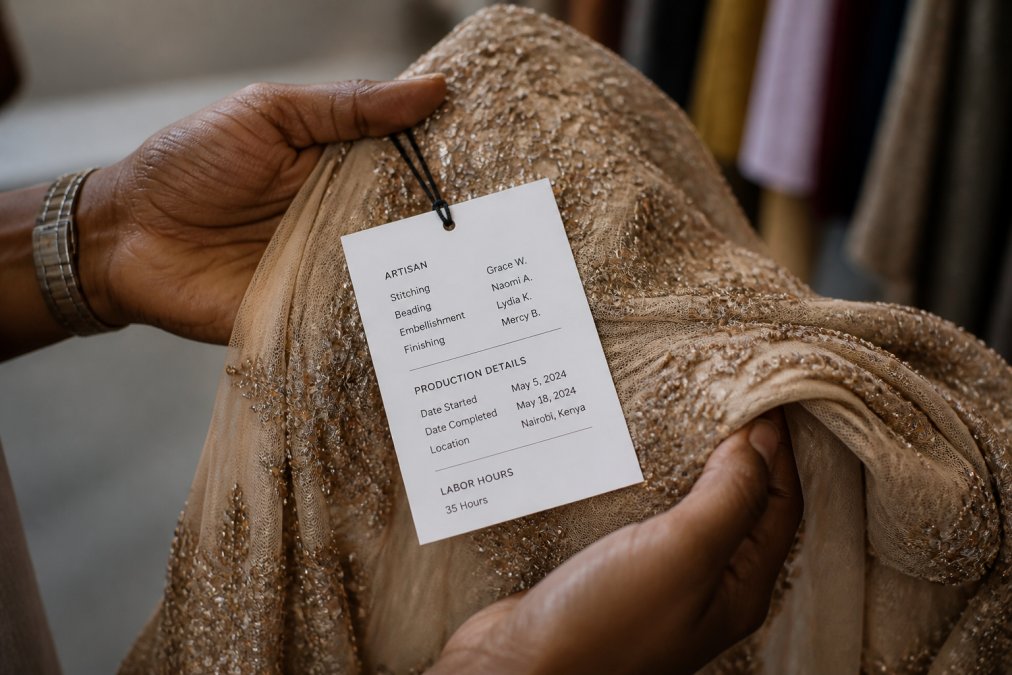
Item verification: When buying a specific piece, verify that it matches the brand's production records. Check the item's label, stitching, materials, and construction against authentic examples. For luxury pieces like KAHINDO's handcrafted occasionwear, verify that the provenance card is included. KAHINDO includes documentation identifying the female artisans in Kenya who handcrafted the piece, the hours invested, and details about the production process. If a second-hand listing for a KAHINDO piece doesn't include the provenance card, that's a red flag.
Price verification: If a second-hand piece is priced significantly below market value, investigate why. Stolen goods, counterfeit items, and damaged pieces are sometimes listed at unrealistic prices to move quickly.
Verifying ethical fashion claims requires effort, but it's the only way to ensure your money actually supports the values you care about. Start with the red flags and vague language check, that takes five minutes and eliminates most greenwashing. Move to certification verification and supply chain research if the brand passes that test. Contact brands directly if you're still uncertain. For second-hand purchases, verify authenticity and condition carefully.
The brands that make it through this process aren't just claiming to be ethical, they're proving it with documentation, transparency, and specificity. Those are the brands worth supporting.
At KAHINDO, we've built verification into every piece. Each garment includes a provenance card documenting the female artisans in Kenya who handcrafted it, the hours invested, and details about the production process. This isn't marketing, it's proof. When you invest in a KAHINDO piece, you know exactly where your money goes and whose hands made your dress. That's the standard ethical fashion should meet.
| Verification Step | What to Look For | Red Flags |
|---|---|---|
| Marketing Language | Specific claims with data | Vague terms like "eco-friendly" or "sustainable" |
| Certifications | Multiple current third-party certifications | No certifications or expired ones |
| Supply Chain | Named factories, labor standards, material sourcing | Generic statements, missing details |
| Audit Reports | Independent audits with public results | No audit information or internal-only audits |
| Brand Contact | Quick response with documentation | Vague replies or no response |
| Second-Hand | Authentication, seller ratings, provenance cards | Suspiciously low prices, missing documentation |
Frequently Asked Questions
What are the red flags of greenwashing in fashion?
Watch for vague terms like 'eco-friendly' without specifics, lack of third-party certification, no supply chain disclosure, and generic sustainability claims without data. Brands using images of nature or green colors to suggest ethics without substantive practices are common offenders. According to research, approximately 60% of fashion brands' sustainability claims are unsubstantiated or misleading. Legitimate brands name specific materials, production locations, labor practices, and provide verifiable documentation.
How can I tell if a clothing brand is actually sustainable and ethical?
Verify ethical fashion claims by checking for third-party certifications (Fair Trade Certified, B-Corp, GOTS, OEKO-TEX), reviewing published supply chain transparency reports, and examining whether the brand discloses factory locations and worker wages. Ethical brands document their value chain, name specific artisans or production facilities, and explain their environmental impact. KAHINDO, for example, includes a provenance card with each garment identifying the female artisans who handcrafted the piece and labor hours invested. Research shows 83% of consumers trust sustainability assertions more after third-party verification.
Are third-party certifications reliable for verifying ethical fashion?
Third-party certifications like Fair Trade Certified, GOTS, and B-Corp provide independent verification of labor practices and environmental standards, making them more reliable than brand claims alone. However, certifications have limitations: smaller brands may lack resources for certification costs, some awarding bodies fail to prevent logo misuse, and audits can be unreliable if announced in advance or commissioned by the brand itself. Use certifications as one verification tool alongside supply chain transparency reports, factory disclosure, and direct brand communication.
How do I research a brand's supply chain and verify their labor practices?
Start by visiting the brand's website for transparency reports, factory lists, and labor practice documentation. Check if they disclose specific production locations, wages, and worker conditions. Search for third-party certifications and audit reports. Contact the brand directly with specific questions about supply chain practices, artisan wages, and working conditions. Legitimate brands respond transparently and provide documentation. Cross-reference claims against public registries and compliance databases. Brands with strong traceability, like those using provenance systems, allow you to verify claims about fair-trade practices and sustainable production throughout the entire value chain.
This article was written using GrandRanker