



Garment Provenance Cards: Benefits & Impact
Table of Contents
- What Garment Provenance Cards Actually Are
- Verifying Authenticity and Combating Counterfeits
- Fashion Supply Chain Transparency and Accountability
- Digital Product Passports for Clothing
- Building Consumer Trust Through Documented Craftsmanship
- Resale Value and Long-Term Investment Impact
- How to Use Provenance Information When Shopping
- Conclusion
Last Updated: August 6, 2026
What Garment Provenance Cards Actually Are
Agarment provenance card is a digital or physical document that traces the complete origin story of a piece of clothing, from raw materials through production to the artisan who made it. It functions as a certificate of authenticity and documents everything from fiber sourcing to labor practices to the specific craftsperson responsible for creation.
Think of it as a passport for your dress. Just as a passport proves your identity and travel history, a provenance card proves your garment's identity and production history. It answers the questions conscious consumers increasingly ask: Where did this come from? Who made it? Under what conditions?
The concept sits at the intersection of three major fashion industry shifts: the demand for supply chain transparency, the need to combat counterfeiting, and the growing consumer desire to support ethical production. For luxury brands and artisanal producers like KAHINDO, provenance cards transform production ethics from a marketing claim into verifiable fact.
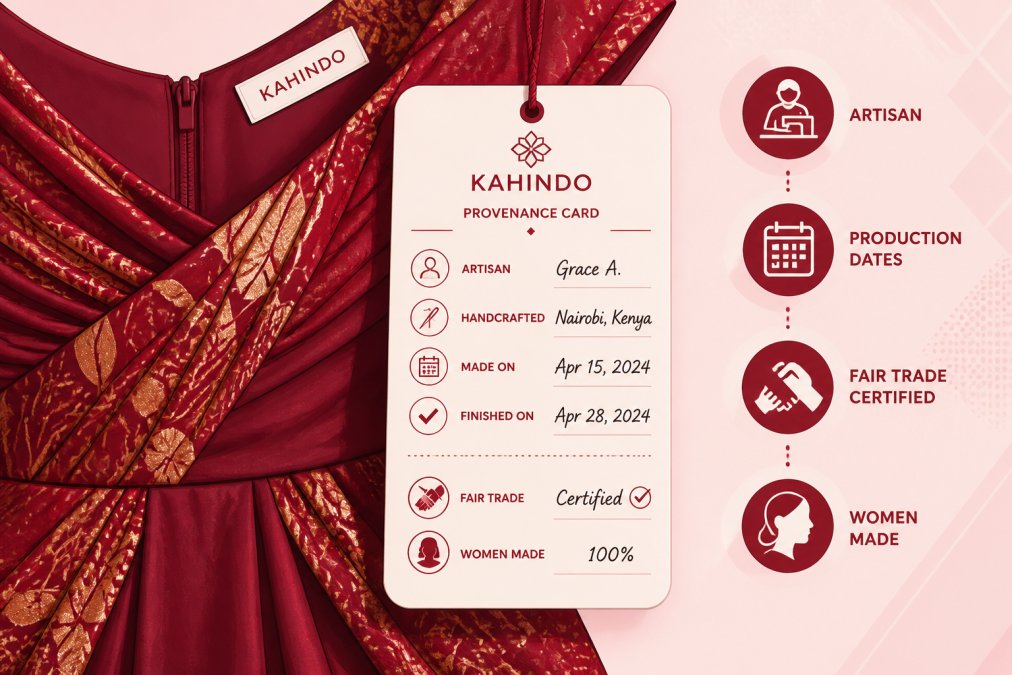
Unlike generic "made in" labels, a comprehensive provenance card documents the entire production lifecycle, typically including the artisan's name and background, specific techniques used, materials sourcing, labor hours invested, and often a personal note from the maker. Some cards incorporate QR codes linking to video content of the artisan at work or extended supply chain documentation.
Provenance cards create accountability. When a brand commits to documenting every production step, shortcuts become impossible. The promise to provide a provenance card forces a business to maintain standards, because those standards will be documented and visible to the customer.
For KAHINDO, each handcrafted piece includes a provenance card documenting the female artisan in Kenya who created it, the labor hours invested, and the fair-trade practices that ensure living wages. This is foundational to the brand's mission of making fashion that "looks good, feels good, and does good."

Verifying Authenticity and Combating Counterfeits
The counterfeit fashion industry costs legitimate brands billions annually. Provenance cards serve as a critical defense mechanism by creating a verifiable chain of custody that counterfeiters cannot easily replicate.
A genuine provenance card includes specific details difficult to fabricate at scale: artisan names tied to actual production records, dated labor hour documentation, material sourcing from traceable suppliers, and often physical or digital signatures. Customers can verify authenticity by cross-referencing documented information with the brand's records.
Some advanced provenance systems use blockchain technology or unique digital tokens to create immutable records. Each garment receives a unique identifier that cannot be duplicated without authorization. A customer can scan a QR code and instantly confirm whether the garment is authentic.
Modern provenance systems shift the economics of counterfeiting by requiring access to the brand's entire production database to replicate convincingly. This fundamental difference makes forgery dramatically more costly and complex than copying physical holograms or security features.
Luxury consumers increasingly expect this verification level. When spending significant money on a statement piece, knowing your purchase is genuine and supports legitimate artisans rather than criminal networks becomes a basic expectation.
Fashion Supply Chain Transparency and Accountability
The fashion industry has historically operated as a black box. A garment might pass through a dozen suppliers, manufacturers, and distributors before reaching a customer, with no documentation of origins or conditions.
Fashion supply chain transparency means making every step visible: documenting textile mills, dye facilities, fiber farms, and labor practices at each stage. It means moving beyond vague claims of "ethical production" to specific, verifiable facts about wages, working conditions, environmental impact, and artisan compensation.
Provenance cards enable this transparency by creating a documented chain from inception to sale. A customer can see the sourcing story: perhaps cotton from a specific supplier in a particular region, low-impact dyeing processes, and construction by specific artisans working under fair-trade conditions.
This documentation requires significant infrastructure. Brands must track materials from origin, maintain relationships with suppliers willing to be named and documented, and ensure every production step is recorded. This complexity is precisely why it carries weight as a signal of genuine commitment to ethical practices.
Generic claims like "ethically made" or "sustainably sourced" without provenance backing have become unconvincing to discerning consumers. Provenance cards flip that dynamic: when a brand documents practices in detail, transparency itself becomes the claim.
Digital Product Passports for Clothing
A digital product passport for clothing is an expanded version of the provenance card concept, a comprehensive digital record that follows a garment throughout its entire lifecycle, from production through ownership changes and potential resale or recycling.
Unlike a static provenance card, a digital product passport is a living document. It can be updated as the garment is worn, cared for, repaired, or resold. It might include care instructions specific to the garment's materials, maintenance history, repair records, and resale information.
The European Union has begun mandating digital product passports for certain goods as part of sustainability regulations. Forward-thinking brands are implementing these systems voluntarily, recognizing they represent the future of consumer accountability and circular economy participation.
From a consumer perspective, a digital product passport answers practical questions: How should I care for this garment to maximize its lifespan? What repairs has it undergone? What materials does it contain for eventual recycling?
Digital passports enable better circular economy participation. As fashion moves toward resale and rental models, transferring complete production and care history to the next owner becomes increasingly valuable. A dress with comprehensive documentation commands higher resale value than an identical dress without it.
Building Consumer Trust Through Documented Craftsmanship
Consumer trust in fashion brands has eroded significantly. Too many companies have made sustainability claims they couldn't back up, too many have been caught using exploitative labor practices. In this environment, documented craftsmanship becomes a rare and valuable differentiator.
When a brand provides a provenance card with every garment, it promises: we stand behind this product so completely that we're willing to document exactly who made it and how. That promise carries weight. It says the brand has nothing to hide.
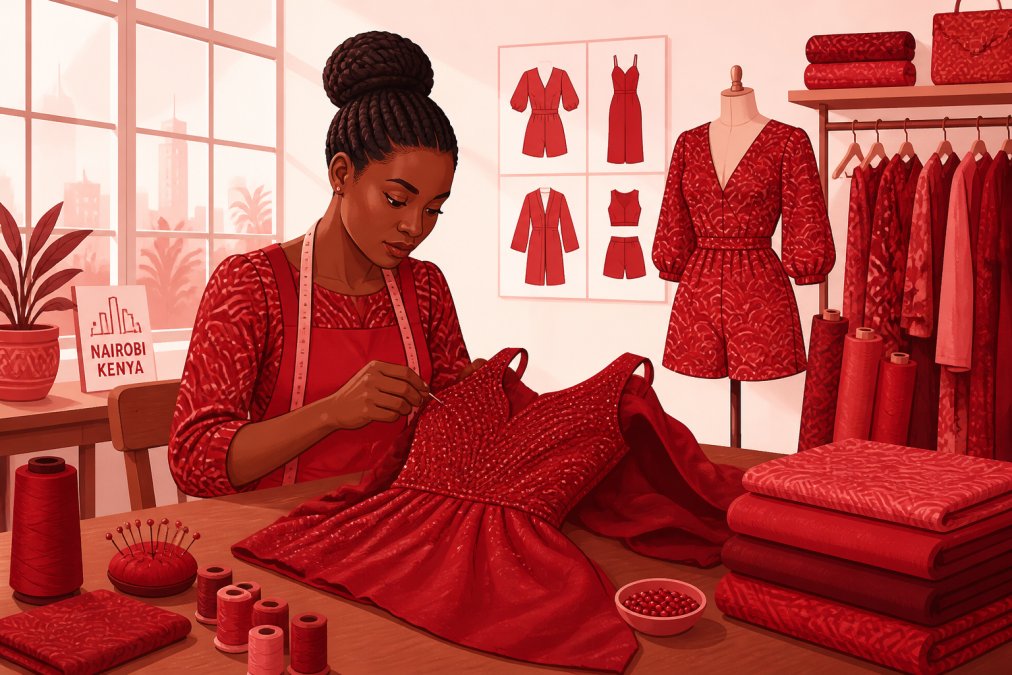
KAHINDO's approach exemplifies this. Every piece includes documentation of the specific female artisan in Kenya who created it, the labor hours invested, and the fair-trade practices that ensure she received a living wage. That's verifiable fact, not a marketing claim.
This transparency builds trust by demonstrating competence (the brand has systems to track production), values (documentation is prioritized), and accountability (practices will be visible and scrutinized).
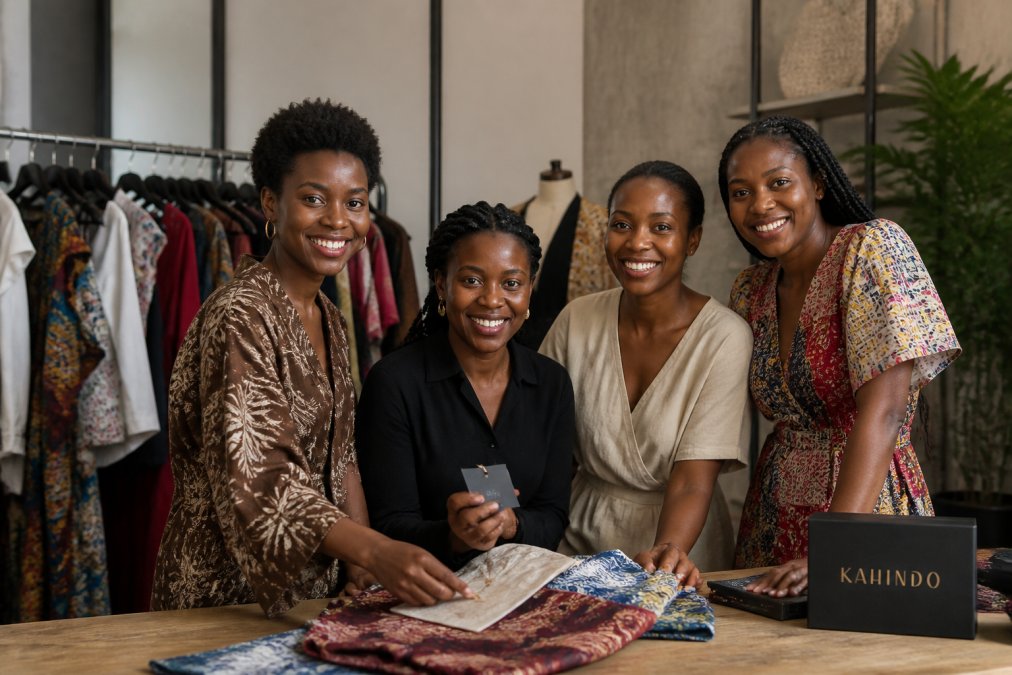
For artisanal producers, documented craftsmanship becomes a competitive advantage. Mass-produced garments cannot offer this personalization and documentation at scale. For makers working with small teams of skilled artisans, provenance documentation transforms production into storytelling. Each garment becomes a narrative of skill, care, and human connection.
| Element | Impact on Trust | Verification Method |
|---|---|---|
| Artisan name and background | Humanizes production | Cross-reference with brand records |
| Labor hours documented | Demonstrates fair compensation | Check against production timelines |
| Materials sourcing | Proves supply chain integrity | Verify supplier relationships |
| Production techniques described | Shows expertise and care | Compare against industry standards |
| Fair-trade certification | Confirms ethical practices | Third-party verification |
Resale Value and Long-Term Investment Impact
A garment with comprehensive provenance documentation holds its value differently than an identical garment without it. This economic reality is reshaping how consumers think about fashion investment.
When reselling a designer handbag or luxury dress, potential buyers want assurance of authenticity. A provenance card eliminates doubt and provides a narrative justifying its price. Buyers are willing to pay more for secondhand items when they can see complete production stories and know items were made ethically and with care.
The resale fashion market has grown substantially. Platforms like Vestiaire Collective, The RealReal, and Depop have created liquid secondary markets for luxury fashion. Items with provenance documentation command premiums.
This economic incentive changes consumer behavior. When shoppers understand that a provenance card increases resale value, they're more likely to preserve documentation, care for the garment, and eventually resell rather than discard. This shift toward longevity and resale participation is fundamentally better for the environment.
For luxury occasional wear, wedding guest dresses, bridesmaid dresses, gala attire, this dynamic is particularly relevant. These garments are often worn once or twice, then stored. With provenance documentation, they become resaleable assets. A woman who purchases a KAHINDO dress for a wedding can wear it, then confidently resell it knowing the provenance card adds value.
Garments made with care and documented craftsmanship tend to age better. Materials hold up. Construction endures. When a provenance card documents specific techniques and labor hours invested, it implicitly documents quality. Buyers recognize and value this accordingly.
How to Use Provenance Information When Shopping
Understanding provenance documentation transforms how you evaluate fashion purchases. Rather than relying solely on brand reputation or visual appeal, you can make decisions based on verifiable information about production, materials, and impact.
When shopping for investment pieces, request provenance documentation before purchasing. For brands like KAHINDO that include provenance cards with every garment, this is standard. For other brands, asking about provenance is increasingly common, and brands providing detailed documentation will stand out.
Examine what the provenance card actually documents. A comprehensive card should include: the artisan's name and background, specific production techniques, materials sourcing, labor hours invested, and evidence of fair-trade or ethical practices. Vague information signals weak documentation practices.
Use provenance information to compare options. When deciding between similar dresses at different price points, the provenance card can justify the difference. A dress costing more but documenting fair wages, artisanal craftsmanship, and sustainable materials represents a better investment than a cheaper dress made under undocumented conditions.
Preserve provenance documentation as you would any certificate of authenticity. When you eventually resell the garment, documentation will increase its value and ease the sale. Buyers specifically seek items with complete provenance information.
Consider the artisan story as part of your purchase. Provenance cards often include information about the maker, their background, and techniques. This narrative transforms a garment from an anonymous product into a connection with a specific person, increasing satisfaction and your willingness to care for it long-term.
For conscious consumers, provenance information enables alignment between values and purchases. If supporting female economic empowerment matters to you, you can verify through provenance documentation that your purchase actually does. If environmental impact concerns you, provenance cards documenting sustainable materials and low-impact production let you make informed decisions.
Garment provenance cards represent a fundamental shift in how luxury fashion communicates value and accountability. They transform production from something hidden behind marketing language into something visible and verifiable. For brands committed to ethical practices and consumers who care about where their clothing comes from, provenance documentation has become essential.
KAHINDO's approach exemplifies this commitment. Every handcrafted piece includes documentation of the female artisan who created it, ensuring transparency is foundational rather than a marketing feature. When you invest in a KAHINDO dress, you're purchasing a documented story of craftsmanship, fair-trade production, and economic empowerment. That provenance card transforms your purchase into something with lasting value, both financially and ethically. Explore KAHINDO's collection and experience the difference that documented craftsmanship makes.
Frequently Asked Questions
What information is typically included on a garment provenance card?
A provenance card documents the garment's complete story: the artisan or artisan collective who created it, the number of labor hours invested, the textile origin and materials used, production location, and often the design inspiration or cultural heritage behind the piece. For KAHINDO pieces, this includes details about the female artisans in Kenya who handcrafted your garment and the fair-trade practices that ensured they received living wages. This transparency allows you to understand exactly where your garment came from and who benefited from your purchase.
How do garment provenance cards help verify authenticity?
Provenance cards function as anti-counterfeit fashion technology by creating a documented record tied to a specific garment. Each card includes unique identifiers, artisan signatures, and production details that counterfeiters cannot easily replicate. This digital and physical documentation makes it significantly harder for fake items to enter the market, protecting both consumers and legitimate brands. When you purchase a garment with a verified provenance card, you have proof of its genuine origin and craftsmanship.
Does a provenance card affect the resale value of a dress?
Yes. A provenance card significantly increases resale value by providing documentation of authenticity, craftsmanship quality, and ethical production. Buyers in the secondhand luxury market prioritize verified pieces with clear provenance because they can confirm the garment's legitimacy and story. A dress with a provenance card from an artisan collective or heritage brand commands higher resale prices than unmarked alternatives. This makes provenance cards a practical investment benefit, not just a feel-good certificate.
Can I verify that fair-trade claims on a provenance card are actually true?
Provenance cards create accountability by documenting specific details: artisan names, production locations, labor hours, and fair-trade certifications. You can verify these claims by researching the artisan collective or production partner listed on the card. Brands like KAHINDO provide additional transparency through their sourcing partnerships and third-party fair-trade documentation. The card itself serves as a starting point for verification, reputable brands back up their provenance claims with verifiable production data and accessible supply chain information.
This article was written using GrandRanker