

Handmade vs Mass Produced Formal Wear: A 2026 Guide
Table of Contents
- Handmade vs Mass Produced Formal Wear: The Core Differences
- Handmade vs. Machine-Made Clothing: Construction, Craftsmanship, and Detail
- Formal Dress Materials: Fabric Quality and Material Selection
- Custom Evening Gowns: Fit, Sizing, and Alterations
- Cost, Durability, and Long-Term Value
- Ethical Occasionwear: Labor, Sustainability, and Transparency
- How to Choose: A Decision Framework by Wearer and Event
- Conclusion: Making the Right Call for Your Occasion
- Frequently Asked Questions
Last Updated: October 6, 2026
Handmade vs Mass Produced Formal Wear: The Core Differences
The choice between handmade versus mass produced formal wear comes down to construction method, scale, and what you value. Handmade pieces are cut and sewn by individual artisans in small batches; mass produced formal wear is manufactured in bulk using standardized patterns and assembly lines.
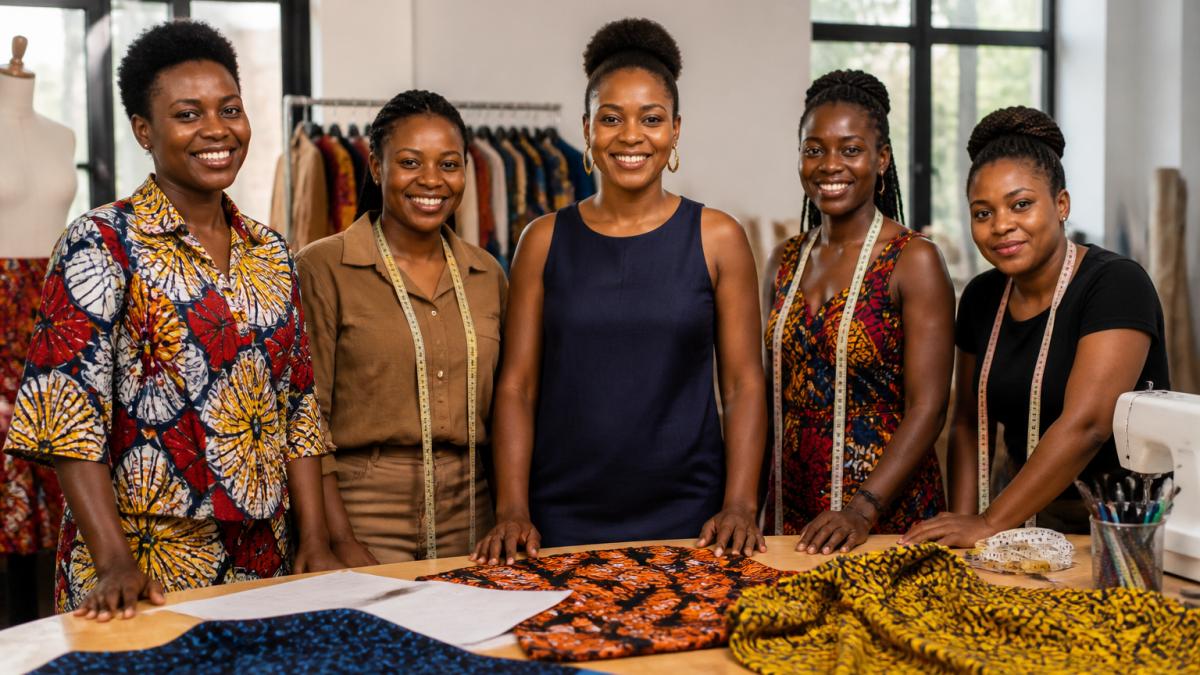
At KAHINDO, we design every piece in New York and handcraft it with female artisans in Kenya. The differences are still practical and measurable.
How Construction and Production Scale Diverge
Mass production cuts many layers at once with a mechanical blade, then divides sewing among stations where each operator repeats one step hundreds of times a day, yielding speed and consistency.
Handmade construction moves differently: a single artisan or small team handles the garment from cut to finish, adjusting seams as the fabric behaves. Small scale is why handcrafted garments take longer and cost more upfront.
What Handmade and Mass Produced Actually Mean
Handmade describes a garment cut, sewn, and finished largely by hand in limited quantities, often by named artisans in small workshops. Mass produced describes clothing manufactured in bulk on assembly lines, where identical units follow one fixed pattern.
The line between them is blurrier than marketing suggests. As Vogue's examination of what handmade really means points out, no garment is made solely by a machine, and verified handcrafted techniques sit on a spectrum rather than a binary.
Handmade vs. Machine-Made Clothing: Construction, Craftsmanship, and Detail
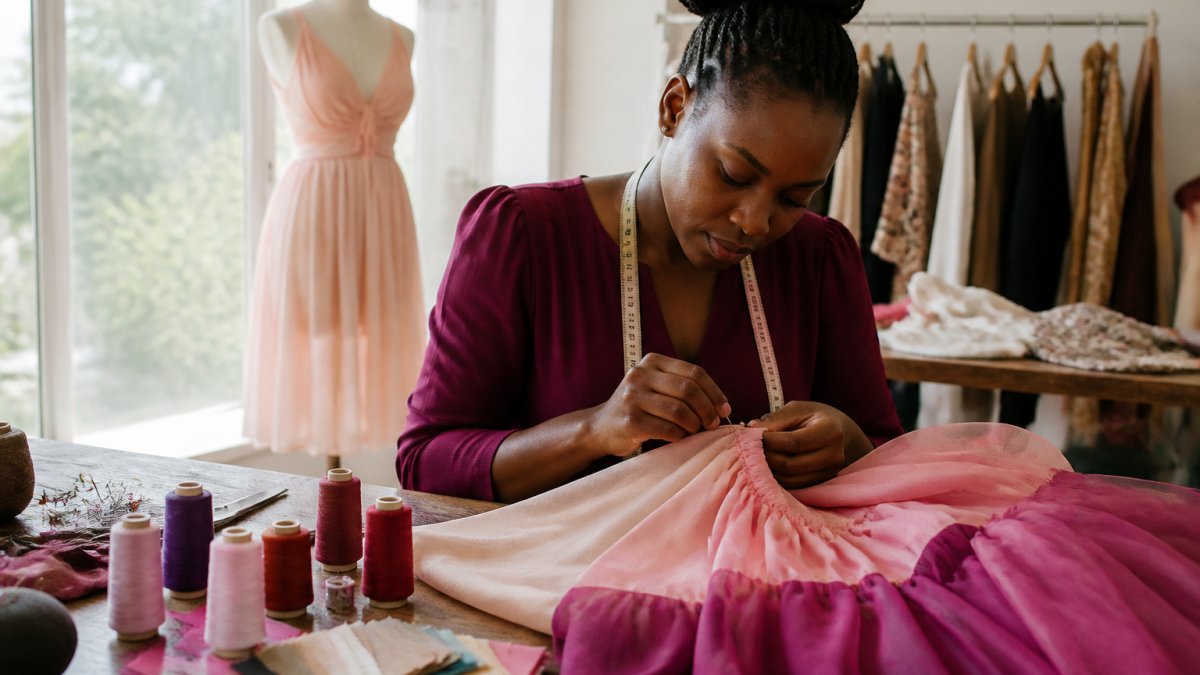
Handmade and machine-made clothing differ most in how seams are finished, how patterns are matched, and how much a maker can adjust mid-construction.
Formal Dress Materials: Fabric Quality and Material Selection
Fabric quality determines how a formal dress drapes, photographs, and holds up over years of wear.
Handmade formal wear often uses smaller fabric runs, allowing artisan dyeing and unique color variation. Slow-bath dyeing produces gradients that cannot be replicated exactly, so no two pieces are identical.
| Factor | Handmade Formal Wear | Mass Produced Formal Wear |
|---|---|---|
| Fabric runs | Small, often artisan-dyed | Large, standardized |
| Color consistency | Unique variation per piece | Uniform across units |
| Material selection | Curated per design | Chosen for bulk availability |
| Best for | Statement pieces, one-of-a-kind looks | Coordinated group orders, budget |
Neither approach is wrong. If you need six bridesmaid dresses in an identical shade, uniform fabric has real advantages.
Custom Evening Gowns: Fit, Sizing, and Alterations
Fit is where custom evening gowns and mass produced formal wear diverge most. A mass produced dress is built to a standard size chart, fitting the average body reasonably well and everyone else approximately.
Alterations close the gap either way. Most formal wear needs some tailoring, whether off a rack or from a workroom; the difference is how much.
- Mass produced: Budget for hemming, taking in the waist, and adjusting straps. Standard sizes assume an average height and proportion.
- Handmade or custom: Fewer alterations are typically needed because the garment is built closer to your measurements, though final fitting tweaks still happen.
A common mistake is assuming handmade means perfect fit out of the box. It does not.
Cost, Durability, and Long-Term Value
Handmade formal wear costs more upfront, and that premium is real. The question is whether it pays back over time. For a garment worn once and forgotten, it may not. For an investment piece worn across multiple events, the math changes.
Upfront Price and What Drives It
Most shoppers arrive with one number in mind: the price tag. That number hides four cost drivers, each behaving differently depending on how the garment was made.
| Cost driver | Handmade or custom | Mass produced |
|---|---|---|
| Labor hours per garment | Often measured in dozens of hours for a fully hand-finished gown or tuxedo | Typically a fraction of that, split across assembly stations |
| Fabric and trim | Curated per design, often small runs or artisan-dyed | Bought in bulk for uniform color and availability |
| Pattern and fit work | Built or adjusted to measurements before cutting | Cut from a fixed size chart, no individual pattern |
| Alterations | Fewer needed, but final fitting tweaks still happen | Commonly needed: hem, waist, straps, sleeves |
Because those drivers stack, the gap between a mass produced formal dress and a handmade equivalent is usually measured in multiples, not dollars.
What pushes a handmade quote higher, specifically:
- Labor hours. Hand sewing, hand-finished hems, and hand-set seams take far longer than machine assembly. A maker who spends a full day on finishing is not being slow; that is the work.
- Small production runs. Artisans cannot spread fixed costs across thousands of units, so each garment carries its own setup cost.
- Material sourcing. Curated, artisan-dyed, or limited-run fabrics cost more per yard and often come with minimum order constraints.
Mass produced formal wear keeps costs down through scale: bulk fabric buying, assembly-line speed, and standardized sizing that needs no individual attention.
Garment Lifespan and Cost Per Wear
Durability depends on construction and fabric as much as on how the garment was made. Well-made formal wear, handmade or not, lasts longer than fast-fashion equivalents. Cost per wear is the honest comparison: divide the price by the number of times you realistically expect to wear it.
Run the math on two scenarios:
- A mass produced gown at a few hundred dollars, worn once, costs that full amount per wear.
- A handmade gown at roughly three times that price, worn to three events over five years, lands at a comparable or lower cost per wear, and it is still in your closet for the fourth event.
That calculation favors handmade when you plan to rewear, and mass produced when the garment is truly single-use or so trend-driven you would not wear it again anyway.
A few practical factors change the outcome:
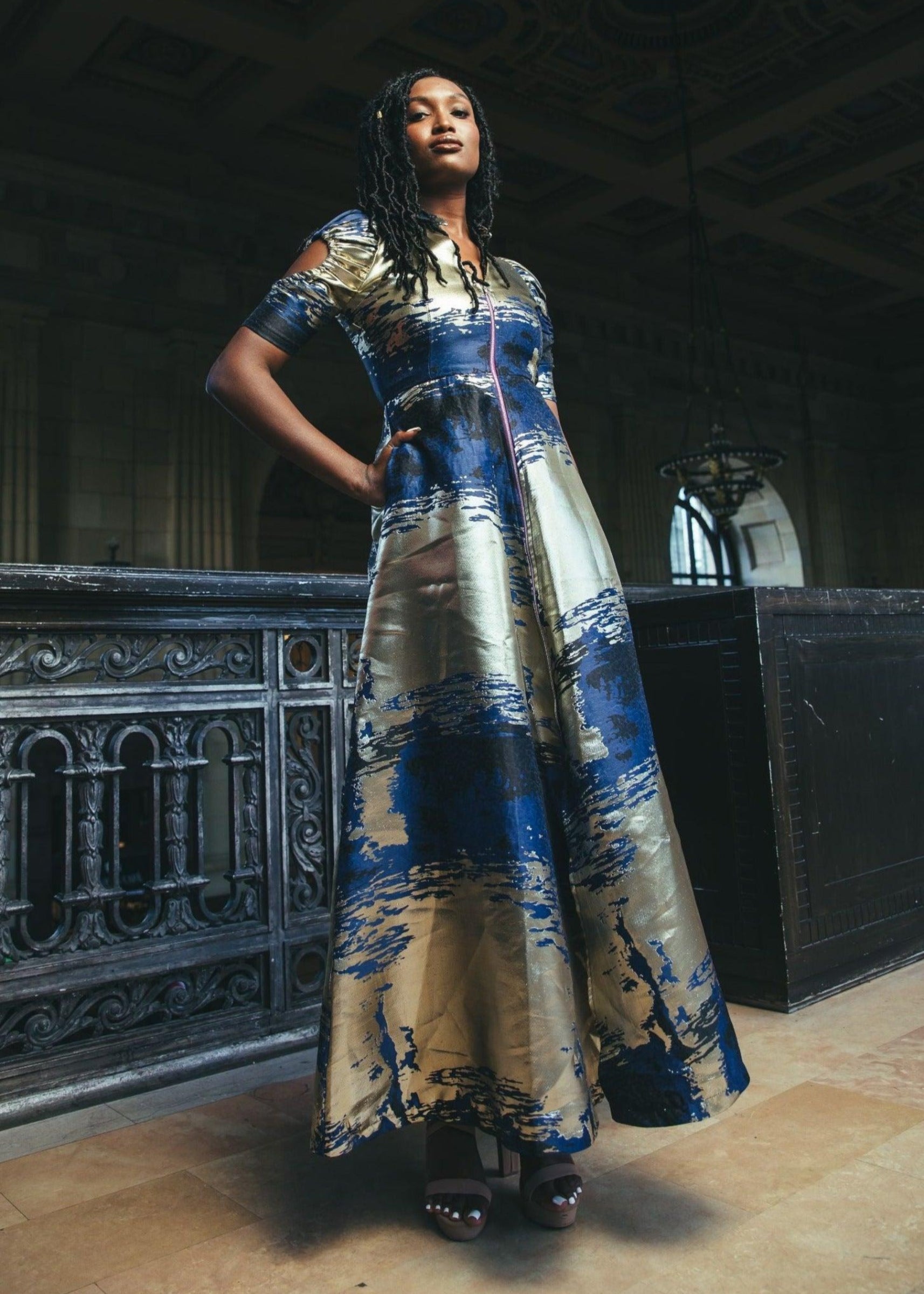
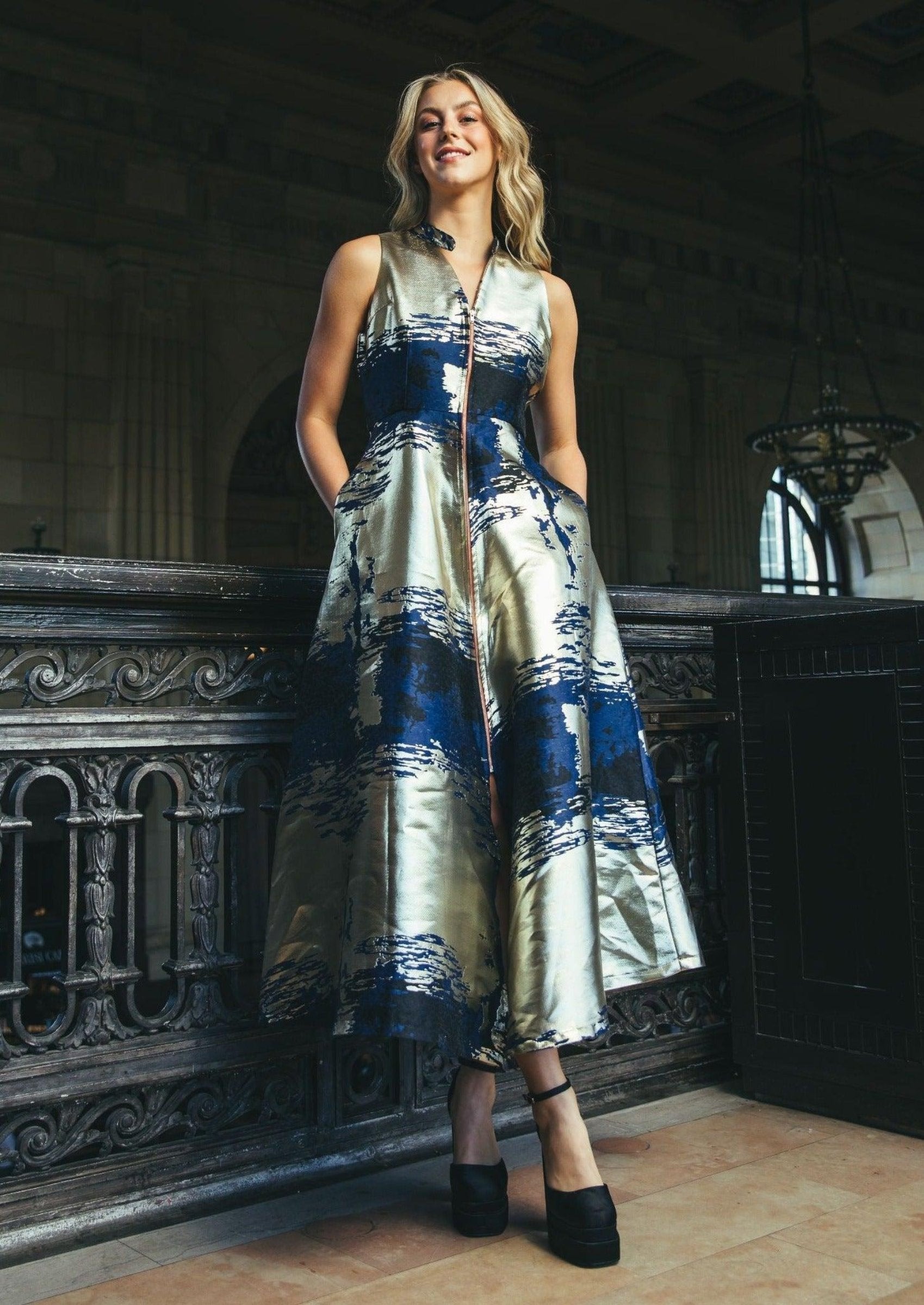
Burgundy Gold Metallic Jacquard Halter Pencil Dress →
- Rewear count. Be honest about it. Most people overestimate how often they will wear a formal piece.
- Alteration costs. A mass produced gown that needs hemming, waist work, and strap adjustments adds to its true cost. A custom piece usually needs less, though not zero.
- Care and repair. Hand-finished seams and generous seam allowances can often be let out or repaired. Glued or narrowly finished seams in fast production may not survive a second alteration.
Ethical Occasionwear: Labor, Sustainability, and Transparency
Ethical occasionwear is formal wear produced with fair labor practices, reduced waste, and traceable supply chains. The label matters less than the proof behind it.
Mass production can be ethical, and handmade can be opaque.
Questions worth asking before you buy:
- Who made this garment, and can the brand name them?
- What does the brand pay its makers, and is it a living wage?
- How much waste does the production process create?
Handmade production tends to generate less waste per garment because pieces are cut to order rather than in bulk. That said, small-batch does not automatically mean sustainable.
How to Choose: A Decision Framework by Wearer and Event
The right choice depends on the wearer, the event, and how often you plan to rewear the piece. There is no universal winner between handmade versus mass produced formal wear, only a better fit for your situation. What most comparisons skip is the timeline, which often decides the purchase.
Start With the Calendar, Not the Label
Work backward from the event date. Handmade and custom garments need production and fitting time that mass produced pieces do not, and a beautiful commission ordered too late is still a dress you cannot wear.
A common pattern for custom and handmade formal wear:
- Consultation and measurements. Usually a single session, in person or virtual, where measurements, fabric, and silhouette are settled.
- Production. Weeks, not days, for a handcrafted garment. Beading, hand finishing, and artisan dyeing add time on top.
- First fitting. Often several weeks before the event, with adjustments identified and sent back to the workroom.
Mass produced formal wear compresses this dramatically: order a standard-size gown or tuxedo and have it within days, then book a local tailor. The trade-off is that alterations are on you to schedule, and a busy tailor in wedding season may need a week or two of lead time.
Match the Option to the Wearer
- If you need identical dresses for a large bridal party on a tight timeline: Mass produced, coordinated sizing wins on speed and consistency. Order all sizes at once, then budget for a group alteration appointment.
- If you have unusual proportions or a hard-to-fit body: Custom or made-to-measure is usually the better starting point. Standard size charts assume an average height and proportion, and the further you sit from that average, the more alterations a mass produced garment needs.
- If you want a statement piece for a wedding, gala, or milestone event: Handmade formal wear gives you uniqueness, better fit potential, and a garment with a story.
A Fair Look at Fit and Alteration Costs
This is where the comparison gets lopsided in ways shoppers do not expect.
But fewer is not zero. A common mistake is assuming handmade means perfect fit out of the box.
The fair way to compare is total cost of fit:
- Mass produced: Add the price of hemming, taking in the waist, adjusting straps, and possibly shortening sleeves. Those costs are real and often overlooked.
- Handmade or custom: The fit work is usually built into the price, but confirm whether fittings and final adjustments are included or billed separately.
When you add alteration costs to a mass produced garment, the gap between the two options narrows. It rarely closes entirely, but it is smaller than the sticker prices suggest.
The Reuse Question
Ask one more question before deciding: will you wear this again? If yes, a handmade or custom piece usually earns its premium over time. If no, and the budget is fixed, mass produced plus good alterations is a defensible choice.
For wedding guest dresses, bridesmaid looks, and mother-of-the-bride gowns, we build pieces meant to be worn more than once. Our ombré organza styles, including the Strapless Ombré Organza Mini Dress and the Double Collar Ombré Organza Midi Dress, are designed for exactly that kind of repeat wear.


Conclusion: Making the Right Call for Your Occasion
The hardest part of this decision is separating the romance of "handmade" from what you actually need for the event in front of you.
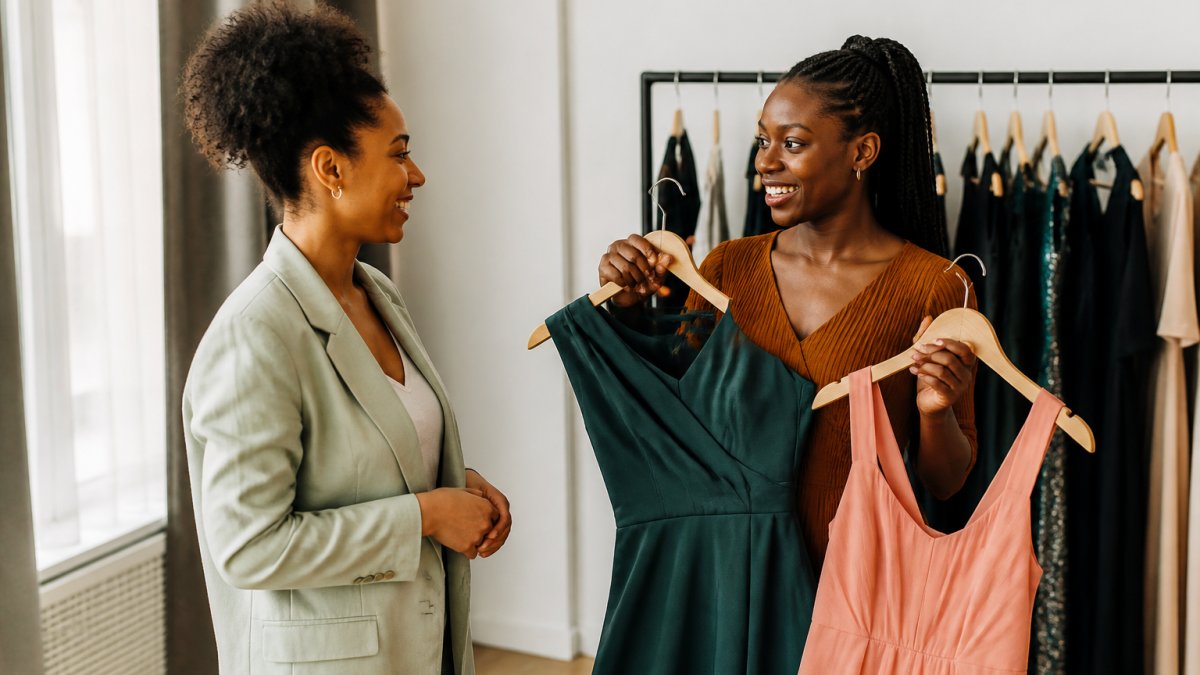
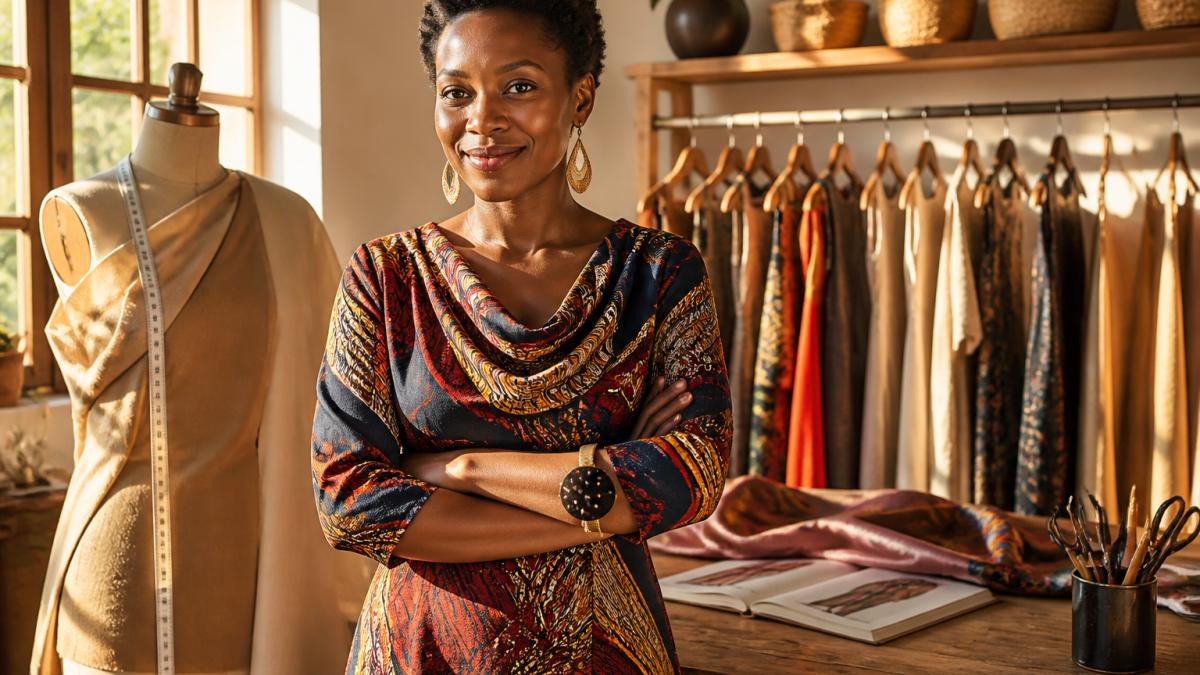
At KAHINDO, we make the case for the second woman: singular, ethically made pieces with real craftsmanship behind them.
If you want a formal piece that looks good, feels good, and does good, explore the KAHINDO collection and find the one that fits your occasion.
Frequently Asked Questions
What is the difference between handmade and mass-produced formal wear?
Handmade formal wear is cut, sewn, and finished by individual artisans, often in small batches or to order, so no two pieces are identical. Mass-produced formal wear is cut and assembled on a factory line in bulk, using standardized patterns and machine-driven processes. The practical differences show up in construction detail, fabric handling, fit, lead time, and price. A 2021 Springer study modeled why firms choose hand production: when consumers are willing to pay a handmade premium, hand production becomes the better business choice, not necessarily because the garment is inherently superior.
Is handmade formal wear better quality than mass-produced clothing?
Not automatically. Research published in the Springer study explicitly allows for machine production to be superior in some cases. Quality depends on the specific maker, the fabric chosen, and the finishing techniques used, not the label alone. Vogue notes that no garment is made solely by a machine, which complicates any simple handmade-versus-mass-produced comparison. The more useful question is whether the maker's construction methods, material selection, and attention to detail match what you need for the occasion.
Does handmade formal wear fit better than mass-produced clothing?
Handmade and custom evening gowns are typically cut to your measurements or a specific fit block, which reduces the need for major alterations. Mass-produced formal dresses follow standardized sizing, so most wearers need hemming, taking in, or strap adjustments. That said, handmade garments still benefit from a fitting, especially for structured silhouettes. If you order handmade, confirm the maker's size chart and alteration policy before you buy, and budget time for a local tailor if needed.
Is custom formal wear worth the extra cost?
It depends on how often you will wear the piece and what you value. Handmade production involves more labor hours, smaller fabric runs, and often more expensive material selection, which drives the upfront cost higher than bulk production. The payoff is in fit, uniqueness, and garment lifespan. If you are attending multiple events or want a piece you can rewear for years, the cost per wear can be lower than buying several cheaper dresses. If it is a one-time event, a rental or off-the-rack option may make more financial sense.
What material are most formal dresses made of?
Formal dress materials vary widely, but common choices include polyester blends, silk, organza, jacquard, and satin. Mass-produced formal wear often uses polyester and spandex blends for durability and lower cost. Handmade and custom evening gowns may use the same base fibers but with more expensive finishes, double-layer construction, or specialty weaves. For example, a metallic jacquard dress might blend polyester with metallic thread for a luminous effect, while an ombré organza gown uses double-layer threaded fabric for depth and drape. Fabric quality and material selection affect how the garment moves, photographs, and holds up over time.