

Why Buy Handmade Artisan Dresses: 2026 Guide
Table of Contents
- The Real Cost of Fast Fashion: Why Artisan Dresses Are the Smarter Buy
- What Makes Handmade Artisan Dresses Different
- The Impact of Slow Fashion on the Environment
- How to Identify High-Quality Artisan Clothing
- Best Investment Dresses for Weddings: What to Look For
- How Handmade Dresses Support Artisans and Local Economies
- Caring for Handcrafted Dresses: A Practical Guide
- Frequently Asked Questions
Last Updated: September 10, 2026
The Real Cost of Fast Fashion: Why Artisan Dresses Are the Smarter Buy
The global handicraft market is projected to reach $1.34 trillion in 2026, growing at 10.2% annually through 2034 (Inspire Product 2026 handicraft market analysis). That number tells you something important: shoppers are actively moving away from mass-produced clothing and toward pieces with a maker behind them. If you're wondering why buy handmade artisan dresses, the answer starts with a simple shift in how you think about price. Fast fashion wins on the sticker tag and loses everywhere else. This guide from KAHINDO breaks down the real math, the environmental case, and the practical checks that separate genuine artisan work from marketing.
The numbers behind that shift are hard to ignore. The Arts and Crafts Market is valued at USD 50.7 billion in 2026 and is projected to reach USD 67.39 billion by 2030, growing at a 7.4% CAGR (Research and Markets Arts and Crafts Market Report). Meanwhile, 100 billion garments are produced globally every year (Dutch Label Shop Fashion Statistics), most of them designed to be worn a handful of times.
Here's what most buying guides get wrong: they treat handmade clothing as an emotional purchase. It isn't. It's a durability and cost-per-wear calculation that happens to also look better.
What Makes Handmade Artisan Dresses Different
Artisan dresses are garments cut, sewn, and finished by individual makers or small co-operatives rather than assembly lines, which changes construction quality at every stage. The difference shows up in fabric weight, seam reinforcement, and how the garment holds its shape after repeated wear.
Craftsmanship You Can Feel: Construction, Fabric, and Finish
In practice, the distinction comes down to three things:
- Material selection: Artisan makers tend to work with natural fibers and hand-dyed textiles rather than synthetic blends chosen for cost.
- Reinforced construction: Double-stitched tension points and finished seams resist the pulling that breaks down fast-fashion garments.
- Finishing by hand: Hems, closures, and linings get individual attention that a production quota doesn't allow.
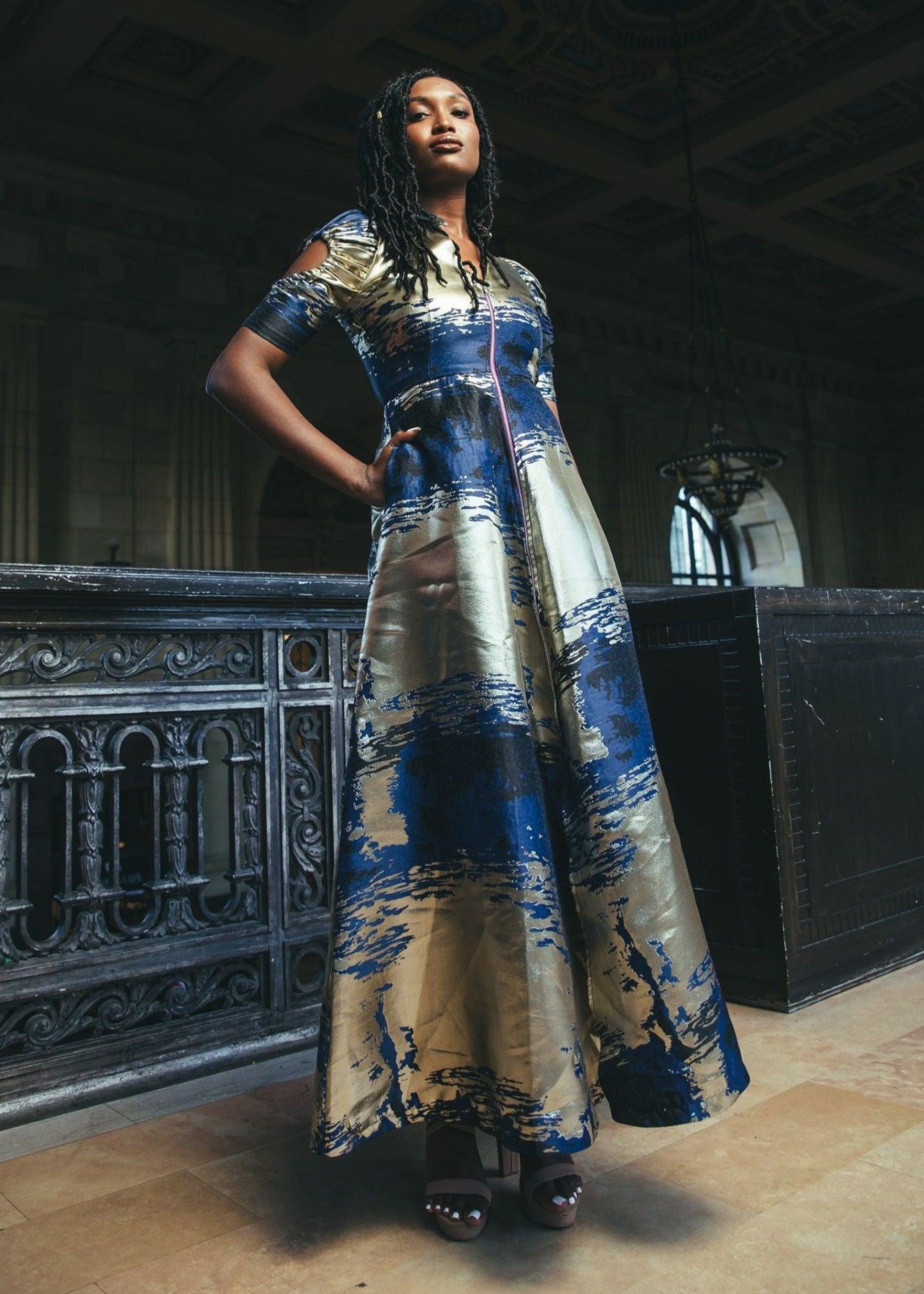
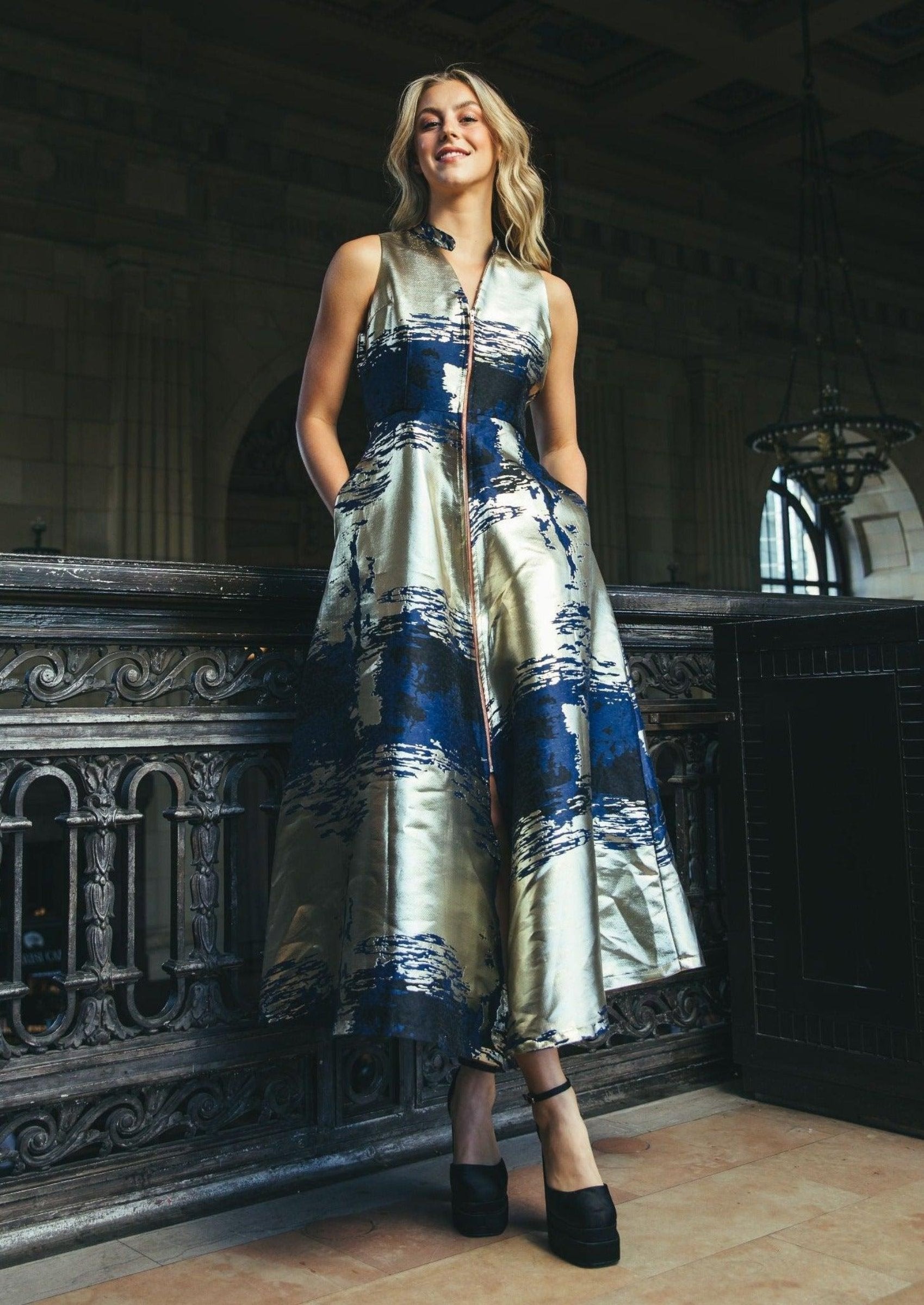
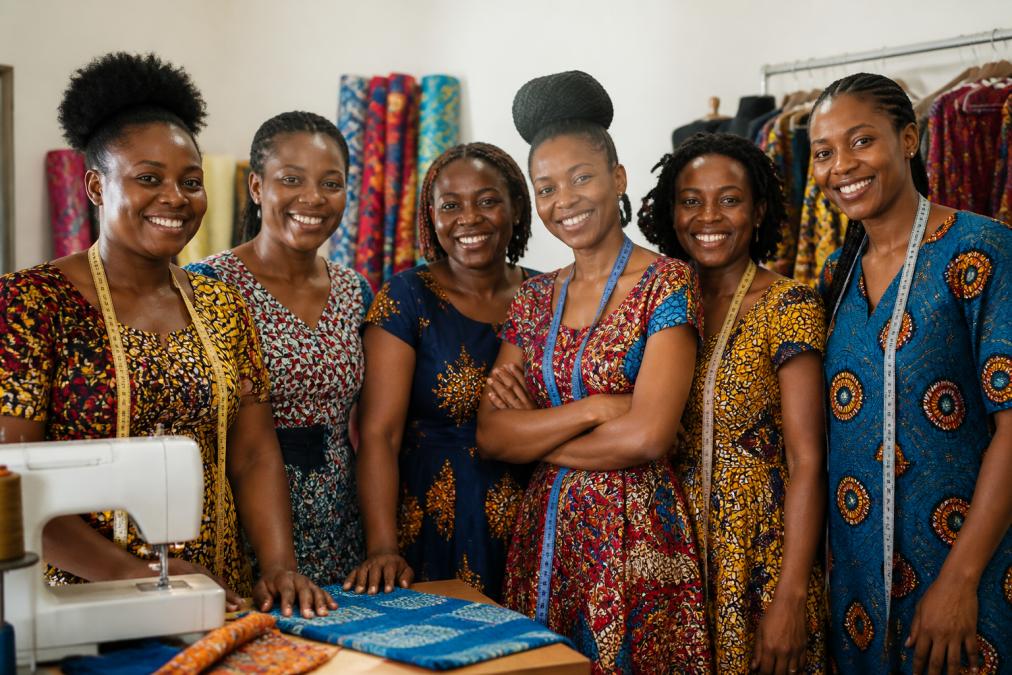
KAHINDO's pieces, for example, are handcrafted by female artisans in a Nairobi co-operative using original prints rooted in Congolese textile traditions. Each garment ships with a provenance card documenting the artisan and the labor hours behind it.

The Impact of Slow Fashion on the Environment
Slow fashion reduces environmental harm primarily by producing fewer, longer-lasting garments instead of high volumes of disposable ones. That single change cuts textile waste, water use, and the carbon footprint tied to constant replacement.
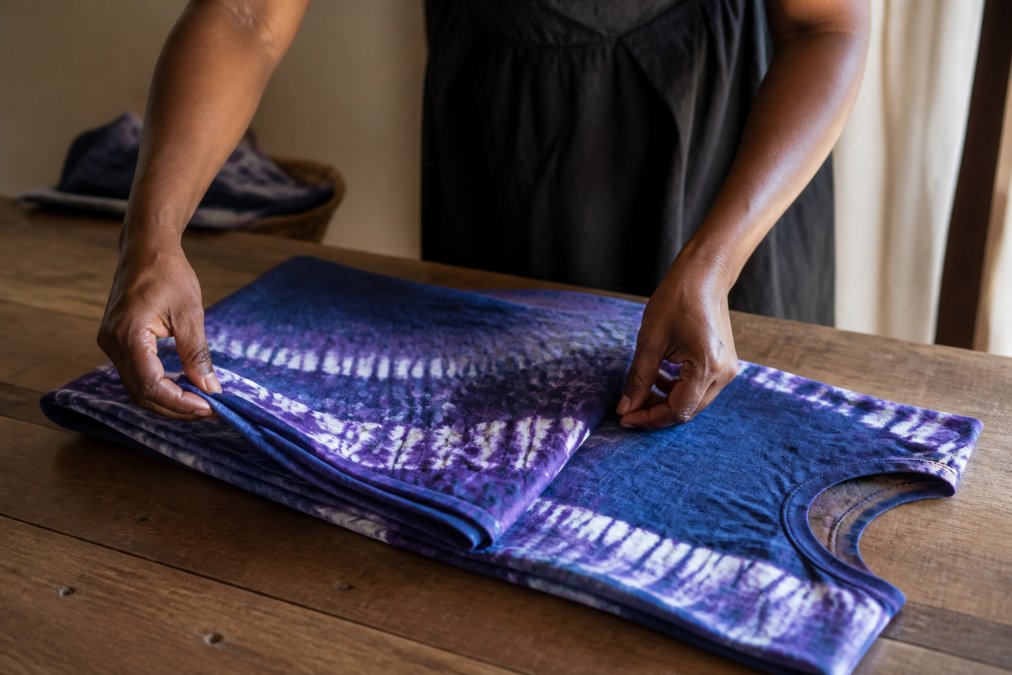
Traditional craftsmanship also serves as a symbol of social and cultural identity, standing in direct contrast to the logic of fast fashion (Salve Regina University study on handmade versus fast fashion). Slow-bath dyeing, the technique behind KAHINDO's non-replicable gradients, uses less water than industrial dye processes and produces no two identical pieces.
The trade-off is real, though. Scaling handmade production is genuinely harder than mass-market manufacturing, and that constraint is exactly why artisan goods cost more per unit (Rural Handmade analysis of artisan scaling). You're paying for a production model that can't be rushed.
How to Identify High-Quality Artisan Clothing
Genuine artisan clothing is identifiable through verifiable production details, not aesthetic cues alone. Greenwashed brands borrow the language of craft without the supply chain to back it up, so you need checks that marketing copy can't fake.
Five Checks Before You Buy
- Ask for provenance. A real maker can name the artisan, the region, and the hours involved. KAHINDO's provenance cards do exactly this.
- Inspect the seams. Look for double-stitched stress points and clean interior finishing.
- Check the fiber content. Natural fibers with a stated origin beat vague "premium blend" labels.
- Look for dye variation. Hand-dyed fabric shows subtle, non-repeating gradients. Perfectly uniform color often means industrial printing.
- Read the fair-wage claim carefully. Vague "ethical production" statements mean little without specifics about who gets paid and how much.
| Signal | Genuine Artisan | Greenwashed |
|---|---|---|
| Maker named | Yes, with region | No, vague "artisans" |
| Fabric origin | Stated country/technique | "Premium blend" |
| Dye pattern | Unique variation | Uniform, printed |
| Wage disclosure | Specific practices | Generic ethics claim |
| Provenance | Documented per garment | None |
Best Investment Dresses for Weddings: What to Look For
The best investment dresses for weddings are pieces built for repeat wear across multiple occasions, not single-event statements. Fabric durability, silhouette versatility, and construction quality matter more than trend alignment. But there's a fourth factor most buying guides ignore entirely: fit. A dress that doesn't fit your body properly won't get worn a second time, no matter how well it's made.

The Fit Advantage Handmade Offers
Mass-market occasionwear is cut to a standard size chart that averages body proportions across a population. If your shoulders, torso length, or hip-to-waist ratio fall outside that average, you're stuck choosing between a dress that gaps at the bust, pulls at the hip, or needs alterations that can cost as much as the garment itself. Handmade and made-to-measure production works differently: the maker can adjust pattern pieces to your measurements before the fabric is cut, which is a structural advantage, not a luxury add-on.
For weddings specifically, that means:
- Timeless silhouettes that work for a gala, a rehearsal dinner, and an evening event
- Vibrant, original prints that read as intentional rather than seasonal
- Natural fibers that hold up to repeated cleaning
- Adjustable or made-to-measure construction so the dress fits the first time and stays wearable as your body changes
KAHINDO designs occasionwear for exactly this use case, including wedding guest dresses, bridesmaid dresses, and mother-of-the-bride gowns. The Simien Dress, a hand-dyed Adire cotton midi at $75, is the kind of piece that moves from one event to the next without looking dated.

Cost-Per-Wear Math: The Numbers Behind the Price Tag
Cost per wear is calculated by dividing a garment's price by the number of times you wear it. A $75 dress worn 15 times costs $5 per wear. A $40 fast-fashion dress worn twice costs $20 per wear. The handmade dress is four times cheaper per outing, even though it costs nearly twice as much up front.
The math gets more favorable the longer you keep the garment. A $75 dress worn 30 times over three years lands at $2.50 per wear. A $40 dress replaced every season, four purchases over the same three years, costs $160 total and still delivers a worse experience each time. That is the core of the investment argument: the higher upfront price is the entry fee, not the final number.
A few practical variables change the calculation:
- Occasion frequency. A wedding-guest dress you can wear to rehearsal dinners, showers, and evening events earns its cost faster than a one-event gown.
- Alteration costs. Mass-market dresses often need $30-$80 in tailoring to fit properly. Made-to-measure pieces usually don't.
- Cleaning and repair. Natural fibers that can be hand-washed and mended extend the wear count; synthetics that pill or fade shorten it.
- Resale or hand-down value. Well-constructed artisan pieces hold enough value to resell or pass on, which mass-market occasionwear rarely does.
That math is why handmade clothing is increasingly positioned as a long-term investment, driven by lower cost-per-wear from reinforced construction and durable natural fibers (Yiume 2026 cost-per-wear analysis).
How Handmade Dresses Support Artisans and Local Economies
Handmade dress production supports artisans through direct wages, skill preservation, and economic reinvestment in maker communities. But the mechanism matters more than the slogan. When a garment is made by a named artisan or a small co-operative rather than an anonymous assembly line, the money follows a shorter path: fewer intermediaries, more of the retail price reaching the person who actually cut and sewed the fabric.
KAHINDO's model is built on this structure. Every piece is designed in New York and handcrafted by female artisans in Kenya, with fair-trade production as a founding principle rather than a marketing layer. The brand's mission, "Fashion That Looks Good, Feels Good & Does Good," reflects that arrangement. Each garment ships with a provenance card documenting the artisan and the labor hours behind it, so the connection between buyer and maker is documented rather than implied.
Why the Wage Structure Is Different
In a typical mass-market supply chain, a garment passes through fabric mills, cut-and-sew factories, finishing houses, freight consolidators, and retail buyers before it reaches a shelf. Each step takes a margin, and the worker at the sewing machine captures a small fraction of the final price. Artisan production collapses several of those steps. The maker often works directly with the brand or a co-operative that negotiates on her behalf, which means:
- Fewer margin layers between the retail price and the artisan's pay.
- Per-piece compensation rather than hourly quotas that reward speed over care.
- Skill-based pricing, a hand-dyed Adire panel or a hand-finished hem commands more than a plain seam because the technique itself has value.
- Repeat relationships, artisans who work with the same brand season after season build income stability instead of chasing one-off orders.
That last point is the one most buying guides skip. Steady orders are what let a maker invest in better tools, train an apprentice, or take on a larger commission. A single purchase is a transaction; a repeat purchase pattern is an economy.
The Skill-Preservation Angle
Traditional textile techniques, slow-bath dyeing, hand-block printing, resist-dyeing methods like Adire, are passed down through practice, not through documentation. If the demand for those techniques disappears, the knowledge goes with it. When you buy a handcrafted dress, you are funding the hours a maker spends keeping a technique alive, which is a different kind of value than buying a mass-produced garment that happens to use a traditional-looking print.
The impact extends past individual wages. Supporting artisan-made fashion ties to three consumer motivations that show up repeatedly in industry reporting: preserving centuries-old craft traditions, strengthening local economies, and reducing environmental impact compared to industrial manufacturing (Great Hall Collections House artisan fashion report). The difference between a generic ethics claim and a real one is whether you can trace the money and the technique back to a person.
Caring for Handcrafted Dresses: A Practical Guide
Handcrafted dresses last longest with cold hand-washing, air drying, and careful storage. Hand-dyed natural fabrics are more sensitive to heat and harsh detergents than synthetic blends, so gentler care directly extends garment life.
A simple routine:
- Hand wash cold with a mild detergent. KAHINDO's Adire cotton pieces specify this directly.
- Skip the dryer. Heat breaks down natural fibers and fades hand-dyed color.
- Dry flat or hang in shade to protect gradient patterns from sun damage.
- Store folded, not hung, for heavier natural fabrics that can stretch on a hanger.
- Address small repairs early before they become structural.
That last point matters more than people expect. Repairability is one of the primary drivers behind artisan clothing purchases, alongside cultural authenticity and durability (Indie Haat artisan fashion insights). A dress you can mend is a dress you keep.
Fast fashion's real cost shows up after the event, in a garment that pills, fades, and gets replaced within a season. KAHINDO builds the opposite: occasionwear handcrafted by female artisans in Kenya, using original Congolese-rooted prints, fair-trade production, and slow-bath dyeing that makes every piece singular. Each dress ships with a provenance card documenting the artisan and labor behind it, so you know exactly what you're wearing and who made it. Get started with KAHINDO and invest in a dress that earns its place in your closet for years, not one event.
Frequently Asked Questions
What are the primary benefits of buying handmade artisan clothing?
Handmade artisan dresses offer superior durability, unique design, and ethical production. Each garment is crafted with care, often using traditional techniques like hand-dyeing and reinforced stitching, which extends its life. According to a 2026 Yiume report, handmade clothing is positioned as a long-term investment due to lower cost-per-wear. Additionally, your purchase supports fair wages and preserves cultural heritage, making it a socially responsible choice.
How does artisan-made fashion differ from mass-produced garments?
Artisan-made fashion is created in small batches by skilled craftspeople, often using heritage techniques and natural fibers. Mass-produced garments rely on automated processes and synthetic materials, prioritizing speed and low cost. A 2025 Salve Regina University study notes that traditional craftsmanship symbolizes cultural identity, contrasting with fast fashion's uniformity. Artisan pieces offer unique aesthetics and better construction, while mass production often leads to textile waste and poor working conditions.
Why is handmade clothing considered more sustainable?
Handmade clothing reduces environmental impact through small-batch production, which minimizes waste and overproduction. Artisans often use natural, biodegradable fibers and traditional dyeing methods that require less water and chemicals. By choosing handmade, you support circular production and waste reduction. A 2026 Craft Industry Alliance report highlights that artisan-made products are valued for their durability and repairability, further reducing landfill waste compared to fast fashion's rapid turnover.
How does buying artisan dresses support female empowerment?
Many artisan brands, like KAHINDO, employ female artisans in cooperatives, providing fair wages and skill development. This economic empowerment allows women to support their families and communities. A 2026 Great Hall Collections House report links supporting artisan-made fashion to strengthening local economies and preserving craft traditions. When you buy an artisan dress, you contribute to a supply chain that values people over profit, fostering gender equity in the fashion industry.