

Slow Bath Dyeing Explained: Process & Benefits
Table of Contents
- What Is Slow Bath Dyeing?
- The Slow Bath Dyeing Process: Step by Step
- Sustainable Textile Dyeing Methods and Low-Impact Alternatives
- Benefits of Low-Impact Dyes and Textile Color Fastness Standards
- Why Ethical Luxury Brands Choose Slow Bath Dyeing
- Troubleshooting Uneven Dyeing and Achieving Color Consistency
- Conclusion
Last Updated: August 21, 2026
What Is Slow Bath Dyeing?
Slow bath dyeing is a textile coloring process where fabric remains immersed in a dye bath for extended periods, allowing dye molecules to gradually bond with fibers at controlled temperatures. Unlike conventional dyeing, which uses high heat and chemical accelerators to force rapid color fixation, slow bath dyeing prioritizes time, lower temperatures, and careful thermal regulation to achieve deeper fiber saturation and superior color adhesion.
The process produces striking, non-replicable color gradients and ombré effects that shift from deep to pale shades across a single length of fabric. According to Grand View Research's market analysis, the global waterless textile dyeing market size was valued at USD 483.7 million in 2025 and is projected to grow to USD 1,501.9 million by 2033, at a CAGR of 15.3% from 2026 to 2033. This expansion reflects growing demand for sustainable dyeing methods that reduce environmental impact without sacrificing quality.
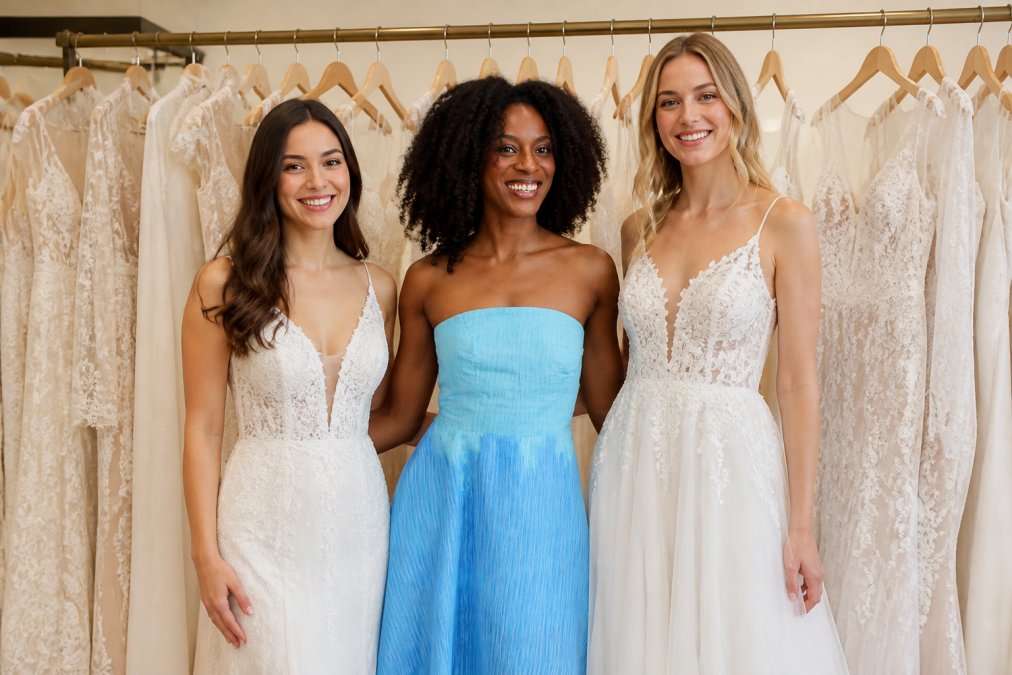
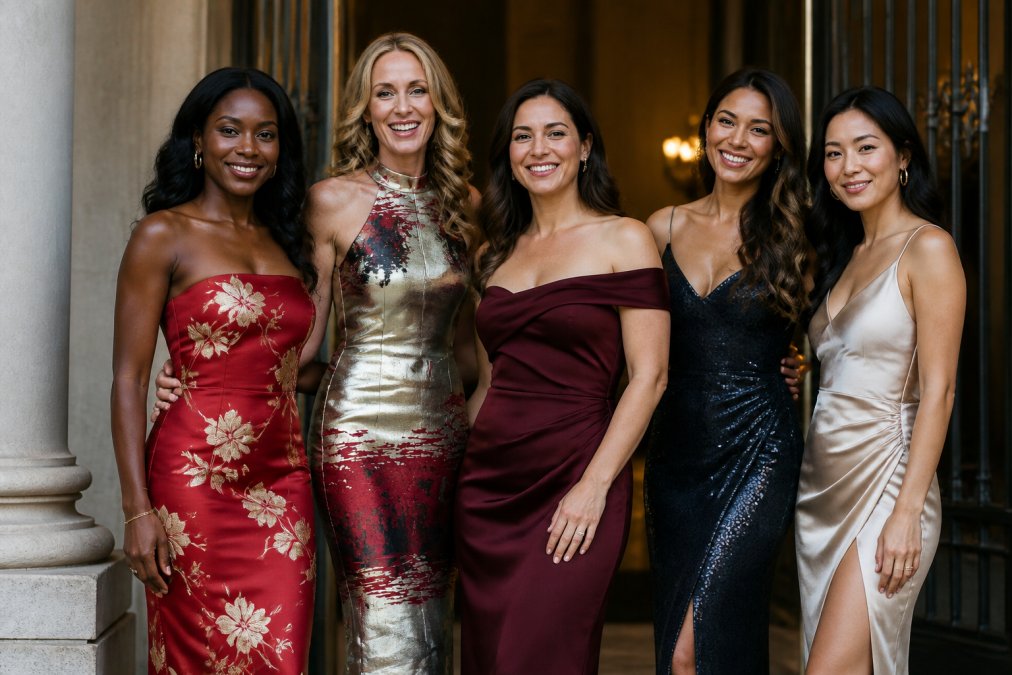
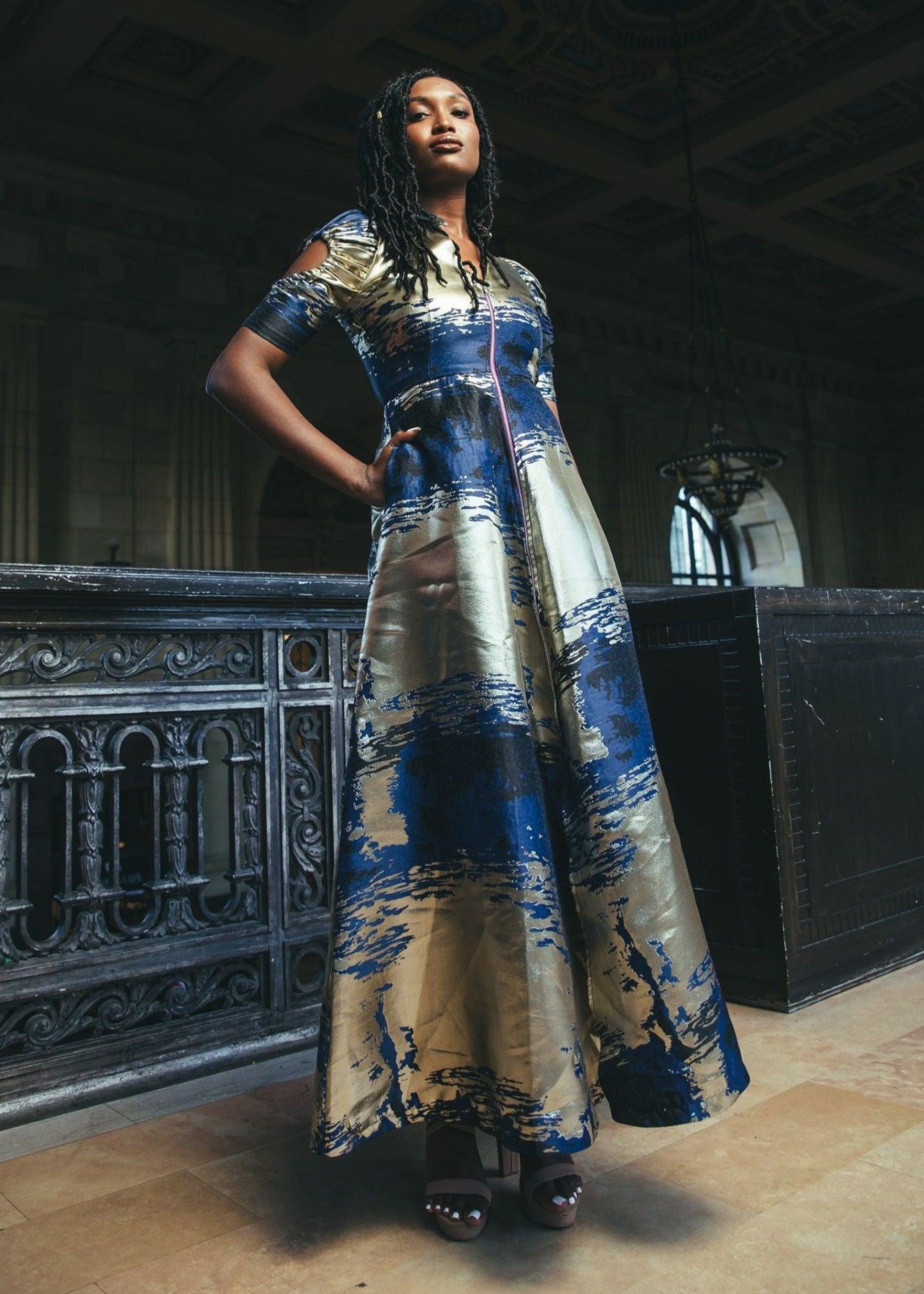
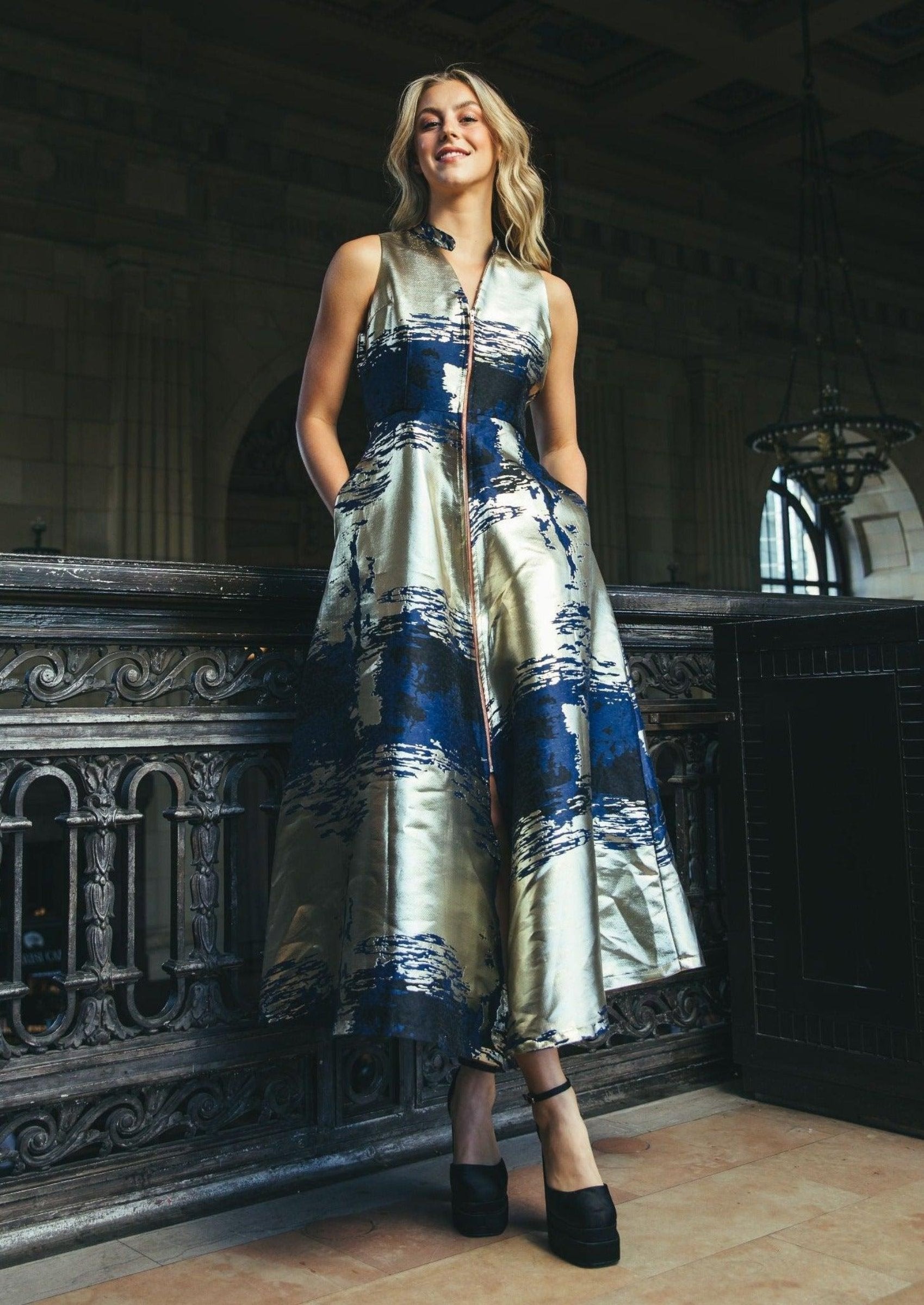
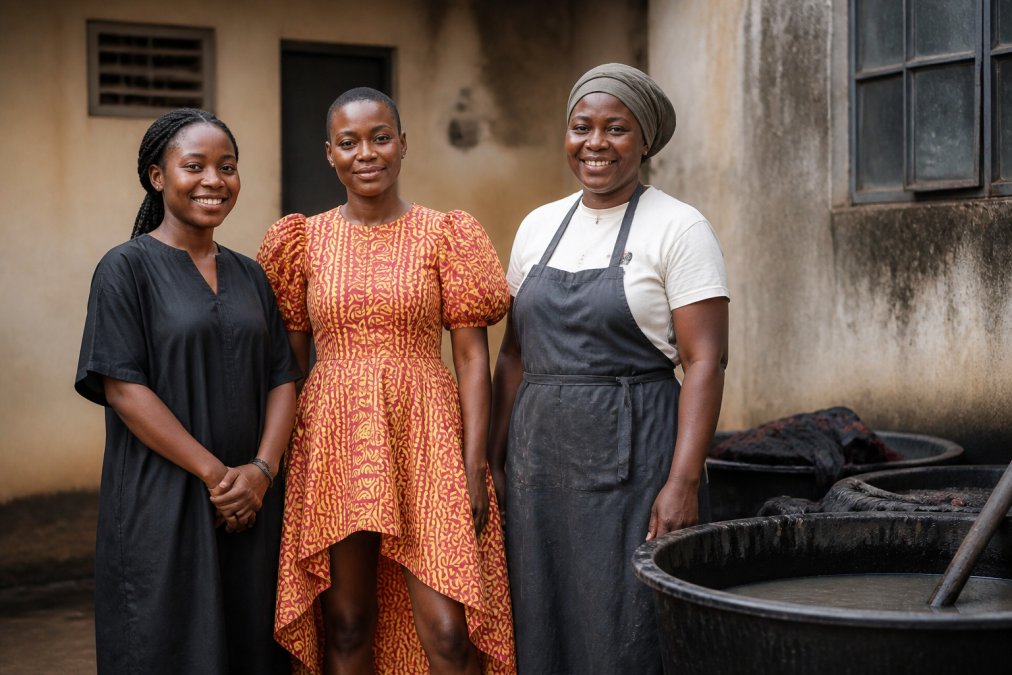
At KAHINDO, slow bath dyeing is foundational to the brand's production philosophy. Each handcrafted piece, from the Hand-Dyed Adire Cotton Midi Dress to the Senegal Jumpsuit, benefits from this meticulous approach, which takes up to two days per fabric length. The result is singular ombré gradients that cannot be replicated, making every KAHINDO garment genuinely one-of-a-kind.

How It Differs From Conventional Dyeing
Conventional dyeing forces dyes to bond quickly using high heat (often 95-100°C), aggressive agitation, and chemical auxiliaries that accelerate the striking rate. This approach delivers consistent color in 30-60 minutes but comes with environmental and quality costs. Up to 40% of reactive dyes used in conventional processes do not bond to fiber and are discharged as colored wastewater (nepis.epa.gov). Conventional dyeing can consume up to 150 liters of water per kilogram of dyed fabric.
Slow bath dyeing reverses these priorities. Temperature remains moderate (typically 50-75°C), time stretches to hours or days, and agitation is gentle. This allows dye molecules to diffuse gradually into fiber, achieving higher exhaustion rates and reducing dye waste. The textile industry is responsible for 20% of industrial water pollution globally, according to UNEP's environmental assessment. Slow bath dyeing directly addresses this by reducing both water consumption and dye discharge.
The Role of Time in Dye Absorption
Time is the active ingredient in slow bath dyeing. When fabric enters a dye bath, dye molecules initially attach to the fiber's outer layer through adsorption. True color fastness requires diffusion: dye molecules must penetrate deep into the fiber's structure and form chemical bonds with the fiber polymer. This diffusion is slow and accelerates with moderate heat combined with extended immersion time.
For natural dyes especially, time is irreplaceable. Natural colorants like walnut husks, indigo, and madder root contain multiple pigment compounds that require different amounts of time to bond fully. Rushing the process leaves some compounds unattached, resulting in poor color fastness and rapid fading. Slow bath dyeing is not just a technical process; it is a philosophy that respects both material and maker.
The Slow Bath Dyeing Process: Step by Step
Step 1: Presoaking and Fiber Saturation
Before dye touches the fiber, preparation determines success. Fiber must be thoroughly wetted and saturated with water to displace air pockets that create resistance to dye penetration. When fabric is presoaked in clean, warm water (typically 40-50°C), water molecules swell the fiber and open its structure, making it receptive to dye molecules. Presoaking typically takes 30-60 minutes, depending on fiber weight and type.
Step 2: Preparing the Dye Bath
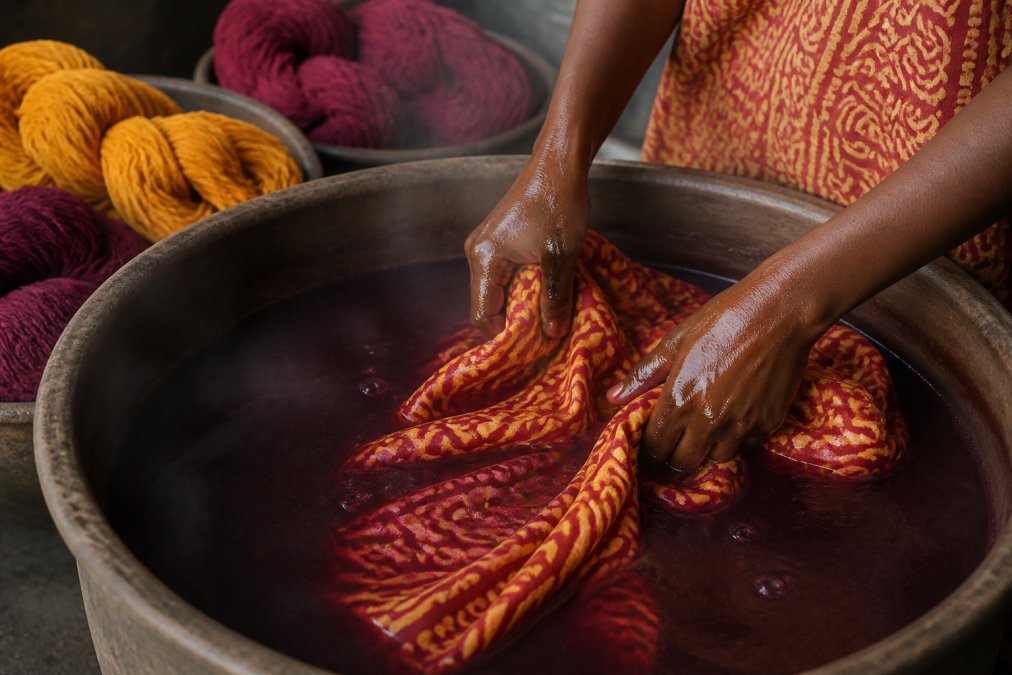
The dye bath is the controlled environment where color transfer occurs. For natural dyes, the bath typically includes the dye material (walnut husks, indigo leaves, madder root), water, and often a mordant like alum or tannin that helps dye molecules bond to fiber. For synthetic dyes in slow bath processes, the bath includes dye powder dissolved in water plus gentler auxiliaries that support gradual exhaustion. Dye bath concentration determines color intensity; a stronger bath produces deeper shades, while a weaker bath yields paler tones. In slow bath dyeing, dye concentration naturally decreases as fabric exhausts the bath, creating the signature ombré gradient.
Step 3: Temperature Control and Thermal Regulation
Temperature controls the speed of dye molecule diffusion without forcing it. In slow bath dyeing, temperature increases slowly, typically 1-2°C per minute, and holds at a moderate level (50-75°C for most natural dyes, 60-85°C for many synthetics). This slow temperature rise allows fiber swelling and dye molecule movement to proceed evenly. Maintaining consistent temperature throughout the dyeing period is equally important. Professional slow bath operations use thermostatic water baths or steam-heated vessels with precise temperature control. The duration at target temperature varies, with natural dyes often requiring 2-4 hours and some synthetic dyes extending to 8-12 hours or longer.
Step 4: Exhausting the Dye Bath
Exhaustion is the final phase, where remaining dye molecules are pulled from the bath and bonded to fiber. As fabric absorbs dye, the bath concentration decreases visibly. Complete exhaustion, where virtually all dye has bonded to fiber, maximizes color fastness and minimizes dye waste. Some research indicates that 20-30% of dyes are commonly lost during conventional dyeing processes. Slow bath dyeing significantly reduces this loss by prioritizing complete fiber saturation.
Sustainable Textile Dyeing Methods and Low-Impact Alternatives
Natural Versus Synthetic Dyes in Slow Dyeing
Natural dyes come from plant, animal, or mineral sources, indigo leaves, madder root, walnut husks, cochineal insects, iron oxide. They are biodegradable and produce unique, non-standardized colors. However, they require mordants for color fastness, have limited color ranges, and require longer dyeing times. Synthetic dyes offer wider color ranges and higher fastness, but many are petroleum-derived. In slow bath dyeing, synthetic dyes can be used responsibly, with lower temperatures and longer times reducing chemical auxiliary requirements and higher exhaustion rates meaning less dye enters wastewater.
KAHINDO's Hand-Dyed Adire Cotton Midi Dress and Mali Dress feature 100% hand-dyed Adire fabric made in Nigeria using traditional resist-dyeing techniques with natural colorants, honoring cultural textile traditions while maintaining environmental responsibility.
Water Conservation in Slow Bath Processes
Water consumption is the most visible environmental impact of textile dyeing. Conventional processes use 150 liters per kilogram of fabric. Slow bath dyeing reduces this significantly through lower temperatures, longer immersion times in smaller bath volumes, and smaller batch sizes. Some slow bath operations reuse dye baths through multiple dyeing sessions, reducing both water and dye material disposed of while creating intentional color variation.
Benefits of Low-Impact Dyes and Textile Color Fastness Standards
Superior Color Fastness and Durability
Color fastness measures how well dye resists fading under washing, sunlight, and wear, on a scale of 1-5 where 5 is excellent. Slow bath dyeing consistently achieves high color fastness (4-5) because dye molecules form strong chemical bonds deep within the fiber. Complete fiber saturation means dye is distributed throughout, not just on the surface. This durability is practical: a dress that holds its color for years justifies its investment price. Research from Mahendra Engineering College found that biological treatment systems achieved 85-95% color removal efficiency for textile dyehouse effluents, underscoring that improved dyeing processes reduce both water pollution and the need for aggressive wastewater treatment.
Unique, Non-Replicable Color Gradients
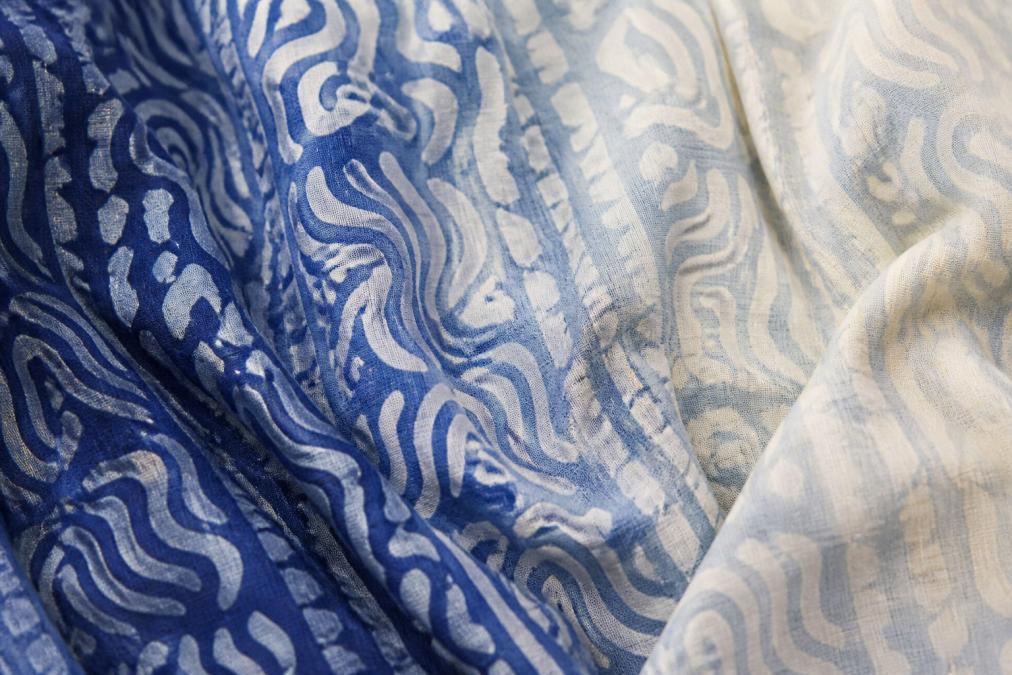
The ombré gradient is a byproduct of slow bath dyeing. As the bath exhausts, dye concentration decreases, and fabric experiences changing dye concentrations, creating a color gradient from deep to pale. This gradient is genuinely non-replicable, depending on exact timing of fabric entry and removal, specific dye concentration curves, water temperature fluctuations, and fiber characteristics. benefits of artisanal fashion.
Why Ethical Luxury Brands Choose Slow Bath Dyeing
Ethical luxury brands like KAHINDO adopt slow bath dyeing because it aligns with fair-trade production. Slow processes require skilled labor, not just machinery, meaning employment for artisans and fair wages for their time and expertise. The two-day dyeing timeline for KAHINDO's signature gowns is an investment in the people who create the garments.
The global Ethical Fashion Market is valued at USD 10.96 billion in 2026 and is projected to reach USD 26.68 billion by 2035, growing at a CAGR of approximately 9.3%. This growth is driven by environmentally responsible materials, transparent supply chains, and fair labor practices, all of which slow bath dyeing embodies. Over 60% of Gen Z and Millennials search for used items before buying new in 2026. Slow-dyed garments, with their superior color fastness and durability, are more likely to retain value and be worn for years, aligning with this shift toward intentional consumption.
Troubleshooting Uneven Dyeing and Achieving Color Consistency
Despite careful process control, uneven dyeing can occur. Common causes include incomplete fiber saturation during presoaking (solution: extend presoaking time and ensure thorough wetting), temperature fluctuations (solution: use thermostatic water baths and minimize variation), uneven agitation (solution: gentle, regular turning and loose fabric arrangement), low liquor ratios without chemistry adjustment (solution: pair machine changes with adjusted auxiliary chemistry, tighter temperature control, and closer monitoring), and pH imbalance (solution: test and adjust pH before dyeing and monitor throughout).
Achieving color consistency in slow bath dyeing means accepting that perfect uniformity is not the goal. Instead, consistency means repeatable processes that produce predictable results. For brands like KAHINDO, artisanal variation is an asset that reinforces authenticity.
| Challenge | Cause | Solution | Expected Outcome |
|---|---|---|---|
| Streaky color | Incomplete fiber saturation | Extend presoaking to 60 minutes | Even color uptake |
| Blotchy shade | Temperature fluctuation | Use thermostatic bath control | Consistent color depth |
| Pale areas | Uneven agitation | Gentle, frequent fabric turning | Uniform dye distribution |
| Rapid fading | Insufficient exhaustion time | Extend dyeing duration to 12+ hours | Superior color fastness |
| Agglomeration | Low liquor ratio without chemistry adjustment | Add auxiliary chemistry and monitor closely | Even dye dispersion |
Conclusion
Slow bath dyeing is a deliberate rejection of speed in favor of quality, sustainability, and artisanal authenticity. It produces color fastness, unique gradients, and reduced environmental impact that conventional methods cannot match. For customers seeking occasion-ready luxury with a conscience, KAHINDO's slow-dyed pieces offer singular beauty backed by transparent production. Each Hand-Dyed Adire Cotton Midi Dress and Senegal Jumpsuit carries the mark of slow craft, ombré gradients that cannot be replicated, durability that lasts years, and the knowledge that artisan hands in Kenya shaped every detail. Get started with KAHINDO and wear fashion that looks good, feels good, and does good.

=== FAQ ANSWERS (audit these too, same rules) ===
[1] Q: How does slow bath dyeing differ from continuous dyeing? A: Slow bath dyeing immerses fiber in a stationary dye bath for extended periods, allowing gradual dye molecule absorption and deep fiber saturation. Continuous dyeing passes fabric rapidly through dye baths, achieving faster throughput but less uniform color penetration. Slow bath methods produce superior color fastness and unique ombré gradients because dyes have time to bond completely with fiber. Some conventional processes lose 20-30% of dyes to wastewater, while slow methods achieve higher exhaustion rates and minimize chemical runoff.
[2] Q: Is slow bath dyeing more environmentally friendly? A: Yes. Conventional textile dyeing consumes up to 150 liters of water per kilogram of fabric, with up to 40% of reactive dyes never bonding to fiber. Slow bath dyeing uses lower liquor ratios and extended immersion, achieving higher dye exhaustion and reducing chemical waste. The textile industry accounts for 20% of global industrial water pollution; slow bath methods significantly reduce that footprint. Natural dyes in slow baths create minimal chemical runoff, and exhausted dye baths can be reused for subsequent dyeing sessions, further conserving resources.
[3] Q: Why do luxury ethical brands prefer slow bath dyeing? A: Slow bath dyeing produces non-replicable color gradients and superior color fastness, creating singular statement pieces that justify premium pricing. Each garment becomes unique, aligning with luxury positioning. The process also aligns with fair-trade values: it supports artisan employment through labor-intensive, skilled work and demonstrates genuine sustainability commitment rather than greenwashing. Brands like KAHINDO use slow bath dyeing to create striking ombré effects while maintaining transparent, ethical production that resonates with conscious consumers aged 30+ seeking meaningful investment pieces.
[4] Q: What types of fabrics are best suited for slow bath dyeing? A: Natural fibers absorb dyes most effectively in slow bath processes. Cotton, wool, silk, and linen achieve superior color fastness and uniform saturation because their fiber structure swells and allows dye molecules deep penetration. Protein fibers like wool respond well to acid dyes in slow baths, while cellulose fibers like cotton excel with reactive dyes. Blends of natural and synthetic fibers can work but require adjusted temperature gradients and pH balance. Hanks and yarn dyeing in slow baths produces the most striking, even results due to increased surface area and consistent agitation control.
Frequently Asked Questions
Q: How does slow bath dyeing differ from continuous dyeing?
A: Slow bath dyeing immerses fiber in a stationary dye bath for extended periods, allowing gradual dye molecule absorption and deep fiber saturation. Continuous dyeing passes fabric rapidly through dye baths, achieving faster throughput but less uniform color penetration. Slow bath methods produce superior color fastness and unique ombré gradients because dyes have time to bond completely with fiber. Some conventional processes lose 20-30% of dyes to wastewater, while slow methods achieve higher exhaustion rates and minimize chemical runoff.
Q: Is slow bath dyeing more environmentally friendly?
A: Yes. Conventional textile dyeing consumes up to 150 liters of water per kilogram of fabric, with up to 40% of reactive dyes never bonding to fiber. Slow bath dyeing uses lower liquor ratios and extended immersion, achieving higher dye exhaustion and reducing chemical waste. The textile industry accounts for 20% of global industrial water pollution; slow bath methods significantly reduce that footprint. Natural dyes in slow baths create minimal chemical runoff, and exhausted dye baths can be reused for subsequent dyeing sessions, further conserving resources.
Q: Why do luxury ethical brands prefer slow bath dyeing?
A: Slow bath dyeing produces non-replicable color gradients and superior color fastness, creating singular statement pieces that justify premium pricing. Each garment becomes unique, aligning with luxury positioning. The process also aligns with fair-trade values: it supports artisan employment through labor-intensive, skilled work and demonstrates genuine sustainability commitment rather than greenwashing. Brands like KAHINDO use slow bath dyeing to create striking ombré effects while maintaining transparent, ethical production that resonates with conscious consumers aged 30+ seeking meaningful investment pieces.
Q: What types of fabrics are best suited for slow bath dyeing?
A: Natural fibers absorb dyes most effectively in slow bath processes. Cotton, wool, silk, and linen achieve superior color fastness and uniform saturation because their fiber structure swells and allows dye molecules deep penetration. Protein fibers like wool respond well to acid dyes in slow baths, while cellulose fibers like cotton excel with reactive dyes. Blends of natural and synthetic fibers can work but require adjusted temperature gradients and pH balance. Hanks and yarn dyeing in slow baths produces the most striking, even results due to increased surface area and consistent agitation control.
This article was written using GrandRanker