



Article: Why Ethical Sourcing Matters for African Textiles
Why Ethical Sourcing Matters for African Textiles
Table of Contents
- What Ethical Sourcing Means for African Textiles
- The Environmental and Labor Realities of Textile Production
- Textile Supply Chain Transparency: From Fiber to Finished Garment
- How Ethical Fashion Brands in Africa Help Artisans
- Ethical Textile Sourcing: Fair Wages, Safe Conditions, and Worker Rights
- Sustainable Textile Procurement: What Conscious Consumers Should Know
- How to Verify Ethical Claims and Measure Real Impact
- The Trade-Offs and Honest Realities of Ethical Fashion
- Frequently Asked Questions
Last Updated: October 17, 2026
What Ethical Sourcing Means for African Textiles
Ethical sourcing means knowing exactly where your garment comes from and who made it, that the people who crafted it earned fair wages, worked in safe conditions, and had a real say in their labor.
Understanding why ethical sourcing matters for African textiles is essential because it directly supports artisans and their communities.
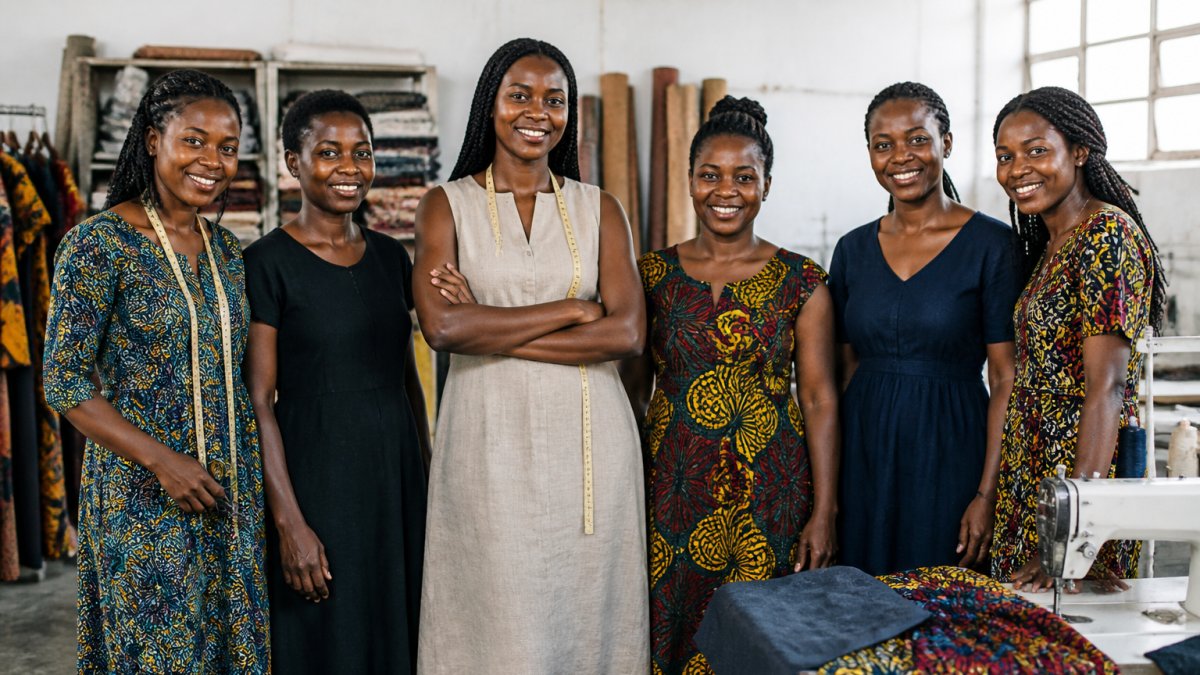
At KAHINDO, we treat ethical sourcing as foundational, not as marketing language. Every dress is handcrafted by female artisans in our Nairobi cooperative. Each garment includes a provenance card documenting the artisan's name and the labor hours invested. You're not buying a mystery product. You're buying a relationship.
The textile supply chain is long: fiber is grown, spun, dyed, woven, cut, and sewn, and someone works at each stage. Ethical sourcing means tracing that entire chain and ensuring fairness at every step, and for African textiles, celebrating the continent's rich traditions rather than extracting them.
The Environmental and Labor Realities of Textile Production
Textile production has serious environmental and human costs. Understanding them is the first step toward intentional choices.
Environmental impact starts at the fiber stage. Cotton requires significant water and pesticides. Polyester comes from petroleum and sheds microplastics into waterways.
Labor realities are equally stark. Garment workers in many countries earn below a living wage, work long hours in poorly ventilated spaces, and see injuries go untreated, with little power to demand better conditions for fear of losing their jobs.
African textile producers face unique pressures. Many compete against cheap imports that undercut local prices, creating a race to the bottom: lower wages, faster production, less care for quality and safety.
But here's what changes when you prioritize ethical sourcing, why ethical sourcing matters for African textiles, is that you shift the incentive structure. Brands that commit to fair wages and safe conditions create demand for better practices.
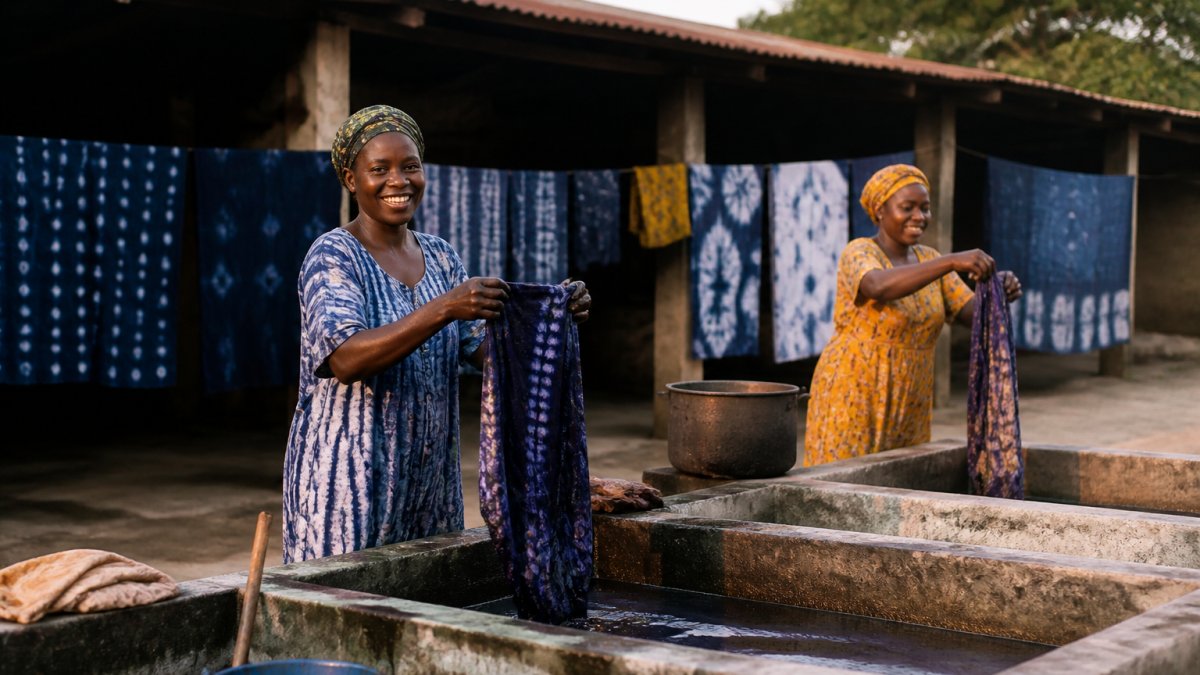
The environmental picture improves too. Handcrafted pieces last longer, slow-bath dyeing uses less water and fewer harsh chemicals, and made-to-order production reduces waste because nothing is overproduced and discarded.
Textile Supply Chain Transparency: From Fiber to Finished Garment
Supply chain transparency means you can trace a garment's journey from raw fiber to your closet, harder than it sounds, because global supply chains are fragmented and opaque by design.
A typical garment passes through multiple countries and dozens of hands: cotton grown in one country, spun in another, dyed in a third, sewn in a fourth.
Ethical brands make transparency non-negotiable. They work with suppliers they know personally, visit production facilities, and build long-term relationships rather than chasing the cheapest quote.
For African textiles, transparency means documenting the entire local production chain: where the fabric comes from, who dyes it, who cuts and sews, and under what conditions.
Transparency also means honesty about trade-offs: handcrafted production takes longer, lead times are slower, and prices are higher because artisans earn fair wages.
What to look for in supply chain transparency:
- Named suppliers and production partners
- Documented working conditions and wages
- Traceability from fiber to finished garment
- Clear information about production timelines
- Honesty about limitations and trade-offs
When a brand can't or won't answer these questions, that's a red flag. Transparency requires effort and commitment. Brands that skip it usually have something to hide.
How Ethical Fashion Brands in Africa Help Artisans
Ethical fashion brands create pathways for artisans to build sustainable livelihoods, far beyond paying slightly higher wages. Real empowerment means agency, stability, and recognition.
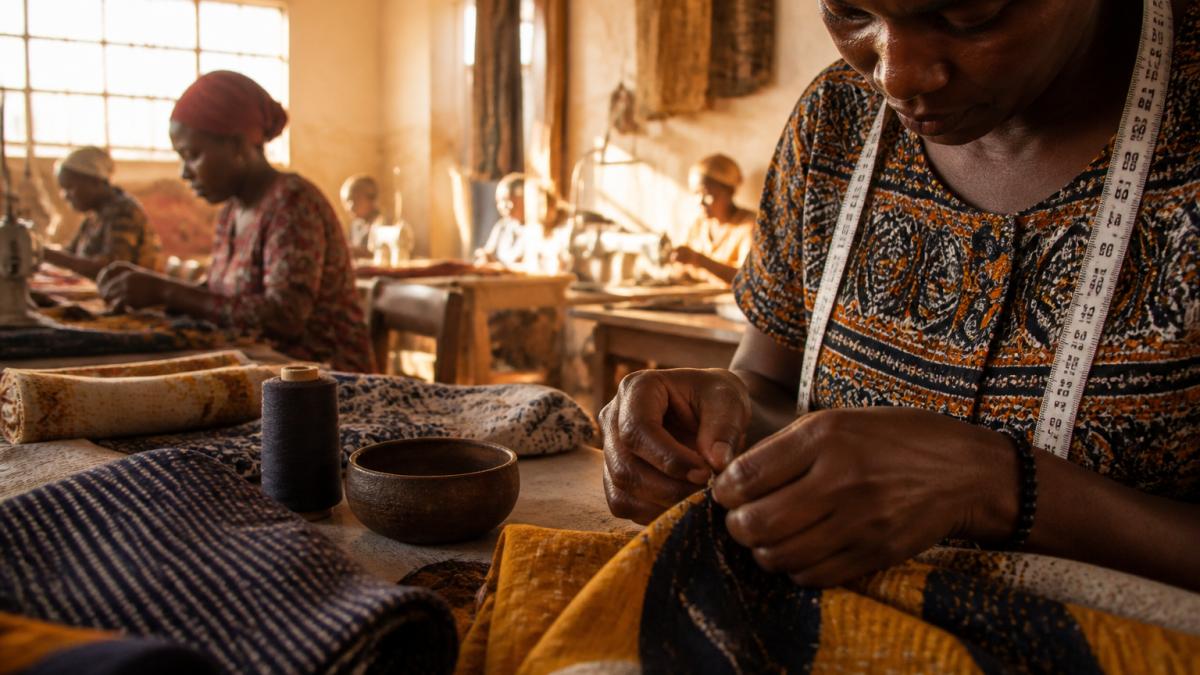
Fair compensation is the foundation. Living wages let artisans feed their families, send children to school, and invest in their craft instead of being trapped in survival mode, forced to accept whatever price a buyer offers.
But compensation alone isn't enough. Empowerment means artisans have a voice in how work is organized, home or cooperative, hours, sick leave. Real partnerships involve artisans in these decisions rather than imposing them from above.
Recognition matters deeply. Many artisans make garments sold under a designer's name with no credit to the maker, erasing their contribution and artistry.
Community development is another layer.
KAHINDO works with female artisans in Kenya, treating their artistry as a primary luxury asset. The brand features artisan stories, pays living wages, and builds long-term relationships. This isn't charity.
Ethical Textile Sourcing: Fair Wages, Safe Conditions, and Worker Rights
Fair wages and safe working conditions are non-negotiable elements of ethical textile sourcing. These aren't nice-to-haves. They're basic human rights.
Fair wages mean workers earn enough to live on. This varies by region and cost of living, but it means covering housing, food, healthcare, transportation, and education without excessive hours.
Safe working conditions mean adequate lighting, ventilation, and ergonomics, clean bathrooms and drinking water, protective equipment when handling chemicals, maintained machines, trained workers, and someone accountable when injuries happen.
Worker rights include organizing, negotiating collectively, and refusing unsafe work without retaliation. These rights are often suppressed where labor protections are weak; ethical brands actively protect them and support workers who organize.
What to verify when evaluating ethical claims:
- Are workers paid living wages for their region?
- Do workers have written contracts explaining their rights and responsibilities?
- Is there independent monitoring of working conditions?
- Can workers organize and voice concerns without fear?
- Are there clear processes for reporting and addressing violations?
Many brands make vague claims about "fair trade" or "ethical production" without backing them up. Genuine commitment means submitting to independent audits, publishing findings, and being willing to name problems and fix them.
For African textile producers, fair wages and safe conditions are especially important because labor protections are often weaker. Ethical brands working in Africa take extra responsibility to ensure they're not exploiting the vulnerabilities of their supply chain partners.
Sustainable Textile Procurement: What Conscious Consumers Should Know
Sustainable procurement means thinking about the full lifecycle of a garment, not just the final price tag, choosing materials and production methods that minimize environmental harm and maximize longevity.
Material choices matter. Natural fibers like organic cotton, linen, and wool have lower environmental impact than conventional alternatives when grown and processed responsibly. African textile traditions often use natural dyes and fibers that are inherently more sustainable.
Sustainable procurement also means reducing waste. Fast fashion creates massive waste because garments are overproduced, discarded after a few wears, and end up in landfills. Ethical brands use made-to-order production, making garments only when someone buys them, which eliminates overstock and waste.
Durability is a form of sustainability. A dress that lasts 20 years and gets worn hundreds of times is more sustainable than a cheap dress worn twice and discarded.
Production methods affect sustainability too. Slow-bath dyeing uses less water and fewer harsh chemicals than industrial dyeing, hand-finishing reduces energy consumption, and local production cuts transportation emissions. These choices cost more and take longer, but they result in genuinely lower environmental impact.
How to Verify Ethical Claims and Measure Real Impact
Many brands claim to be ethical. Few can back it up with evidence. Learning to verify claims separates genuine ethical producers from greenwashing.
Start with documentation. Ask the brand for specific information:
- Who are the artisans or producers? Can you find their names and stories?
- What are the wages? Not a vague "fair wage" claim, but actual numbers or verifiable standards.
- What are the working conditions? Are there independent audits or certifications?
- How is the supply chain organized? Can you trace the journey from fiber to finished garment?
Brands that answer these questions with specifics are usually genuine. Brands that give vague responses or refuse to answer are hiding something.
Look for third-party verification. Independent certifications add credibility. Fair Trade certification, B Corp certification, and similar standards involve audits and ongoing monitoring. They're not perfect, but they're better than self-reporting.
Measure impact where possible. Some brands publish impact reports showing how many artisans they employ, what wages they pay, and what community investments they've made. These reports should be specific and updated regularly. Vague claims about "helping communities" without numbers are marketing, not accountability.
Consider the price. Ethical production costs more. If a brand claims to be ethical but prices are suspiciously low, something doesn't add up. Living wages, safe conditions, and quality materials all cost money. Ethical brands pass some of those costs to consumers.
Ask hard questions:
- How long have you worked with these producers?
- What happens if a producer can't meet your standards?
- How do you handle complaints or disputes?
- What are your actual margins? (This reveals whether workers are really paid fairly.)
- Can I meet or communicate with the artisans who made my garment?
Brands that welcome these questions are confident in their practices. Brands that dodge them are likely cutting corners.
The Trade-Offs and Honest Realities of Ethical Fashion
Ethical fashion involves real trade-offs. Pretending otherwise sets consumers up for disappointment.
Lead time is longer. Handcrafted production takes time. A dress made to order might take 6-8 weeks instead of arriving in days. This is not a bug.
Prices are higher. Fair wages, safe conditions, quality materials, and careful craftsmanship all cost money, so an ethically made dress costs more than a mass-produced one.
Availability is limited. Ethical brands typically produce smaller quantities because they work with specific artisan partners rather than massive factories.
Sizing and fit can be inconsistent. Handcrafted pieces vary slightly because they're made by humans, not machines.
The impact is real but limited. Buying one ethical dress doesn't solve the textile industry's problems.
Some claims are genuinely hard to verify. Even well-intentioned brands sometimes struggle to trace every step of their supply chain. Complexity is real. Transparency has limits.
The honest truth is this: ethical fashion requires more money, more time, and more patience than fast fashion, and offers less convenience and selection.
Ethical sourcing for African textiles is about recognizing that fashion has real human and environmental costs. KAHINDO embodies this approach, every handcrafted piece in our collection is made by female artisans in Kenya who earn living wages and have a say in their work.

Fair Trade USA standards and certification
United Nations Sustainable Development Goals on decent work and economic growth
Ellen MacArthur Foundation's circular economy principles for fashion
Frequently Asked Questions
What does ethical sourcing mean in the textile industry?
Ethical sourcing in textiles means ensuring that fabrics and garments are produced under fair labor conditions, with living wages paid to workers, safe working environments maintained, and environmental practices that minimize pollution and resource waste. It includes transparency about where materials come from, who makes the clothing, and how supply chains operate. For brands like KAHINDO, ethical sourcing also means direct relationships with artisan communities and documented provenance for each piece.
How can I verify that a fashion brand actually sources textiles ethically?
Look for brands that provide specific documentation about their supply chain, including artisan names, production locations, and labor practices. Ask whether the brand offers provenance cards or certificates showing who made your garment. Request information about wage standards, working conditions, and certifications from third-party auditors. Be skeptical of vague claims; legitimate ethical brands share concrete details about their producers and welcome questions about their sourcing practices.
Why does ethical sourcing matter for African textile producers specifically?
African textile artisans and producers have historically faced exploitation, low wages, and limited market access. Ethical sourcing ensures they receive fair compensation, maintain safe working conditions, and build sustainable livelihoods. It also preserves traditional textile techniques and cultural heritage while creating economic opportunities for communities. When brands commit to ethical sourcing in Africa, they help shift power dynamics, allowing artisans to control their own production and stories rather than serving as low-cost labor for global fast-fashion supply chains.
What's the difference between ethical sourcing and sustainable textile procurement?
Ethical sourcing focuses on labor practices, fair wages, worker rights, and transparency in the supply chain. Sustainable textile procurement emphasizes environmental responsibility: choosing eco-friendly materials, reducing waste, minimizing water and chemical use, and considering the full lifecycle of fabrics from production to disposal. Both matter; the best brands address both ethical labor and environmental impact together. KAHINDO combines fair-trade practices with sustainable dyeing methods to achieve both standards.