




Article: How to Care for Hand-Dyed African Garments
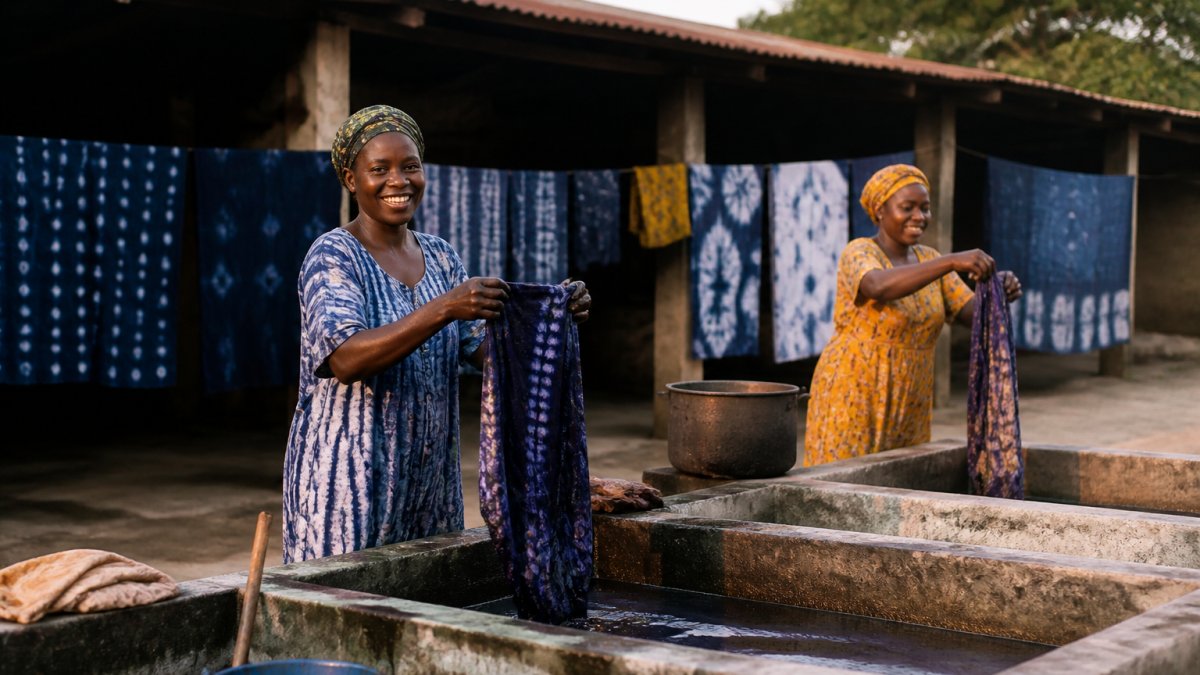
How to Care for Hand-Dyed African Garments
Table of Contents
- Understanding Your Hand-Dyed African Garment
- How to Wash African Wax Print Clothing
- How to Care for Adire Clothing
- How to Prevent Hand-Dyed Fabric from Fading
- How to Store African Print Garments
- Troubleshooting Dye Bleeding, Stains, and Accidental Fading
- Care by Fiber, Construction, and Embellishment
- Frequently Asked Questions
Last Updated: October 15, 2026
Understanding Your Hand-Dyed African Garment
Hand-dyed African garments are textile art. Each piece tells a story through color, pattern, and craft.

What makes hand-dyed fabric different from mass-produced clothing is the process itself. When fabric is dyed by hand using natural or traditional methods, the color penetrates differently than factory dyeing.
The most important thing to understand: hand-dyed fabric is more delicate. It requires care. But with the right approach, your garment will last for years and maintain its vibrant character.
What Makes Hand-Dyed Fabric Different
Hand-dyed fabrics absorb color through immersion and time, not pressure and chemicals. The dye bonds to the fiber gradually. This creates rich, natural color but also means the dye is less locked in than industrial dyeing.
Traditional techniques like Adire from Nigeria and wax print methods from across the continent rely on resist dyeing. Parts of the fabric are blocked from the dye, creating patterns. The hand-dyed process takes days or weeks.
This difference matters for care. Your hand-dyed garment needs gentler handling because:
- The dye is still settling into the fibers
- Agitation can loosen color prematurely
- Heat can set stains before you can remove them
- Harsh detergents break down the dye bond
Understanding this foundation changes how you approach every wash, rinse, and dry.
Colorfastness Testing Before Your First Wash
Before you wash your hand-dyed garment for the first time, test the colorfastness. This simple step prevents surprises.
What to do:
- Fill a small bowl with cool water
- Add a drop of mild detergent
- Submerge a hidden corner of the garment (inside seam, hem, or underside)
- Let it sit for 5 minutes
- Rinse gently and check if color bleeds into the water
If the water stays clear or nearly clear, you're safe to wash. If the water turns dark with color, expect some bleeding in the first wash. This is normal for hand-dyed pieces. It doesn't mean the garment is defective.
Many hand-dyed African garments release excess dye in the first 2-3 washes. This is expected. The color will stabilize after that.
How to Wash African Wax Print Clothing
African wax print clothing is bold, graphic, and durable when handled correctly. Wax prints are created by applying wax resist to fabric before dyeing, then removing the wax to reveal the pattern underneath. The process creates crisp, defined designs.
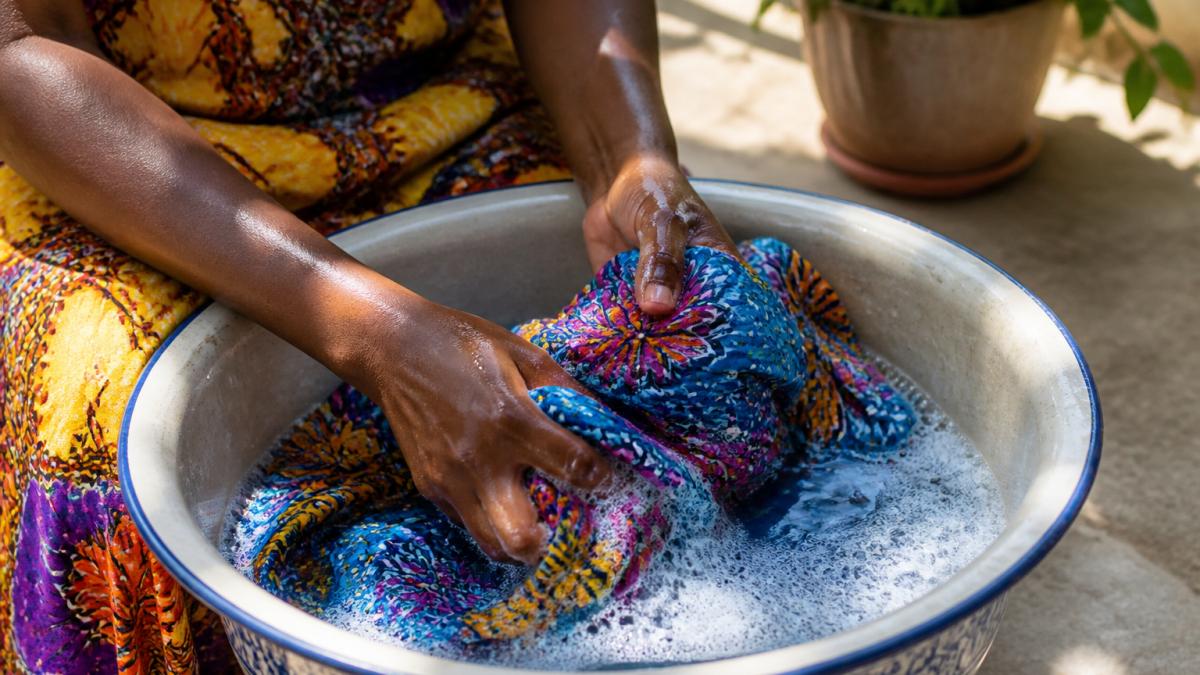
Wax print garments can handle slightly more agitation than delicate hand-dyed pieces, but they still need respect. The key is cool water and gentle motion.
Hand Washing Versus Machine Washing
Hand washing is always the safer choice for hand-dyed African garments. It gives you control and reduces color loss.
Here's how to hand wash:
- Fill a basin with cool water (60-70°F)
- Add a small amount of mild detergent (about 1 teaspoon for a full basin)
- Submerge the garment and gently agitate for 2-3 minutes
- Let it soak for 10 minutes
- Gently squeeze soapy water through the fabric
- Drain and rinse 3-4 times until water runs clear
Machine washing is acceptable for wax prints if you use these settings:
- Delicate or gentle cycle only
- Cool water (never warm or hot)
- Minimal spin
- No bleach, no fabric softener
- Mild detergent only
The difference: hand washing takes 15 minutes. Machine washing takes 45 minutes but requires less physical effort. Choose based on your schedule and the garment's condition.
Heavily soiled garments benefit from hand washing because you can target stains directly. Lightly worn pieces can go in the machine on delicate.
Water Temperature and Gentle Detergent Selection
Cool water is non-negotiable. Hot water opens the fiber and releases dye. Warm water does the same, just more slowly.
Cool water (60-70°F) keeps the dye locked in. It's cold enough to matter but not so cold that detergent won't dissolve.
For detergent, choose one of these:
- Mild soap flakes (like Ecos or Seventh Generation)
- pH-neutral detergent (check the label)
- Gentle plant-based cleaners
- Wool wash or delicate fabric wash
Avoid:
- Regular laundry detergent (too harsh)
- Bleach (will strip color)
- Fabric softener (coats the fiber and traps dye)
- Enzyme-based cleaners (break down natural fibers)
A little detergent goes a long way. Use half the amount you'd normally use. Excess soap is harder to rinse out and can dull the fabric.
How to Care for Adire Clothing
Adire is a West African indigo-dyeing technique that creates intricate patterns through resist methods. The name comes from the Yoruba word meaning "to tie and dye." Traditional Adire uses natural indigo, which is less colorfast than synthetic dyes but creates unmatched depth and character.
Adire pieces require the most careful handling of all hand-dyed garments. The indigo dye is beautiful precisely because it's loosely bound to the fiber.
Adire-Specific Washing Techniques
Adire garments should be hand washed every time. Machine washing risks damaging the delicate indigo.
The process is nearly identical to standard hand washing, but with one key difference: soak first, agitate gently, then soak again.
- Fill basin with cool water and mild detergent
- Submerge the garment and let it soak for 15 minutes (not agitating)
- Gently squeeze soapy water through the fabric for 1-2 minutes
- Drain the basin
- Refill with cool water and soak again for 10 minutes
- Rinse thoroughly
This approach removes dirt without the friction that loosens indigo dye.
Adire pieces will release blue water for the first 4-5 washes. This is expected and normal. The indigo stabilizes over time, but it will always release a small amount of dye if agitated heavily.
Rinsing and Reducing Agitation
Rinsing is where most people make mistakes. They rinse quickly and move on. Thorough rinsing is essential.
After washing, rinse at least 4 times:
- First rinse: drain soapy water, refill with cool water, squeeze gently
- Second rinse: repeat
- Third rinse: repeat
- Fourth rinse: repeat until water runs nearly clear
Each rinse removes residual detergent and loose dye. Incomplete rinsing leaves soap that dulls the fabric and traps dye particles that will later bleed.
For Adire specifically, use a final rinse with white vinegar (1 tablespoon per gallon of water). Vinegar helps set the indigo and reduces future bleeding. Soak for 5 minutes, then drain without rinsing again.
How to Prevent Hand-Dyed Fabric from Fading
Fading happens when dye is exposed to light, heat, and moisture. You can't stop it entirely, but you can slow it dramatically.
The best prevention strategy is simple: wash less often, wash gently, and dry carefully.
Spot Cleaning and Washing Only When Necessary
Most garments don't need a full wash after every wear. Hand-dyed pieces especially don't.
Hand-Dyed Adire Print Cotton Romper with Cutout Back →
Spot clean instead:
- Light stains: dab with cool water and a soft cloth
- Visible dirt: use a soft brush to brush off dry dirt
- Odors: hang in fresh air for a few hours
- Sweat marks: dampen a cloth with cool water and mild soap, gently rub the area, then rinse with a damp cloth
Spot cleaning extends the time between washes. Fewer washes mean less color loss.
When you do wash, ask yourself: does this garment truly need it?
A practical rule: wash hand-dyed pieces once every 3-4 wears. Wax print pieces can go once every 2-3 wears. Adire pieces should be washed once every 4-5 wears.
Air-Drying Away from Direct Sunlight
How you dry your garment determines how long the color lasts.
Never use a dryer. Heat sets stains and fades color permanently.
Air dry instead:
- Hang on a padded hanger in a shaded area
- Or lay flat on a clean, dry surface
- Make sure air can circulate around the garment
- Avoid direct sunlight, which fades color
Drying takes 6-12 hours depending on humidity and fabric weight. Be patient. A garment that dries slowly is a garment that retains color better.
If you must speed up drying, use a fan to circulate air around the garment. Never use heat.
How to Store African Print Garments
Storage affects longevity. The right environment keeps your garment in perfect condition between wears.
Store in a cool, dry place away from direct light. A closet is ideal. A drawer works.
Use padded hangers for dresses and tops. Fold heavy pieces like jackets or thick cotton prints.
If you fold, refold every few months to prevent permanent creases.
Avoid plastic storage bags. They trap moisture and can cause mildew.
Keep garments away from direct sunlight, which fades color over time.
Temperature matters less than consistency.
Troubleshooting Dye Bleeding, Stains, and Accidental Fading
Even with careful handling, problems happen. Here's how to address the most common issues.
Addressing Color Bleeding
If your garment bleeds color onto another piece, act immediately.
- Rinse the affected garment in cool water
- Soak in cool water with white vinegar (1 tablespoon per gallon) for 30 minutes
- Rinse thoroughly
- Air dry
The vinegar helps set the dye and can sometimes prevent the bleeding from setting permanently.
If the color has already set (the stain is dry), use one of these approaches:
- For light stains: soak in cool water with a small amount of mild detergent for 1 hour, then rinse
- For stubborn stains: soak in cool water with white vinegar for 2-3 hours, then rinse
Never use hot water or scrub. Both will set the stain deeper.
Prevention is easier than cure. Wash your hand-dyed pieces separately for the first 3-4 washes. After that, the excess dye has released and bleeding is minimal.
Removing Stains Without Damaging Dye
Fresh stains are easier to remove than old ones. Address stains the day they happen.
For common stains:
- Food or drink: blot with cool water first, then soak in cool water with mild detergent for 30 minutes
- Dirt or mud: let it dry, brush off dry dirt, then rinse with cool water
- Sweat or deodorant: soak in cool water with white vinegar for 1 hour, then rinse
- Oil or grease: sprinkle with cornstarch, let sit for 1 hour to absorb, then brush off and rinse
Never use hot water or bleach. Both will damage the dye and set the stain.
If a stain persists after rinsing, soak the garment in cool water with mild detergent overnight. Repeat the process if needed.
Care by Fiber, Construction, and Embellishment
Different fibers and construction methods require slightly different care approaches.
100% cotton (the most common hand-dyed fabric) is durable and forgiving.
Embellished pieces (with beads, embroidery, or appliqué) require extra care. Wash by hand only. Avoid agitation near embellishments.
Structured pieces (with interfacing or boning) should be laid flat to dry to maintain shape.
Caring for hand-dyed African garments is an investment in longevity and beauty.
At KAHINDO, every hand-dyed piece comes with a provenance card documenting the artisan who created it. That connection matters.
Frequently Asked Questions
Should hand-dyed African garments be washed in cold water?
Yes. Cold or cool water (below 65°F) is essential for hand-dyed African garments, especially naturally dyed and wax print pieces. Cool water minimizes color bleeding and fading by slowing dye release from the fabric. Always check your garment's care label, but most artisan hand-dyed pieces specify cold water hand washing. Hot water opens the fiber structure, allowing more dye to escape into the rinse water.
How often should you wash hand-dyed African garments?
Wash only when necessary. Spot clean mildly soiled areas between washes to extend the life of the garment and preserve vivid colors. Many hand-dyed pieces can be worn multiple times before washing. Limiting full washes reduces color fading and stress on delicate fabrics. For pieces like the Retba Vest or Adire Print Cotton Romper, spot cleaning between occasional full washes keeps the artisan textile looking fresh.
Can you put hand-dyed African garments in the washing machine?
Hand washing is strongly recommended for hand-dyed African garments to minimize agitation and color loss. Machine washing, even on a delicate cycle, can cause excessive dye bleeding and damage to naturally dyed or wax print fabrics. If you must use a machine, use a gentle cycle with cold water, mild detergent, and wash alone or with like colors. Hand washing gives you control over water temperature, agitation, and rinsing, making it the safest option for preserving color and fabric longevity.
How should you store African print garments to protect their color?
Store hand-dyed African garments in a cool, dark place away from direct sunlight and heat sources. Fold or hang them on padded hangers to avoid creasing and stress on delicate areas. Use acid-free tissue paper between folds to prevent color transfer. Keep garments in a breathable cotton storage bag or drawer rather than plastic, which can trap moisture. Store away from damp areas to prevent mildew. Proper storage prevents accidental fading and extends the life of the artisan textile.