


Article: Styling Modest Wedding Guest Outfits for All Seasons
Styling Modest Wedding Guest Outfits for All Seasons
Table of Contents
- How to Build a Modest Wedding Guest Outfit That Works in Any Season
- Modest Wedding Guest Outfit Ideas That Read Polished, Not Plain
- Modest Summer Wedding Guest Outfits for Heat and Long Ceremonies
- Modest Winter Wedding Guest Outfits That Handle Cold Venues
- What to Wear Over a Dress to a Wedding: Layering That Looks Intentional
- Matching Your Modest Look to the Dress Code and the Venue
- Conclusion
- Frequently Asked Questions
Last Updated: October 18, 2026
How to Build a Modest Wedding Guest Outfit That Works in Any Season
Building a modest wedding guest outfit starts with coverage, then adapts to the weather, the venue, and the dress code.
The core idea: pick a covered silhouette first, then layer for the temperature, then finish with accessories. Most styling advice gets this backwards, starting with a trend and solving coverage as an afterthought.
Below, we'll show you how to build outfits that feel polished in every season, including layers that work indoors, fabrics that survive a long ceremony, and how to read a dress code before you buy.
Start With Coverage, Then Add the Season
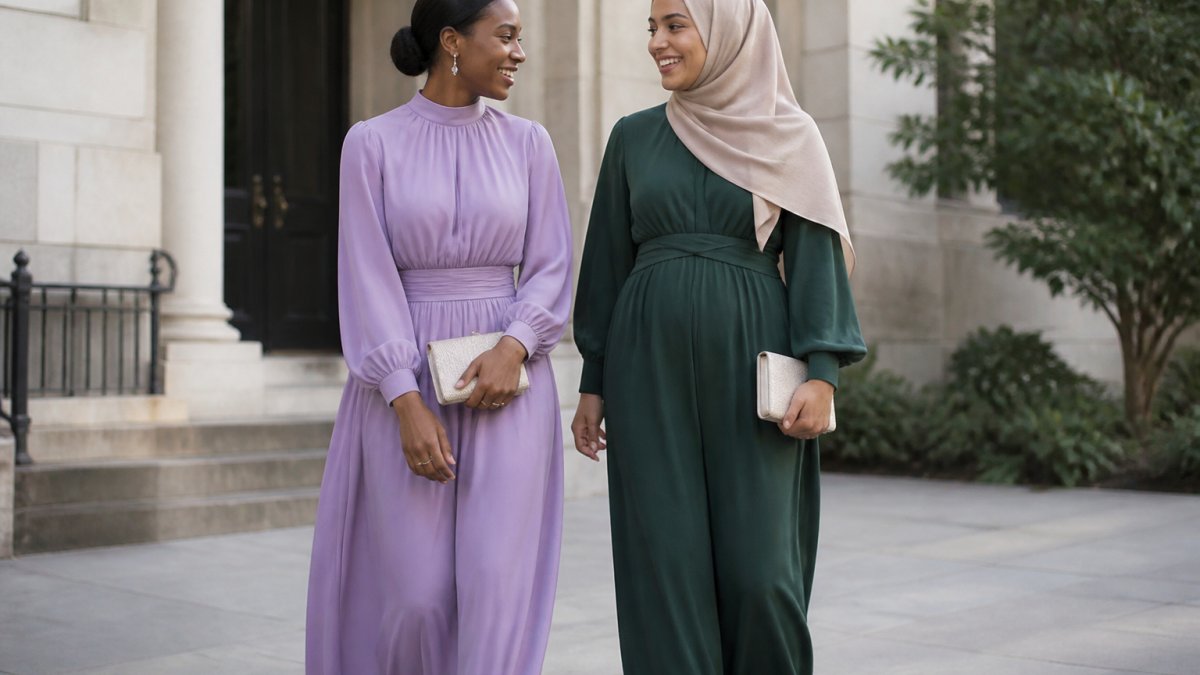
Coverage means your dress already handles sleeves and hemline before you think about weather. A modest wedding guest look typically covers the shoulders, upper arms, and knees at minimum, with a comfortable neckline.
Once that base is set, the season only changes two things: fabric weight and what you put over the dress.
- Warm months: lighter fabrics, breathable weaves, fewer layers
- Cold months: heavier fabrics, tights, a coat or wrap
- Shoulder seasons: mid-weight fabric plus one removable layer
That's the whole method. It keeps you from buying a summer dress you can't wear in October.
The Three-Part Formula: Dress, Layer, Finish
Every outfit here follows the same three steps, a checklist you can run in your head while getting ready.
- Dress: a covered silhouette in a season-appropriate fabric
- Layer: one piece that handles temperature or modesty gaps
- Finish: shoes, bag, and accessories that pull the look together
The finish step is where most people stall. One strong accessory, like a silk scarf or a structured bag, does more than five small ones.

Modest Wedding Guest Outfit Ideas That Read Polished, Not Plain
Polished comes from fit and fabric, not from how much skin you show. A modest dress with clean lines and good drape reads more elegant than a busy outfit.
Here's what separates a polished look from a plain one:
- Fabric with weight: a lined midi holds its shape; a thin, unlined one clings
- One focal point: a bold print, an architectural collar, or a striking color, not all three
- Tailored fit: shoulders that sit right and a hem that falls cleanly
A common mistake is treating modesty as a reason to choose something shapeless. Structure is your friend: a defined waist or strong shoulder keeps the silhouette from looking flat.
Silhouettes That Give You Sleeve and Hemline Coverage
These shapes solve coverage without extra effort. Pick one and you've handled the hardest part.
- Maxi dress: full-length coverage, works in every season with the right fabric
- Midi dress: falls below the knee, easy to pair with boots or heels
- Long-sleeve or three-quarter sleeve dress: covers arms without a layer
For a formal wedding, a lined midi or maxi in a rich color reads appropriately elevated. For something more relaxed, a flowing dress in a soft print works well.

Modest Summer Wedding Guest Outfits for Heat and Long Ceremonies
Summer heat is the real test of a modest outfit. The goal is coverage that breathes, not coverage that traps heat.
Step 1: Choose a fabric that moves heat away from the body. Natural fibers and blends beat fully synthetic fabrics in heat.
Step 2: Test opacity in direct light, not dressing-room light. Unlined sheer fabrics look fine indoors and turn transparent in bright sun.
What works for a hot-weather ceremony:
- Fabric: cotton blends, rayon, lightweight organza, and lined natural fibers
- Color: pastels, blush, sage, and lavender reflect heat and photograph beautifully
- Sleeves: three-quarter or sheer long sleeves feel cooler than a heavy short sleeve
Managing Sweat, Chafing, and Long Ceremonies
A summer wedding can run five or six hours from ceremony to last dance. Practical additions:
- An absorbent undershirt or slip: a thin cotton or moisture-wicking layer under the dress protects the fabric and reduces visible sweat marks.
- Anti-chafe balm or powder: apply before you dress, especially if you wear a midi with bare legs or a fitted waistband.
- A clutch big enough for a small fan, blotting papers, and a stain pen: these three items solve most mid-ceremony emergencies.
- Hair and makeup that tolerate heat: a low chignon or braid keeps hair off the neck; a setting spray keeps makeup from sliding during outdoor photos.
Heat-to-Air-Conditioning Transitions
The most common summer mistake is dressing only for the outdoor temperature. Ceremonies often move from a sunlit garden into a heavily air-conditioned hall.
Modest Winter Wedding Guest Outfits That Handle Cold Venues
Cold-weather weddings fail on one detail: the venue is warm inside and freezing outside.
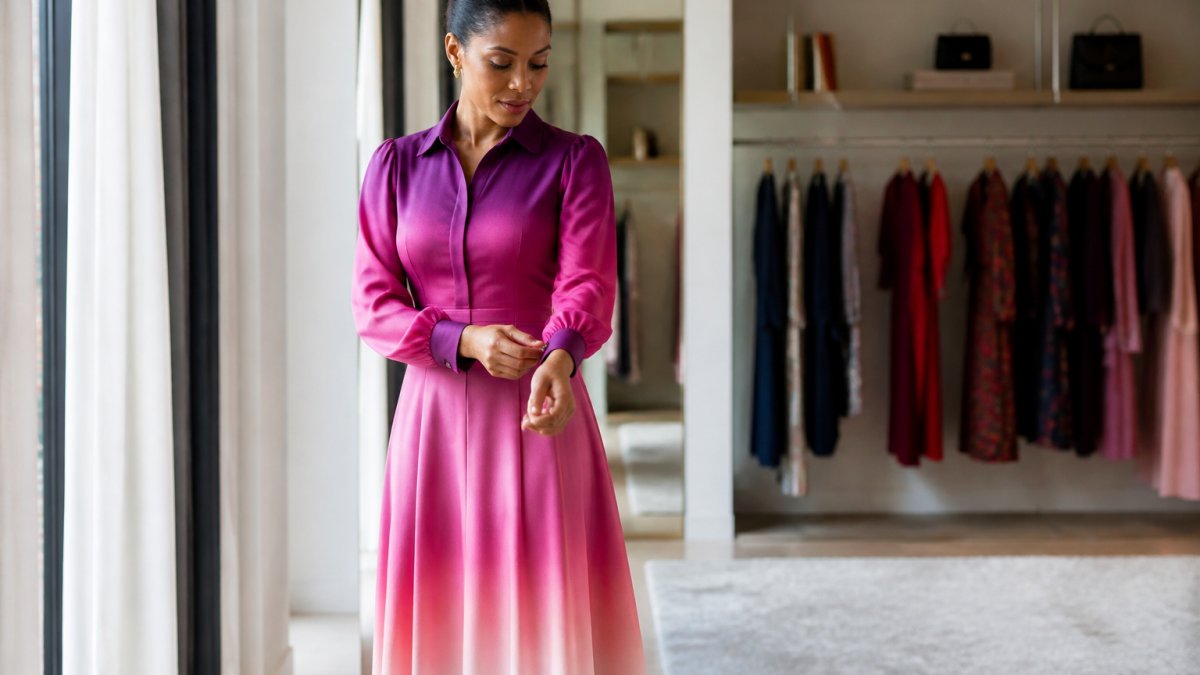
Double Collar Ombré Organza Midi Dress →
Base layer: a long-sleeve midi or maxi in a heavier fabric, fully lined.
Warmth layer: opaque tights and closed-toe heels or dress boots.
Outer layer: a wool coat, a long trench, or a structured wrap.
Finish: a silk scarf at the neck and a bag that fits gloves.
The Indoor-Outdoor Temperature Swing
Most winter wedding advice stops at "wear a coat." The harder problem is the transition: you arrive in freezing air, spend twenty minutes outdoors for photos, then sit in a warm reception for four hours.
Treat the coat as part of the outfit, not an afterthought. Choose a tailored coat in a color that works with the dress so it looks intentional in photos, and plan where it will live during the reception.
Boots, Tights, and Formal Dress Codes
Can boots work for a formal winter wedding? It depends on the boot. A sleek knee-high leather boot in a dark neutral reads formal enough for semi-formal and many formal dress codes, especially with opaque tights and a lined midi.
For a black-tie winter wedding, choose a floor-length dress in a substantial fabric and add a formal coat. For a semi-formal event, a lined midi with tights and a tailored coat is plenty.
Cold-Weather Contingencies Competitors Skip
- Rain or sleet: a trench with a water-resistant finish over the dress, and a compact umbrella that fits in a clutch. Avoid suede shoes in wet weather.
- Wind: a long coat or abaya blocks wind better than a wrap, which can blow loose during outdoor photos.
- Cold ceremony spaces: a house of worship or historic venue may be drafty even with heat. A thermal layer under the dress is invisible and effective.
- Long walks from parking: choose shoes you can walk in for five minutes on pavement, or bring a backup pair.
What to Wear Over a Dress to a Wedding: Layering That Looks Intentional
A layer should look like part of the outfit, not an emergency fix. Choose one that matches the dress's formality and adds shape rather than hiding it.
Layers that read as intentional:
- Open abaya: long, flowing, and elegant over a base dress
- Tailored trench or long coat: structured and formal enough for most weddings
- Pashmina or silk wrap: for shoulder coverage indoors
- Cropped jacket: defines the waist and keeps proportions clean
Layers That Work Indoors vs. Outdoors
Indoor layers should be light and removable: a wrap, silk scarf, or cropped jacket you can drape over a chair. Outdoor layers need to handle weather: a trench, wool coat, or long abaya that blocks wind.
Match the layer to where you'll spend the most time. If the ceremony is outdoors and the reception indoors, bring a layer you can take off and carry easily.
Matching Your Modest Look to the Dress Code and the Venue
Dress codes are guidance, not rules, and modesty fits inside every one. Match fabric, length, and detail to the formality level, then read the venue for practical clues.
| Dress Code | Best Dress Choice | Layer | Shoes |
|---|---|---|---|
| Casual | Midi in cotton or rayon | Light cardigan | Sandals or flats |
| Semi-formal | Lined midi, soft print | Wrap or cropped jacket | Block heels |
| Formal | Lined maxi or midi, rich color | Tailored coat or abaya | Closed-toe heels |
| Black-tie | Floor-length, substantial fabric | Formal coat | Evening heels |
Venue matters as much as the code. A barn or garden wedding means uneven ground, so skip stilettos. A house of worship may call for covered shoulders and a lower hemline even if the reception is relaxed.
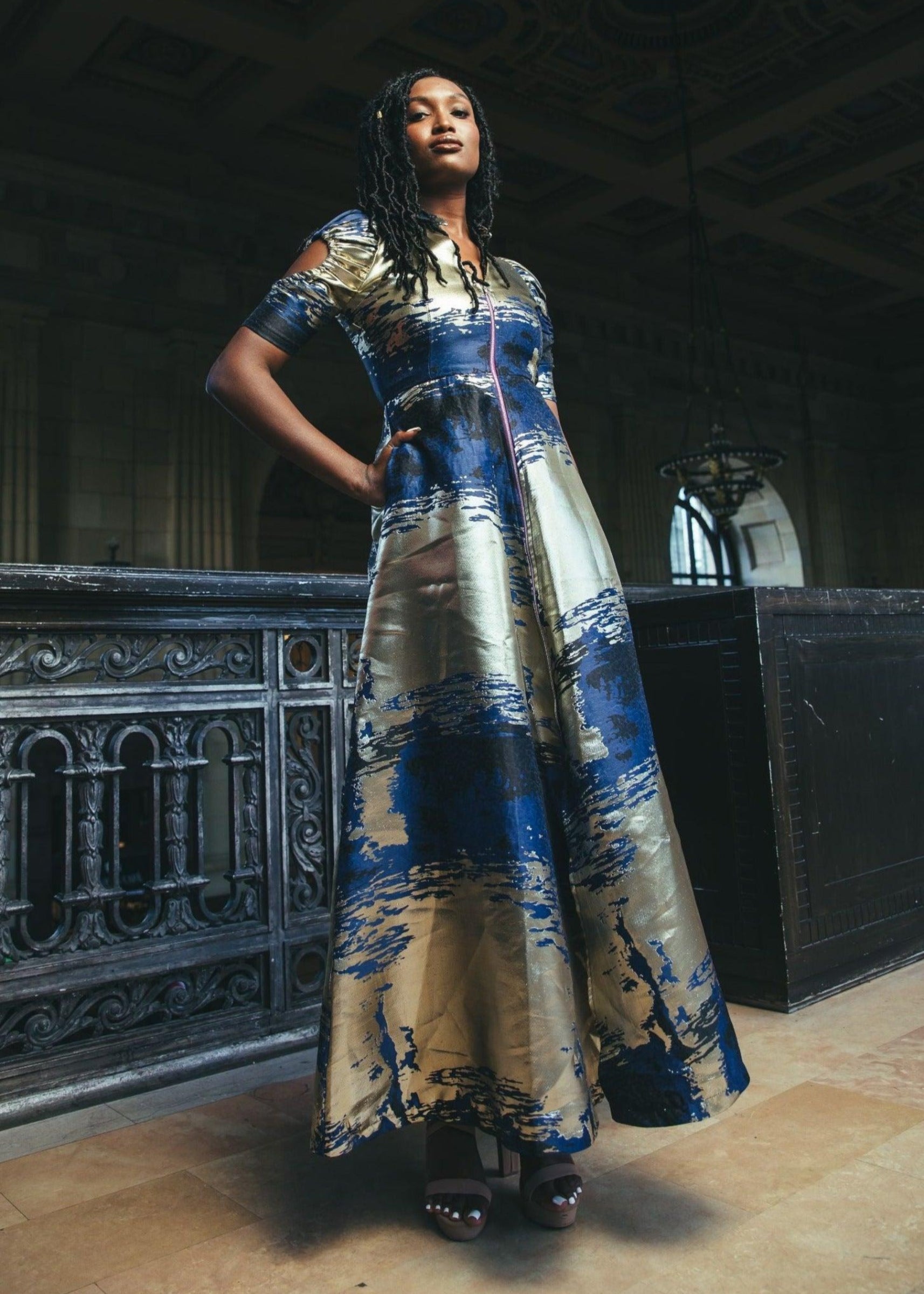
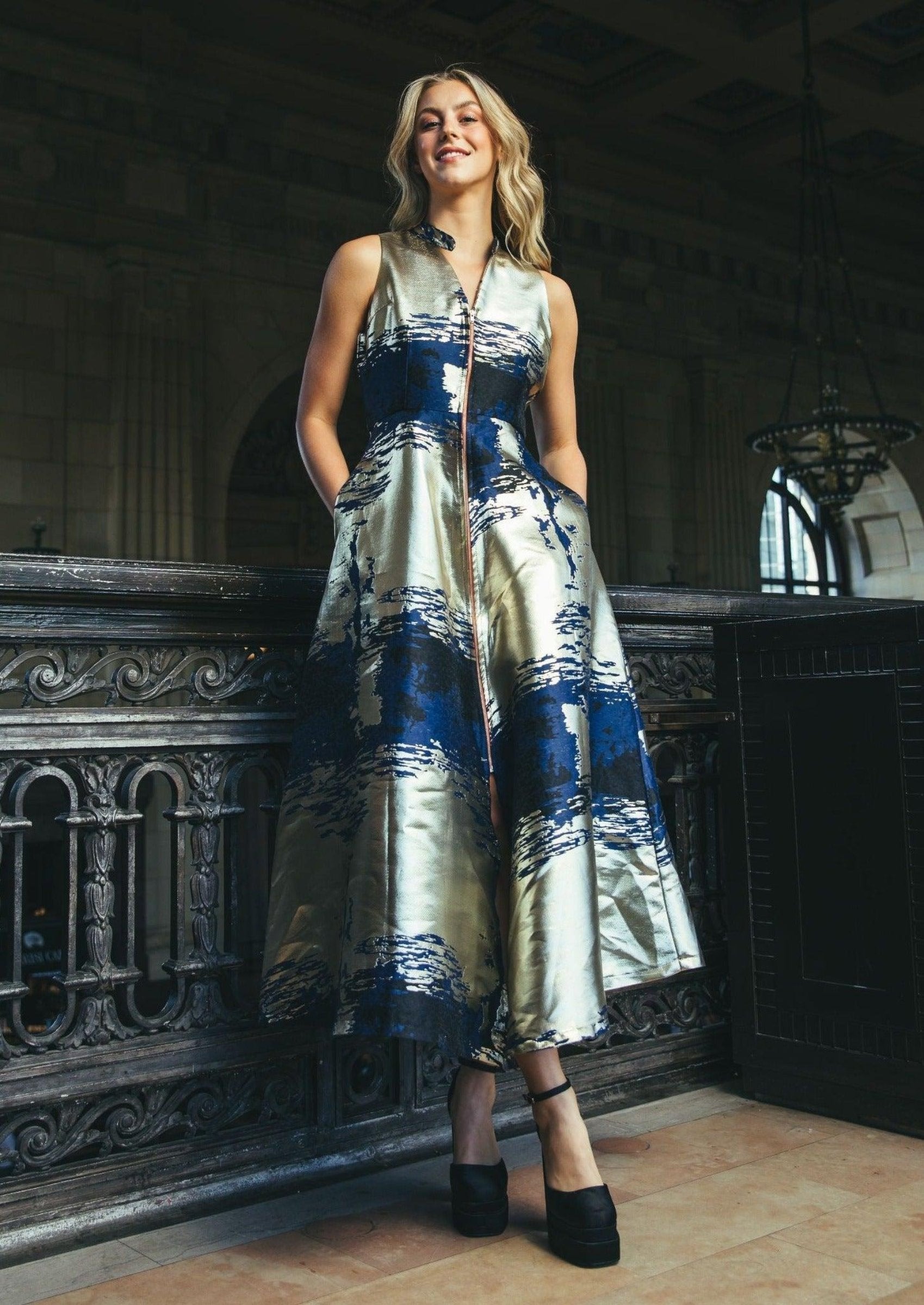
For a look that carries real presence, a handcrafted piece with an original print does the work for you. KAHINDO's Double Collar Ombré Organza Midi Dress covers the shoulders with an architectural collar and falls to midi length, and the ombré organza shifts color as you move. It's a wedding guest dress that reads as a statement without any extra styling.
Conclusion
The hardest part of dressing for a wedding isn't finding something modest. It's building one outfit that handles the season, the venue, and the dress code without a last-minute scramble.
At KAHINDO, we design occasionwear for exactly this: handcrafted dresses that stand out and hold up. Explore the Double Collar Ombré Organza Midi Dress for a summer or garden wedding, or the Lionshead Trench Coat to layer over a winter look.

Frequently Asked Questions
What should I wear over a sleeveless dress to a wedding?
A tailored layer solves this without hiding the dress. A cotton trench coat with a removable belt gives you coverage from shoulder to below the knee and looks deliberate rather than improvised. For indoor ceremonies, a silk scarf draped over the shoulders or knotted at the neck adds coverage and color in one move. Match the layer's weight to the venue: light and breathable for summer, structured and substantial for winter. Avoid anything that competes with the dress's neckline, since stacked details read messy in photos.
How do I dress modestly for a summer wedding without overheating?
Fabric matters more than coverage. Choose opaque, breathable weaves like rayon blends or lined organza, which give you full coverage without trapping heat. Long sleeves in a light fabric are cooler than a sleeveless dress plus a heavy wrap. Keep the silhouette flowing so air moves, and pick lighter colors that reflect sun. A midi or maxi length in a breezy fabric covers legs while staying comfortable through a long ceremony and reception.
Are jumpsuits appropriate for a wedding guest outfit?
Yes, when the fabric and cut match the formality. A well-tailored jumpsuit in a dressy material reads as formal as a midi dress and gives you full leg coverage in one piece. Look for a defined waist, a polished neckline, and a fabric with some structure so it holds its shape through the day. Skip casual cotton or utility styles for evening weddings. Add heels and a clutch to push the look toward semi-formal or formal.
What shoes and accessories work with a modest wedding guest dress?
Keep accessories balanced against your coverage. If your dress has a high neckline and long sleeves, choose simpler jewelry and let the dress lead. A block heel handles grass, gravel, and long walks between ceremony and reception better than a stiletto. For cooler months, closed-toe heels or dressy boots extend the outfit. A silk scarf doubles as a head covering, a shoulder layer, or a bag accent, which makes it the most flexible accessory for modest styling across seasons.