




Article: Wax Print vs Hand-Dyed Fabric: Key Differences
Wax Print vs Hand-Dyed Fabric: Key Differences
Table of Contents
- Wax Print vs Hand-Dyed Fabric: Overview
- Comparison Table: Wax Print and Hand-Dyed Fabric
- Understanding Wax Print Fabric Manufacturing Process
- Batik Fabric vs Wax Print: What Sets Them Apart
- How to Identify Authentic Wax Print Fabric
- Durability, Colorfastness, and Care: How to Wash African Wax Print Fabric
- Cultural Heritage and Global Influence
- Environmental and Labor Impact: Production Transparency
- Frequently Asked Questions
Last Updated: October 19, 2026
Wax Print vs Hand-Dyed Fabric: Overview
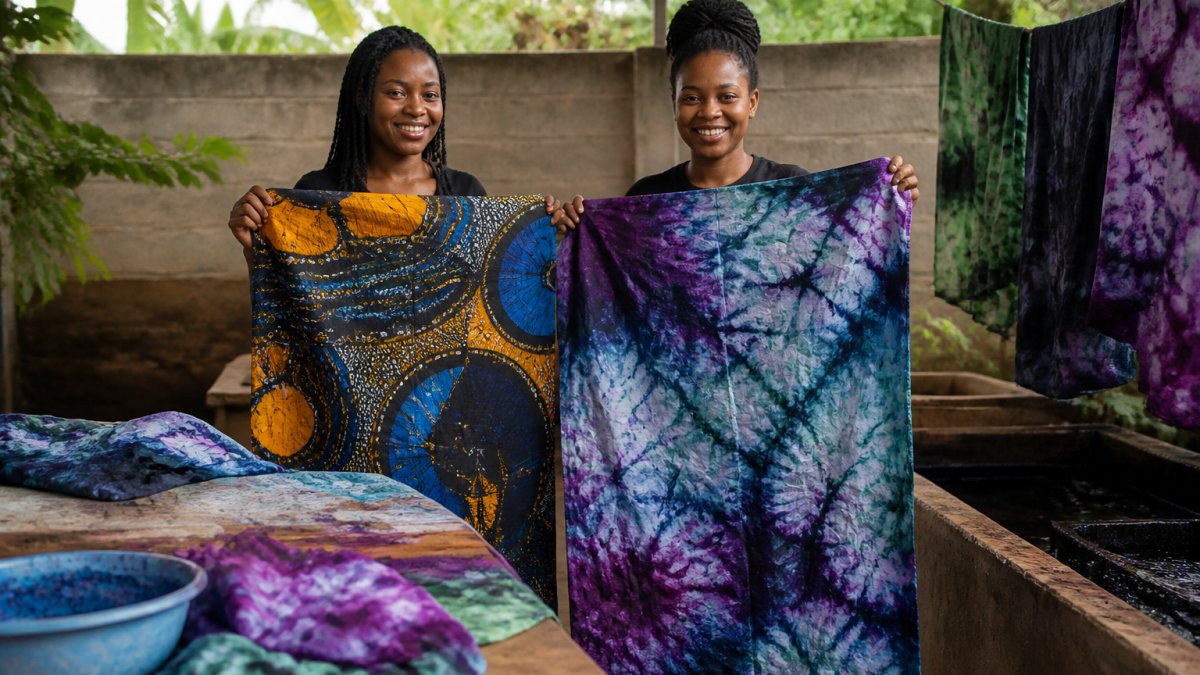
Understanding wax print vs hand-dyed fabric matters when shopping for African-inspired textiles. Wax print uses industrial resist-dyeing to create crisp, repeatable patterns on cotton; hand-dyed fabric relies on artisanal processes where each piece emerges unique. This KAHINDO guide breaks down what separates them, and why it affects the story behind what you wear.
Both celebrate African textile heritage, but they're not interchangeable. The choice depends on what you value: bold, consistent patterns with industrial precision, or subtle variations and artisanal authenticity.
Comparison Table: Wax Print and Hand-Dyed Fabric
| Characteristic | Wax Print Fabric | Hand-Dyed Fabric |
|---|---|---|
| Production Method | Industrial wax-resist dyeing with mechanical printing | Artisanal hand-dyeing using batik, Adire, or tie-dye techniques |
| Pattern Consistency | Identical repeats across the bolt | Unique variations in every piece |
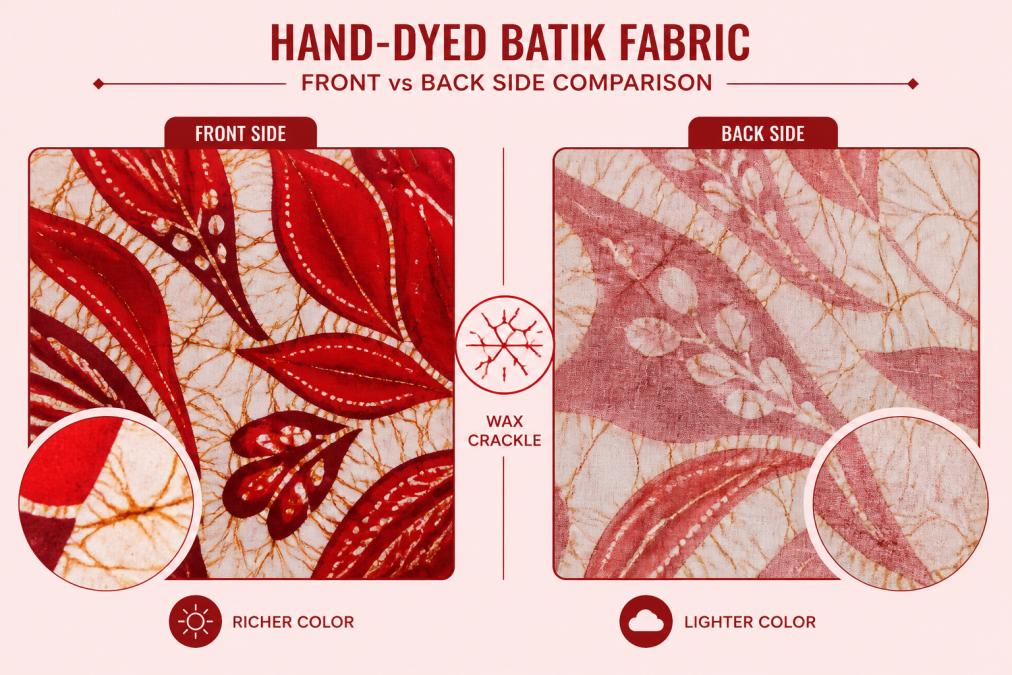
| Color Intensity | Uniform front and back | Variable front and back (lighter reverse side common) |
| Crackling Effect | Minimal to none | Pronounced, visible crackling from wax cracking |
| Manufacturing Scale | Mass production with minimum order quantities | Small-batch or made-to-order production |
| Colorfastness | High; industrial dyes are engineered for durability | Varies; depends on artisan skill and dye quality |
| Cost | Lower per yard; economies of scale | Higher per yard; labor-intensive process |
| Turnaround Time | Weeks to months (MOQ required) | Weeks to months (custom orders) |
| Cultural Origin | West African textile traditions, industrial adaptation | West African textile traditions, handmade heritage |
| Best For | Bold, consistent patterns; high-volume orders | Singular, artisanal pieces; custom occasions |
Understanding Wax Print Fabric Manufacturing Process
Wax print fabric manufacturing adapted traditional West African techniques into large-scale production. It begins with 100% cotton cloth, treated with hot wax applied in precise patterns using screens or rollers. Once the wax hardens into a resist layer, the fabric is immersed in dye vats: the wax blocks dye from penetrating, leaving the original color in protected areas while exposed cotton absorbs the dye.
The result is crisp designs and bright colors. Industrial wax printing produces identical pattern repeats across entire bolts.
The process relies on minimum order quantities, typically hundreds to thousands of yards. Production is faster once underway, though setup time makes individual custom orders impractical.
Industrial Wax Printing vs Artisan Production
Industrial wax printing operates at scale, with production lines processing hundreds of yards per day. The consistency is mechanical and reliable: every yard matches the last.
Artisan wax printing, when it exists, is rare and commands premium pricing. Some small workshops still hand-apply wax, but most contemporary "artisan" wax print is industrially produced; the distinction is design origin or material quality, not manufacturing speed. KAHINDO focuses on hand-dyed techniques rather than wax printing, prioritizing artisanal character and unique variations.
Batik Fabric vs Wax Print: What Sets Them Apart
Batik is a hand-dyed resist technique that predates industrial wax printing by centuries. Hot wax is applied directly to cotton by hand, using brushes, stamps, or immersion, creating a resist layer before the fabric is dipped into dye vats. When the wax is removed, the pattern is revealed.
The key difference from industrial wax print is the hand application and resulting aesthetic. Batik patterns often show visible crackling where the wax fractured during dyeing, creating fine lines that give the fabric texture and depth. Each piece is unique because the crackling is impossible to replicate exactly.
Wax print, by contrast, uses industrial screens or rollers to apply wax in precise, repeatable patterns. The crackling is minimal or absent because the wax is applied mechanically and removed under controlled conditions. Wax print prioritizes consistency; batik celebrates variation.
Both techniques celebrate African textile heritage. Batik traditions are especially strong in West Africa, where Adire, a Nigerian indigo-dyed resist technique, is deeply rooted in cultural identity. Wax print adapted these traditions into industrial production, making patterned African textiles accessible at scale.
How to Identify Authentic Wax Print Fabric
Authentic wax print fabric has telltale characteristics. The pattern is identical on both sides, front and back showing the same design with equal color intensity, a hallmark of industrial wax printing. The fabric feels crisp, with a tight, dense weave.
Hand-dyed fabric tells a different story. The back side is often lighter than the front because dye penetrates unevenly during hand immersion. The pattern is never perfectly identical when you compare two pieces side by side. The crackling effect, fine lines where wax fractured, is visible and pronounced.
Imitation fabric is a real concern. Some manufacturers use screen or digital printing to mimic wax print patterns on synthetic blends or lower-quality cotton. These imitations fail to deliver the cultural authenticity and craftsmanship that make these textiles meaningful.
When you buy from KAHINDO, every garment comes with a provenance card documenting the artisan who made it and the labor hours invested. This transparency allows you to verify that what you're wearing is genuinely handcrafted by female artisans in Kenya, not mass-produced in an industrial facility overseas.
Testing for Crackling and Pattern Consistency
To test whether fabric is hand-dyed or industrially produced, examine the crackling closely. Hold it up to light and look for fine lines through the pattern. Hand-dyed batik and Adire show pronounced crackling because the wax naturally fractures during dyeing; industrial wax print shows minimal crackling.
Check the back of the fabric against the front. If the pattern is identical and the color intensity matches, you're likely looking at wax print. If the back is noticeably lighter or the pattern appears softer, you're probably looking at hand-dyed fabric.
Feel the fabric between your fingers. Hand-dyed cotton often feels softer and more organic because dyeing doesn't require the chemical treatments of industrial production. Wax print feels crisper and more structured.
Durability, Colorfastness, and Care: How to Wash African Wax Print Fabric
Colorfastness, a fabric's ability to retain color after washing, depends on production method and dye quality.
Hand-dyed fabric colorfastness varies based on the artisan's skill and the quality of natural dyes used. This doesn't mean hand-dyed fabric is fragile, it means it requires more intentional care. The color may shift or soften slightly over time, which many consider part of the fabric's charm.
Both fabrics require cold-water washing to preserve color and pattern integrity. Use gentle detergent, and air-dry rather than machine-dry.
KAHINDO garments made from hand-dyed Adire and batik fabrics include care instructions specific to each piece. The slow-bath dyeing processes used create unique, non-replicable gradients that deserve intentional maintenance.
Hand-Dyed Adire Print Cotton Romper with Cutout Back →

Washing and Fading Comparison
Wax print tolerates warmer water and more aggressive washing than hand-dyed fabric.
Hand-dyed fabric requires hand washing or a delicate machine cycle in cold water. The first wash may release excess dye, which is normal and expected. Wash hand-dyed pieces separately initially to avoid transferring dye to other garments. After the first few washes, the dye stabilizes and fading slows.
Both fabrics benefit from turning garments inside out before washing to protect the pattern from friction. Avoid chlorine bleach on both. For stubborn stains, pre-treat with cold water and mild soap rather than harsh chemicals.
The longevity difference is subtle. Hand-dyed fabric develops character over time; colors may soften and shift, but that's part of its appeal. A hand-dyed KAHINDO garment worn regularly for five years will show its history in subtle color variations.
Cultural Heritage and Global Influence
African wax print and hand-dyed fabrics carry deep cultural significance. They are expressions of identity, heritage, and artistry, not simply decoration.
Hand-dyed techniques like Adire and batik are rooted in centuries-old traditions. Adire, originating in Nigeria, uses indigo and resist-dyeing methods practiced for generations. The patterns and colors communicate cultural messages and social status. In contemporary fashion, these textiles have gained global recognition as symbols of African artistry and pride.
KAHINDO centers African provenance as a primary luxury asset. Every collection is rooted in cultural storytelling, from Congolese heritage to the artistry of female artisan communities across Kenya. The brand's approach treats these textiles not as trends but as expressions of heritage and empowerment.
The global influence of African textiles has grown significantly, with designers worldwide incorporating wax print and hand-dyed fabrics into contemporary collections. This adoption comes with responsibility: authentic African textiles should be sourced ethically and credited to their cultural origins, not appropriated as generic "ethnic" prints.
Environmental and Labor Impact: Production Transparency
The production method determines environmental and labor impacts. Industrial wax print requires significant water and chemical inputs; synthetic dyes generate wastewater that must be treated to prevent contamination.
Hand-dyed fabric production is typically smaller-scale and labor-intensive. Artisans often use natural dyes like indigo, which are less harmful than some synthetic alternatives.
Labor practices differ significantly. Industrial wax print relies on factory workers, often in countries with varying labor standards, doing repetitive, fast-paced work.
KAHINDO's commitment to fair-trade practices ensures that female artisans in Kenya receive living wages and equitable treatment.
According to the International Labour Organization's guidelines on fair trade textiles, ethical production requires transparency in supply chains and fair compensation for workers.
Research from the Ethical Fashion Initiative shows that artisan-centered production models create sustainable livelihoods while preserving cultural textile traditions. This approach contrasts with mass-production models that prioritize volume over artisan equity.
The United Nations Sustainable Development Goals emphasize gender equality and decent work, both of which are central to KAHINDO's mission.
The difference between wax print and hand-dyed fabric ultimately comes down to what you value in your wardrobe.
KAHINDO specializes in hand-dyed and artisan-printed textiles that celebrate African heritage while supporting female artisans in Kenya. Every garment, from the Hand-Dyed Adire Print Cotton Romper to the Strapless Batik Cotton Mini Dress, is handcrafted with intention and documented with a provenance card.

Frequently Asked Questions
What is the difference between wax print and hand-dyed fabric?
Wax print uses hot wax as a resist during dyeing to create crisp, repeating patterns with sharp edges, while hand-dyed fabric relies on immersion in a dye vat without wax, producing softer, more variable color gradients. Wax print typically shows identical patterns front and back, whereas hand-dyed fabrics often display different color intensities on each side. Hand-dyed pieces are uniquely one-of-a-kind due to natural variation in the dye process, while wax prints can be reproduced at scale.
How do you identify authentic wax print fabric?
Check the back of the fabric; genuine wax print shows the same pattern and color as the front. Imitation wax prints use screen printing or digital printing instead, showing flatter, more uniform color.
Is batik the same as wax print?
Batik and wax print are related resist-dyeing techniques, but not identical. Wax print, popular in West African textile traditions, typically uses industrial or semi-industrial methods to apply wax in repeating patterns, allowing for larger production scale and consistent pattern repeat. Both create color resistance through wax, but batik emphasizes handcrafted artistry while wax print prioritizes pattern consistency.
How should you wash African wax print fabric to preserve color?
Hand wash wax print fabric in cold water with mild detergent to prevent fading. Dry flat or hang to air dry rather than using a machine dryer. Turn the garment inside out before washing to protect the front pattern. All African textiles benefit from gentle care to extend their lifespan.
What makes wax print fabric manufacturing different from hand-dyed production?
Wax print manufacturing applies hot wax in repeating patterns onto cotton cloth, then dips the entire fabric into a dye vat. This industrial or semi-industrial process allows high production volume and consistent pattern repeat. Hand-dyed fabric skips the wax step entirely; artisans immerse plain cotton directly into dye vats, creating natural color variation and gradients that differ piece to piece. Hand-dyed production is ideal for artisan-scale operations like those supporting female artisans in fair-trade cooperatives.