

Article: Modern Designers vs. Traditional Tailors
Modern Designers vs. Traditional Tailors
Table of Contents
- Modern African Fashion Designers vs. Traditional Tailors: Key Differences
- Design Philosophy: Ancestral Techniques Meet Contemporary Aesthetics
- Production Methods and Garment Construction
- Unique African Print Formal Gowns: The Designer Advantage
- Ethical Luxury Womenswear and Supply Chain Transparency
- Pricing, Investment Value, and Economic Models
- When to Choose a Designer vs. a Tailor
- Conclusion
- Frequently Asked Questions
Last Updated: September 26, 2026
Modern African Fashion Designers vs. Traditional Tailors: Key Differences
The choice between modern African fashion designers traditional tailors isn't just about where you shop, it's about what you're buying into. Modern African fashion designers bring contemporary aesthetics, global distribution, and transparent supply chains to the table. Traditional tailors offer bespoke craftsmanship, direct relationships, and garments made specifically for your body. Both approaches have merit, but they serve fundamentally different needs.
KAHINDO bridges these two worlds. This guide breaks down exactly where modern designers and traditional tailors diverge, and where they complement each other.
Design Philosophy: Ancestral Techniques Meet Contemporary Aesthetics
Modern African fashion designers traditional tailors blend ancestral techniques with contemporary aesthetics in distinctly different ways. Designers start with a concept rooted in cultural heritage, Congolese textile traditions or Nigerian Adire resist-dyeing, and translate it into current, wearable silhouettes.
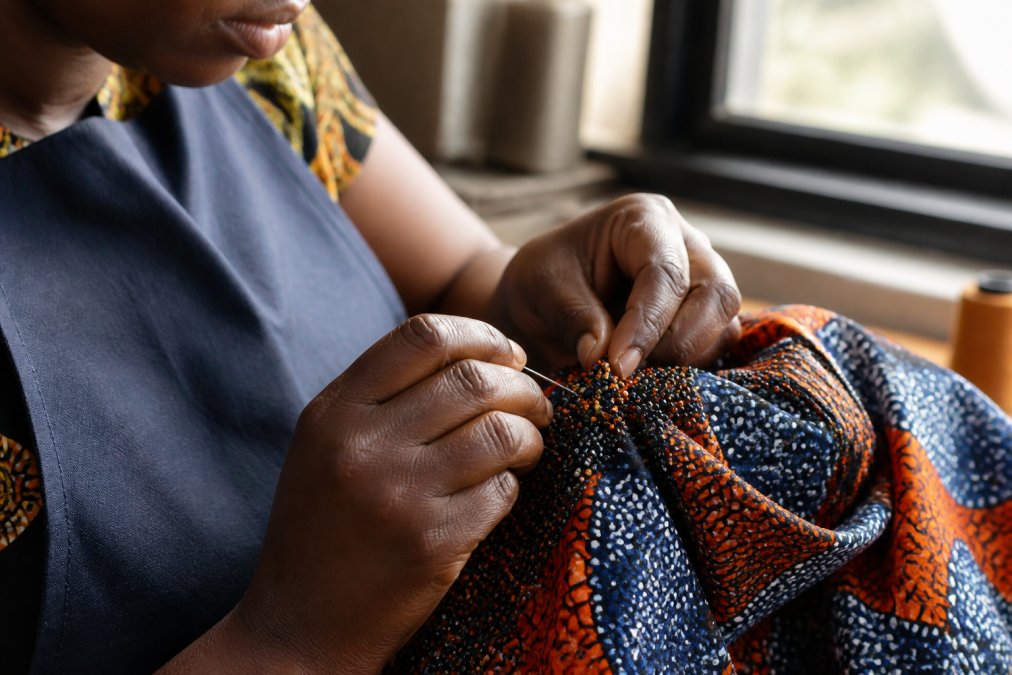
Traditional tailors start with your body and preferences, then apply time-honored construction methods. Their design philosophy centers on fit, proportion, and how fabric drapes on you, not on broader cultural narrative or seasonal themes.
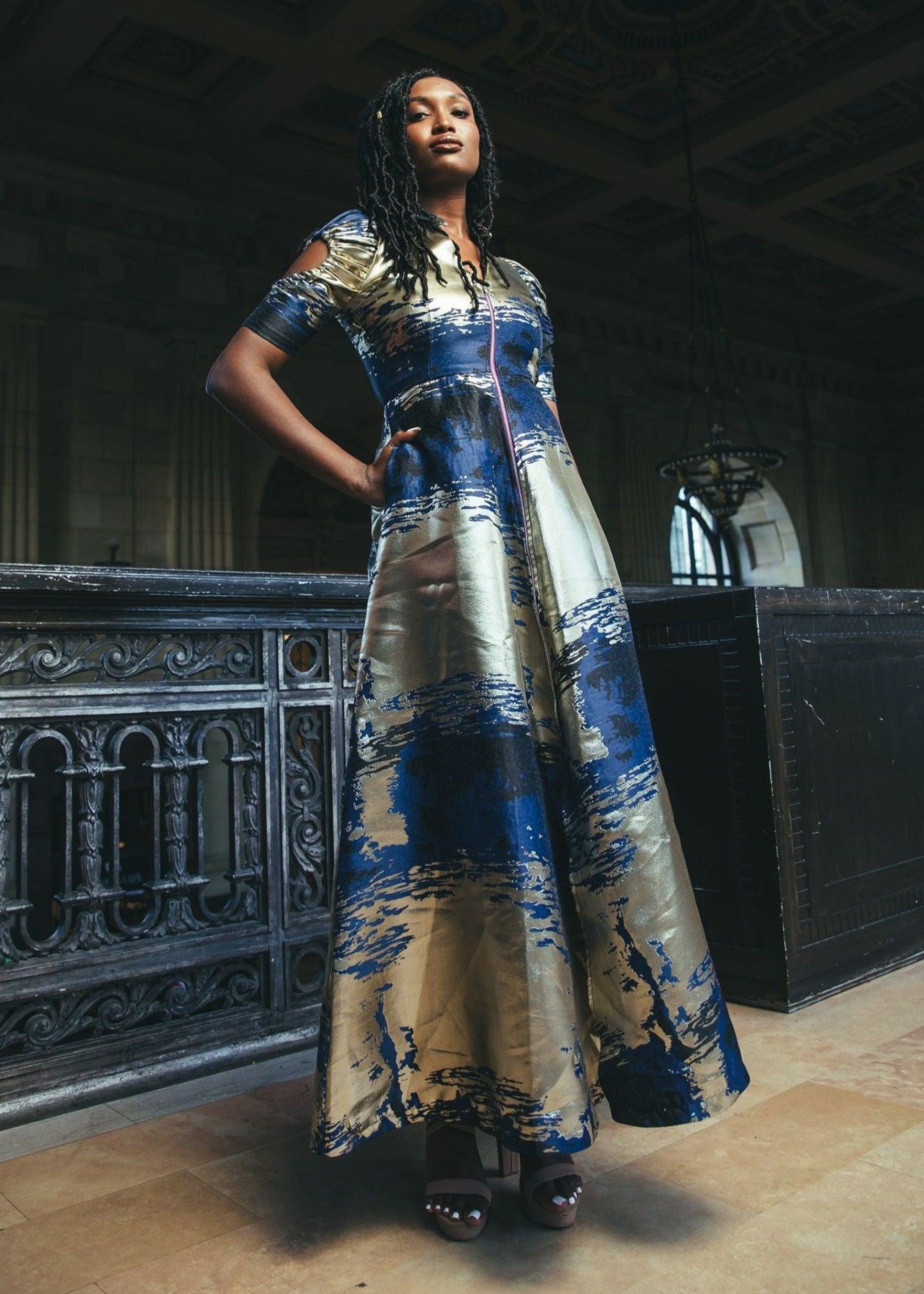
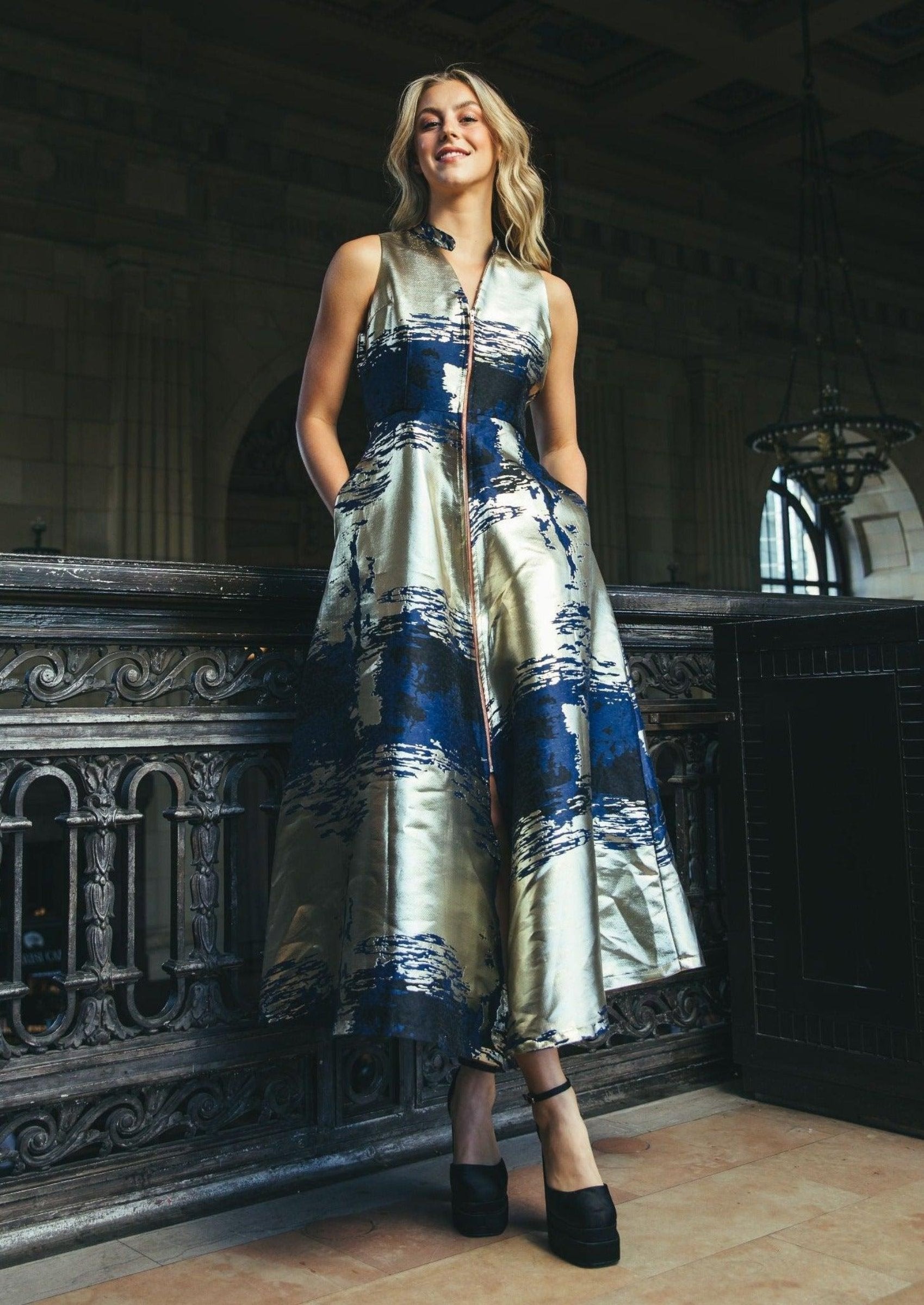
A designer's piece carries intentional storytelling. When you wear a KAHINDO gown, you're wearing a garment rooted in Congolese heritage, constructed using fair-trade practices, and designed to make a statement at formal occasions.
A tailor's piece prioritizes your individual silhouette, measured, constructed, and tailored specifically to flatter your frame.
Designers showcase craftsmanship through textile innovation and boundary-pushing construction. Tailors showcase it through precision fit and adaptation to your exact proportions.
Production Methods and Garment Construction
Timeline and Scale Differences
Designers work in batches, planning 3-6 months in advance. This ensures consistency, every size small fits the same way, every piece uses the same fabric batch, but requires advance sourcing and production scheduling.
Traditional tailors work one piece at a time, taking 2-4 weeks. Every seam is sewn with your body in mind, delivering unmatched fit precision.
Supply Chain and Sourcing Strategy
This is where the two models diverge most dramatically.
Modern designers establish long-term relationships with fabric suppliers, textile artisans, and production facilities. KAHINDO sources hand-dyed Adire fabrics from Nigerian artisan communities and partners with female-led production facilities in Kenya. This requires:
- Advance fabric commitments: Bulk orders (50-500 meters per print) months before production
- Quality control: Multi-stage inspections ensure consistency
- Inventory management: Storage and carrying costs for unsold stock
- Supplier relationships: Long-term partnerships enable fair wages and custom finishes, but reduce flexibility
Traditional tailors source differently:
- Client-provided materials: Many clients bring their own fabric
- Local suppliers: Relationships with 2-5 local fabric merchants, no bulk commitments
- Opportunistic sourcing: Buy quality fabric at good prices for future clients, keeping overhead low
- No inventory carrying: Produce only on commission, minimizing waste and storage costs
Garment Construction Process
Designers use pattern grading systems that scale across sizes using mathematical ratios. This ensures consistency but sometimes sacrifices the nuanced fit a tailor provides.
Tailors draft patterns directly from your measurements, accommodating individual proportions. This is why tailor-made garments often fit better, they're built from your specific body, not graded from a standard.
Cost Structure Implications
- Designers: Fixed costs (design, sampling, quality control, marketing) spread across multiple units; variable costs decrease per unit at higher volume
- Tailors: Minimal fixed costs; variable costs remain constant per piece regardless of volume
Unique African Print Formal Gowns: The Designer Advantage
Modern designers have a structural advantage with unique African print formal gowns. A designer like KAHINDO commissions original designs rooted in cultural storytelling, sources hand-dyed fabrics from artisan communities, and produces limited quantities. Traditional tailors typically work with client-provided or locally sourced fabrics, excelling in construction and fit rather than fabric uniqueness.
For occasion-ready wear, a designer's formal gown carries intentional storytelling and visual impact. A tailor's formal gown carries precision fit and personal customization. Designers test silhouettes across multiple sizes before release; tailors construct one piece at a time.
Ethical Luxury Womenswear and Supply Chain Transparency
This is where the modern designer model, when executed thoughtfully, offers something traditional tailors typically cannot: documented supply chain transparency and fair-trade accountability at scale.
Modern designers can implement traceability systems. KAHINDO includes a provenance card documenting the artisan, labor hours, and fair wages paid. Traditional tailors operate on relationship and reputation, with no third-party verification or documented supply chain.
Modern designers offer verifiable accountability through documented fair-trade practices. Traditional tailors often operate ethically by scale alone, they're not producing in exploitative factories, but don't provide documented evidence.
Pricing, Investment Value, and Economic Models
The pricing difference between modern designers and traditional tailors reflects fundamentally different business models, cost structures, and value propositions. Understanding these differences helps you evaluate whether you're getting genuine value or paying for overhead.
Cost Structure Breakdown
Traditional Tailor Model:
- Workspace: $200-$500/month
- Materials: 10-20% markup on fabric cost
- Labor: Tailor's time; apprentices paid hourly or as percentage of revenue
- Marketing: Word-of-mouth, minimal digital presence
- Overhead: Minimal, no inventory carrying costs
Result: Custom garments typically range $150-$500 depending on complexity. A simple shift dress: $150-$250; a structured formal gown: $400-$600. Tailor's margin: 40-60% of final price.
Modern Designer Model:
- Design and sampling: $2,000-$10,000 per collection
- Fabric sourcing: Bulk orders at wholesale prices (30-50% of retail)
- Production: $15-$40 per unit labor cost
- Quality control: 5-10% of production cost
- Marketing and e-commerce: $500-$5,000/month
- Inventory carrying: 10-20% of production cost annually
Result: KAHINDO's formal gowns range $75-$200.
Why the Price Difference?
A $300 designer gown and a $300 tailor-made gown are not the same product, even if they look similar.
Investment Value and Longevity
Business Model Sustainability
When to Choose a Designer vs. a Tailor
The decision comes down to what you actually need.
Choose a modern designer if:
- You want a statement piece for a specific occasion (wedding, gala, milestone event)
- You value the story and cultural heritage behind the garment
- You want something you know won't show up on anyone else at the event
- You prioritize supply chain transparency and ethical production
- You want consistent sizing and fit across a known size range
- You prefer shopping online with a clear return policy
- You value the design aesthetic and brand story as part of what you're buying
KAHINDO's gowns, for example, are designed for women who want standout occasion-ready wear with documented ethical production. You're buying the design, the story, the artisan empowerment, and the confidence that you're wearing something singular.
Choose a traditional tailor if:
- You need a garment made to your exact measurements and body type
- You want direct input into every design decision
- You prefer working face-to-face with the person making your garment
- You have specific fit needs that ready-to-wear doesn't address
- You want to build a long-term relationship with a craftsperson
- You're willing to wait longer for production and handle fittings
- You prioritize precision fit over design storytelling
Conclusion
Modern African fashion designers and traditional tailors solve different problems. Designers bring contemporary aesthetics, cultural storytelling, supply chain transparency, and occasion-ready impact. Tailors bring precision fit, customization, and direct craftsmanship.
Frequently Asked Questions
What's the fundamental difference between a modern African fashion designer and a traditional tailor?
Modern African fashion designers create original collections with cohesive design narratives, blending cultural heritage with contemporary silhouettes for ready-to-wear or bespoke pieces. Traditional tailors focus on custom garment construction, adapting existing patterns or client specifications to fit individual measurements. Designers set trends and own the creative vision; tailors execute client requests with precision. Modern designers often emphasize brand storytelling and cultural identity, while tailors prioritize fit and construction quality.
How do modern African designers incorporate traditional prints into contemporary silhouettes?
Modern African fashion designers source traditional textiles like hand-dyed Adire and original African prints, then reinterpret them through avant-garde silhouettes, unexpected fabric pairings, and innovative garment construction. They honor ancestral techniques by preserving the textile art while updating the garment shape, sleeve design, and overall aesthetic. This fusion respects cultural heritage while making traditional craftsmanship relevant to modern fashion weeks and global audiences. The result is pieces that tell a cultural narrative through both fabric and form.
When should you choose a bespoke tailor versus a luxury designer brand for formal occasions?
Choose a bespoke tailor if you need a custom fit for your specific body type, have limited time, or prefer working directly with a craftsperson. Choose a luxury designer brand if you want an original design concept, cultural storytelling, investment-quality pieces with resale potential, and verifiable ethical production. For formal occasions like weddings or galas, a designer brand offers unique, non-mass-produced statement pieces with documented artisan provenance. Tailors excel at perfecting fit; designers excel at creating singular, occasion-ready silhouettes with cultural meaning.
What role do female artisans play in the modern African luxury fashion supply chain?
Female artisans are central to modern African luxury fashion, providing the intricate craftsmanship, textile innovation, and hand-finishing that distinguish designer pieces from mass production. They execute hand-dyeing, embroidery, garment construction, and quality control, often working in cooperative ateliers that ensure fair wages and economic empowerment. Modern designers position female artisan labor as a primary luxury asset, not a cost-cutting measure. This approach preserves traditional skills, supports local economies, and creates a transparent supply chain where consumers can verify the artisan behind each garment.