


How to Verify Fair Trade Fashion: A 2026 Guide
Table of Contents
- Why Verification Matters in Fair Trade Fashion
- How to Check if a Brand Is Ethical: A 5-Step Verification Process
- Understanding Ethical Fashion Certification Labels
- Spotting Greenwashing in the Fashion Industry
- Living Wage vs. Minimum Wage: What Fair Trade Actually Guarantees
- Conclusion: Make Verification a Habit
- Frequently Asked Questions
Last Updated: September 9, 2026
Why Verification Matters in Fair Trade Fashion
Recent data shows that 57% of Gen Z consumers now require tangible proof, such as official certifications, before they will trust sustainability claims made by fashion brands (Rawshot.ai Gen Z Sustainable Fashion Statistics, 2026). That shift toward scrutiny is reshaping how all of us shop, not just the youngest buyers. Learning how to verify fair trade fashion is no longer a niche concern; it is the core skill for anyone who wants their spending to match their values.

Fair trade fashion is clothing produced under standards that prioritize living wages, safe working conditions, and worker empowerment throughout the supply chain. The challenge is that the label alone rarely tells the whole story. As the U.S. sustainable fashion market grows toward an estimated $2.5 billion to $3.2 billion by the end of 2026 (SourceReady US Sustainable Fashion Market Report 2026), the incentive for brands to make claims they cannot fully back also grows.
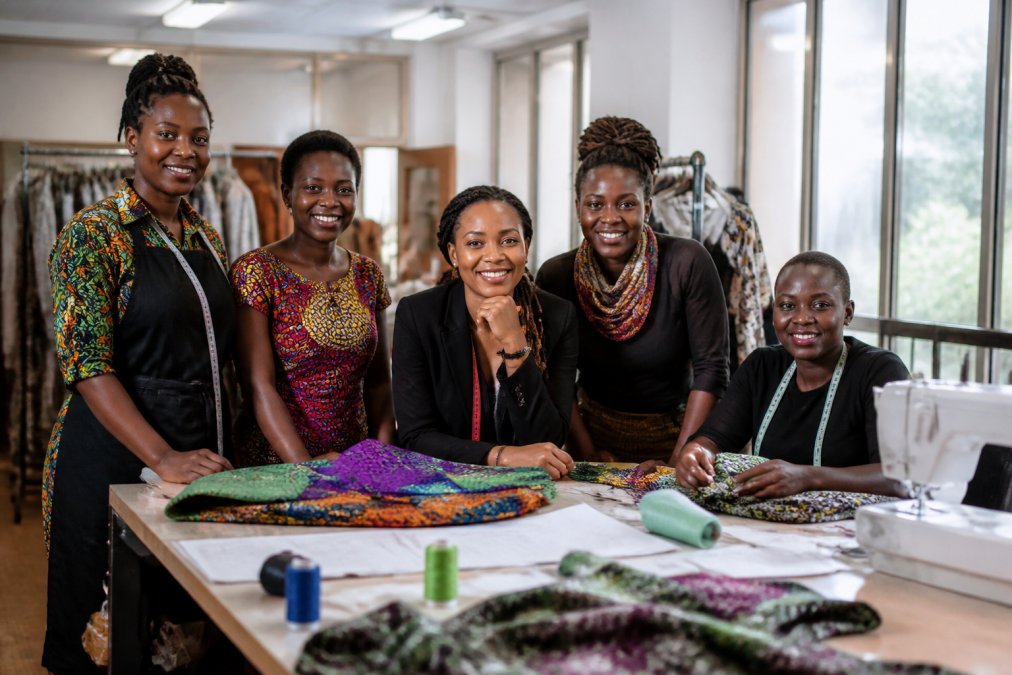
At KAHINDO, we design occasionwear handcrafted by female artisans in Kenya, and we treat verification as a two-way street: we owe our customers proof, and you deserve a reliable method to check any brand you consider. Below, we'll show you exactly how to verify fair trade fashion in five practical steps, what the certification labels actually mean, and how to spot the greenwashing tactics that muddy the waters.
How to Check if a Brand Is Ethical: A 5-Step Verification Process
Checking whether a brand is ethical comes down to documented evidence rather than marketing language. The process takes about fifteen minutes per brand once you know what to look for.
Step 1: Inspect the Certification Label
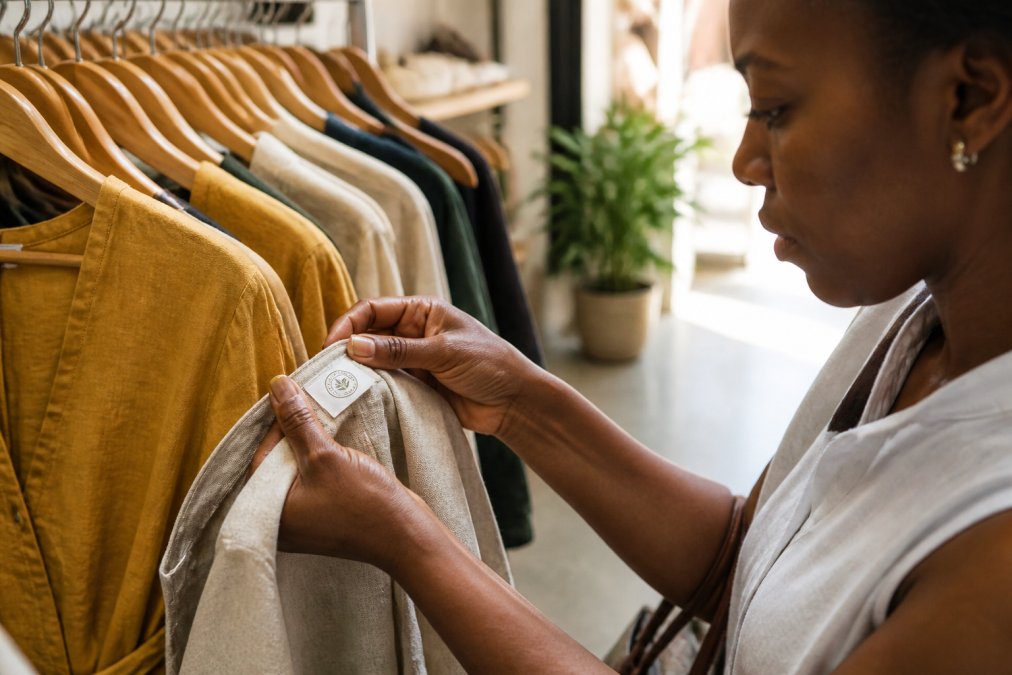
Start with the physical garment or the product page. Look for a sewn-in label or a clearly displayed certification mark, not just a mention in the brand's "About Us" story. Legitimate certifications such as Fair Trade Certified, GOTS, or B-Corp appear directly on the product or its official imagery. The label must be on the specific item you are buying, not on a different product in the same collection. If the product page shows the certification logo but the garment's sewn-in label does not carry the corresponding mark, that is a discrepancy worth questioning.
Step 2: Cross-Reference the Certificate Number
A logo alone is not proof. Industry best practices in 2026 require requesting the manufacturer's Fair Trade certificate and looking for a visible certification number with an expiration date (Megavick Wear guidance on ethical manufacturers). Take that number and enter it into the issuing body's public database. For GOTS, for example, a license number that does not appear in the official registry is a red flag. For Fair Trade Certified, the Fair Trade USA website maintains a public list of certified partners and their facilities. Here is what to check once you find the listing:
- Does the facility name match? Some brands list a parent company that is certified, but the actual sewing factory is a subcontractor that is not covered.
- Is the certification current? Certifications expire, typically on a one-to-three-year cycle. An expired certificate means the brand has not completed its most recent audit.
- What scope does the certificate cover? A certificate may cover only the cotton sourcing, not the garment assembly. Read the scope language carefully.
Step 3: Look for Supply Chain Transparency
Traceability is the backbone of verification. The 2026 Fashion Retail Outlook identifies traceability and transparency as core strategic trends, with brands expected to provide factory lists and labor practice reports (Strategy& Fashion Retail Outlook 2026). If a brand cannot name its factories or describe its supply chain mapping, treat vague assurances with skepticism. But naming a factory is only the first layer. Ask these follow-up questions:
- Can the brand name the specific factory that made the garment you are holding? A general factory list for the company is not the same as traceability for a specific SKU.
- Does the brand disclose the factory's audit history? Look for whether the factory has passed or failed recent social compliance audits, and what corrective actions were taken.
- Is there a third-party verification layer? The most credible brands use independent auditors such as SGS, Bureau Veritas, or Intertek, not just self-reported supplier questionnaires.
Step 4: Verify the Audit Trail
Certifications are not static; they depend on ongoing audits. The most rigorous fair trade certifications require unannounced or semi-announced on-site inspections. When you ask a brand for its audit documentation, a legitimate operation will share a summary report or direct you to a public registry. You are looking for evidence of continuous monitoring, not a single inspection from five years ago. A common pattern among brands that are not truly fair trade is to cite an audit that occurred before a factory changed ownership or moved locations. If the audit predates the current production run, ask when the most recent inspection happened.
Step 5: Test the Brand's Willingness to Answer
This final step is the one most guides omit. Send the brand a direct question through its customer service channel: "Can you tell me which factory produced this specific item, and can you share its most recent fair trade audit summary?" Then time the response. A brand with genuine fair trade practices will respond within a few business days with specific documentation or a link to a public registry. A brand that deflects, uses vague language, or takes weeks to respond is demonstrating its actual commitment.
Understanding Ethical Fashion Certification Labels
Not all ethical fashion certification labels carry equal weight. The most rigorous certifications share three traits: they are issued by independent third parties, require on-site audits, and cover both social and environmental standards.
The Fairtrade Mark, for instance, requires garments to contain at least 20% certified Fairtrade content to feature the label with an arrow (Ethical Consumer guidance on Fairtrade labeling). That specific threshold matters because it prevents brands from using a token amount of certified cotton to label an entire garment as fair trade.
Research into sustainable fashion has identified the core values and detailed standards required to define and verify ethical practices (MDPI Sustainability Journal case study, 2022). What this means in practice is that certification bodies maintain codes of conduct covering labor rights, environmental impact, and equitable trade terms. When you see a certification you do not recognize, look it up against the issuing body's database rather than assuming it is legitimate.
Spotting Greenwashing in the Fashion Industry
Greenwashing in the fashion industry is the practice of making environmental or ethical claims that sound good but lack substantiation. It is pervasive, and it is the main reason why learning how to verify fair trade fashion matters.
Not all sustainable clothing certifications are equally trustworthy, and consumers must distinguish between rigorous third-party standards and potentially misleading marketing claims (Lexy Silverstein Sustainable Clothing Certifications 2026 Guide, 2026). Here are the specific tactics to watch for:
- Vague marketing language: Words like "eco-friendly," "conscious," or "responsible" without a named certification or standard.
- Certification-free storytelling: Beautiful imagery of artisans with no documentation of wages, hours, or working conditions.
- Single-attribute claims: A brand highlighting one sustainable material while ignoring the rest of its supply chain.
- Missing audit trail: No mention of independent auditors, factory compliance reports, or third-party verification.
A useful question to ask: does the brand name the specific certification body, or does it just use the word "fair trade" as an adjective? The former invites verification; the latter often avoids it.
Living Wage vs. Minimum Wage: What Fair Trade Actually Guarantees
The distinction between a living wage and a minimum wage is one of the most misunderstood aspects of fair trade fashion, and it directly affects whether your purchase supports worker empowerment. Most consumers assume that if a brand follows local labor laws, workers are being treated fairly. That assumption collapses when you examine how minimum wages are set in garment-producing regions.
The Technical Difference
A minimum wage is the legal floor set by a government. It is a political compromise, not an economic calculation. In many countries with large garment industries, the minimum wage is deliberately kept low to attract foreign manufacturing contracts. A living wage, by contrast, is calculated from the actual cost of basic needs in a specific region: housing, food, healthcare, transportation, and education for children. The Global Living Wage Coalition publishes region-specific benchmarks estimating what a worker actually needs to live with dignity.
Here is the key number to understand: the gap between minimum wage and living wage in major garment-producing countries is typically 30% to 50%. A worker earning minimum wage is missing a substantial portion of their basic needs. This is why fair trade certification standards require living wages, not just minimum wage compliance. When a brand says it "pays above minimum wage," that is not the same as paying a living wage. Above minimum could still be 20% below what the worker needs.
How Living Wages Are Calculated
Living wage benchmarks are not arbitrary. They are derived from cost-of-living surveys that track prices for a standardized basket of goods in specific cities or regions. The calculation typically includes:
- Food: A nutritious diet for a worker and their family, based on local dietary patterns and food prices.
- Housing: Rent for decent, safe housing that meets basic standards, not just the cheapest available shelter.
- Healthcare: Access to basic medical care, including preventive care and emergency treatment.
- Education: School fees, uniforms, and supplies for children.
- Transportation: The cost of getting to and from work.
- A small margin for savings: Enough for unexpected expenses without falling into debt.
These calculations are published and updated regularly. When you see a brand claim it pays a living wage, you can check whether that claim aligns with the published benchmark for the specific factory location. A brand that pays a living wage in one country but sources from factories in three countries needs to meet the benchmark in each location, not just the one it publicizes.
What Fair Trade Certification Actually Requires
Fair Trade Certified and Fairtrade International standards both include living wage provisions, but the mechanisms differ. Fairtrade International uses a "living wage differential", an additional premium paid on top of the negotiated price that is specifically earmarked to move workers toward a living wage. Fair Trade USA's standard requires producers to implement a wage management system that works toward living wages over time, with measurable progress documented in audits.
When you see a fair trade certification, it does not guarantee that every worker currently earns a living wage. It guarantees that the brand or producer is on a documented, audited path toward that goal. That is still meaningfully different from a brand with no certification that simply complies with local minimum wage laws. The certification creates accountability and a timeline; the absence of certification creates no obligation at all.
The Worker Empowerment Dimension
Living wages are not just about income; they are about power. A worker earning a living wage has more bargaining power, more ability to leave an exploitative situation, and more capacity to participate in union organizing or worker committees. Fair trade certification standards typically require not just living wage progress but also worker voice mechanisms: elected worker representatives, grievance procedures, and health and safety committees. When you verify a brand's fair trade status, look for explicit language about living wages and compensation models, not vague references to "competitive pay."
Garment workers paid a living wage can support their families, send children to school, and participate more fully in their communities. Worker empowerment is the measurable outcome of equitable trade practices.
Conclusion: Make Verification a Habit
Verifying fair trade fashion takes a few extra minutes per purchase, but the cumulative effect is significant. Each time you cross-reference a certificate or ask for supply chain transparency, you signal that ethical fashion claims must be backed by evidence.
At KAHINDO, we build verification into every garment. Each piece is handcrafted by female artisans in a Nairobi co-operative under fair-trade practices, and every garment includes a provenance card documenting the artisan and the labor hours behind it.
Get started with KAHINDO and wear occasion-ready pieces you can verify, from wedding guest dresses to eveningwear, knowing your purchase supports women's economic empowerment through fair trade fashion.
Frequently Asked Questions
Is Fairtrade certification legit?
Yes, but not all certifications carry equal weight. Legitimate Fairtrade labels, such as those from Fair Trade USA or the World Fair Trade Organization, rely on independent auditors and published standards. To confirm a claim, ask the brand for its certificate and check the certification number against the issuing body's public database. If the number is missing or doesn't appear, treat the claim with caution.
How do I check if a clothing brand is ethical?
Start by reviewing the brand's website for its code of conduct and factory list. Then, identify which third-party certifications it holds and verify those credentials directly with the issuing organization. Look for specifics like a living wage policy and audit reports. Vague language about 'being ethical' without third-party verification is a common red flag.
What is the difference between fair trade and ethical fashion?
Fair trade fashion refers to a specific set of standards focused on equitable trade, fair compensation, and worker empowerment, often verified by a third-party certification body. Ethical fashion is a broader term that covers these social factors plus environmental impact, animal welfare, and supply chain transparency. A brand can be ethical without formal fair trade certification, but independent verification is the most reliable proof.
How can I spot greenwashing when shopping for clothing?
Look for concrete evidence instead of marketing language. Terms like 'eco-friendly' or 'conscious' without a specific certification or data are vague. Check for a visible certification number with an expiration date, and verify it in the official registry. Also, examine the brand's transparency: does it list its factories or publish audit reports? Over 1,500 companies have adopted Fair Trade Certification, so verifiable claims are increasingly common.