

How to Style Jumpsuits for Formal Weddings
Table of Contents
- Start With the Dress Code: A Formal Wedding Jumpsuit Checklist
- How to Dress Up a Jumpsuit for a Wedding
- What to Wear With a Jumpsuit to a Wedding
- Wedding Guest Jumpsuit Outfit Ideas by Occasion
- Shoes to Wear With a Wedding Jumpsuit
- Fit, Tailoring, and Jumpsuit Practicalities
- Wedding Etiquette and Color Considerations
- Frequently Asked Questions
Last Updated: October 12, 2026
Start With the Dress Code: A Formal Wedding Jumpsuit Checklist
A formal wedding jumpsuit works when the fabric, cut, and color match the dress code and setting. This KAHINDO guide covers how to style jumpsuits for formal weddings, from black-tie rooms to beach ceremonies.
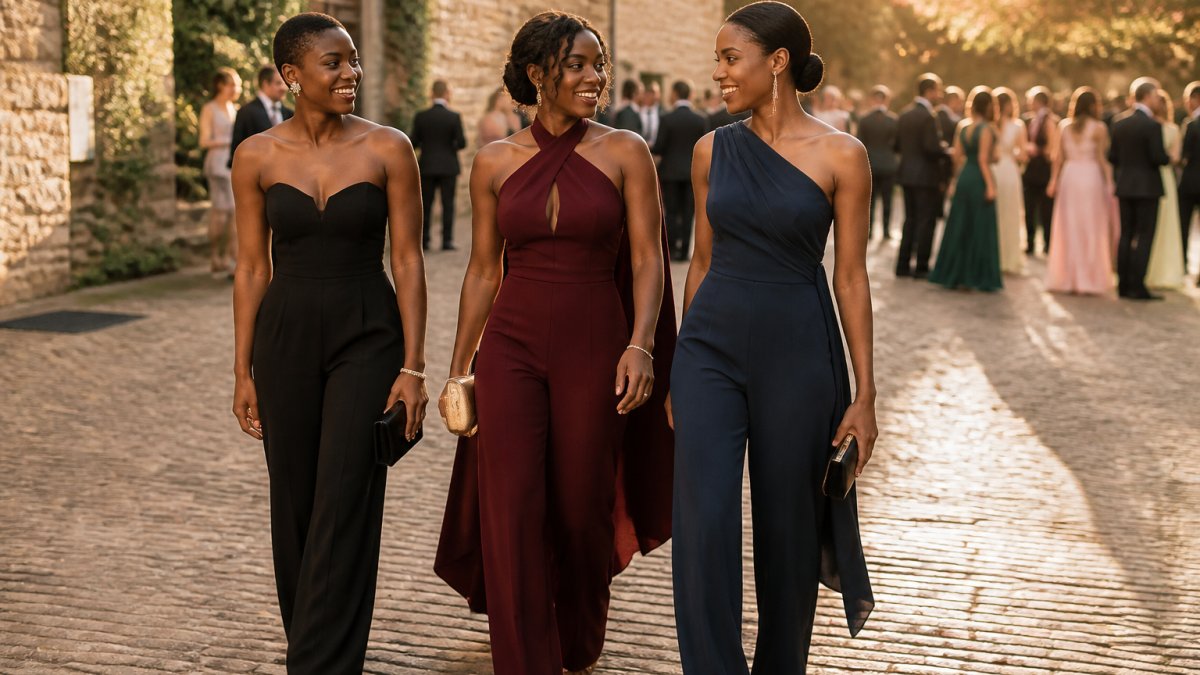
The short version: a jumpsuit belongs at a formal wedding when it is floor-length or wide-leg, in a dressy fabric, finished with real accessories.
Before you shop, run through this checklist:
- Fabric has sheen or weight (satin, crepe, organza)
- Cut is wide-leg, floor-length, or tailored
- Color suits the season and the venue
What Counts as Formal vs. Cocktail vs. Black Tie
The dress code decides how much shine and structure you need.
Formal attire means floor-length or dressy separates in elevated fabric. Cocktail attire sits one step below: knee-length to midi, polished but lighter. Black tie calls for a long silhouette, rich fabric, and refined accessories.
For a jumpsuit, that translates to:
- Cocktail: midi or wide-leg, satin or crepe
- Formal: floor-length, structured, deep color
- Black tie: floor-length, luxe fabric, minimal jewelry
When a couple names a dress code, they are asking guests to match the tone of the room. The Emily Post Institute guide to wedding dress codes explains how guests should read each level.
How to Dress Up a Jumpsuit for a Wedding
You dress up a jumpsuit by upgrading the fabric, color, and silhouette, not by adding more stuff.
Start with fabric: satin, crepe, chiffon, and organza read as eveningwear; cotton, jersey, and linen read as daytime.
Then color: deep tones and rich solids look more formal than pale or busy prints.
Finally, silhouette: a wide-leg or floor-length cut lengthens the body, while a cropped or tapered leg can look casual.
Fabric, Color, and Silhouette Upgrades
The fastest way to elevate a jumpsuit is to change one of these three things.
- Fabric: swap jersey for satin, crepe, or organza
- Color: move from pastels to jewel tones or black
- Silhouette: choose wide-leg or floor-length over cropped
A satin wide-leg jumpsuit in a deep color can pass for black-tie eveningwear. A printed cotton romper cannot. The gap is entirely in the material and cut.
What to Wear With a Jumpsuit to a Wedding
The layers and accessories decide whether a jumpsuit reads dressy or casual.
Add one structured layer: a tailored blazer or dressy wrap finishes the look and covers the arms.
Then jewelry: one statement piece beats a full stack, a bold earring or a single cuff.
Finally, choose a bag and shoes that match the formality. A clutch and heels beat a tote and flats every time.
Layers, Jewelry, and Accessories That Elevate
Here is what actually works:
- Structured layer: a fitted blazer or a satin wrap
- Statement jewelry: bold earrings or a single cuff bracelet
- Clutch: small, structured, matches your shoe tone
Skip casual extras: sneakers, canvas totes, and chunky daytime jewelry pull a jumpsuit back toward casual.
Wedding Guest Jumpsuit Outfit Ideas by Occasion
Wedding guest jumpsuit outfit ideas start with the venue and season, then build around one hero piece. Below are head-to-toe formulas, seasonal adjustments, and etiquette checks.
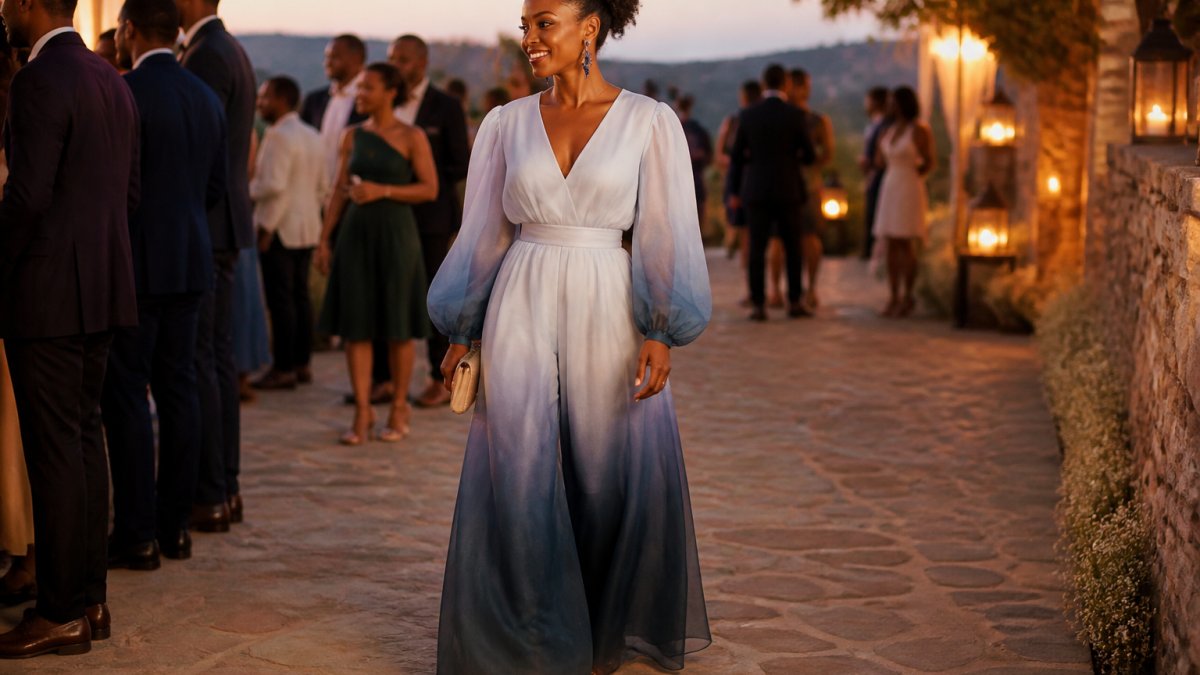
Complete Formulas for Cocktail, Black-Tie, and Beach Weddings
Use these as templates and adjust the color to the season.
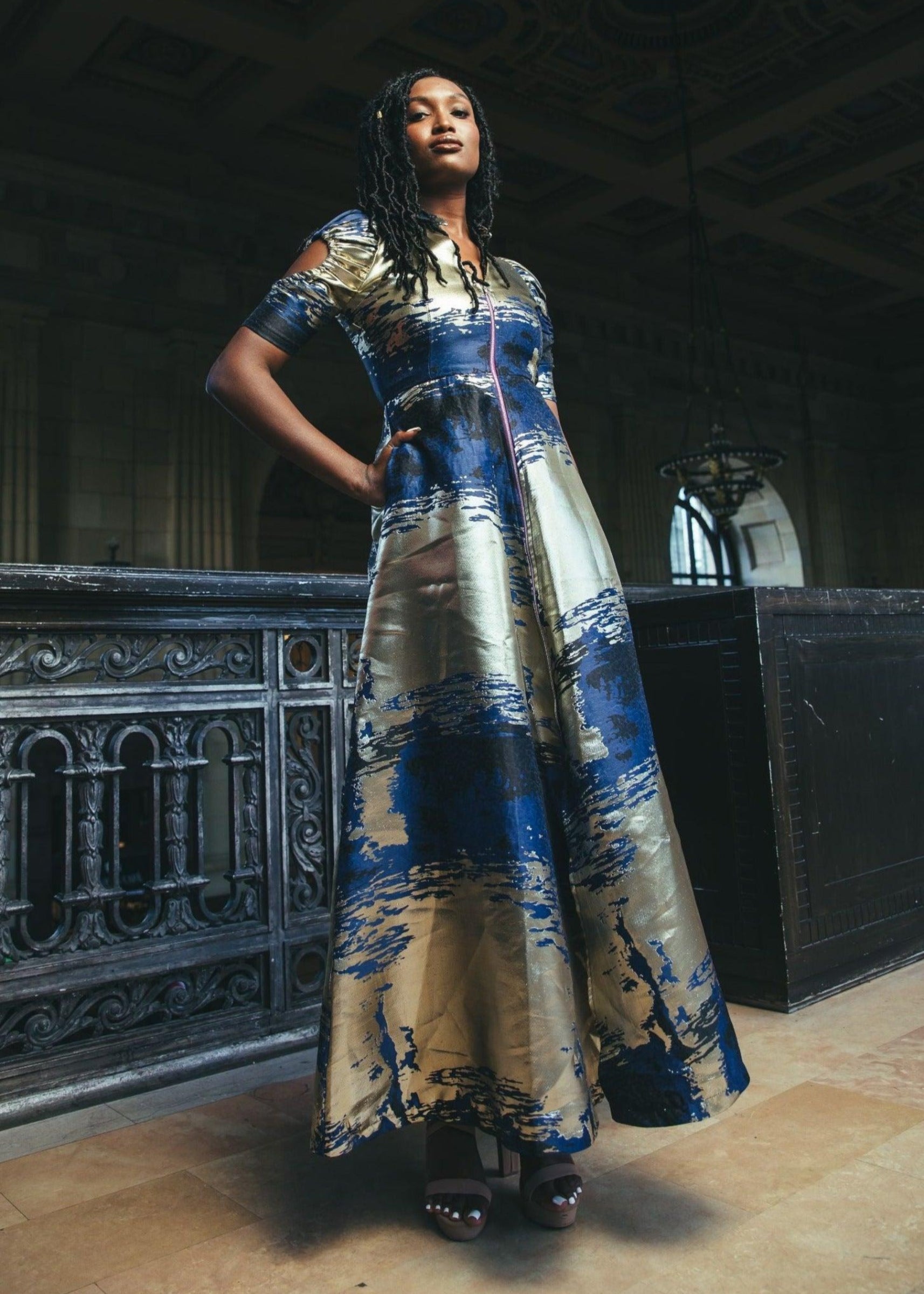
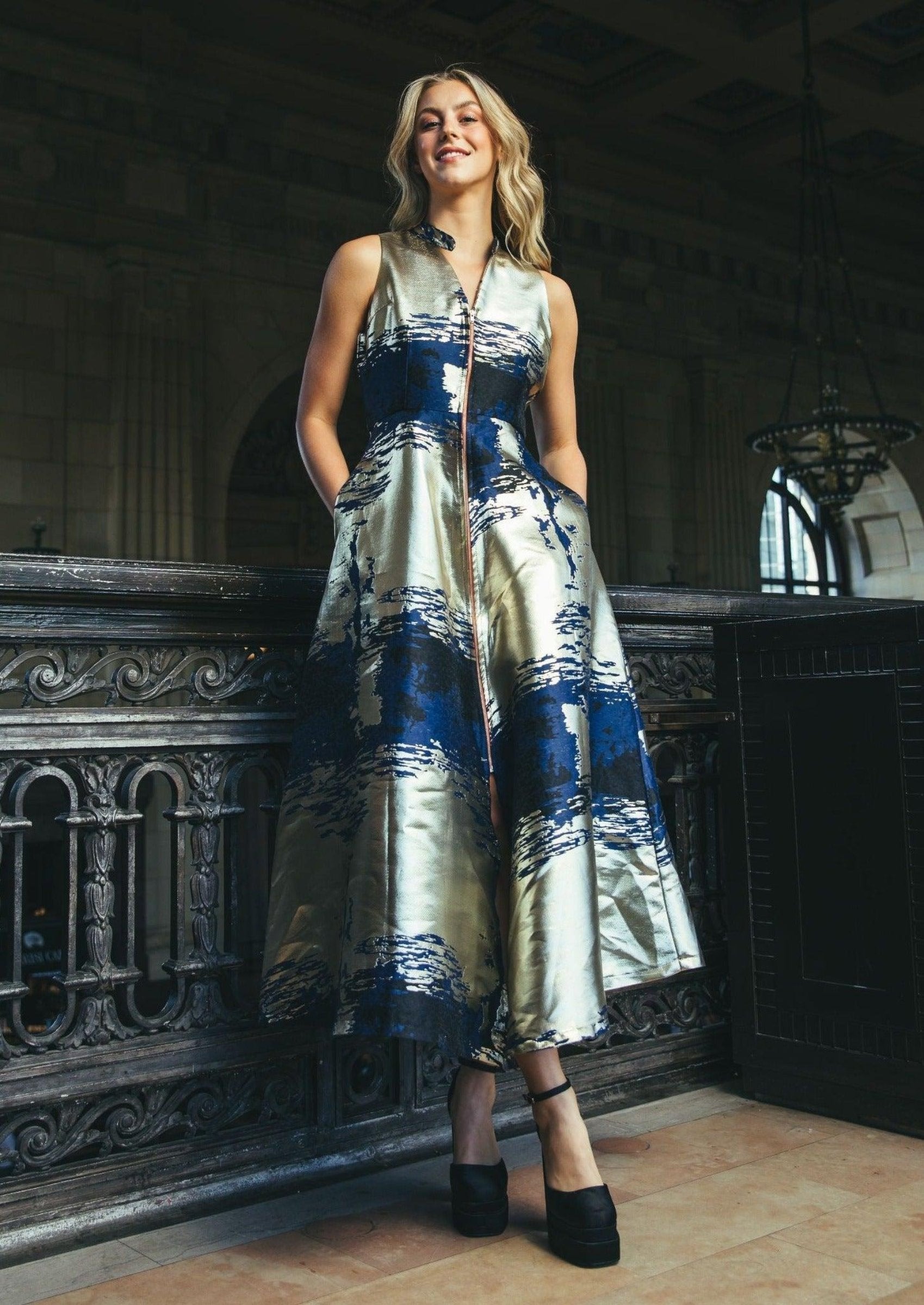
Balloon Sleeve Ombré Organza Jumpsuit →
| Occasion | Silhouette | Fabric | Shoes | Bag | Jewelry | Outer layer |
|---|---|---|---|---|---|---|
| Cocktail | Wide-leg, midi | Satin or crepe | Heeled sandals | Small structured clutch | Statement earrings | Fitted blazer or satin wrap |
| Formal | Floor-length, tailored | Crepe or organza | Pointed pumps or strappy heels | Small clutch | Single cuff or bold earring | Tailored blazer |
| Black tie | Floor-length, column or wide-leg | Organza, crepe, or heavy satin | Strappy heels | Small clutch, metallic or matching | One refined piece | Optional wrap or capelet |
| Beach formal | Wide-leg, flowing | Chiffon or organza | Block heels or dressy flat sandals | Small clutch or wristlet | Light jewelry | Light wrap for evening |
For a black-tie room, a floor-length organza jumpsuit in a deep gradient does the work of a gown. For a beach ceremony, a flowing wide-leg cut in a lighter fabric keeps you cool.
Seasonal and Weather Adjustments
- Warm weather or outdoor ceremony: choose chiffon, organza, or a lightweight crepe. Sleeveless or one-shoulder cuts work. Skip heavy satin, which shows sweat and holds heat. Bring a light wrap for the evening temperature drop.
- Cold weather or winter wedding: choose a heavier crepe, velvet, or a lined satin. Add a tailored blazer, a long coat, or a capelet. Closed-toe pumps or a dressy boot keep you warm without undercutting formality.
- Outdoor grass or sand: a block heel or a wide, stable heel keeps you from sinking. A pointed stiletto is a hazard on grass and unstable on sand.
Etiquette Checks Before You Commit
- Avoid white, ivory, cream, and bridal-adjacent shades. This applies to jumpsuits exactly as it does to dresses.
- Respect the couple's palette if they set one. If the invitation asks for a specific color or a "black-tie optional" tone, follow it rather than your personal default.
- Check the venue. A house of worship may ask for covered shoulders or a longer hem. A formal ballroom rarely does.
One Hero Piece, Everything Else Quiet
Each formula works because one element carries the look and the rest support it. If the jumpsuit is the hero, keep jewelry to one piece and the bag small.
This is where KAHINDO fits naturally. Our handcrafted jumpsuits, like the KAHINDO Blue Ombré Organza Jumpsuit, are built for exactly these rooms. Each piece is designed in New York and made by female artisans in Kenya through fair-trade practices.

Shoes to Wear With a Wedding Jumpsuit
The best shoes for a wedding jumpsuit are dressy heels that match the event's formality. A wide-leg or floor-length cut hides most of the shoe, so choose a heel that adds height and finishes the line.
For formal and black-tie events, strappy heels or pointed pumps work best. For beach or outdoor weddings, a block heel keeps you stable on grass or sand.
Keep the color simple:
- Nude or metallic for a seamless line
- Black for a classic finish
- A matching tone to your jumpsuit for a monochrome look
Avoid sneakers, flats, and chunky daytime sandals, they undercut the formality.
Fit, Tailoring, and Jumpsuit Practicalities
Fit is the difference between a jumpsuit that looks expensive and one that looks off. A jumpsuit must work at the shoulder, waist, and hem at once, so tailoring matters more than with a dress. Here is what to measure, what to ask the tailor, and how to stay comfortable all night.
The Three Fit Points That Decide Everything
- Torso length (rise): The waist seam should sit at your natural waist, not below it. If the seam drops toward your hips, the legs look short and the whole line sags. If it rides up into your ribs, the crotch pulls and you will feel it every time you sit.
- Hem length: For a formal or black-tie jumpsuit, the hem should just skim the top of your shoe with the heel you will actually wear. A floor-length jumpsuit hemmed for flats will drag the moment you switch to heels.
- Waist definition: A defined waist flatters more than a loose one. If the jumpsuit is cut straight through the middle, a tailor can add two darts at the back to bring it in without changing the front line.
What to Measure Before You Shop
Bring three numbers to the fitting room, measured over the undergarments you plan to wear:
- Inseam: from the crotch seam to the floor in your wedding shoes. This tells you whether a "floor-length" jumpsuit will actually reach the floor on you.
- Natural waist: the narrowest point of your torso, usually just above the navel. Compare it to where the jumpsuit's waist seam falls.
- Torso rise: from your shoulder to your natural waist. If a jumpsuit is cut for a longer or shorter torso than yours, the waist seam will land in the wrong place no matter what size you buy.
A common pattern: a jumpsuit fits at the hips and bust but gaps at the waist, or fits the waist but pulls at the shoulder. That is normal, jumpsuits are cut for an average torso, and almost no one is average in all three zones.
What to Ask a Tailor For
- Take in the waist: two back darts or side seams, usually a one- to two-day job.
- Hem to shoe height: bring the exact heels you will wear. Ask for a blind hem on satin or crepe so the stitching does not show.
- Shorten the rise (if needed): this is the hardest alteration. A tailor can sometimes take it up at the shoulder seam or the waist seam, but it is not always possible on a lined or heavily structured piece. If the rise is far off, return it and size down rather than pay for a rebuild.
If you are between sizes, size up and tailor down. A tailor can take in a waist in a day. They cannot add fabric that is not there.
Practicalities Competitors Skip
- Bathroom access: a one-piece is not a dress. Look for a back zipper long enough to step out of, a hidden crotch snap, or a wrap-style bodice you can loosen. If the jumpsuit has a short back zip and no give, plan for a two-person assist or choose a different piece.
- Movement: sit, squat, and raise your arms above your head in the fitting room. If the crotch pulls when you sit or the shoulders bind when you reach, the rise or the armhole is wrong.
- Seating and dancing: a wide-leg cut can catch under a chair or underfoot. A slightly tapered wide leg or a crepe with a bit of weight moves better than a stiff organza on the dance floor.
Wedding Etiquette and Color Considerations
Wedding guest etiquette says avoid white, ivory, and anything that reads as bridal.
Beyond white, think about the couple's color scheme.
A few practical notes:
- Skip white, cream, and bridal-adjacent shades
- Avoid anything overly revealing for a formal ceremony
- Match the formality of the invitation, not your personal default
Color is also where a jumpsuit can shine: a bold solid or rich gradient lets you stand out without competing with the bride.
That is the point of a well-styled jumpsuit: it reads as intentional, elegant, and completely your own.
Styling a jumpsuit for a formal wedding comes down to fabric, fit, and one strong accessory. At KAHINDO, every jumpsuit is designed in New York and handcrafted by female artisans in Kenya, with fair-trade production and a provenance card in each garment. Our Blue Ombré Organza Jumpsuit and Strapless Peplum Ombré Organza Jumpsuit are made for formal rooms, galas, and evenings that matter.

Frequently Asked Questions
Are jumpsuits appropriate for formal weddings?
Yes, when the fabric and silhouette match the formality of the event. A floor-length jumpsuit in satin, crepe, or organza reads as formal eveningwear, especially with structured layers and elevated accessories. Skip cotton, jersey, or casual prints, which belong at daytime or resort events. A well-tailored formal wedding jumpsuit can be just as polished as a gown, and it often photographs better because the silhouette holds its shape.
What shoes should you wear with a formal wedding jumpsuit?
Pointed-toe pumps, strappy heeled sandals, and sleek block heels work best. Match the shoe's formality to the fabric: satin or organza jumpsuits pair well with satin or metallic heels, while a structured crepe jumpsuit suits a classic leather pump. Skip wedges, chunky platforms, and anything with a casual sole. If the wedding includes grass or gravel, a block heel gives you stability without losing polish. Nude or metallic shades elongate the leg under a wide-leg cut.
Can you wear a black jumpsuit to a formal wedding?
Yes, black is fully appropriate for formal and black-tie optional weddings, especially in the evening. The old rule against black at weddings has largely faded. To keep a black jumpsuit from reading too austere, add texture or shine: satin, crepe, or a beaded belt. Statement jewelry in gold or silver, a colorful clutch, or a bold lip lifts the look. Avoid head-to-toe black at daytime ceremonies, where lighter or jewel-toned options feel more celebratory.
How should a jumpsuit fit for a formal wedding?
The waist seam should sit at your natural waist, the bodice should lie flat without gaping, and the pant hem should skim the top of your shoe without pooling. If you are between sizes, size up and have the waist and hem tailored. A wide-leg cut needs enough length to cover the shoe but not drag. Check the rise when you sit and the strap security when you move, since strapless and one-shoulder styles need a snug fit to stay put through a long reception.