

Is Handmade Clothing More Durable? A 2026 Guide
Table of Contents
- The Durable Difference: Why Handmade Clothing Often Outlasts Mass-Market
- How to Identify High-Quality Garment Construction
- Durability of Natural Fibers vs Synthetics: What Lasts Longer
- The Benefits of Artisan-Made Clothing Beyond Longevity
- The Skill Gap Variable: When Handmade Doesn't Mean Better
- Repairability and Mending: The Hidden Longevity Factor
- Cost-Per-Wear: The Real Investment Math
- Frequently Asked Questions
Last Updated: September 15, 2026
The Durable Difference: Why Handmade Clothing Often Outlasts Mass-Market
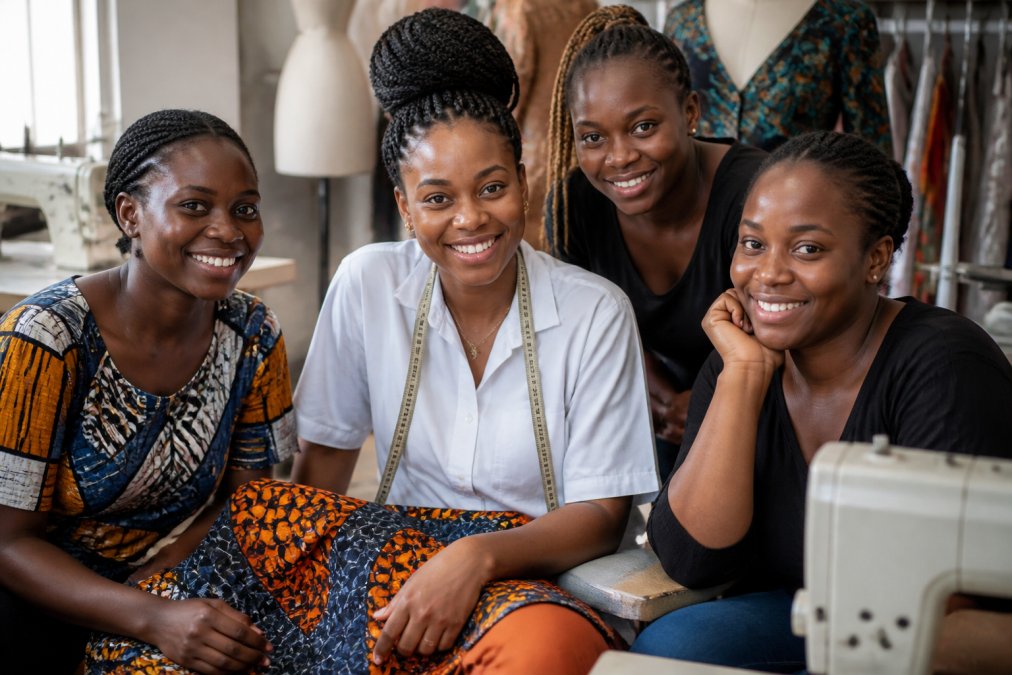
Ask whether handmade clothing is more durable than mass-market alternatives and the honest answer is: usually, but not automatically. Construction quality, fiber choice, and the skill of the maker matter far more than the label "handmade" itself. At KAHINDO, we design occasionwear that is handcrafted by female artisans in Kenya, and we have learned that durability comes down to specific, identifiable construction choices rather than marketing language.
The difference shows up fastest at the seams. Mass-produced garments are typically assembled at high speed, with stitching optimized for throughput rather than stress tolerance. Handmade garments, by contrast, are often sewn at a slower pace with reinforced seams, finished edges, and more careful tension control. That is why a well-made handmade piece frequently outlasts its fast-fashion counterpart, even when both use similar fabrics.
Below, we break down exactly how to evaluate garment construction, when handmade falls short, and how to calculate whether a piece is genuinely worth the investment.
How to Identify High-Quality Garment Construction
High-quality garment construction is identifiable by four things: seam type, stitch type, stitch density, and edge finishing. You do not need a magnifying glass, but you do need to turn the garment inside out and look at how it was actually put together.
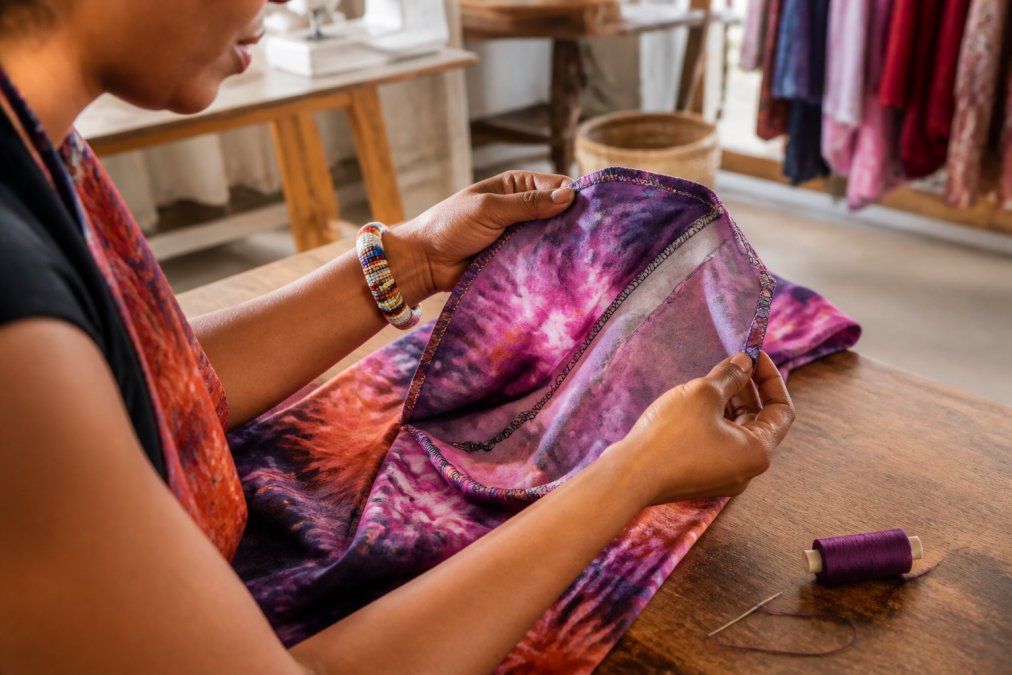
Start with the seam allowance, the strip of fabric between the stitch line and the raw edge. A generous allowance gives the seam room to move without pulling apart. Then check whether raw edges are serged, bound, or French-seamed. Bound and French seams cost more labor and last longer because they enclose the raw edge entirely.
Seam Strength and Stitch Integrity: The Technical Breakdown
Stitch integrity refers to how evenly and consistently thread is locked into fabric along a seam. The most durable seams use a lockstitch or a backstitch at stress points, with 10 to 12 stitches per inch being a common benchmark for woven garments (Effect of Thickness and Stitch Density on Low-Velocity Impact and Compression After...). Below that range, seams gap under tension; well above it, the needle perforates the fabric and creates a tear line.
Four stitch types matter most for longevity:
- Lockstitch: Two threads interlock in the fabric, one from the needle and one from the bobbin. It is the standard straight stitch and the backbone of durable seams. It does not unravel from a single broken thread, which is why it outperforms chain-stitching on stress seams.
- Chain-stitch: A looping stitch that is fast to sew and slightly elastic, common on hems and on mass-produced knits. It is strong in tension but fails catastrophically, pull one thread and the whole run can unravel. That trade-off is why chain-stitched hems are a known weak point on fast-fashion garments.
- Backstitch: Used at the start and end of a seam to lock thread in place. Its absence is a common failure point, and it is one of the fastest things to check on a handmade piece.
- Overlock (serged): Finishes raw edges with a looping stitch that wraps the fabric edge. Effective against fraying, but it does not reinforce the seam itself.
A common mistake is assuming heavy stitching equals strong stitching. Too-tight tension can pucker fabric and cause thread to snap under stress, and a dense row of stitches on a lightweight fabric can act like perforation.
Fabric Weight, GSM, and Fiber Density
GSM, or grams per square meter, is the standard measure of fabric weight. Heavier fabric is not automatically better, but GSM tells you how much material you are actually getting, and it is the single fastest way to compare two garments that look identical on the rack.
For context, lightweight shirting often sits around 110 to 130 GSM, a standard cotton T-shirt fabric runs roughly 150 to 180 GSM, mid-weight denim and canvas commonly land between 300 and 400 GSM, and heavy workwear canvas can exceed 500 GSM. Fiber density, meanwhile, describes how tightly yarns are woven. A denser weave resists abrasion and holds shape longer, which is why two cottons at the same GSM can age very differently.
The Five-Point Inside-Out Check
You can evaluate any garment, handmade or mass-produced, in under a minute by checking five points on the inside:
- Seam allowance width. Narrow allowances fray and pull; generous ones can be let out or reinforced.
- Stitch density. Count stitches across one inch of a straight seam. Ten to twelve is the durable range for wovens.
- Seam finish. French or bound seams beat serged, which beats raw and unfinished.
- Stress-point reinforcement. Look for backstitching or bar tacks at zippers, pockets, armholes, and the crotch seam.
- Interfacing type. Sewn-in interfacing can be replaced; fused interfacing bubbles and delaminates over time and is a common hidden shortcut.
This checklist is the honest answer to whether handmade is more durable: the label does not decide it, the construction does. A handmade garment that passes all five points will generally outlast a mass-market piece that fails three of them, and a handmade garment that fails them is not worth a premium.
Durability of Natural Fibers vs Synthetics: What Lasts Longer
Natural fibers and synthetics fail in different ways. Natural fibers such as cotton, merino wool, linen, and cashmere tend to pill, fade, or thin over time, but they often remain repairable. Synthetics such as polyester resist abrasion and hold color well, yet they can snag permanently and are harder to mend invisibly.
That distinction matters for garment longevity. A cotton dress with a worn seam can be reinforced. A polyester blend with a pulled thread often cannot be repaired without visible scarring.
The Federal Trade Commission's textile labeling guidance requires accurate fiber content disclosure on garment labels, which makes it possible to check exactly what you are buying before you commit.
Merino wool and cashmere sit at the high end of natural fiber durability when fiber length is long. Short-staple versions of the same fibers pill quickly, which is why fiber quality, not just fiber type, drives how a garment ages.
The Benefits of Artisan-Made Clothing Beyond Longevity
Artisan-made clothing delivers value that extends past how long a piece lasts. The benefits of artisan-made clothing include traceable material sourcing, fair wages for makers, and production runs small enough to allow real quality control.
Circular production and upcycling are easier to support when garments are made in small batches. When a maker knows every seam, repair and alteration become realistic options rather than afterthoughts. Ethical manufacturing also tends to mean slower output, which gives artisans time to inspect each piece before it ships.
At KAHINDO, every garment includes a provenance card documenting the artisan and the labor hours behind it, and our slow-bath dyeing process produces gradients that cannot be replicated by mass production. That transparency is part of the value, not a marketing add-on.
The Skill Gap Variable: When Handmade Doesn't Mean Better
Handmade does not guarantee quality. A poorly trained maker working with cheap thread and rushed tension control can produce a garment less durable than a well-engineered mass-market piece.
This is the skill gap variable, and it is the single most overlooked factor in the handmade-versus-mass-produced debate.
Signs of a skilled maker:
Repairability and Mending: The Hidden Longevity Factor
The Repairability Index: Scoring a Garment Before You Buy
| Factor | 0 points | 1 point | 2 points |
|---|---|---|---|
| Seam allowance | Narrow, under 1/4 inch | Standard, about 3/8 inch | Generous, 1/2 inch or more |
| Stitch accessibility | Stitching buried in fused layers | Partially accessible | Fully accessible, unpicks cleanly |
| Fabric type | Synthetic blend, melts and scars | Mixed fiber | Natural fiber, holds a patch |
| Interfacing | Fused throughout | Fused at stress points only | Sewn-in or none |
| Hardware | Proprietary or glued | Standard but hard to source | Standard buttons, zippers, snaps |
Why Handmade Usually Scores Higher, and When It Doesn't
What Repairs Actually Cost You
Cost-Per-Wear: The Real Investment Math
The formula is simple:
Cost-per-wear = Purchase price ÷ Number of wears
| Garment Type | Price | Wears Per Year | Years of Wear | Cost-Per-Wear |
|---|---|---|---|---|
| Mass-market occasion dress | $40 | 2 | 1 | $20.00 |
| Mid-range occasion dress | $120 | 3 | 3 | $13.33 |
| Handmade artisan piece | $90 | 4 | 5 | $4.50 |
Frequently Asked Questions
What makes handmade clothing more durable than mass-produced items?
Handmade clothing often uses stronger construction techniques like reinforced seams and hand-finished edges. Artisans can adjust tension and inspect each stitch, reducing weak points. Mass-produced garments prioritize speed, sometimes using weaker stitches and lower-quality thread. Additionally, handmade pieces typically use denser, higher-quality fabrics that resist wear and tear better over time.
Does handmade clothing always equate to higher quality?
No. The 'Skill Gap' variable matters. A poorly trained artisan can produce weaker garments than a well-run factory. Quality depends on the maker's expertise, the materials chosen, and quality control. Look for signs of high-quality construction: tight, even stitches, clean seam finishes, and sturdy buttons. KAHINDO uses fair-trade practices to ensure consistent quality.
Is handmade clothing a better long-term investment for your wardrobe?
It can be. The cost-per-wear of a durable handmade garment often beats fast fashion. Handmade pieces also hold resale value and can be mended, extending their life further. The key is choosing well-constructed pieces in timeless styles.
How does fabric choice impact the durability of handmade garments?
Fabric choice is critical. Natural fibers like cotton, merino wool, and cashmere often outlast synthetic blends because they resist pilling and hold shape. However, some synthetics like high-quality polyester can be durable too. The difference is in fiber density and GSM (grams per square meter). Heavier, denser fabrics generally withstand wear and tear better. Handmade garments using premium natural fibers tend to age gracefully with proper care.