

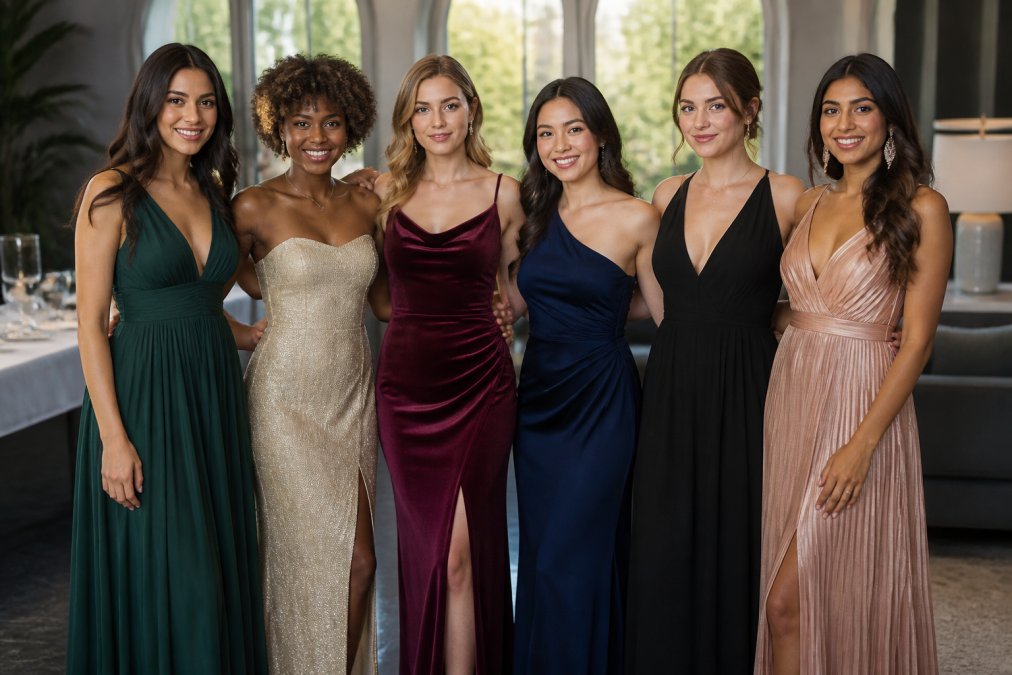
How to Find Flattering Formal Dresses: A 2026 Guide
Table of Contents
- Start With Your Body Measurements, Not a Size Label
- Formal Dress Silhouettes for Body Types: A Practical Guide
- The Best Necklines for Formal Dresses by Shape
- How to Style Statement Formal Dresses Without Overwhelming the Look
- Fabric, Drape, and the Details That Signal Quality
- Budget-Friendly Tailoring and Fit Adjustments
- Renting vs. Buying: What Makes Sense for Your Event Calendar
- Frequently Asked Questions
Last Updated: September 14, 2026
Start With Your Body Measurements, Not a Size Label
The fastest way to find flattering formal dresses is to ignore the number on the tag and start with three measurements: bust, natural waist, and hip. Sizing labels vary wildly between designers, and a "10" in one atelier is a "12" in another. Your measurements don't change. The label does.
This guide from KAHINDO walks through silhouette, neckline, fabric, and tailoring so you can walk into any formal occasion knowing exactly what works on your frame.
Here's the part most shoppers get wrong: they buy for the size they wish they were, then blame the dress when it gapes at the bust or pulls across the hip. Take your measurements over light clothing, keep the tape level and snug (not tight), and write them down. According to the Council of Fashion Designers of America sizing resources, standardized sizing has never been truly standard across brands.
A common mistake is measuring over bulky clothing or holding the tape loose. Both add phantom inches. In practice, this means you should remeasure twice and trust the smaller, snugger number.
Formal Dress Silhouettes for Body Types: A Practical Guide
Formal dress silhouettes for body types fall into a handful of reliable categories, and matching the right one to your proportions does more for how a gown looks than any other decision. The goal is balance: draw the eye where you want it and skim the rest.
A-Line and Fit-and-Flare: The Most Versatile Options
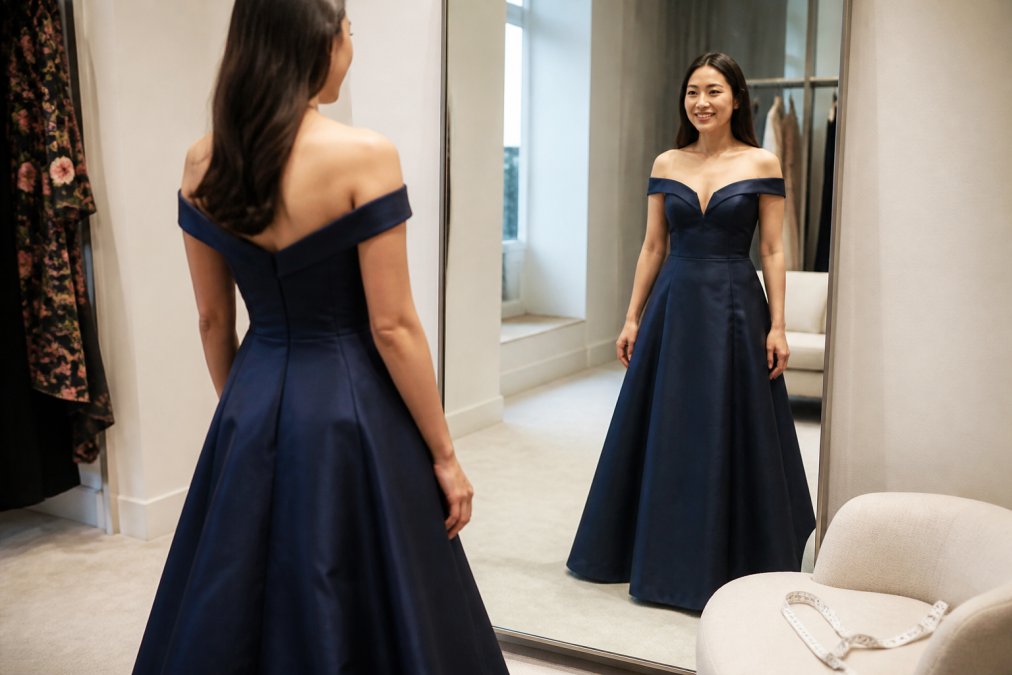
If you only remember one rule, make it this: A-line and fit-and-flare suit almost everyone. Both skim away from the body below the waist, which balances a pear-shaped or apple-shaped frame and adds gentle volume for a narrow hip.
Fit-and-flare nips at the natural waist before flaring, so it reads more dramatic. A-line is softer and more forgiving. Neither clings where you'd rather it didn't.
Sheath and Wrap: Structure and Waist Definition
Sheath dresses follow your natural line and reward good tailoring, which is why they're a favorite for hourglass figures who want to show proportion rather than hide it. A wrap dress, by contrast, builds waist definition into the design itself through its cinched tie.
The trade-off: sheath styles show every seam, so budget for alterations. Wrap styles forgive more, but the neckline can gape if the bust fit is off.
The Best Necklines for Formal Dresses by Shape
The best necklines for formal dresses are the ones that frame your face, balance your shoulders, and work with the bust support you actually have. Neckline is the single most photographed part of a gown, so it pays to choose it deliberately rather than by trend.
Start with the vertical line. A V-neck elongates the torso and works on nearly every shape because it draws the eye downward in a continuous line. The deeper the V, the stronger the elongation, but past a certain depth the neckline stops supporting the bust and starts relying on tape or a structured inner corselet to hold its shape. A plunging neckline flatters a fuller bust only when the fabric is structured; in a soft, unlined knit it collapses and reads as a wardrobe malfunction rather than a design choice.
For a pear-shaped frame, a wider or embellished neckline pulls attention upward and balances fuller hips. A boat neck or a portrait collar adds horizontal width at the shoulder, which visually offsets a wider hip. For an apple-shaped frame, a deeper V or a scoop creates a vertical line that lengthens the midsection and moves the eye away from the waist.
Shoulder width is the variable most shoppers ignore. If your shoulders are broad, a halter or asymmetrical neckline can feel severe because it exposes the full width of the shoulder line; a soft scoop or portrait neckline softens it instead. If your shoulders are narrow, a halter or off-the-shoulder style adds width and balances a fuller hip or bust.
Bust shape matters as much as bust size. A wide-set bust reads better in a scoop or square neckline, which fills the space between the breasts. A close-set bust reads better in a V or a sweetheart, which separates the line and creates definition. A small bust can wear a high or jewel neckline without looking flat, because there is no volume competing with the fabric.
One more mechanism worth knowing: neckline and strap placement change where the dress's weight rests. A halter concentrates weight at the back of the neck, which can ache over a long evening. A wide-set strap distributes weight across the shoulder. If you plan to dance or stand for hours, a wider strap or a built-in bodice structure will be more comfortable than a thin halter, even if the halter photographs better.
How to Style Statement Formal Dresses Without Overwhelming the Look
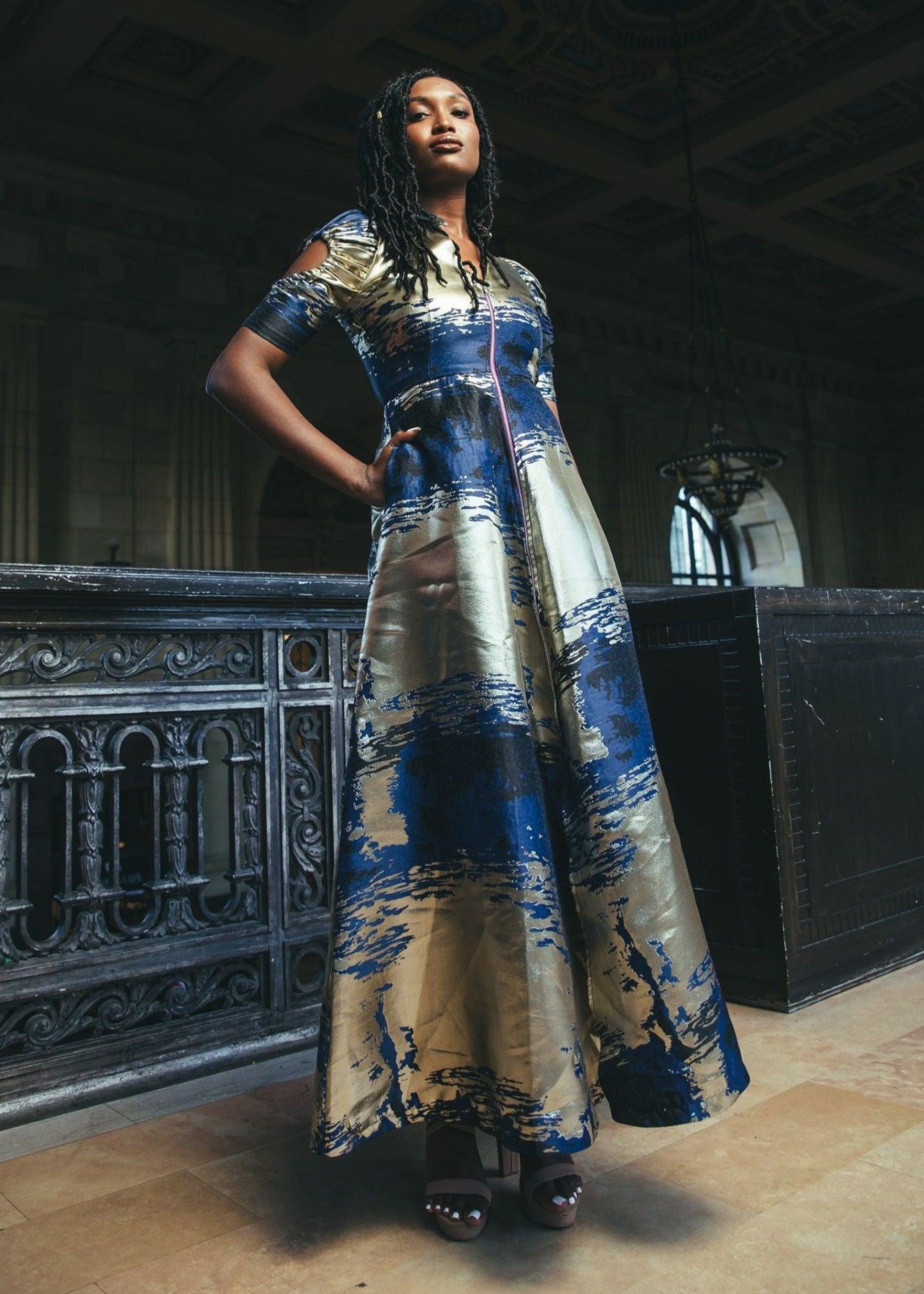
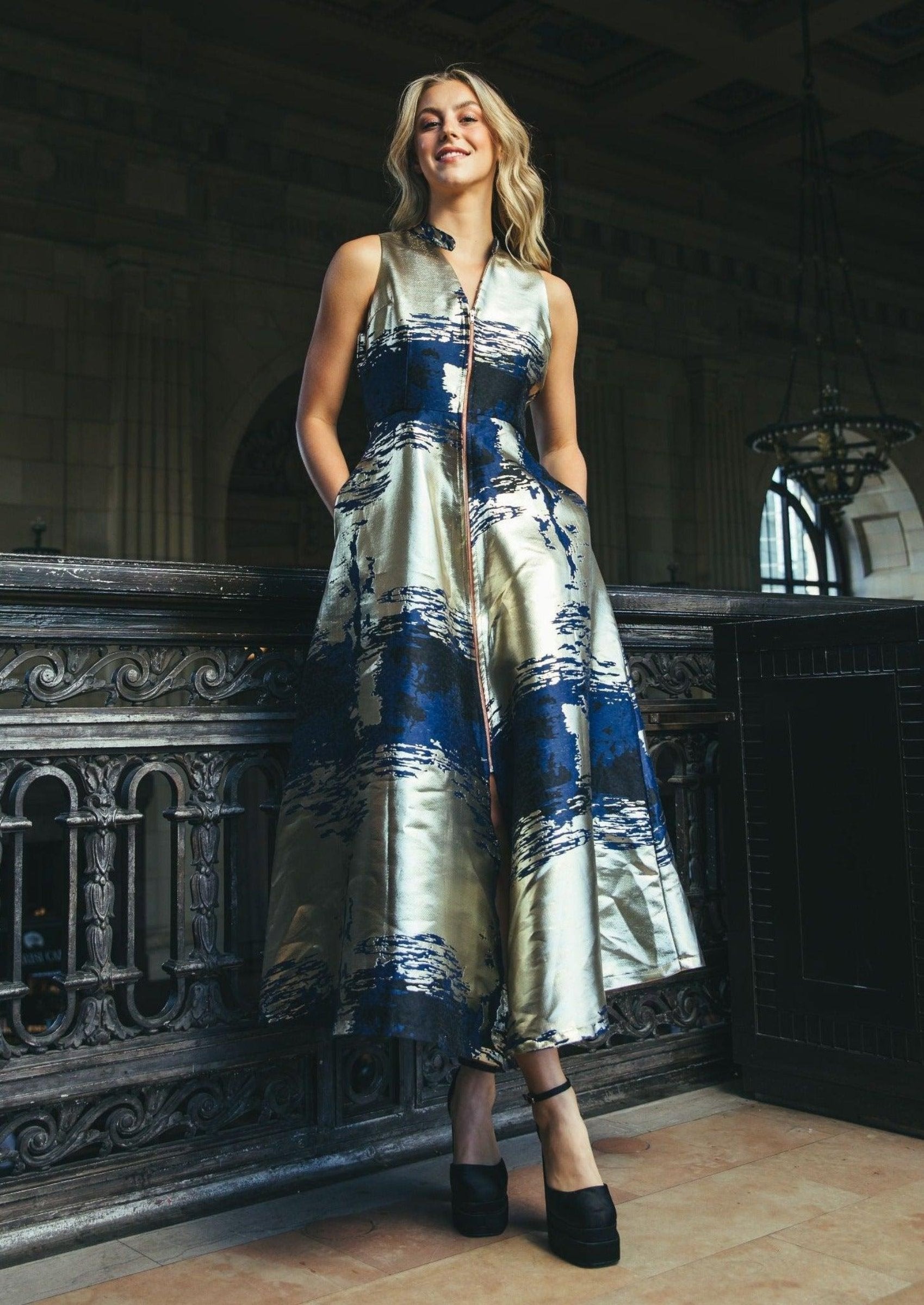
How to style statement formal dresses comes down to restraint: let the dress lead and keep everything else quiet. A bold print or metallic jacquard already carries the outfit, so jewelry should support, not compete.

- Choose one focal accessory, then stop
- Match metals to the dress's undertone, not your other jewelry
- Keep hair and makeup polished but uncomplicated
- Skip the belt unless it defines a waist the dress doesn't already define
A KAHINDO piece like the Burgundy Gold Metallic Jacquard Halter Pencil Dress does the work for you: the metallic thread weave catches light and creates its own visual interest, so a single pair of earrings is enough.
Fabric, Drape, and the Details That Signal Quality
Fabric drape tells you more about a formal dress than the price tag does. A fabric that falls in smooth, weighted folds holds its shape through a long evening; a thin, stiff one creases and sags. The difference is almost always fiber content and weight, not brand.
Weight is measured in grams per square meter (GSM), and formalwear generally sits in a heavier range than daywear (astm.org). A substantial jacquard, a lined crepe, or a double-faced satin keeps its structure because the fabric has enough mass to resist gravity and movement. Unlined synthetics in a light weight cling, show every line, and pick up static, the three failure modes that make a gown look cheaper than it is.
Fiber content drives behavior. Silk and wool drape with a natural fluidity and hold a press; polyester and acetate can mimic the look but tend to shine under flash photography and hold wrinkles differently. Viscose and rayon fall between the two: they drape well but can stretch out at stress points like the bust and hip over a long evening. None of these is automatically better, the question is whether the fiber matches the silhouette. A structured sheath wants a fabric with body; a bias-cut gown wants a fabric with fluidity.
Lining is the quiet quality signal. A lined bodice almost always fits better than an unlined one because the lining adds a second layer of structure and hides seam allowances. A fully lined skirt prevents see-through under event lighting and reduces cling. If a gown is unlined, check whether the seams are finished, a serged or bound seam inside signals real tailoring, while a raw, fraying edge signals a garment built to a price.
Run three tests in the fitting room:
- Hold the fabric up to the light. If you can see your hand clearly through a single layer, the dress will photograph as sheer under flash.
- Scrunch a corner in your fist and release. A good formal fabric relaxes with few deep creases; a poor one holds them.
- Check the zipper and the seams. A well-set invisible zipper lies flat and moves smoothly; a puckered one will pull and gap. Clean, finished interior seams signal real tailoring.
Details separate a refined gown from a basic one. Invisible side pockets, a well-set zipper, and cut-out ruching at the sleeve all read as intentional design. According to the Federal Trade Commission guidance on textile labeling, fiber content and care instructions must be disclosed, so read the label before you commit, and treat a missing or vague label as a warning sign.
One mechanism worth understanding: drape is a function of both fiber and weave. A satin weave reflects light and shows every seam and body line; a matte crepe absorbs light and hides them. If you want a forgiving gown, choose a matte finish in a heavier weight. If you want drama and are confident in the fit, choose a satin or jacquard that catches light.
Budget-Friendly Tailoring and Fit Adjustments
Budget-friendly tailoring is the highest-return move in formal dressing, because a well-fitted inexpensive dress beats an ill-fitting expensive one every time. Most gowns need at least one adjustment, and planning for it upfront saves money.
- Hem length: the most common fix, and usually the cheapest
- Waist take-in: tightens a dress that gaps at the back
- Strap or shoulder adjustment: corrects a bodice that slips
- Bust darts: reshapes the chest without rebuilding the dress
Bring the shoes and undergarments you'll wear to the fitting. Both change your posture and your hemline, and skipping them is why so many hems come out wrong.
Renting vs. Buying: What Makes Sense for Your Event Calendar
Renting wins for one-off events and trends you won't repeat. Buying wins when you'll wear the piece more than once, when fit matters most, or when you want a garment that lasts beyond a single season.
| Factor | Renting | Buying |
|---|---|---|
| Best for | One-time events, trend pieces | Repeat wear, milestone occasions |
| Fit control | Limited, fixed sizing | Full tailoring possible |
| Cost per wear | Low for a single event | Drops with each wearing |
| Ownership | None | Yours to keep and resell |
| Sustainability | Shared use, less waste | Longevity through durability |
If your calendar holds several weddings, galas, or milestone events, buying a well-made piece and tailoring it is the smarter math. KAHINDO's Orange Maxi Gown with Trumpet Sleeves & Front Slit is built for exactly that kind of repeat occasion, with a lined body and a fluid drape that holds up across wearings.

For the once-a-year gown, renting is reasonable. For the dress you'll reach for again, ownership pays off.
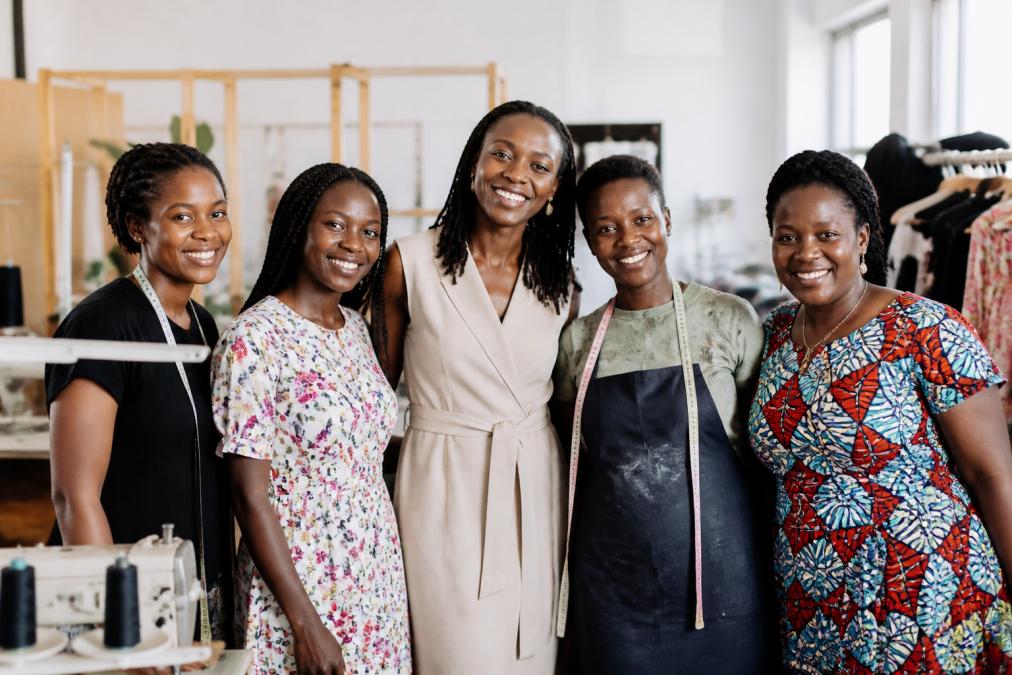
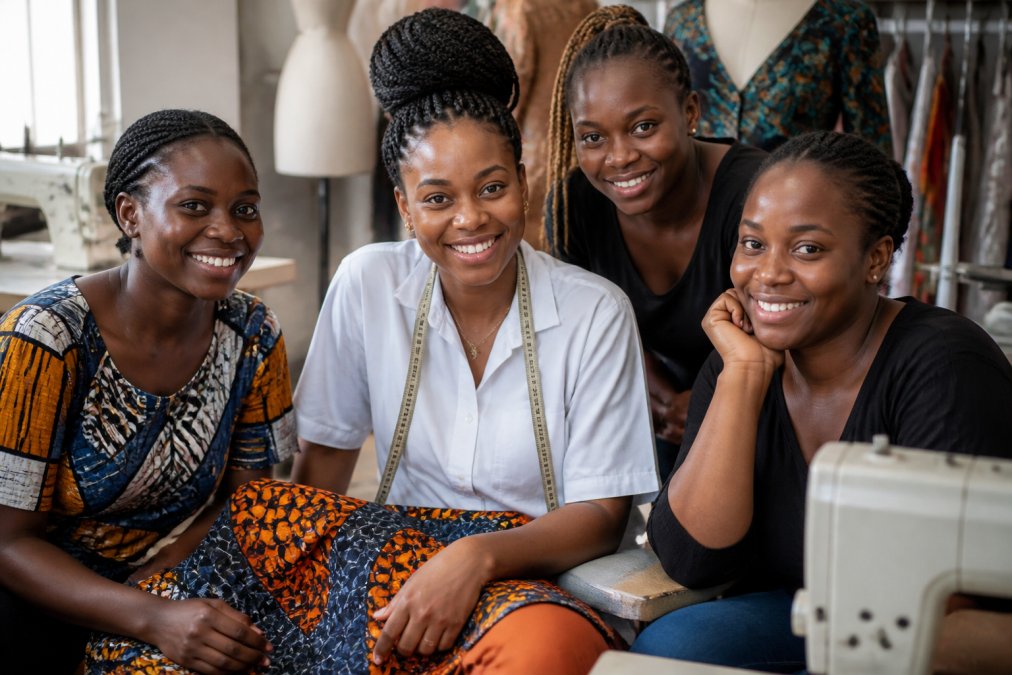
Finding a formal dress that flatters comes down to measurements, silhouette, and tailoring, not luck. KAHINDO designs occasionwear for women who want pieces that fit the moment and last beyond it, handcrafted by female artisans in Kenya with fair-trade production and a provenance card documenting each garment's maker and labor hours. Explore the Cleopatra Maxi Dress and the full collection to find a statement piece built to be worn, and re-worn, beautifully.

Frequently Asked Questions
What type of formal dress makes you look slimmer?
Dresses that create a vertical line tend to elongate the body. A sheath or A-line silhouette in a dark, solid color with a V-neck or plunging neckline draws the eye upward and downward rather than across. Wrap dresses with a cinched waist also define the narrowest part of your torso, which balances proportions. Avoid heavy horizontal details at the hip or hem, and choose fabrics with fluid drape instead of stiff, bulky material.
What are the most flattering formal dress silhouettes for different body types?
For hourglass figures, a wrap dress or fit-and-flare highlights the waist naturally. Pear-shaped bodies benefit from A-line skirts that skim the hip and a structured bodice to balance shoulders. Apple-shaped figures often look best in an empire waist or sheath with vertical seaming. Petite frames do well with sheath or column dresses in a single color to elongate the leg. Always prioritize waist definition and fabric drape over trends.
How do I determine my body shape for formal wear?
Take your bust, waist, and hip measurements with a soft tape measure. Compare the numbers: if bust and hips are within a few inches and waist is significantly smaller, you have an hourglass shape. If hips are wider than bust, you are pear-shaped. If bust is wider than hips, you are apple-shaped. If all three are close in measurement, you are rectangular. These measurements guide which formal dress silhouettes will flatter you most.
Are there specific necklines that are universally flattering?
A V-neck and a sweetheart neckline are the most universally flattering because they create vertical lines and draw attention upward. A scoop neck also works well for most shapes. Halter necklines flatter broad shoulders, while off-the-shoulder styles balance a fuller bust. The best necklines for formal dresses depend on your shoulder width and bust size, but V-necks and sweethearts remain the safest choices for evening gowns.