

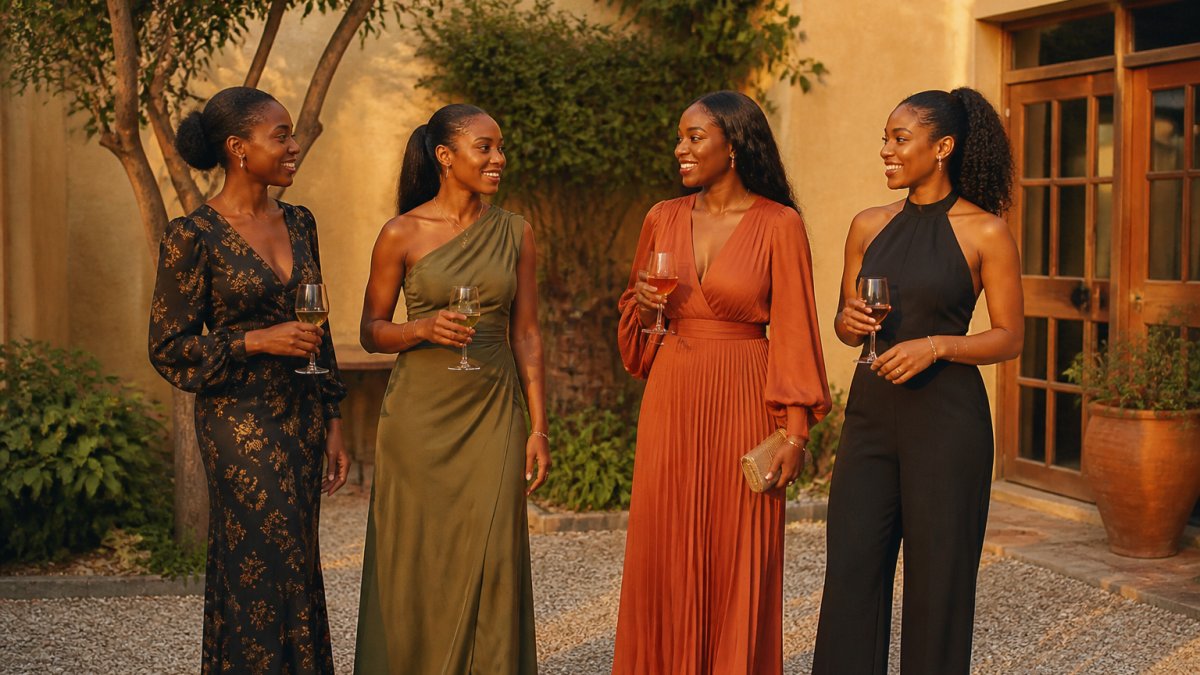
How to Rewear Wedding Guest Outfits for Different Events
Last Updated: October 23, 2026
Quick Summary
To rewear wedding guest outfits for different events, change one visual anchor per event: the shoe, the neckline, or the layer on top. Our Five-Swap Method covers shoes, layers, accessories, bags, and shape, and one swap is enough to make the same dress read as new.
- The average guest spends $550 to $820 or more on once-worn outfits over time.
- Pick a simple silhouette, a season-spanning color, and details you can cover or highlight.
- Two swaps are the ceiling; three or more stops reading as intentional.
- Build the plan around the most formal event first, since every other event is a downgrade.
- A $300 dress worn to six events costs $50 per wear.
Table of Contents
- Why Rewearing Wedding Guest Outfits Makes Sense
- Start With Versatile Wedding Guest Dresses
- How to Wear the Same Dress in Different Ways
- Accessories to Change an Outfit
- How to Style a Formal Dress Casually
- A Step-by-Step Rewearing Plan for Different Event Types
- Dress Code Etiquette and Care That Protects Your Outfit
- Conclusion
- Frequently Asked Questions
Why Rewearing Wedding Guest Outfits Makes Sense
The average guest spends $550 to $820 or more on once-worn outfits over time, according to ThredUp's data on one-wear wedding outfits, and 68% of those pieces never get a second outing. That is a lot of money hanging in the back of a closet.
At KAHINDO, we design occasionwear meant to be seen more than once. The goal is not to hide a repeat but to make the second wear look deliberate: change enough details, a different shoe, a new layer, a swapped bag, that the outfit reads as new.
Start With Versatile Wedding Guest Dresses
Versatile wedding guest dresses share three traits: a simple silhouette, a season-spanning color, and details you can cover or highlight. Buy for those and rewearing becomes automatic.
The wrap dress and the midi dress are the workhorses here, flattering a range of body types and moving from daytime to evening.
Navy, burgundy, plum, deep green, and teal all read as fall colors or evening shades depending on styling. Black is the most forgiving of all.
How to Wear the Same Dress in Different Ways
The trick to wearing the same dress in different ways is to change one visual anchor per event: the shoe, the neckline, or the layer on top.
Change the anchor and the dress reads as new. Change nothing and people remember.
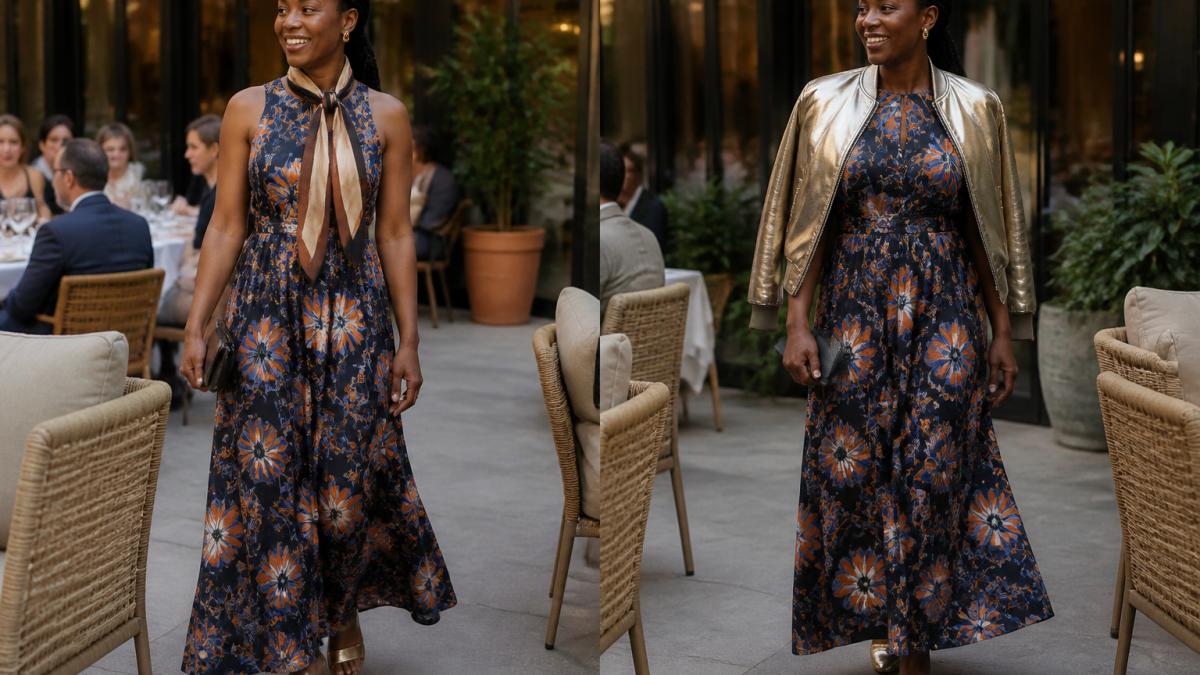
The Five-Swap Method
Our Five-Swap Method: pick one swap per event and you have a fresh outfit every time.
| Swap | What Changes | Best For |
|---|---|---|
| Shoes | Block heels to dressy flats | Long receptions, travel |
| Layer | Bare shoulders to jacket or kimono | Cooler venues, evening |
| Accessory | Scarf, hat, or statement jewelry | Daytime vs. evening |
| Bag | Clutch to structured shoulder bag | Formal vs. casual |
| Shape | Belted to unbelted, or knotted hem | Changing the silhouette |
One swap is enough. Two swaps and it looks like a new dress.
Accessories to Change an Outfit
Accessories to change an outfit do the heaviest lifting in a rewearing plan. They cost the least and change the most.
Layering pieces add range without bulk. A lightweight kimono over a slip dress works for a garden party. A structured jacket takes the same dress into a gallery opening.
Our guide to accessorizing a simple wedding guest dress goes deeper on building these combinations from one base piece.
Shoes, Bags, and Layering Pieces
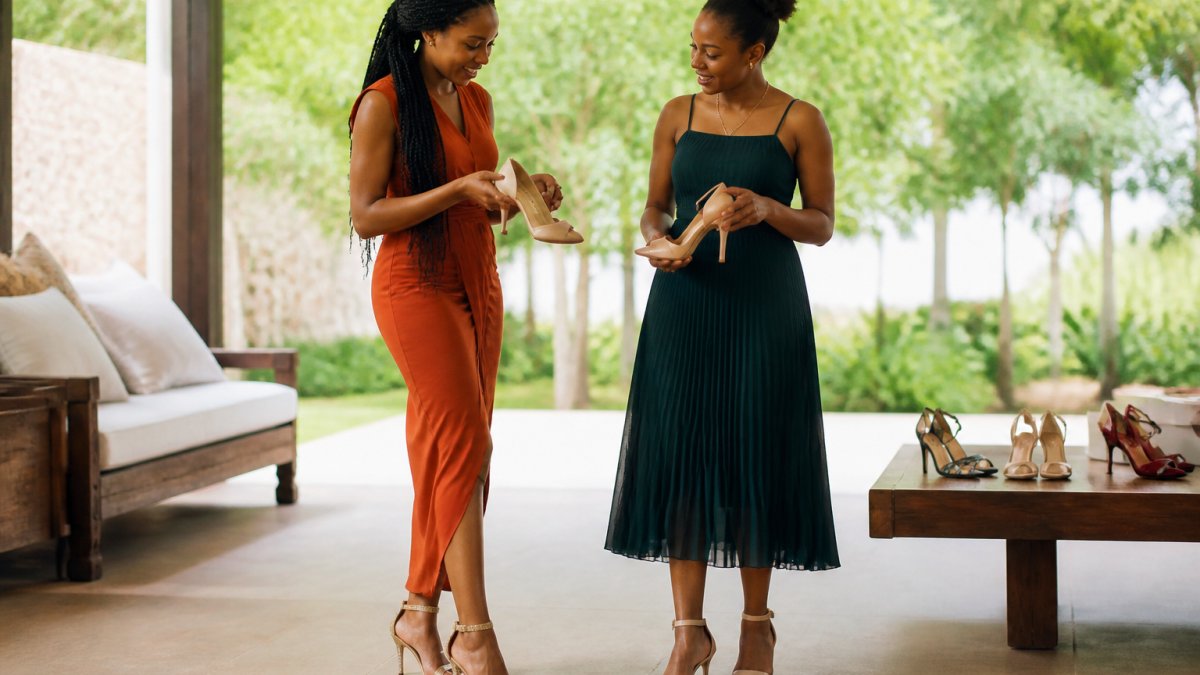
Shoes set the formality of the whole outfit: block heels suit most ceremonies and stay comfortable through a reception, while dressy flats read as daytime and travel friendly. Bags are the quiet signal, a small clutch says evening, a structured shoulder bag says daytime.
If shoes are your main swap, our piece on choosing comfortable heels for all-day wedding wear covers fit, height, and venue floors.
How to Style a Formal Dress Casually
How to style a formal dress casually comes down to removing polish, not adding it. A floor-length gown becomes daytime appropriate when you swap heels for dressy flats or a low block heel, replace the structured bag with a simple shoulder bag or none, add one casual layer, a knit cardigan, denim jacket, or flowing kimono, and keep jewelry minimal.
A Step-by-Step Rewearing Plan for Different Event Types
A rewearing plan is a short list that maps each base outfit to specific events, swaps, and seasons. Build it once and you stop re-buying for every invitation:
- List every event on your calendar for the next 12 months.
- Note the dress code, time of day, venue type (indoor or outdoor), and expected temperature for each one.
- Pick two or three base outfits that fit the most formal events on the list. Include at least one dress and one non-dress option such as a jumpsuit, a suit, or coordinated separates.
- Assign one Five-Swap change to each event, using the event-type map below.
- Plan the care, cleaning, and storage between wears.
- Review after each event and adjust the map.
Most people find two base outfits cover six or more events once the swaps are mapped.
KAHINDO Adinkra Diamond Silk Scarf →
Event-Type Swap Map
Use this map to translate an event type into a specific swap. Each row assumes the same base outfit and changes only the anchor.
| Event type | Dress code signal | Primary swap | Secondary swap | What to avoid |
|---|---|---|---|---|
| Daytime wedding, garden or outdoor venue | Cocktail or dressy casual | Dressy flats or low block heel | Straw hat or silk scarf, soft kimono | Structured clutch, heavy metallic layers |
| Evening wedding, indoor ballroom | Formal or black tie optional | Statement heel | Metallic jacket or shawl, bold earrings | Casual flats, denim or knit layers |
| Rehearsal dinner | Smart casual | Structured shoulder bag | Knit cardigan, minimal jewelry | Full formal shoe, floor-length layer |
| Work event or client dinner | Business casual to business formal | Structured blazer | Closed-toe pump or loafer, structured tote | Strappy heels, statement jewelry |
| Holiday party | Festive or cocktail | Metallic or embellished layer | Statement earrings, clutch | Daytime flats, straw accessories |
| Gala or fundraiser | Formal or black tie | Statement shoe and clutch | Metallic layer, bold jewelry | Casual layers, soft fabrics |
| Brunch or shower | Casual to smart casual | Dressy flat or sandal | Simple shoulder bag, light scarf | Formal clutch, structured jacket |
One swap is usually enough. Two swaps are the ceiling. Three or more and the outfit stops reading as intentional.
Adapting for Season, Weather, and Venue
The same base outfit needs different support depending on where and when the event happens. Build these adaptations into the plan rather than improvising on the day.
- Outdoor ceremony, warm weather: Choose breathable fabrics and a removable light layer. A silk scarf or lightweight kimono handles sun and air conditioning without bulk. Avoid dark, heavy fabrics that show heat and sweat.
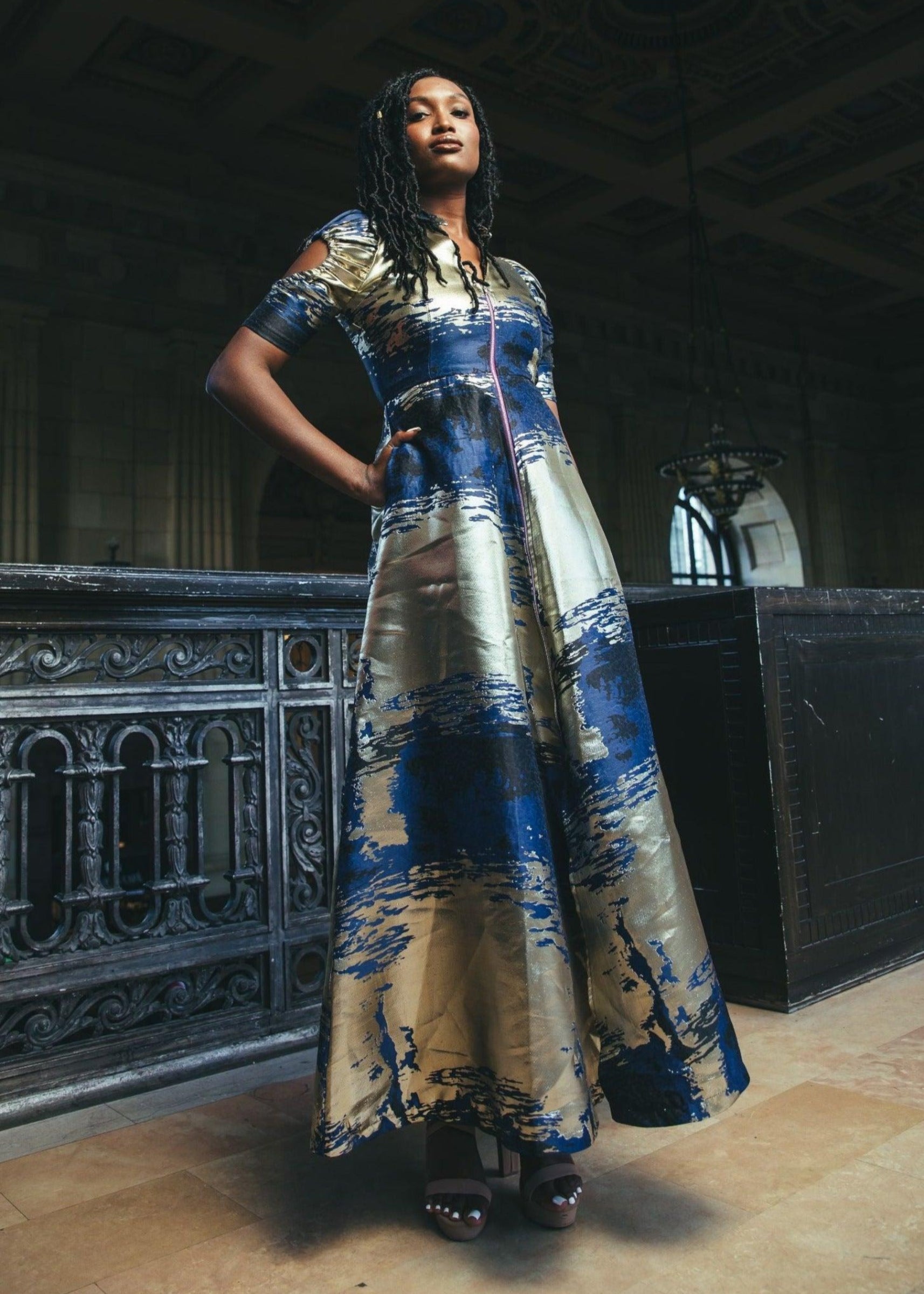
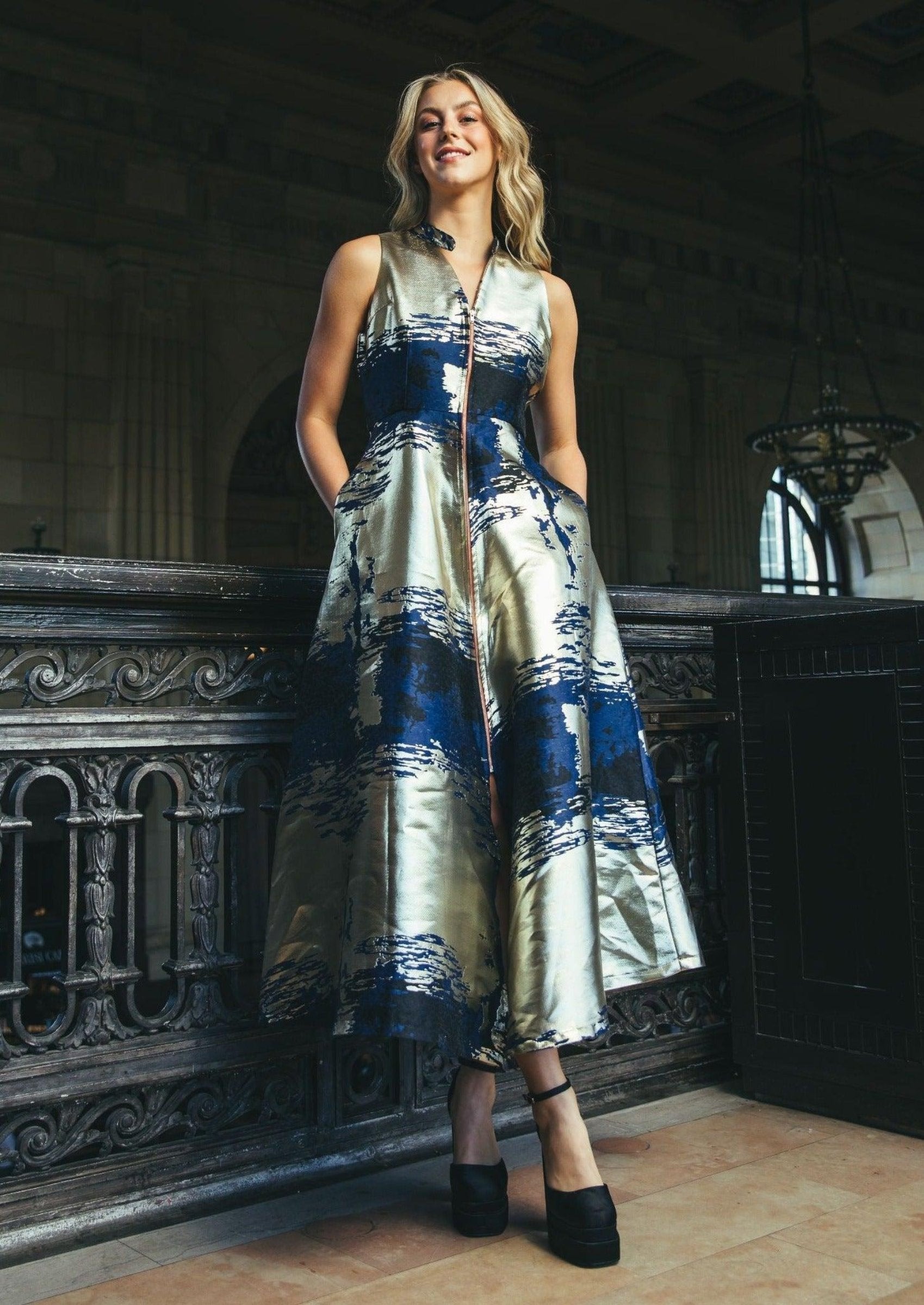
- Outdoor ceremony, cool weather: Add a structured jacket or a long coat that matches the formality of the dress. A metallic jacquard bomber reads as evening; a wool blend blazer reads as daytime. Keep the shoe closed-toe.
- Indoor venue with strong air conditioning: Carry a wrap or shawl even in summer. A pashmina or lightweight cardigan folds into a bag and keeps the outfit from reading as uncomfortable in photos.
Weddings, Dinners, and Galas
Weddings, dinners, and galas each ask for a different register. For weddings, match the ceremony and reception dress codes separately: keep the formal shoe and clutch for the ceremony, then switch to a block heel and shoulder bag for the reception. If the ceremony is outdoors, add the layer and flat before you arrive.
Our guide to styling statement pieces for galas covers the gala-specific details.
Dress Code Etiquette and Care That Protects Your Outfit
Rewearing an outfit to different events is completely acceptable. The etiquette is about context, not repetition.
Repetition Etiquette by Guest Relationship and Event Type
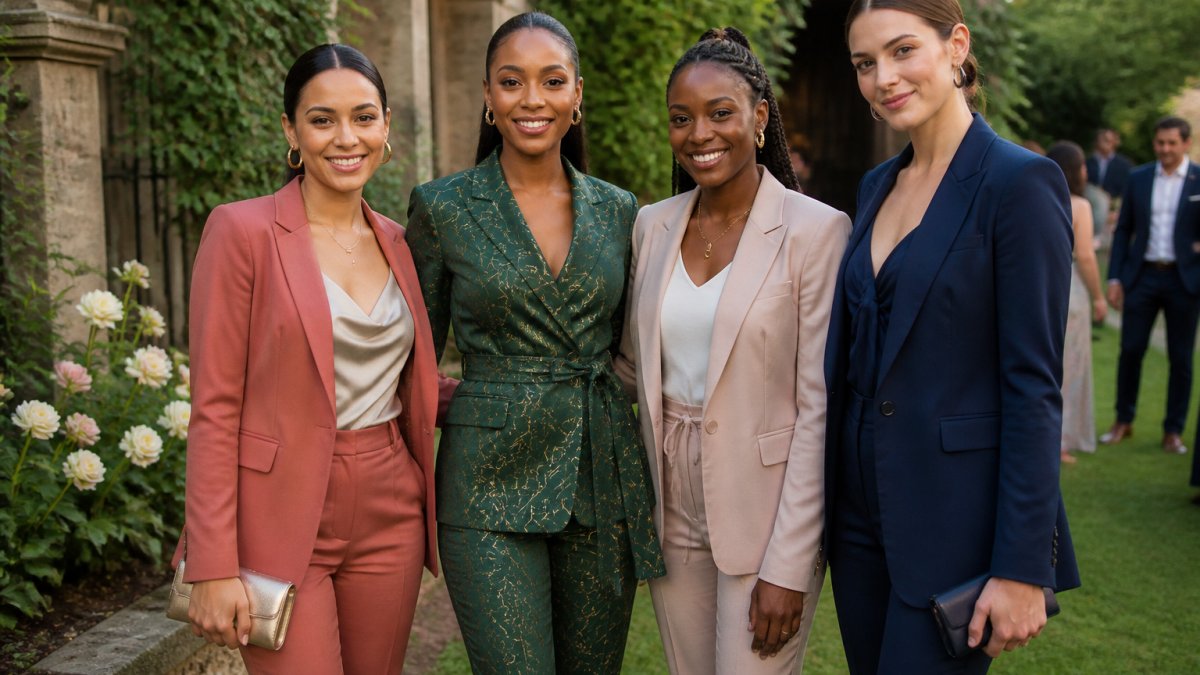
The core rule: a repeat is safe when the guest lists do not overlap and the formality level is different. A repeat is risky when the same people will see the outfit twice at the same formality level in the same season.
| Situation | Repeat acceptable? | Why |
|---|---|---|
| Different weddings, no overlapping guests, different cities | Yes, freely | No one in the room has seen the look |
| Same social circle, different formality levels | Yes, with one anchor change | The formality shift signals a different outfit |
| Same social circle, same formality, same season | No, or change two anchors | Overlap is likely and the repeat will read as a repeat |
| Work event and a wedding with overlapping colleagues | Yes, if the work look is the more conservative version | The blazer and closed-toe shoe change the register |
| Two events hosted by the same family | Yes, if the events are different types | Hosts expect guests to reuse; the type shift covers it |
| A wedding and a related shower or rehearsal dinner | Yes, with a clear swap | The events are adjacent but distinct in formality |
The closer you are to the host, the more freedom you have: a close friend or family member will not read a repeat as a slight, while a distant acquaintance or professional contact is more likely to notice, so change at least one anchor if guest lists could overlap.
Care, Alterations, and Cost Per Wear
Care is what makes rewearing possible. Hand-dyed and artisanal garments need gentle handling to keep their color; our guide to caring for hand-dyed African garments covers washing, drying, and storage. Between wears, air the garment, spot clean promptly, and store it flat or on a padded hanger.
Cost per wear is the practical test for whether a piece belongs in the rotation. Divide the purchase price by the number of times you expect to wear it.
If you are also reusing bridal party pieces, our article on whether bridesmaid dresses can be reworn makes the same case for those garments.
Conclusion
The hardest part of rewearing is not the styling but trusting that a considered repeat looks better than a rushed new purchase.
KAHINDO designs occasionwear for exactly this kind of rotation. Our pieces are handcrafted by female artisans in Kenya, made with original prints rooted in Congolese textile traditions, and produced through fair-trade practices.
Get started with KAHINDO and build a wardrobe that earns its place at every event on your calendar.
Frequently Asked Questions
Can you rewear a wedding guest outfit to another event?
Yes, and it is increasingly common. ThredUp reports that wedding guests spend an average of $550 to $820 or more on once-worn outfits over time, and 68% of those pieces stay unused. Rewearing works best when you change at least two elements: swap the shoes, add a layer, or reset the accessories. A dress that reads formal at a ceremony can read relaxed at a dinner once you remove the structured pieces and add softer ones.
What accessories can change the look of a wedding guest outfit?
The fastest swaps are shoes, bags, and a layer. Dressy flats or block heels shift the formality level in seconds. A silk scarf tied at the neck or worn as a headwrap adds a new focal point without buying a new dress. A structured metallic jacket over a gown turns it into eveningwear for a gala. Keep two or three accent colors that repeat across your accessories so every combination still looks intentional.
How do you style a formal dress casually?
Strip the formal signals first. Remove the jewelry you wore to the ceremony and replace it with one simple piece. Swap heels for dressy flats or low block heels. Add a soft layer such as a kimono or a lightweight knit instead of a structured jacket. Keep the dress as the statement and let everything else recede. A floor-length gown styled this way works for a dinner or a garden party without reading as overdressed.
How do you restyle a wedding guest dress for cooler weather?
Layering does most of the work. A metallic jacquard bomber or a long kimono over the dress adds warmth and changes the silhouette. Swap open shoes for closed block heels or dressy boots, and add a scarf at the neck. Choose layers in colors already present in the dress print so the outfit still reads as one look rather than two separate pieces.
ThredUp's report on once-worn wedding outfits