



Article: Cultural Significance of Congolese Textiles
Cultural Significance of Congolese Textiles
Table of Contents
- Congolese Textiles as Cultural Identity
- Kuba Cloth History and the Kingdom of Kuba
- Kuba Textile Techniques and Plant-Fiber Production
- Kuba Cloth Meaning Through Geometric Patterns and Motifs
- Kongo Textiles and Broader Textile Traditions
- Textiles in Ceremony, Ritual, and Social Status
- Colonial Impact, Museum Collections, and Repatriation
- Preserving Textile Heritage and Supporting Artisan Communities
- Frequently Asked Questions
Last Updated: October 10, 2026
Congolese Textiles as Cultural Identity
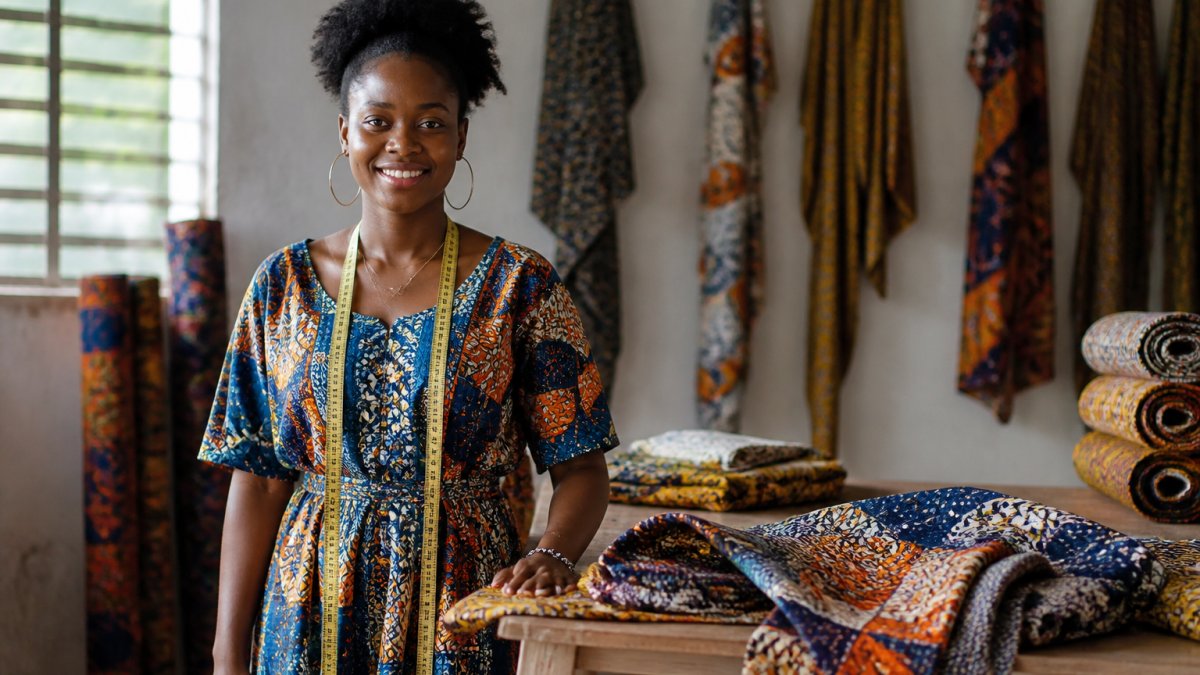
Congolese textiles embody the identity, history, and values of entire communities across Central Africa, carrying meanings woven into fabric for centuries. From intricate Kuba cloth to resist-dyed Adire traditions, these textiles form the foundation of how communities express who they are and connect to one another.

Congolese textiles mark life transitions, communicate social status, preserve ancestral knowledge, and sustain livelihoods. Wearing a piece rooted in these traditions means participating in a living cultural legacy that supports artisans keeping these traditions alive.
Understanding this significance requires recognizing how colonialism disrupted these traditions, how museums have collected these works, and how contemporary makers are reclaiming and redefining their meaning.
Kuba Cloth History and the Kingdom of Kuba
Origins in Central Africa
Kuba cloth emerges from one of Central Africa's most sophisticated textile traditions.

By the time of European contact, Kuba cloth production had become so refined and culturally embedded that it functioned as currency, ceremonial regalia, and artistic statement. The cloth was made for the Kuba people themselves, by the Kuba people, according to Kuba standards of beauty and meaning.
Raffia, derived from palm leaves, provided the base material. The Kuba people developed methods to harvest, process, and weave these fibers into cloth of remarkable thinness and strength, reflecting generations of experimentation and refinement.
The Kuba People and Social Hierarchy
The Kuba people organized themselves through a complex system where textiles functioned as visible markers of rank, wealth, and belonging. The finest examples, with the most labor-intensive embroidery and complex geometric patterns, belonged to nobility, creating a textile-based hierarchy everyone could read at a glance.
Noble women held significant power within Kuba society, and their textiles reflected that authority. The cloths they wore and commissioned demonstrated their family's wealth and their own influence.
The Kingdom of Kuba maintained this system through careful control of production and distribution, reinforcing the social order while ensuring textile knowledge remained concentrated and valued.
Kuba Textile Techniques and Plant-Fiber Production
Weaving and Embroidery Methods
Kuba cloth production begins with raffia fiber processed from palm leaves. Weavers create the base cloth using traditional looms, producing fabric of varying weights and densities depending on intended use.
Weaving demands precision and understanding of tension, thread width, and durability. This knowledge passes from maker to maker through demonstration and practice.
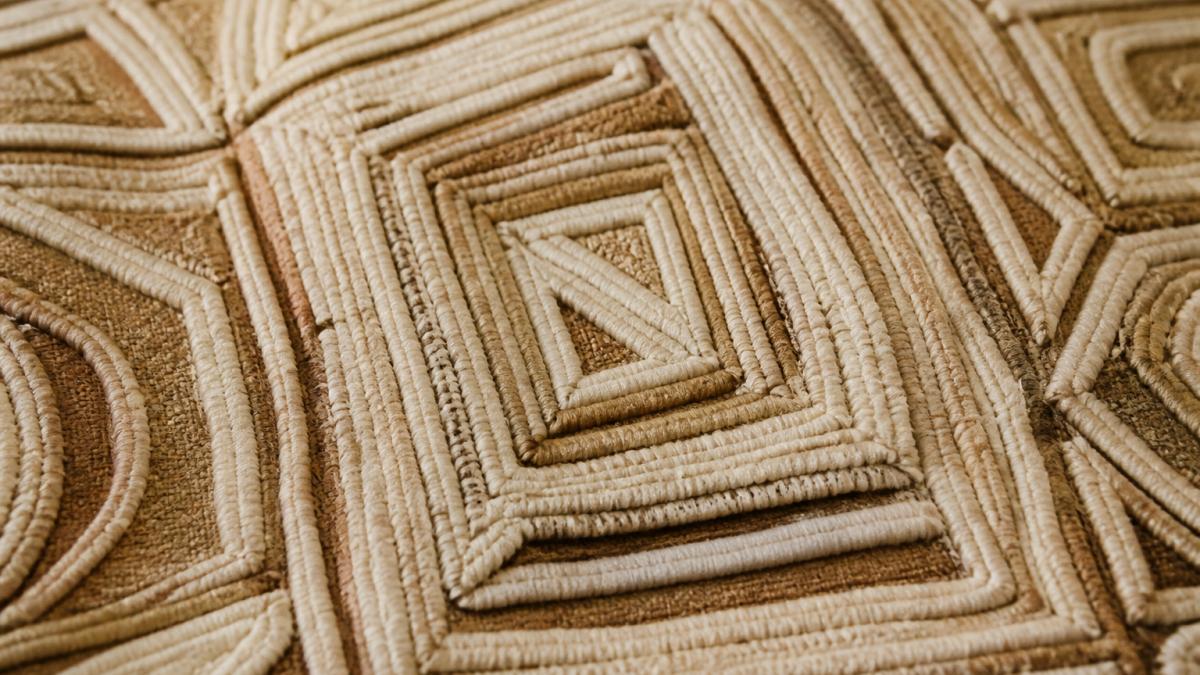
The distinctive character of Kuba cloth emerges through embroidery. Artisans add additional raffia threads to the woven base, building sculptural relief and three-dimensional texture.
The embroidery process is extraordinarily labor-intensive, with a single large cloth requiring hundreds of hours of work. This investment of time and skill gives Kuba cloth its economic and cultural value, representing commitment, mastery, and respect for tradition.
Dyeing and Material Selection
Kuba cloth traditionally relied on the natural color of raffia fiber, cream, tan, and brown tones. Makers learned to select fibers that would work together harmoniously, creating subtle color relationships within the neutral palette.
Some Kuba textiles incorporate other plant fibers or natural dyes, creating deeper colors and more complex visual effects. Material choices affect appearance, durability, texture, and aging, understanding developed through long practice and observation.
Contemporary textile makers working in Congolese traditions continue this emphasis on material selection and natural dyeing processes. Slow-bath dyeing techniques create non-replicable color gradients, each piece unique because natural dyes respond unpredictably to fiber, water, temperature, and timing variations.
Kuba Cloth Meaning Through Geometric Patterns and Motifs
Pattern Symbolism and Design Interpretation
Kuba cloth patterns are not random. Each geometric motif carries meaning within the cultural context of the Kuba people, referencing natural forms, animals, and abstract concepts like balance and spiritual protection.
The patterns reflect Kuba philosophy about order, harmony, and the relationship between the visible and invisible worlds. Geometric precision represented a worldview where balance and symmetry held spiritual significance.
Different pattern types carry different associations, with some reserved for ceremonial use and others for everyday wear. Over time, certain pattern innovations became associated with particular makers or families, creating a visual genealogy of textile production.
Individual Variation and Artistic Expression
Within a framework of traditional patterns and techniques, individual makers exercised remarkable artistic freedom. Two weavers might both create a cloth following the same pattern, yet produce visually distinct results through variations in scale, density, color choice, and embroidery technique.
This balance between tradition and innovation kept the textile tradition alive and vital. Makers were interpreting tradition, bringing their own vision and skill to established forms. This distinguishes living cultural practice from museum artifact.
Contemporary textile artists working with Congolese heritage continue this practice of respectful innovation, honoring traditional techniques while creating work that speaks to contemporary contexts.
Kongo Textiles and Broader Textile Traditions
Beyond Kuba: Raffia and Adire Traditions
While Kuba cloth receives significant international attention, the Democratic Republic of the Congo hosts multiple textile traditions, each with distinct techniques and cultural contexts.
Raffia cloth production extends across multiple ethnic groups and regions. The Bushong people, the Shoowa, and other communities all developed sophisticated raffia-working traditions reflecting their specific history, environment, and cultural values.
Adire textiles, originating in West Africa but influencing Central African traditions, use resist-dyeing techniques to create striking geometric and organic patterns.
The International Women's Media Foundation has documented how imported competition and economic pressure have disrupted textile production across the region, threatening both the cultural practices and the livelihoods of artisans.
Regional Variation and Cultural Significance
Across the Democratic Republic of the Congo and neighboring regions, textile traditions reflect local geography, available materials, spiritual beliefs, and historical contact patterns. Coastal communities developed different traditions than inland forest peoples, and trading networks brought influences that were reinterpreted through local aesthetic frameworks.
Understanding Congolese textile significance requires attention to specificity. A cloth from one community carries different meanings and was made using different techniques than cloth from another community, even if both are labeled generically as "African textiles" in Western contexts.
This specificity is lost when textiles are treated as generic "African art" divorced from their cultural context. Each tradition represents centuries of knowledge and cultural meaning-making by particular communities.
Textiles in Ceremony, Ritual, and Social Status
Kuba cloth and related Congolese textiles function as essential elements in major life transitions and ceremonial occasions: births, marriages, deaths, initiations, and celebrations of leadership.
Funerary Regalia and Ceremonial Garments
Funerary ceremonies represent the most significant context for Kuba cloth display. When a person of status dies, the finest cloths wrap the body and honor the deceased's place in the community.
These funerary textiles weren't everyday wear. Families preserved their finest cloths specifically for this purpose, sometimes across generations.
Ceremonial garments for initiations, chiefly investitures, and major celebrations similarly required the finest textiles. A person of high status would wear multiple layers of cloth, each communicating different aspects of their identity and authority, creating a figure that was simultaneously human and monumental.
Wealth, Noble Status, and Clan Affiliation
Kuba cloth functioned as a form of wealth storage and display. A family's collection of fine textiles represented accumulated resources and aesthetic sophistication, demonstrating economic power and access to skilled makers.
Cloth ownership communicated clan affiliation and family history. Certain pattern types became associated with particular families or clans. A trained observer could identify a cloth's origins and the status of its owner by reading these visual markers.
Noble women accumulated cloths as markers of their own authority and their family's prestige. A woman's textile collection represented her power within her household and her family's standing within the broader kingdom.
Colonial Impact, Museum Collections, and Repatriation
How Colonialism Disrupted Textile Traditions
European colonialism fundamentally disrupted Congolese textile production and the cultural systems that sustained it. Colonial powers imposed new economic systems, redirected labor toward resource extraction, and introduced imported manufactured goods that undercut local textile markets.
Colonizers systematically collected Congolese textiles, removing thousands of pieces from their cultural contexts and placing them in European and American museums. This was extraction, taking objects of profound cultural significance and displaying them as "ethnographic specimens" rather than as living cultural expressions.
The removal of textiles from circulation had cascading effects. Fewer cloths remained in communities to be worn and passed down. The cultural knowledge embedded in textile production became harder to transmit when the objects themselves were absent.
Museum Provenance and Contemporary Repatriation Efforts
Today, major museums worldwide hold extensive collections of Congolese textiles, particularly Kuba cloth. These collections represent extraordinary artistic and cultural heritage, but also a historical injustice, with many pieces acquired under colonial conditions or through inadequate payment.
Contemporary repatriation efforts seek to return these textiles to their communities of origin. This process is complex, involving questions of ownership, cultural authority, conservation, and practical logistics. Some communities want physical return; others advocate for detailed documentation that allows knowledge to circulate while textiles remain accessible to researchers.
The repatriation conversation also raises questions about how textiles should be preserved and displayed. Western museum conservation practices may not align with how Congolese communities want their textiles cared for.
Preserving Textile Heritage and Supporting Artisan Communities
Knowledge Transmission and Contemporary Makers
The survival of Congolese textile traditions depends on knowledge transmission, younger generations learning the techniques, understanding the patterns, and internalizing the cultural values embedded in the work. This transmission happens through apprenticeship, family teaching, and community practice.
Contemporary challenges threaten this transmission. Economic pressure pushes young people toward wage labor rather than textile production, and imported manufactured goods undercut the market for handmade cloth.
Yet textile traditions persist. Artisans continue making cloth using traditional techniques, adapting by creating pieces for new markets while maintaining production for local ceremonial use.
KAHINDO works directly with female artisans in Kenya, creating economic incentives for textile production while centering the artisans' knowledge and creativity.
Ethical Production and Fair-Trade Practice
Supporting Congolese textile heritage requires ensuring that artisans receive fair compensation, that their knowledge is respected, and that they retain control over their creative work.
Ethical production also means transparency.
Slow-bath dyeing processes create unique, non-replicable color gradients that distinguish handmade textiles from industrial alternatives.
When you choose garments rooted in Congolese textile traditions, you're supporting the continuation of these cultural practices, choosing singular, handcrafted pieces over mass-produced alternatives, and participating in a system that honors artisan knowledge and compensates makers fairly.
Congolese textiles represent centuries of artistic refinement, spiritual practice, and community identity. Explore our collection of occasion wear designed with African textile traditions at the heart of every piece.
Frequently Asked Questions
What is the cultural significance of Congolese textiles?
Congolese textiles, particularly Kuba cloth, represent identity, wealth, and spiritual connection within Central African communities. These textiles encode clan affiliation, social status, and individual artistry through their patterns and motifs. They function as ceremonial garments in funerary rites and ritual events, marking transitions and honoring the deceased. Beyond their aesthetic value, Congolese textiles preserve cultural memory and knowledge systems passed through generations of makers, embodying the technical cohesiveness and creative vision of their communities.
What materials and Kuba textile techniques are traditionally used?
Kuba cloth is traditionally woven from raffia, a plant fiber derived from palm leaves. Weavers create the base cloth through careful hand-weaving, then embellish it with embroidery using threads dyed in earth tones and vibrant hues. The embroidery creates sculptural relief effects, with stitches building dimension and texture.
What do Kuba cloth patterns and motifs represent?
Kuba cloth meaning is embedded in its geometric patterns, each carrying symbolic weight. Patterns may represent natural phenomena, spiritual concepts, or individual identity markers. The variation in motif interpretation allows artists to express personal creativity within cultural frameworks. Pattern placement and combination communicate messages about the wearer's status, role, and clan. No two pieces are identical due to the hand-embroidered nature of production, making each textile a unique statement of both cultural tradition and individual artistry.
How can ethical production support Congolese textile traditions today?
Fair-trade practices and transparent supply chains ensure that textile makers receive living wages and maintain economic stability, addressing the historical reality that cultural significance alone has not protected jobs or livelihoods in the textile industry. Brands that document artisan stories, provide provenance cards, and invest in knowledge transmission help preserve techniques and empower female makers. Supporting ethical producers means investing in communities that maintain these traditions not as museum pieces, but as living, evolving practices that sustain families and cultural continuity.

