

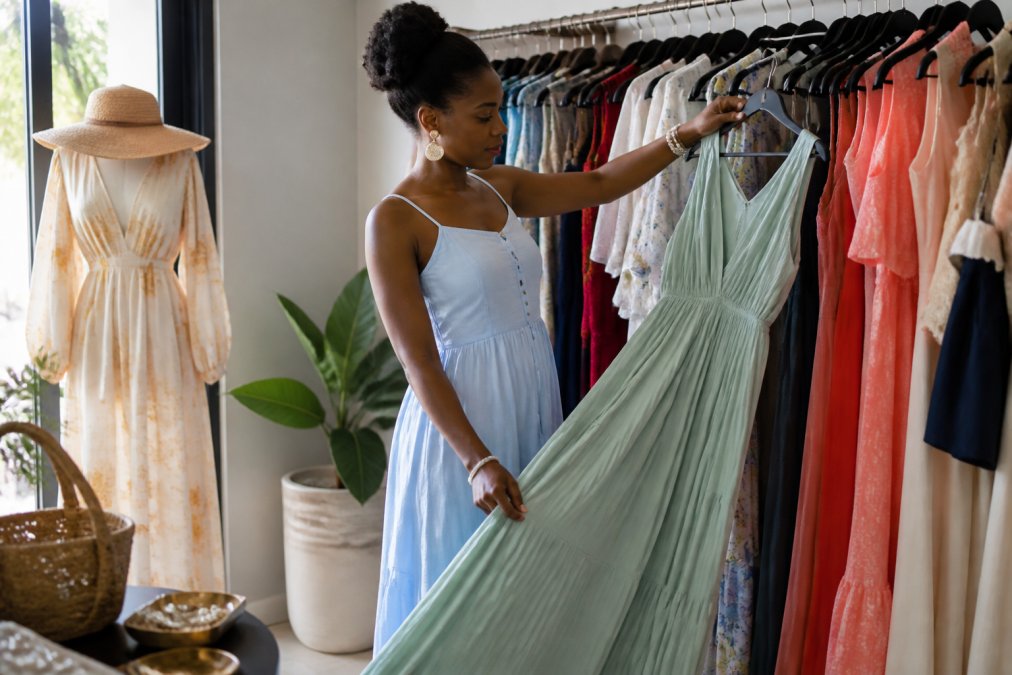
Alternatives to Mass Produced Wedding Guest Dresses
Table of Contents
- Why Mass Produced Wedding Guest Dresses Fall Short
- Sustainable Wedding Guest Dresses Worth Investing In
- Wedding Guest Dress Rental Services: Circular Fashion in Practice
- Power Suits, Jumpsuits, and Tailored Separates as Wedding Guest Attire
- How to Style a Jumpsuit for a Wedding Without Second-Guessing Yourself
- Vintage, Resale, and Custom-Made: The Capsule Wardrobe Approach
- KAHINDO: Artisan-Made Wedding Guest Dresses That Tell a Story
- Conclusion
Last Updated: August 5, 2026
Why Mass Produced Wedding Guest Dresses Fall Short
Mass produced wedding guest dresses prioritize speed over quality and worker welfare. Fast fashion retailers produce thousands of identical styles in synthetic fabrics, resulting in inconsistent fit, disposable quality, and the deflating moment of arriving at a wedding to find your exact dress on someone else.
At KAHINDO, we've spent years working with women who've experienced this firsthand. Mass production also creates real environmental consequences. According to the EPA's overview of textile waste in the United States, Americans discard millions of tons of clothing annually, with dresses worn once and never again contributing significantly to landfill volume.
The good news: alternatives to mass produced wedding guest dresses have never been more accessible or interesting. Below, we cover every serious option, from rental platforms and resale to artisan-made investment pieces, along with practical guidance on wearing non-traditional silhouettes to formal events.
Sustainable Wedding Guest Dresses Worth Investing In
Sustainable wedding guest dresses are produced with intentional attention to fabric sourcing, labor conditions, and environmental impact. The best ones are designed to be worn again, making the cost-per-wear calculation far more favorable than it first appears.
Ethical Brands That Prioritize Fabric Quality and Fair Production
Christy Dawn uses deadstock fabrics, surplus materials that would otherwise go to waste. Their vintage-inspired silhouettes work well for garden parties and semi-formal receptions, with prices ranging from $88 to $498.
Reformation is Climate Neutral Certified and produces many styles in California using TENCEL, linen, and other lower-impact materials. Their RefRecyclable program allows you to return garments at end of life rather than sending them to landfill.
Both brands represent a shift toward conscious consumerism: the idea that a dress can be an investment piece rather than a disposable purchase.
DIY and Upcycling: Turning What You Own Into a Statement Piece
The most underrated alternative to buying a new dress is reworking something you already own. A simple slip dress gains formal weight with a beaded belt or statement brooch. A tailor can fix fit issues for less than a new dress. Slow-bath dyeing can transform a plain garment into something with real visual character. Layering a silk slip under a structured blazer reads as formal when the fabrics are right.
The DIY route produces something genuinely singular and eliminates the risk of wearing the same dress as another guest.
Wedding Guest Dress Rental Services: Circular Fashion in Practice
Wedding guest dress rental services allow you to borrow formal wear for a specific event, then return it, keeping the garment in circulation. The circular fashion model reduces environmental footprint while giving you access to a wider range of styles than most people could afford to buy outright.
A dress you'll wear once is a strong candidate for rental. A dress you'll wear four times over three years is a stronger candidate for purchase.
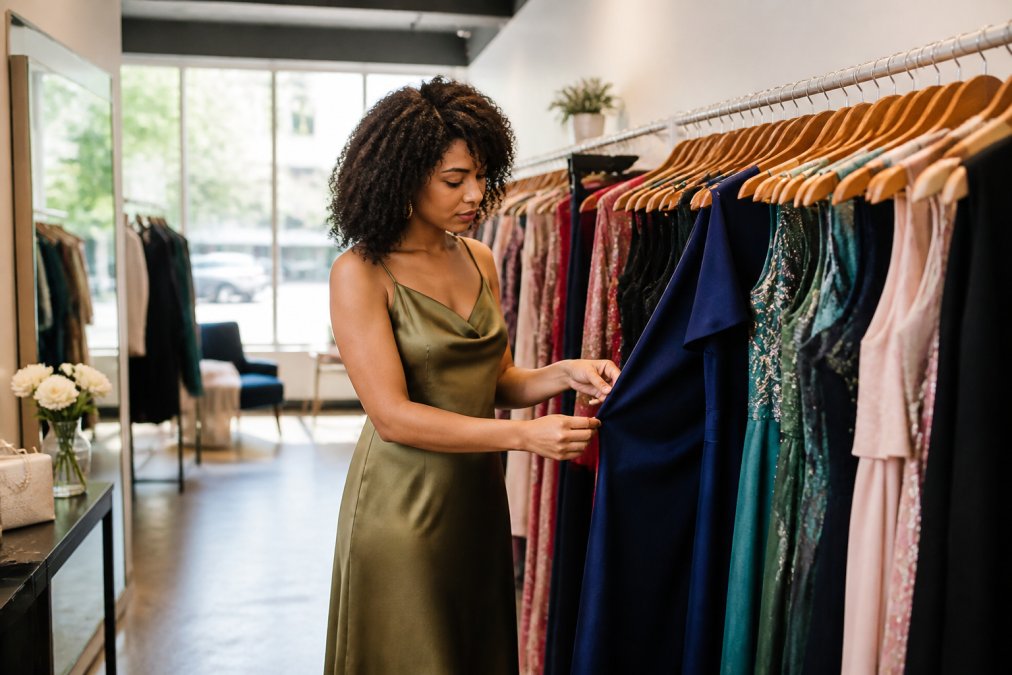
Subscription Rentals vs. Peer-to-Peer Platforms
| Platform Type | Best For | How It Works | Key Consideration |
|---|---|---|---|
| Subscription rental | Frequent event attendees | Monthly fee, rotate items regularly | Worth it for 3+ events per year |
| One-time rental | Single event | Pay per item, specific rental window | Most cost-effective for infrequent use |
| Peer-to-peer rental | Access to designer pieces | Rent directly from individual owners | Condition and coordination vary |
| Resale platforms | Ownership at lower cost | Buy pre-owned, authenticated pieces | No returns on final sale items |
Subscription rental platforms like Nuuly offer up to six items per month starting at $98/month, with free shipping and dry cleaning included. They carry sizes from XXS to 5X, which is meaningful for women who find formal sizing restrictive.
One-time rentals suit someone attending one or two weddings a year who doesn't want to commit to a monthly subscription.
Peer-to-peer platforms like By Rotation allow individual owners to list their garments for rent. Prices vary widely, sometimes as low as $20 per day. The selection is more unpredictable, but includes pieces rarely found on subscription platforms.
According to the Federal Trade Commission's guidance on circular economy and textile sustainability, rental and resale models are among the most effective individual-level interventions for reducing textile waste.
Power Suits, Jumpsuits, and Tailored Separates as Wedding Guest Attire
The assumption that wedding guest attire means a dress is outdated. Most modern wedding invitations don't specify otherwise, and power suits, structured blazer sets, and tailored separates are often the most memorable outfits in the room.
What makes a non-dress silhouette work for a formal occasion comes down to fabric quality and fit. A well-cut trouser in a luxurious fabric, paired with a structured top or blazer, reads as formal in a way that a poorly fitted dress never will.
Practical options that work across a range of wedding dress codes:
- A tailored blazer with wide-leg trousers: Works for cocktail attire and semi-formal events. Choose crepe or silk-blend rather than stiff suiting fabric.
- A structured jumpsuit: One piece, no coordination required, and often more comfortable than a formal dress.
- Silk trousers with an embellished top: Versatile, photographs well, and moves easily through a reception.
- A minimalist co-ord set: A matching top and skirt in a statement fabric functions as occasion wear without looking like office attire.
Occasion wear is about fabric, fit, and intention. A silk crepe blazer with tailored trousers is a wedding outfit. A linen blazer is not.
How to Style a Jumpsuit for a Wedding Without Second-Guessing Yourself
Styling a jumpsuit for a wedding is straightforward when you treat it like you would a dress: match the formality level of the event, choose the right fabric, and accessorize with intention. A silk or crepe jumpsuit with a tailored fit is appropriate for cocktail attire, semi-formal, and many black-tie optional events.
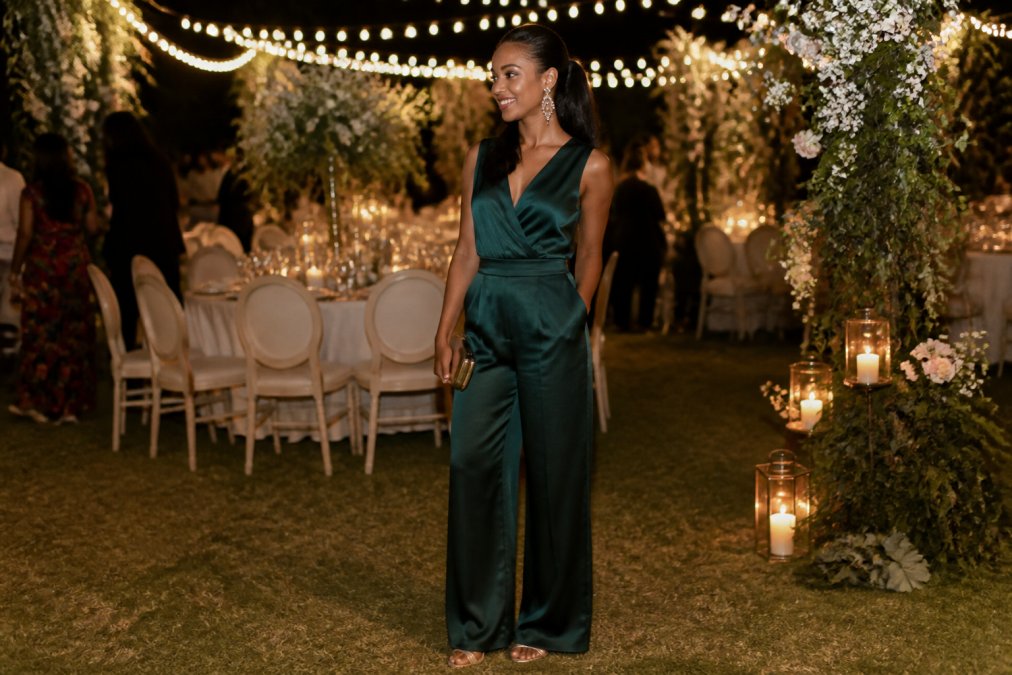
Decoding the Dress Code When You're Not Wearing a Dress
Dress code language was written with dresses in mind, but the underlying intent is about formality level, not garment type:
- Casual or garden party: A relaxed jumpsuit in linen or cotton, or tailored separates in a lighter fabric.
- Cocktail attire: A structured jumpsuit in silk or crepe. Heels or dressy flats. Statement earrings or a bold necklace.
- Semi-formal or festive attire: A wide-leg trouser with an embellished or printed top, or a jumpsuit with more visual detail.
- Black-tie optional: A tailored jumpsuit in a luxurious fabric with elevated accessories.
- Black-tie: A formal gown is conventional, but a beautifully constructed full-length jumpsuit in a formal fabric can work. When in doubt, contact the host.
Most guests and hosts care far less about the specific garment than about whether the overall look reads as dressed-up and respectful of the occasion.
Size Inclusivity and Finding the Right Silhouette
Non-dress silhouettes often offer more flexibility for fit across different body types. A wide-leg trouser is inherently more forgiving in the hip and thigh than a fitted dress. A jumpsuit with an adjustable waist can accommodate a wider range of proportions.
Nuuly's rental platform carries sizes XXS through 5X. Christy Dawn offers Extended and Petite collections. Custom-made options through platforms like Sumissura, starting at $189, allow you to input exact measurements and customize silhouette, neckline, and length.
Vintage, Resale, and Custom-Made: The Capsule Wardrobe Approach
The capsule wardrobe approach means building a small collection of versatile, high-quality pieces that work across multiple occasions rather than buying a new dress for each event.
The RealReal is an authenticated luxury resale platform where you can find designer occasion wear at reduced prices. Because items are authenticated, you're getting verified quality.
ThredUp operates at a lower price point, with over 25,000 brands and prices up to 90% below retail. The selection for formal occasion wear is less consistent, but genuine finds are possible for those willing to browse regularly.
Custom-made platforms like Sumissura allow you to design a dress to your exact measurements using an online 3D tool. The made-to-order model means no excess inventory and a garment that fits your body. Lead times are longer, so this requires planning ahead.
Etsy offers both vintage and custom categories worth exploring. Independent sellers offer one-of-a-kind pieces from specific eras, and independent artisans can create custom work to your specifications. Quality and return policies vary by seller, so reading shop reviews carefully is essential.
According to the Sustainable Apparel Coalition's Higg Index resources on circular fashion, buying secondhand or choosing made-to-order production are among the most impactful individual choices for reducing the environmental footprint of a wardrobe.
KAHINDO: Artisan-Made Wedding Guest Dresses That Tell a Story
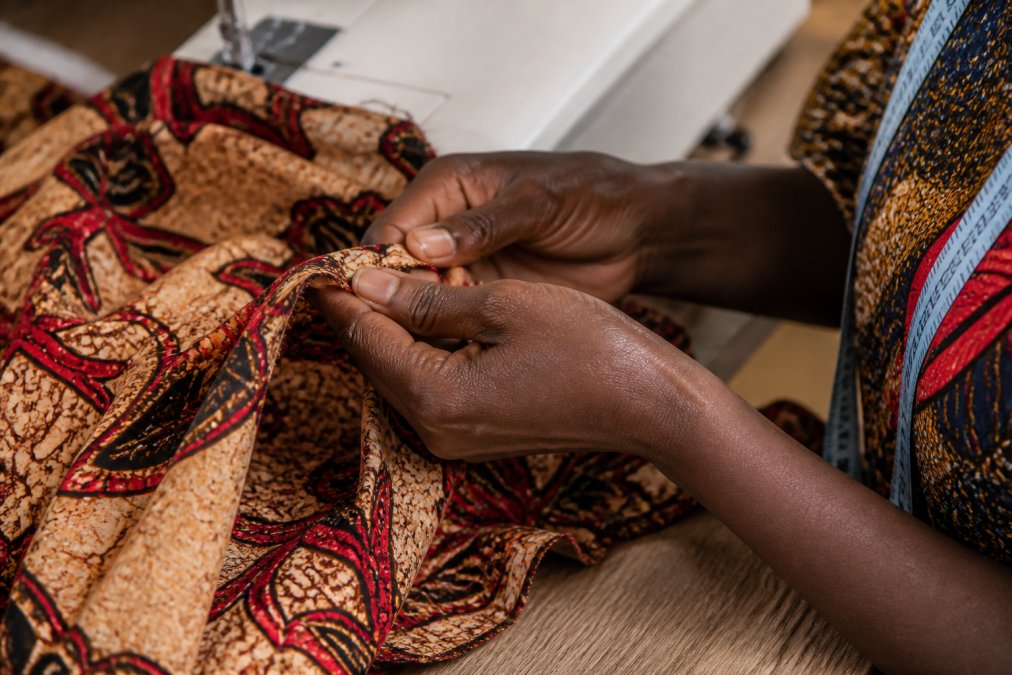
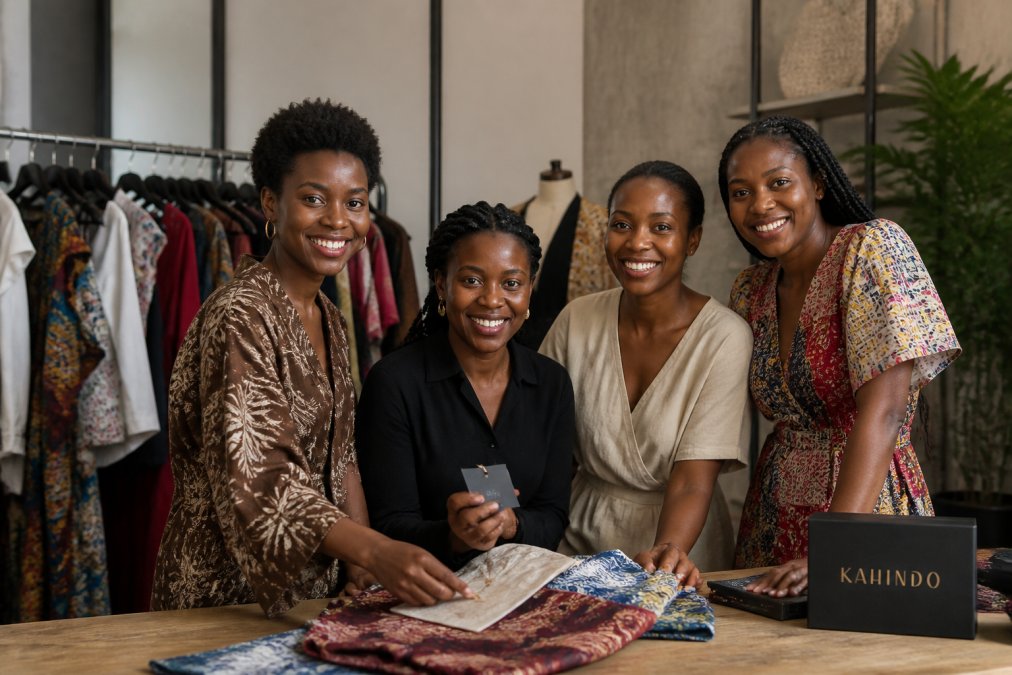
KAHINDO, founded in 2017 by Kahindo Mateene (Project Runway Season 12 alumna and Tory Burch Fellow), designs bold occasionwear in New York and has each piece handcrafted by female artisans in a Nairobi co-operative. The result is something that genuinely cannot be replicated at scale.
Every KAHINDO garment comes with a provenance card documenting the specific artisan who made it and the labor hours involved. This is a supply chain transparency mechanism that most fashion brands don't offer. KAHINDO's fair-trade practices ensure living wages and artisan equity rather than race-to-the-bottom pricing.
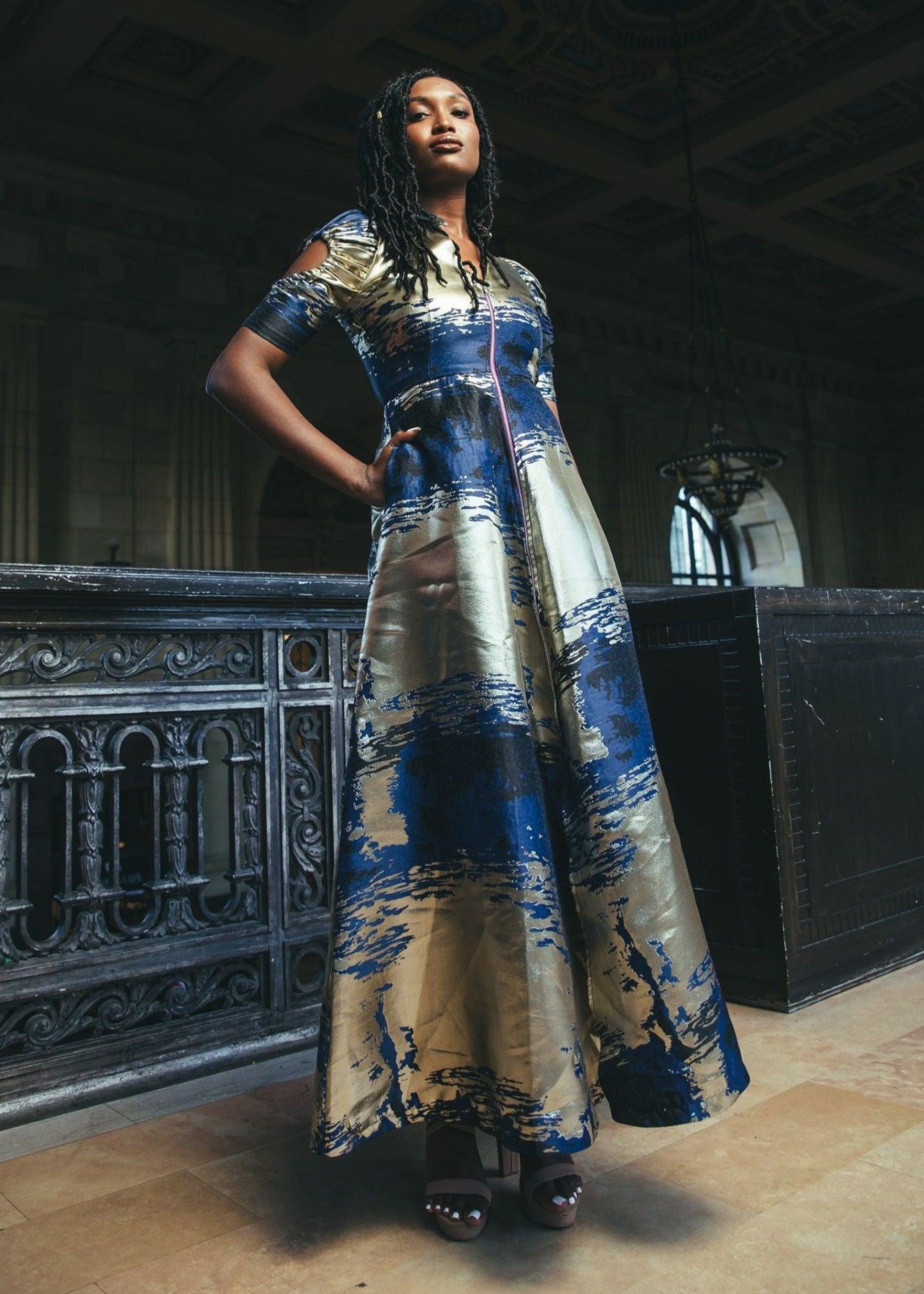
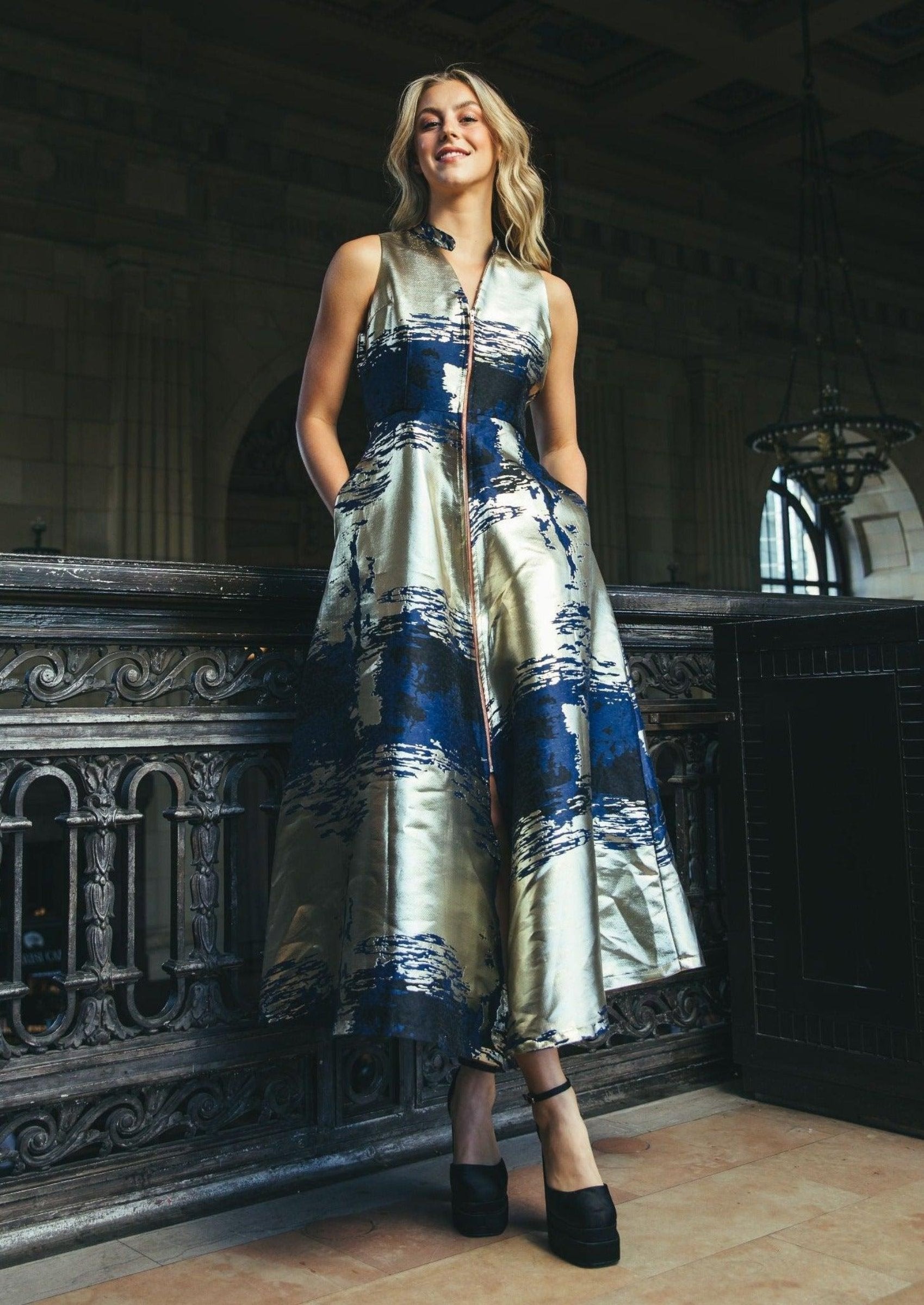
The brand's signature slow-bath dyeing process creates color gradients that are, by definition, non-replicable. No two garments are identical. For a woman attending a wedding who wants to be genuinely certain she won't share a dress with another guest, that matters.
KAHINDO specializes in wedding guest dresses, jumpsuits, mother-of-the-bride gowns, and eveningwear rooted in original print designs drawn from Congolese textile traditions. The brand has been featured in Vogue, Elle, The New York Times, WWD, Essence, and Marie Claire, and is sold at kahindo.com as well as through Nordstrom, Bloomingdale's, and Anthropologie.
One customer described the experience: "These pants are my ultimate favorite. The fabric alone is stunning, like ocean waves. The cut is incredibly flattering, and the compliments keep coming. KAHINDO is my favorite designer by far."
| Approach | Best For | Key Benefit | Lead Time |
|---|---|---|---|
| Artisan-made (e.g., KAHINDO) | Investment piece, singular look | Provenance, craftsmanship, non-replicable | Check brand for current timelines |
| Subscription rental | Frequent event attendees | Variety, circular fashion, no storage | Book 1-2 weeks ahead |
| One-time rental | Single occasion | Cost-effective access to designer styles | Book 1-2 weeks ahead |
| Resale/vintage | Budget-conscious, eco-focused | Reduced cost, sustainable | Variable by platform |
| Custom-made | Specific fit requirements | Exact measurements, personalized design | 3-6 weeks typically |
| Upcycling/DIY | Creative, wardrobe-first approach | No new purchase, singular result | 1-4 weeks depending on method |
| Ethical brand (new) | Conscious new purchase | Verified production standards | Standard shipping timelines |
The real problem with mass produced wedding guest dresses isn't that they're ugly. It's that they're built on a model that doesn't serve the wearer, the maker, or the planet. Every alternative on this list addresses at least one of those failures, and the best of them address all three.
Frequently Asked Questions
Is it better to rent or buy a wedding guest dress?
It depends on how often you attend formal events. Renting through a service like Rent the Runway (starting around $78 per rental) or Nuuly ($98/month subscription) makes sense if you attend one or two weddings a year and want variety without storage concerns. Buying an artisan-made or ethically produced piece is the stronger investment if you value longevity, want something trans-seasonal, and plan to wear it more than once. A well-made dress from a slow fashion brand often outlasts five fast fashion purchases.
How can I find unique wedding guest dresses that aren't mass produced?
Several routes lead away from mass production. Resale platforms like The RealReal and ThredUp carry authenticated and secondhand designer pieces at reduced prices. Etsy sellers offer vintage and custom-made options. Ethical brands that produce in limited runs, using artisan craftsmanship and original textiles, guarantee you won't show up in the same dress as another guest. For a truly singular piece, look for brands whose prints are original designs rather than licensed patterns printed at scale.
What are the best sustainable brands for wedding guest outfits?
Sustainability shows up differently across brands. Christy Dawn uses deadstock fabrics and pays fair wages in Los Angeles. Reformation holds Climate Neutral Certification and offers a garment recycling program. KAHINDO produces each piece through fair-trade artisan cooperatives in Nairobi, with provenance cards documenting the artisan and labor hours per garment. The most sustainable option combines eco-conscious fabric choices with transparent supply chains and slow fashion production volumes, rather than simply using one recycled material while scaling at mass market speed.
How do I style a non-traditional wedding guest outfit like a jumpsuit or power suit?
The silhouette matters less than the formality signals. For a jumpsuit, choose silk or structured fabric over casual cotton, add heeled sandals or mules, and let one statement accessory do the work, a sculptural earring or embellished clutch reads as occasion-ready. For a tailored suit or blazer with trousers, match the fabric weight to the venue: linen for garden parties, wool crepe or silk for indoor or evening ceremonies. Check the dress code first, cocktail attire and black tie both accommodate non-dress options when executed with intention.
Can I build a capsule wardrobe around wedding guest outfits?
Yes, and it's one of the most practical ways to avoid buying a new dress for every event. The core of a wedding guest capsule wardrobe includes one or two investment pieces in versatile silhouettes, a midi dress in a rich print, a tailored jumpsuit, or silk trousers with a structured blazer, that you style differently through accessories, shoes, and outerwear. Choosing trans-seasonal fabrics and timeless cuts means the same pieces work for spring garden weddings and winter evening receptions. Buying fewer, better pieces also reduces overall textile waste.
For women who want occasion wear that genuinely stands apart, KAHINDO offers artisan-made wedding guest dresses and jumpsuits handcrafted in Kenya, with original print designs rooted in Congolese textile traditions and a provenance card for every piece. The brand ships nationwide and is available at kahindo.com. Shop Blue Ombré and find the piece that tells your story.
This article was written using GrandRanker