

Best Cleobella Alternatives for Weddings
Table of Contents
- Why Brides and Wedding Guests Look Beyond Cleobella
- Ethical Luxury Wedding Guest Dresses That Make a Statement
- How to Style Statement Dresses for Weddings
- Best Brands for Mother-of-the-Bride Gowns
- Sustainable vs. Rental: Which Model Works for You
- Comparison: Price, Sustainability, and Fit Across Alternatives
- What Makes Artisan-Made Wedding Dresses Worth the Investment
- Conclusion: Finding Your Perfect Wedding Guest Look
Last Updated: August 27, 2026
Why Brides and Wedding Guests Look Beyond Cleobella
When shopping for wedding attire, the market feels overwhelming. Cleobella has built a reputation for bohemian-inspired occasion wear, but it's far from the only option worth considering. More importantly, the landscape of best Cleobella alternatives for weddings has expanded as brides and guests prioritize sustainability, artisanal craftsmanship, and authentic storytelling behind their garments.
The shift is real. According to ethical fashion market research, more than 55% of consumers now consider sustainability before purchasing apparel. The global ethical fashion market is projected to grow at a 6.3% compound annual growth rate through 2035, with North America accounting for approximately 24% of that market. The average wedding dress cost in 2026 ranges from $1,700 to $2,500, with alterations adding another $400 to $800, a significant investment deserving careful consideration (theknotmag.com).
Choosing the best Cleobella alternatives for weddings isn't just about finding similar aesthetics. It's about understanding what matters to you: investment-quality pieces you'll wear for years, rental flexibility for one-time events, or direct support for artisans whose hands craft every seam. This guide breaks down the most compelling alternatives across sustainability, price point, and wearability for brides, wedding guests, and mothers of the bride.
Ethical Luxury Wedding Guest Dresses That Make a Statement
The best Cleobella alternatives for weddings share one core quality: they refuse to blend in. These brands combine bold design with transparent production practices, meaning you know exactly where your money goes and who benefits from your purchase.
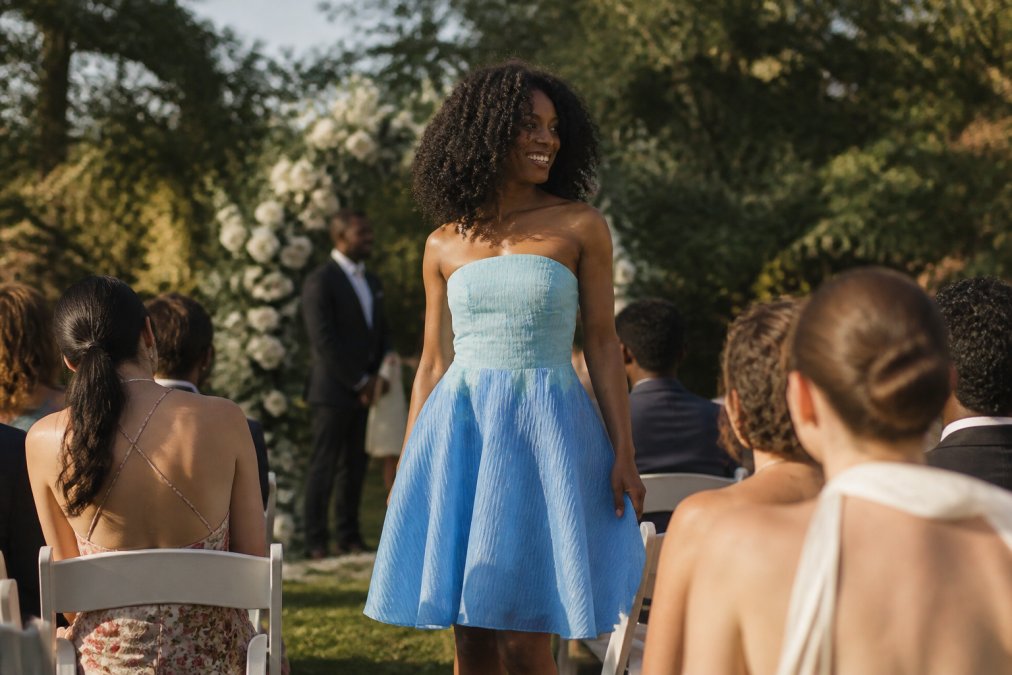
KAHINDO: Handcrafted Occasion Wear with African Heritage
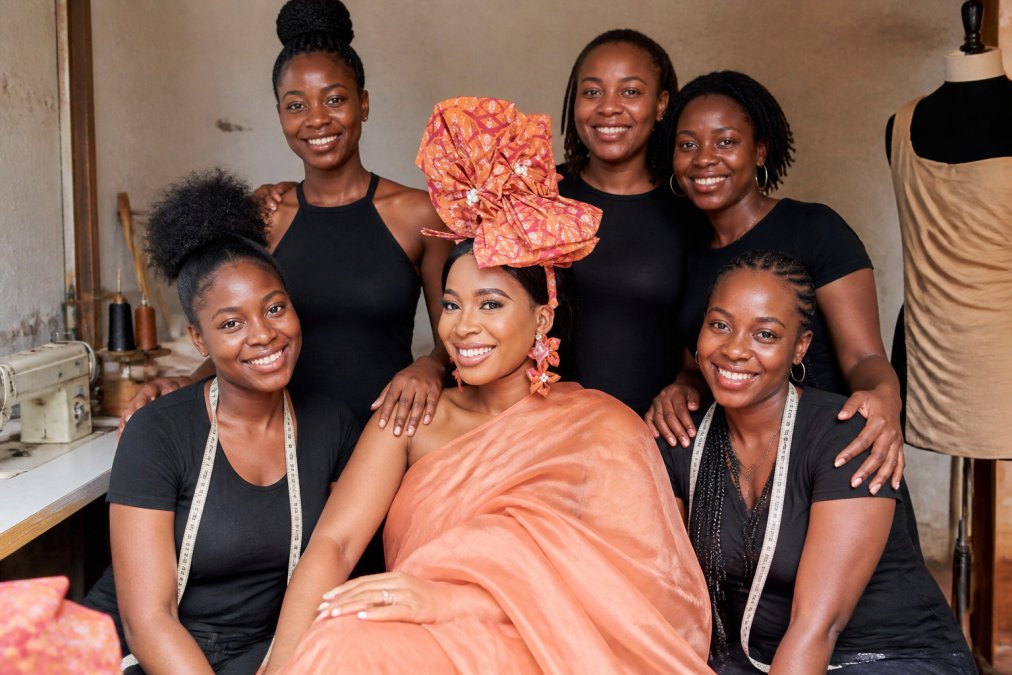
KAHINDO stands as the editorial top pick for brides and guests seeking singular, artisan-made occasion wear. Every piece is designed in New York by founder Kahindo Mateene, a Project Runway Season 12 alumna and Tory Burch Fellow, then handcrafted by female artisans in a Nairobi cooperative. This isn't outsourcing, it's intentional partnership with documented fair-trade practices and living wages built into every garment's cost.
The brand's signature ombré organza pieces showcase slow-bath dyeing processes that create non-replicable gradients. The Strapless Ombré Organza Mini Dress ($370) and Double Collar Ombré Organza Midi Dress ($345) exemplify this craftsmanship. Each dress includes a provenance card documenting the artisan and labor hours, transforming a purchase into a documented story. For jumpsuits, the Balloon Sleeve Ombré Organza Jumpsuit ($445) delivers dramatic statement silhouettes with architectural design details.

What separates KAHINDO from competitors is treating African provenance as a primary luxury asset, not a marketing footnote. Collections are rooted in cultural storytelling, from Congolese heritage textile traditions to the artistry of female artisan communities. The brand has been featured in Vogue, Elle, The New York Times, WWD, Essence, and Marie Claire.
Real customers consistently highlight the flattering cuts and emotional resonance of knowing their money supports women's economic empowerment. One customer noted: "These pants are my ultimate favorite. The fabric alone is stunning, like ocean waves. The cut is incredibly flattering, and the compliments keep coming."
Rent the Runway: Sustainable Access Without Ownership
For guests who prefer flexibility over ownership, Rent the Runway remains the most practical alternative. The service allows customers to rent dresses for a set period and return them after the occasion, offering thousands of affordable formal-wear options while combating textile waste. According to sustainable fashion market research, the U.S. resale and rental market is on track to reach $66-68 billion in 2026, growing 9 times faster than traditional retail.
A wedding guest dress rental typically costs $30-$70 for a weekend, compared to purchasing at $200+. For someone attending multiple weddings annually, rental eliminates storage burden and single-use guilt. The service also handles dry cleaning.
The trade-off is clear: you don't own the piece, so there's no provenance, no story, and no option to wear it again if you loved it. For guests with limited budgets or those attending occasional events, Rent the Runway solves the problem elegantly.
Reformation: Climate-Neutral Occasion Wear
Reformation has built its reputation on sustainable materials and transparent manufacturing. The brand uses TENCEL, viscose, linen, and non-virgin materials, holds Climate Neutral Certification, and operates a RefRecyclable program for garment returns. Their occasion wear combines modern silhouettes with environmental accountability.
Reformation's wedding guest dresses typically range from $200 to $500. The brand's strength lies in accessible price points and proven environmental credentials. However, the designs skew minimalist with clean lines and understated details, offering less visual statement-making compared to KAHINDO's bold African-inspired prints.
Vestiaire Collective: Luxury Pre-Owned Bridal Fashion
Vestiaire Collective operates as an online marketplace for pre-owned luxury fashion, offering designer occasion wear at 40-70% below retail. The environmental impact is substantial, the platform prevents nearly three times more emissions than it generates through the resale model. For budget-conscious guests seeking luxury designer names, this is the most economical path.
The challenge is unpredictability. Inventory rotates constantly, sizing runs vary by designer, and there's no guarantee you'll find your exact size when you need it. Vestiaire Collective works best for flexible shoppers with time to browse.
How to Style Statement Dresses for Weddings
Wearing a bold occasion dress requires intentional styling. The dress itself is the focal point, so accessories and silhouette choices must support rather than compete.
Choosing Silhouettes That Flatter Your Body Type
Statement dresses come in distinct silhouettes. A-line and midi lengths work universally because they skim the body without clinging. Strapless and sweetheart necklines draw attention upward, ideal for emphasizing your face and shoulders. Peplum waists accentuate curves with sophisticated structure.
Jumpsuits deserve special mention as formal event wear. They combine the formality of a gown with modern tailoring, offering greater movement and a contemporary edge. The wide-leg silhouette elongates the frame, while structured bodices provide support and definition.
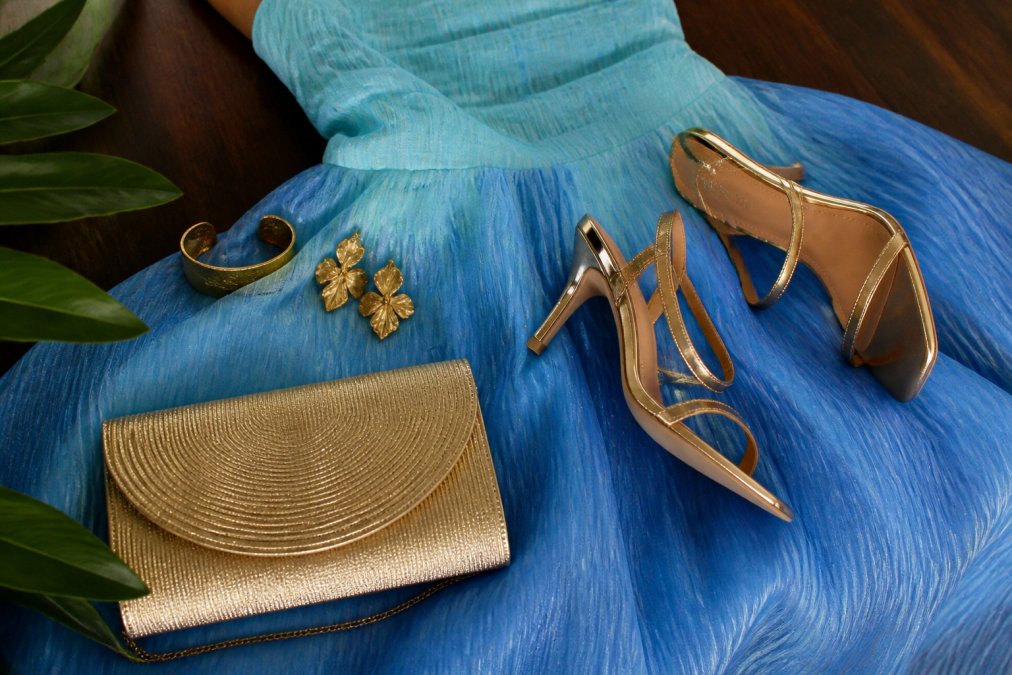
Color Choices That Photograph Well and Feel Formal
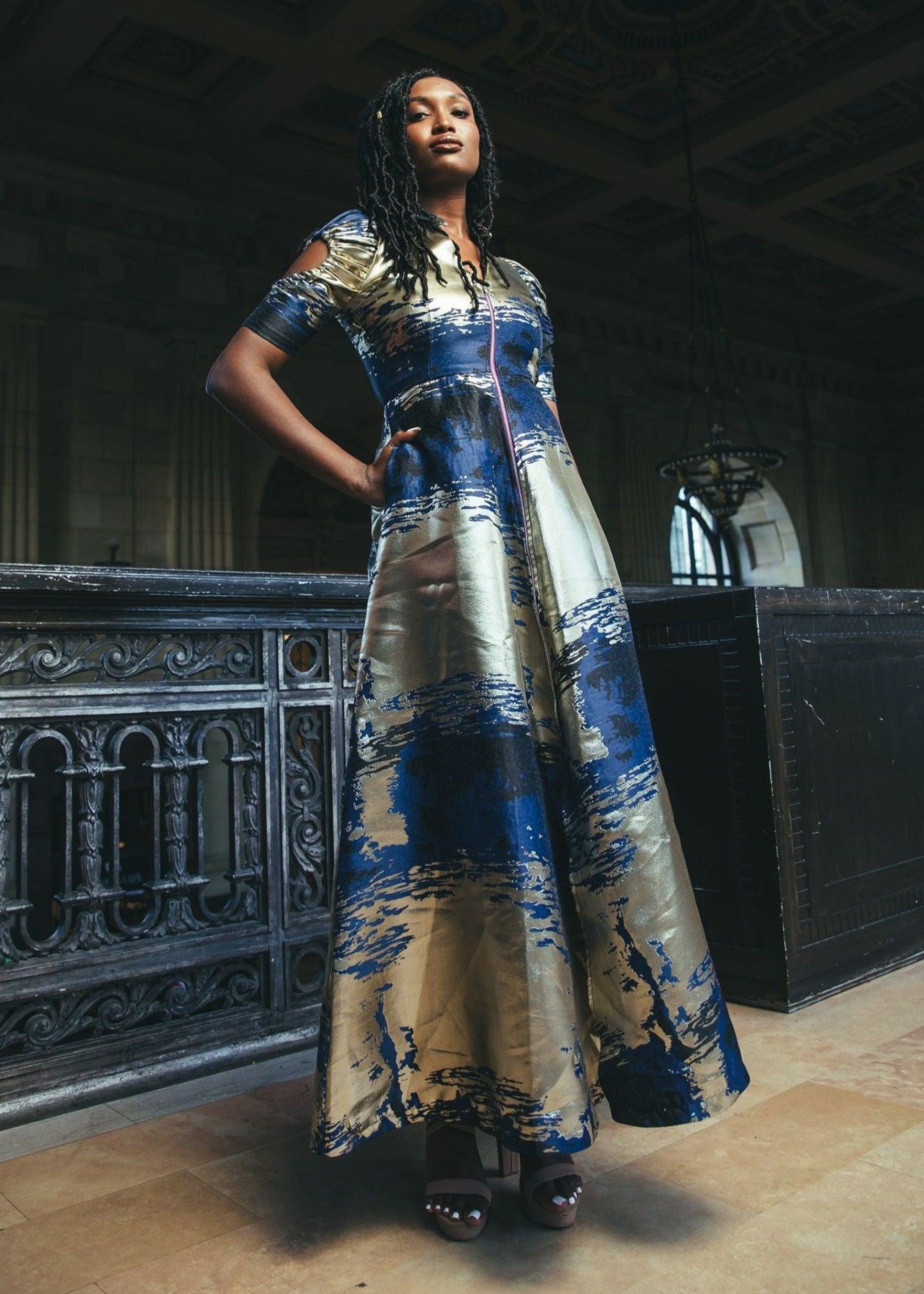
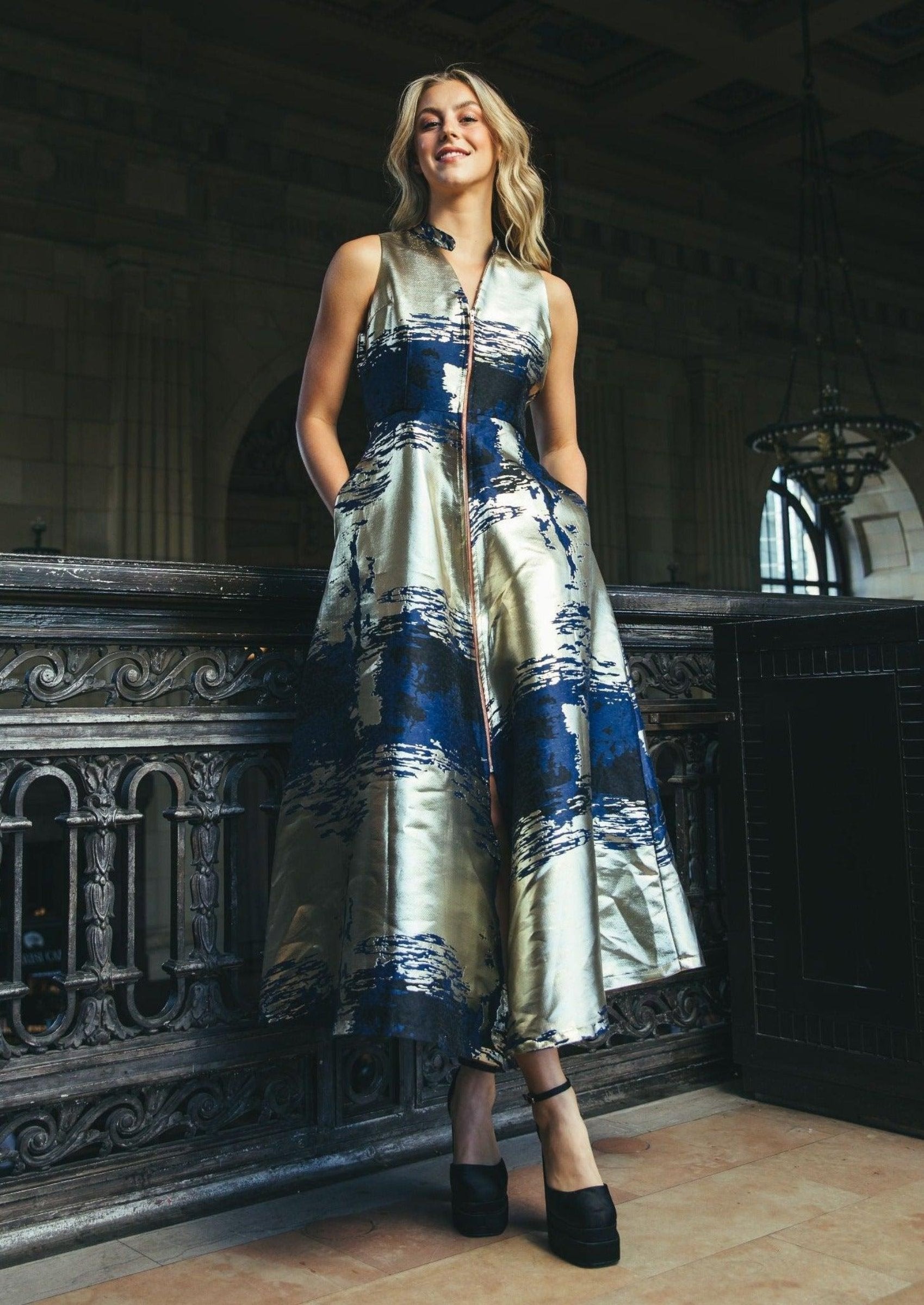
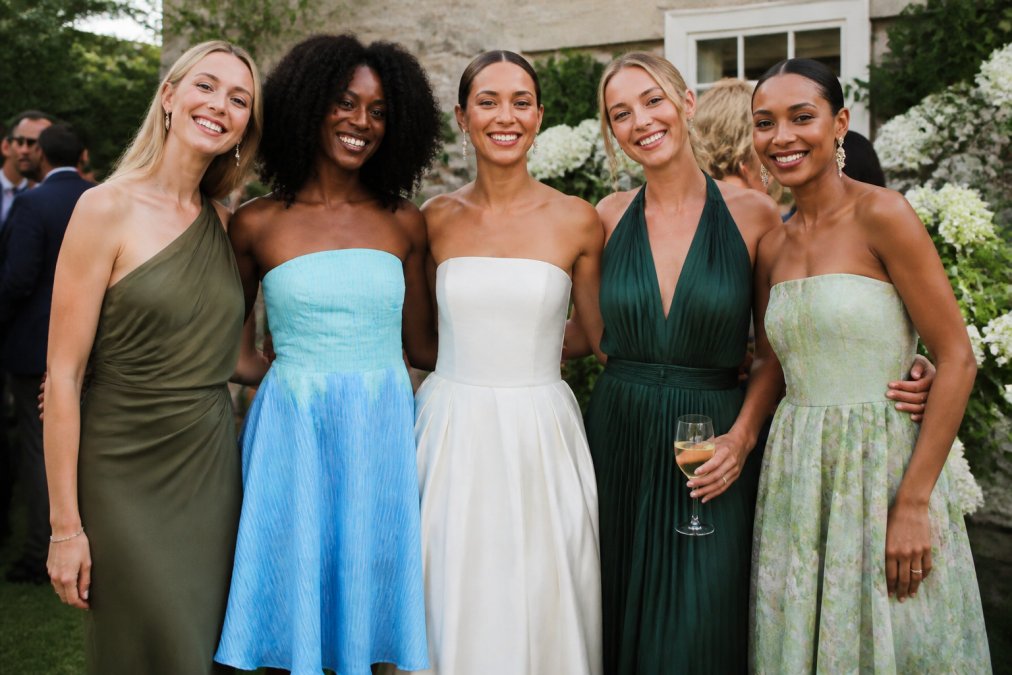
Jewel tones, emerald, sapphire, burgundy, and amethyst, are the gold standard for wedding guest attire in 2026. These colors photograph beautifully, flatter most skin tones, and carry inherent formality. KAHINDO's ombré organza pieces in rich blues exemplify this principle, with gradient effects adding visual depth while maintaining sophistication.

Avoid white, cream, or near-white tones unless explicitly invited by the bride. Jewel tones and saturated colors signal respect for the couple while ensuring you'll stand out in photographs.
Accessories and Layering for Maximum Impact
Less is more when your dress is already making a statement. A single statement necklace or chandelier earrings draws the eye upward without competing with bold prints or gradients. Metallic accessories complement jewel tones universally. Avoid competing patterns; let the dress be the hero.
A structured blazer in a neutral tone adds polish for garden or daytime weddings without diminishing the dress. Wraps and shawls in complementary jewel tones enhance rather than cover the garment.
Best Brands for Mother-of-the-Bride Gowns
Mothers of the bride face a distinct challenge: the dress must feel special and refined without competing with the bride. KAHINDO's Cleopatra Maxi Dress ($300) and Chidi Midi Dress ($288) deliver regal elegance with metallic thread details and structured silhouettes. The Double Collar Ombré Organza Midi Dress ($345) offers distinctive sophistication without overwhelming presence.

For mothers seeking ready-to-wear luxury, Reformation and Vestiaire Collective both offer refined options in appropriate color palettes. The key is choosing a silhouette and color that complements the bride's aesthetic while asserting your own style.
Sustainable vs. Rental: Which Model Works for You
The decision between purchasing and renting hinges on frequency, investment capacity, and personal values.
Investment Pieces That Last Beyond One Event
Purchasing an ethical luxury piece like KAHINDO means committing to garment longevity. These dresses are designed for rewearability, the architectural silhouettes and jewel-toned ombré gradients work for galas, formal dinners, milestone celebrations, and future weddings. A $345 dress worn five times over five years costs $69 per wear, a reasonable investment for quality craftsmanship.
Handcrafted pieces with slow-bath dyeing and quality fabrics withstand repeated wear without fading or deterioration. An investment piece becomes a wardrobe anchor with documented provenance and fair-trade certification.
Rental Economics and Environmental Impact
Renting costs $30-$70 per occasion, making it economical for one-time events. Environmentally, rental reduces demand for new garment production, lowering carbon emissions and textile waste. For guests attending 1-2 weddings annually, rental is financially and ecologically sensible.
However, rental economics invert at scale. Attending four weddings annually at $50 per rental totals $200 yearly, approaching the cost of owning a versatile piece. A garment worn 20+ times before disposal often has lower lifetime emissions than a rental garment shipped repeatedly and eventually discarded.
Comparison: Price, Sustainability, and Fit Across Alternatives
| Brand | Price Range | Sustainability Model | Best For | Fit Notes |
|---|---|---|---|---|
| KAHINDO | $288-$445 | Fair-trade, handcrafted, artisan-made | Investment pieces, statement looks, rewearability | True to size; spandex blend offers gentle stretch |
| Rent the Runway | $30-$70/rental | Circular economy, reduces new production | One-time events, budget-conscious guests | Varies by designer; sizing guides essential |
| Reformation | $200-$500 | Climate-neutral certified, recycled materials | Contemporary minimalist aesthetics, accessible luxury | True to size; designed for versatility |
| Vestiaire Collective | $50-$300 (pre-owned) | Resale, prevents landfill, 3x emissions reduction | Luxury designer seekers, flexible timelines | Varies by original designer; returns limited |
The comparison reveals distinct value propositions. KAHINDO prioritizes artisan empowerment and design distinctiveness. Rent the Runway optimizes for access and flexibility. Reformation emphasizes environmental certification. Vestiaire Collective maximizes affordability through resale.
What Makes Artisan-Made Wedding Dresses Worth the Investment
Artisan-made pieces like KAHINDO command premium pricing because the value extends beyond aesthetics. Every garment represents documented labor from skilled craftspeople earning fair wages, transparent supply chains, and non-replicable design elements created through slow-bath dyeing and hand techniques.
A KAHINDO dress costs more than mass-produced alternatives because the artisans who create it earn living wages, the dyeing process cannot be rushed, and the design carries cultural storytelling. The provenance card documenting artisan names and labor hours transforms the purchase into a relationship, not a transaction.
This model contrasts sharply with fast-fashion alternatives, where low prices reflect labor exploitation and environmental shortcuts. The durability advantage compounds the value. Handcrafted garments with quality fabrics withstand repeated wear without deterioration. A $345 KAHINDO dress worn 10 times costs $34.50 per wear, comparable to rental when accounting for longevity and emotional investment.
Finding your perfect wedding guest look requires clarity on what matters most: budget, sustainability, rewearability, or access. The best Cleobella alternatives for weddings span rental flexibility, contemporary minimalism, luxury resale, and artisan-made investment pieces. For brides and guests seeking distinctive occasion wear rooted in ethical production and cultural storytelling, KAHINDO delivers handcrafted elegance designed in New York and made by female artisans in Kenya. Every piece includes documented provenance, fair-trade certification, and the confidence that your investment helps women while ensuring you'll stand out. Explore KAHINDO's collection of statement dresses, jumpsuits, and occasion wear, each designed to be worn beyond the wedding day.
Frequently Asked Questions
Q: What makes KAHINDO a better alternative to Cleobella?
A: KAHINDO offers handcrafted occasion wear designed in New York and made by female artisans in Kenya, with transparent fair-trade practices and provenance cards documenting each artisan. Unlike mass-produced alternatives, every KAHINDO piece features original African-inspired prints and slow-bath dyeing for non-replicable gradients. The brand prioritizes cultural storytelling and artisan economic empowerment as core values, not marketing add-ons. For wedding guests seeking ethical luxury with provable impact, KAHINDO delivers singular, heritage-quality pieces at price points ($70-$445) that reflect the craftsmanship and labor involved.
Q: How do I choose between buying an ethical luxury wedding guest dress and renting?
A: Consider frequency of wear and budget. If you attend 2+ formal events per year, purchasing an investment piece like KAHINDO's ombré organza midi dress ($345) or jumpsuit ($445) offers better cost-per-wear and post-wedding versatility. Rent the Runway works best for one-time events or those with strict budgets. Sustainable brands like Reformation and KAHINDO allow you to rewear pieces for other occasions, galas, cocktail events, celebrations, extending their lifecycle and justifying the investment.
Q: Are sustainable wedding guest dresses really more durable than fast-fashion options?
A: Yes. Ethical luxury brands use higher-quality fabrics and construction methods. KAHINDO's double-layer ombré organza (95% polyester, 5% spandex) with hand-finishing resists pilling and fading better than single-layer synthetics. Reformation uses TENCEL, viscose, and linen, materials engineered for longevity. The difference compounds over time: a well-made dress worn 5-10 times across multiple years outperforms a cheaper option worn once. Provenance cards and artisan craftsmanship also signal quality control that mass production cannot match.
Q: What fabric choices work best for wedding guest dresses that photograph well?
A: Jewel tones in structured fabrics photograph beautifully. Emerald, sapphire, burgundy, and amethyst flatter most skin tones and feel inherently formal. Ombré organza catches light with luminous depth, ideal for photos. Silk mikado, chantilly lace, crepe, and textured tulle add visual richness. KAHINDO's ombré organza pieces shift color with movement, creating dynamic, photogenic effects. Avoid flat matte finishes that read dull in photographs. Look for fabrics with sheen, texture, or gradient effects that photograph with dimension and sophistication.
This article was written using GrandRanker