

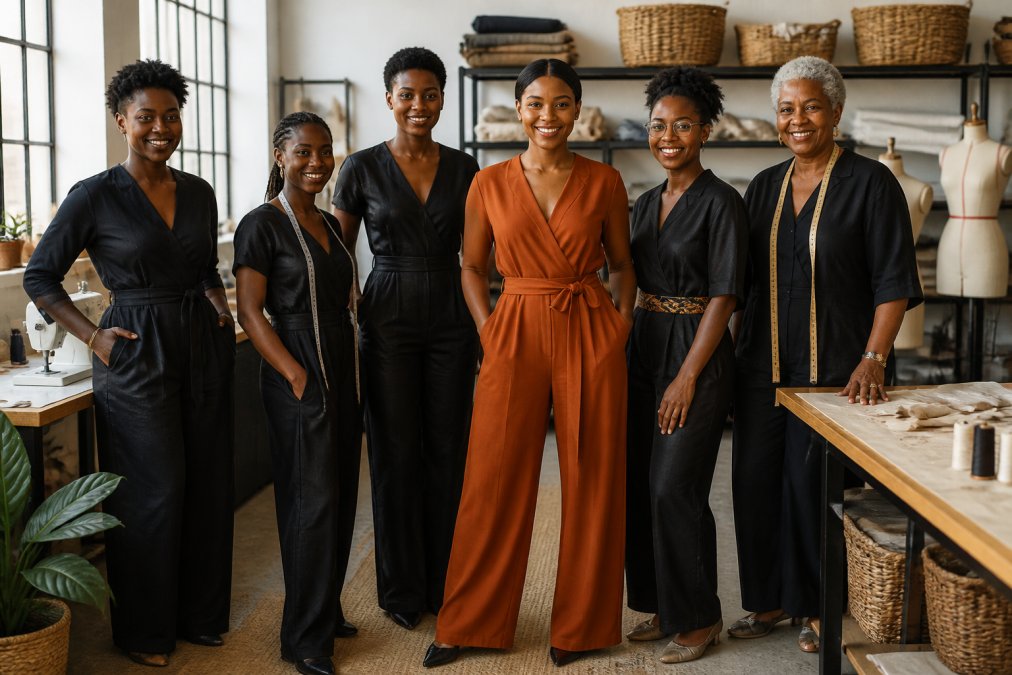
Best Artisan Made Formal Jumpsuits 2026
Table of Contents
- Why Artisan Made Formal Jumpsuits Matter in 2026
- Quick Comparison: Top Artisan Formal Jumpsuits
- 1. Balloon Sleeve Ombré Organza Jumpsuit: Statement Elegance
- 2. Strapless Peplum Ombré Organza Jumpsuit: Refined Curves
- 3. Bahari Print Jumpsuit: Bold Cultural Heritage
- How to Style a Formal Jumpsuit for Black-Tie and Gala Events
- Best Investment Dresses for Weddings: Why Artisan Jumpsuits Outperform Rentals
- Ethical Luxury Occasionwear: Craftsmanship, Transparency, and Artisan Empowerment
Last Updated: August 19, 2026
Why Artisan Made Formal Jumpsuits Matter in 2026
The formal wear market has shifted toward intentional investment pieces with real craftsmanship. The global formal wear sector is projected to reach $28.5 billion by 2033, growing at a compound annual growth rate (CAGR) of about 5.2% from 2025 to 2033. Within this growth, approximately 30% of U.S. apparel consumers now prioritize sustainable labels, and over 60% of Gen Z and Millennials search for used items before buying new.
At KAHINDO, women aren't asking for the cheapest option, they want pieces that stand out, feel extraordinary to wear, and align with their values. They want to know who made their dress and understand the labor and intention embedded in every seam.
Artisan made formal jumpsuits deliver on all fronts: a silhouette that commands attention, craftsmanship that mass production cannot replicate, and direct connection between wearer and artisan. This guide explores the best artisan made formal jumpsuits available in 2026, breaking down what makes these pieces worth the investment, how to style them for maximum impact, and why they outperform both fast-fashion alternatives and rental services.
Quick Comparison: Top Artisan Formal Jumpsuits
| Jumpsuit | Price | Best For | Key Feature | Fabrication |
|---|---|---|---|---|
| Balloon Sleeve Ombré Organza | $445 | Statement-focused formal events | Dramatic balloon sleeves, open back cutout | Double-layer ombré organza, 13oz |
| Strapless Peplum Ombré Organza | $420 | Refined sophistication | Peplum waist, strapless neckline | Double-layer ombré organza, 12oz |
| Bahari Print Jumpsuit | $288 | Bold cultural heritage | Original "evil eye" print, balloon sleeves | 100% cotton, artisan print |
| Strapless Satin Wide-Leg | $145 | Timeless elegance | Wide-leg silhouette, side pockets | 100% polyester satin |
1. Balloon Sleeve Ombré Organza Jumpsuit: Statement Elegance
Made from double-layer thread ombré organza, the Balloon Sleeve Ombré Organza Jumpsuit ($445) captures light with every movement, transitioning from soft blue to deeper hues. The dramatic balloon sleeves create volume without overwhelming the frame, while the open cutout back adds editorial sophistication. The front zipper closure allows fit adjustments, and side pockets provide practical ease. At just 13 ounces, the fabric weighs almost nothing despite its presence.


The wide-leg cut flatters a range of body types with relaxed refinement, moving away from bodycon silhouettes. This silhouette will remain relevant because it's rooted in proportion and movement, not trend cycles.
Ethically handcrafted in Kenya by female artisans through fair trade practices, this piece comes with a provenance card documenting the artisan and labor hours.
2. Strapless Peplum Ombré Organza Jumpsuit: Refined Curves
The Strapless Peplum Ombré Organza Jumpsuit ($420) anchors its strapless neckline with a chic peplum waist that accentuates curves with sophisticated elegance. The same double-layer threaded ombré organza transitions beautifully from soft to deep blue tones. At 12 ounces, it's slightly lighter than the balloon-sleeved version, sitting securely without pulling.
This piece works beautifully for bridesmaids seeking coordinated elegance, mothers of the bride wanting refined sophistication, and wedding guests who prioritize wearability alongside visual impact.
Like all KAHINDO pieces, this jumpsuit is ethically handcrafted by female artisans in Kenya using fair trade practices.
3. Bahari Print Jumpsuit: Bold Cultural Heritage
The Bahari Print Jumpsuit ($288) centers cultural storytelling through an original "evil eye" print rooted in African textile traditions. "Bahari" means "sea" in Swahili, and the design mirrors ocean patterns. Made from 100% cotton, this jumpsuit prioritizes breathability without sacrificing presence. The balloon sleeves create dramatic silhouette, while flare pants offer movement and visual interest.

The cotton fabrication makes this the most versatile option, working for brunch or evening events. For women wanting to wear their jumpsuit multiple times throughout the year, this is the practical choice. The print photographs exceptionally well, making it ideal for wedding guest looks.
According to the 2026 Ethical Fashion Market analysis, consumers increasingly prioritize artisan-made pieces rooted in cultural storytelling. Every purchase supports female artisans in Kenya through fair trade practices.
How to Style a Formal Jumpsuit for Black-Tie and Gala Events
A formal jumpsuit demands different styling than traditional dresses. The jumpsuit itself is the statement piece, so accessories, footwear, and outerwear should amplify rather than compete.
Start with footwear. Heels are essential for black-tie and gala events. A strappy heeled sandal in metallic gold or silver works universally, while statement shoes add drama. The heel elongates the leg line, critical with wide-leg pants. Aim for at least 3 inches to maintain visual proportion.
Jewelry should be minimal but intentional. Choose either a simple pendant necklace or statement earrings, not both. The ombré organza jumpsuits carry significant visual weight, and competing jewelry creates chaos. For the Bahari Print, consider gold jewelry to echo the print's warmth, or keep jewelry minimal to let the pattern dominate.
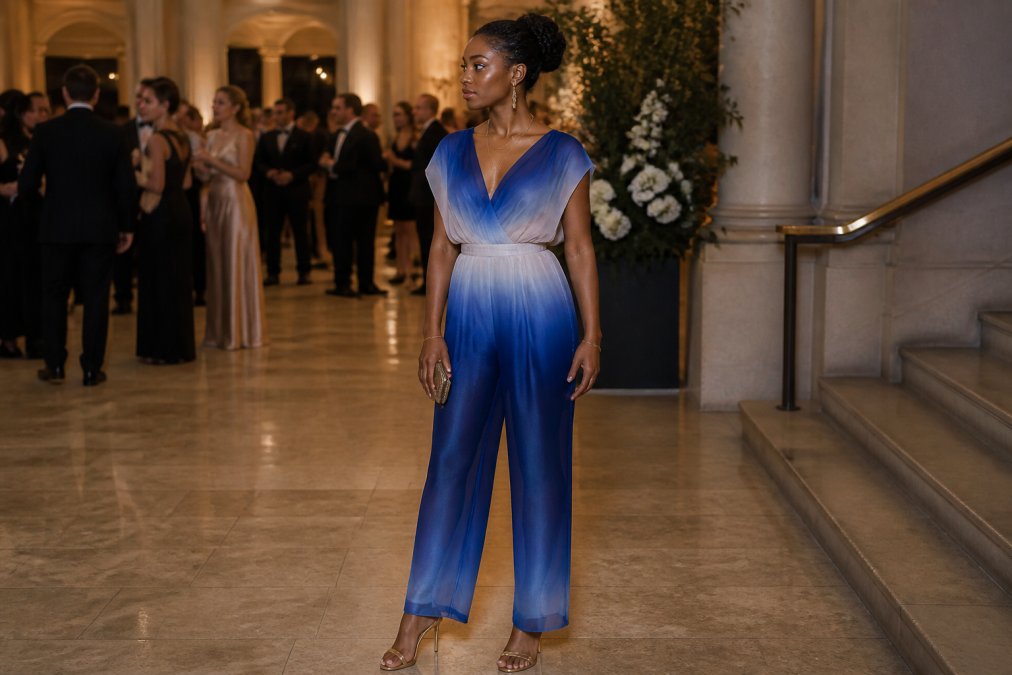
A structured clutch or small evening bag keeps the silhouette clean. Avoid oversized bags, which overwhelm refined proportions. Metallic or neutral leather works with any color. If carrying a wrap or shawl, choose lightweight fabrics. A silk pashmina or structured blazer in a complementary neutral works beautifully.
Hair and makeup should feel polished but not overdone. An upswept style shows off the neckline, particularly important for strapless versions. Makeup can be bolder than daytime wear. A strong lip color and defined eyes complement the architectural nature of the jumpsuit.
The most common mistake is over-accessorizing. One statement piece plus a simple bracelet and watch is sufficient. A formal jumpsuit is inherently more striking than a traditional dress.
Best Investment Dresses for Weddings: Why Artisan Jumpsuits Outperform Rentals
Rental services offer convenience, but the math changes for women attending multiple formal events annually. A single rental typically costs $50-150. Attending four formal events per year means $200-600 in rental fees annually with no asset to show for it. An artisan made formal jumpsuit at $288-445 costs more upfront but becomes an investment piece worn repeatedly. After two years of event attendance, you've broken even financially while building a curated wardrobe.
Beyond economics, artisan jumpsuits offer singularity. Rental pieces are worn by hundreds of women and carry no story. An artisan jumpsuit comes with a provenance card documenting the named artisan in Kenya and labor hours, reflecting your values as a conscious consumer.
Quality differences are measurable. Rental pieces prioritize durability over feel through reinforced seams and synthetic fabrics. Artisan jumpsuits prioritize the first wearer's experience. The ombré organza pieces use double-layer threading creating luminous depth impossible with mass production. Hand-finished details and slow-dye processes create non-replicable gradients.
Research from the 2026 US Sustainable Fashion Market Report found that over 60% of Gen Z and Millennials search for used items before buying new, driven by economic pressure and sustainability values. An artisan jumpsuit worn to multiple events becomes part of your identity as a conscious dresser, while a rental remains anonymous.
Ethical Luxury Occasionwear: Craftsmanship, Transparency, and Artisan Empowerment
The ethical fashion market is no longer niche. The global Ethical Fashion Market is valued at USD 10.96 billion in 2026 and is projected to reach USD 26.68 billion by 2035, growing at a CAGR of around 9.3% from 2026 to 2035. This growth is driven by environmentally responsible materials, transparent supply chains, and fair labor practices.
Ethical luxury means three pillars: labor protection for garment makers, material choices reducing harm through fiber selection and dyeing processes, and transparency verifying production details. Fast fashion fails on all three. Even "sustainable" mass-market brands often lack transparency.
KAHINDO operates differently. Every piece comes with a provenance card documenting the artisan and labor hours. You know who made your jumpsuit, how many hours of labor went into its creation, and that the artisan received a living wage, not exploitative piece rates.
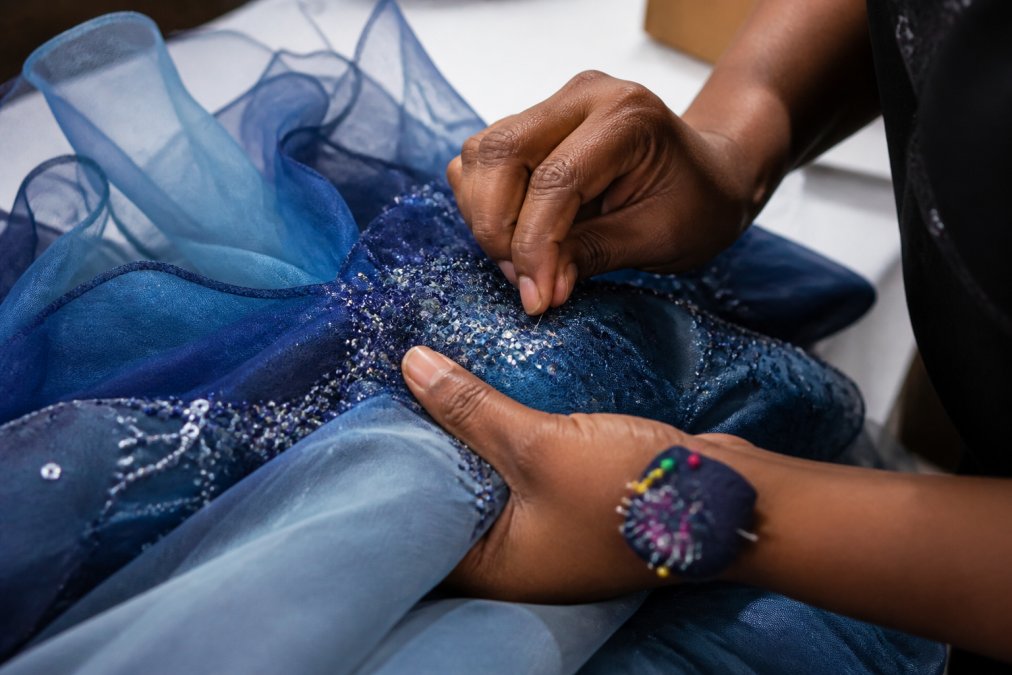
The craftsmanship difference is visible. Double-layer ombré organza pieces use slow-bath dyeing creating unique, non-replicable gradients. Each piece varies slightly because it's hand-finished, a feature, not a flaw. Your jumpsuit is genuinely singular. Balloon sleeves are constructed with architectural precision, cutout backs are hand-finished with careful seam quality, and wide-leg proportions are tailored to drape beautifully.
North America is estimated to reach USD 3.49 Billion in 2026, capturing 28.12% of global revenue in the sustainable fashion market. Women increasingly pay premium prices for pieces aligning with their values, wanting to support artisan communities and ensure transparency.
Artisan made formal jumpsuits separate from both fast fashion and mass-market luxury. Fast fashion offers affordability but exploitative labor. Mass-market luxury offers prestige but obscures supply chains. Artisan luxury offers craftsmanship, transparency, and direct economic impact on artisan communities.
KAHINDO's founder, Kahindo Mateene, is a Project Runway Season 12 alumna and Tory Burch Fellow who designs in New York and partners with female artisans in Kenya. This is deliberate partnership rooted in fair trade principles, featured in Vogue, Elle, The New York Times, WWD, Essence, and Marie Claire.
When you purchase an artisan made formal jumpsuit, you support women's economic empowerment through fashion, invest in craftsmanship lasting years, and participate in a traceable supply chain. For conscious consumers, this alignment between values and purchase is increasingly non-negotiable.
Formal occasions demand pieces reflecting intention and craftsmanship. The artisan made formal jumpsuits explored here represent a shift away from disposable occasion wear toward investment pieces with documented provenance and real artisan impact. KAHINDO's collection delivers through handcrafted construction, transparent labor practices, and silhouettes designed to make you feel unforgettable. Shop the collection at kahindo.com, where pieces are stocked at Nordstrom, Bloomingdale's, and Anthropologie. Your next formal moment deserves a jumpsuit with a story.
Frequently Asked Questions
What makes artisan made formal jumpsuits different from mass-produced options?
Artisan made formal jumpsuits are handcrafted by skilled workers using traditional techniques, resulting in superior seam quality, unique fabric finishes, and garment construction that mass production cannot replicate. Each piece is made with intention and care, often featuring original prints and custom dyeing processes. Artisan jumpsuits also come with documented provenance, you know who made your garment and the conditions under which it was produced. This contrasts sharply with fast fashion, where quality and transparency are secondary to speed and volume.
Are artisan made formal jumpsuits worth the investment for occasional wear?
Yes. Artisan made formal jumpsuits function as investment pieces rather than disposable fashion. A quality handcrafted jumpsuit costs $80-$445 versus $20-$60 for mass-produced alternatives, but it lasts through multiple events, maintains its shape and color, and builds in value through craftsmanship and story. Unlike rental services (typically $50-$150 per event), ownership means you build a capsule wardrobe of formalwear. After 3-5 uses, an artisan jumpsuit pays for itself compared to repeated rentals, plus you avoid sizing inconsistencies and availability stress.
How do I verify that a brand's ethical and fair-trade claims are genuine?
Look for brands that provide documented supply chain transparency, such as provenance cards naming the artisans and production location. Ethical luxury occasionwear brands should specify labor practices, living wages, and artisan equity clearly on their website. Third-party certifications (Fair Trade Certified, B Corp status) are strong signals. KAHINDO, for example, includes a provenance card with every garment documenting the artisan and labor hours, and is featured in Vogue, Elle, and The New York Times, publications that vet sustainability claims. Ask the brand directly about their production standards; genuine ethical brands welcome scrutiny.
How should a formal jumpsuit fit to be flattering and comfortable?
A flattering formal jumpsuit should have a fitted bodice that defines your waist or chest without pulling, wide-leg or tailored pants that elongate your frame, and seams that align with your natural body lines. The inseam should reach your heel or sit just above it. Side pockets should lie flat without bulging. Strapless or peplum styles accentuate curves; balloon sleeves add drama without adding volume to the torso. The fabric should drape rather than cling. Most artisan jumpsuits fit true to size, but sizing up between sizes is recommended for strapless styles to ensure comfort and ease of movement throughout the evening.
What fabrics are best for formal jumpsuits that need to last?
High-quality formal jumpsuits use luxury textiles: organza (polyester blend) for dramatic drape and light-catching shimmer, satin for luxurious sheen and fluidity, cotton blends for breathability and structure, and rayon-cotton mixes for softness with durability. Avoid thin polyester or low-quality blends that pill or lose shape. Artisan makers often use slow-bath dyeing for color depth and stability. Hand-finished seams and quality construction matter as much as fabric choice. Check the product description for fiber content and care instructions; dry-clean-only pieces signal premium construction and longevity.
This article was written using GrandRanker