

Bespoke Artisan Dress Quality Guarantee: What to Expect
Table of Contents
- What a Bespoke Artisan Dress Quality Guarantee Actually Covers
- Custom Dress Fit Guarantee Policy: What Ethical Brands Should Offer
- Artisan Garment Construction Checklist: How to Verify What You're Buying
- How to Choose a Custom Dressmaker with a Genuine Quality Guarantee
- Bespoke Artisan Dress Quality Guarantee: Sustainability and Material Sourcing
- Measurement Accuracy, Turnaround Times, and Delivery Expectations
- Maintenance and Longevity: Making Your Investment Last
- Conclusion
Last Updated: August 4, 2026
Spending serious money on a custom garment and receiving something that doesn't fit is one of the most frustrating experiences in fashion. A genuine bespoke artisan dress quality guarantee does more than promise a refund: it defines exactly what the maker is accountable for, from the precision of the measurements to the integrity of every seam. At KAHINDO, where each piece is handcrafted by female artisans in Nairobi and designed in New York, understanding what a quality guarantee actually covers is foundational to the brand's relationship with every customer. Below, we break down what ethical brands should promise, how to verify artisan dress quality before you commit, and what you can do to protect your investment after the dress arrives.
A real quality guarantee articulates objective standards, defines the threshold between an alteration and a full remake, and backs both with transparent production practices.
What a Bespoke Artisan Dress Quality Guarantee Actually Covers
A bespoke artisan dress quality guarantee is a formal commitment from the maker covering fit accuracy, construction integrity, and material authenticity across the full lifecycle of the garment. It is not the same as a return policy. A return policy governs what happens when you change your mind. A quality guarantee governs what happens when the garment fails to meet the standards the maker promised.
Bespoke vs. Made-to-Measure: Why the Distinction Matters
Bespoke is a garment constructed entirely from scratch using a pattern drafted specifically for one person's body measurements, posture, and proportions. Made-to-measure starts from an existing block pattern that is adjusted to fit the customer's measurements. The distinction matters for guarantees because the accountability is different. A bespoke commission carries a higher fit obligation: because the pattern was built for your body, a fit failure is a maker error. Ethical brands are explicit about which category their garments fall into and price accordingly. According to guidance published by the Federal Trade Commission on textile and apparel labeling standards, marketers must not misrepresent how a product is made, which includes using terms like "custom" or "bespoke" for garments that are simply size-adjusted.
Quality Assurance vs. Fit Guarantee: Two Different Promises
Quality assurance covers construction: the strength of the stitching, the integrity of the lining, the colorfastness of the fabric, and the durability of the closures. A fit guarantee covers whether the finished garment matches the measurements and silhouette agreed upon at commissioning. Both should be documented in writing before you pay a deposit. Vague language like "we stand behind our work" is not a guarantee; it is a sentiment.
Custom Dress Fit Guarantee Policy: What Ethical Brands Should Offer
The custom dress fit guarantee policy at any credible artisan brand should include four concrete elements: a defined measurement protocol, a stated tolerance range for fit variance, a clear alteration or remake pathway, and a timeline for resolution.
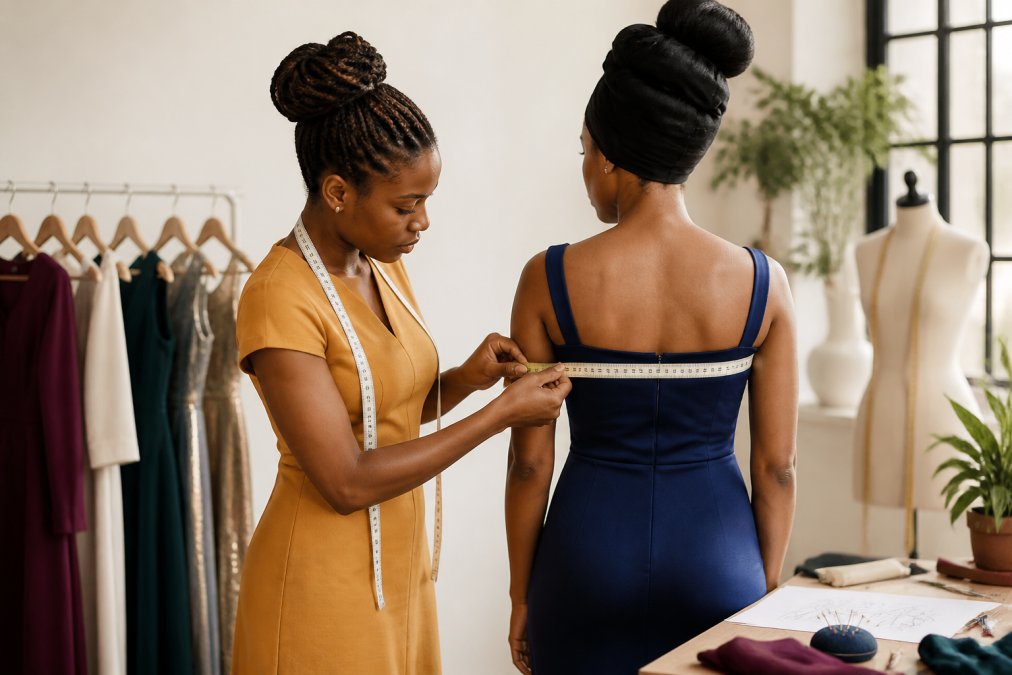
A defined measurement protocol means the brand specifies which measurements it takes, how many, and whether they require a professional fitting or can be self-measured. Tolerance range matters because handcrafted garments carry minor variance by nature; the question is how much variance triggers the guarantee. The alteration and re-fitting pathway should be free of charge when the variance falls within the maker's responsibility.
The Remake vs. Alteration Threshold
An alteration is appropriate when the garment's structure is sound but a specific measurement is off by a correctable amount. Taking in a side seam, adjusting a hem, or nipping a shoulder falls into this category. A remake is warranted when the fit error is structural: when the bodice was cut to the wrong block, when the silhouette does not match the agreed design, or when the fabric placement means no alteration can produce the intended result. Ethical brands draw this line explicitly, usually defined by whether the error requires opening and reconstructing a primary seam or replacing cut fabric.
| Situation | Correct Resolution | Who Bears the Cost |
|---|---|---|
| Measurement off by less than agreed tolerance | Alteration | Maker |
| Measurement off beyond agreed tolerance | Alteration or remake | Maker |
| Customer-provided measurements were incorrect | Alteration | Customer |
| Design changed after pattern was cut | New commission | Customer |
| Fabric defect discovered after delivery | Remake or full refund | Maker |
| Structural silhouette error | Remake | Maker |
Artisan Garment Construction Checklist: How to Verify What You're Buying
Most customers inspect a finished garment the way they would inspect a fast-fashion purchase: they look at the surface. Artisan dress quality lives in the details that are easy to miss on a quick visual pass.
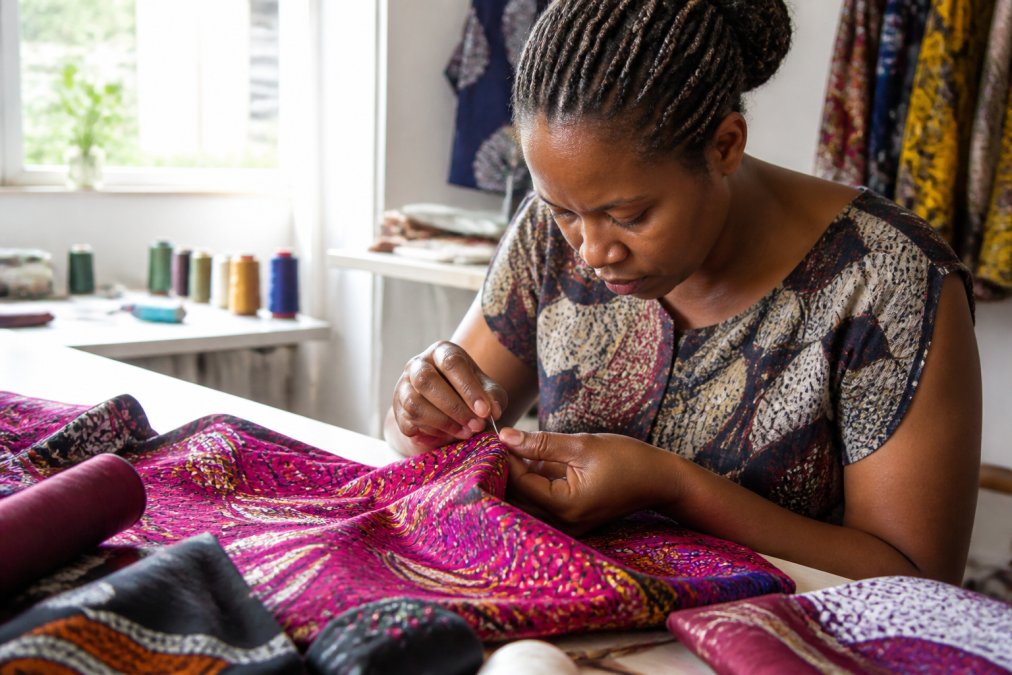
Run through this checklist when a garment arrives:
- Turn the garment inside out. Seam allowances should be finished cleanly, with no fraying or raw edges.
- Pull gently on a seam. There should be no give or puckering at the stitch line.
- Check the lining. It should be cut on the same grain as the outer fabric and lie flat without pulling.
- Examine the hem. Hand-stitched hems leave small, evenly spaced catches on the wrong side.
- Inspect closures. Zippers should sit flush with the fabric; hooks should be sewn through both layers.
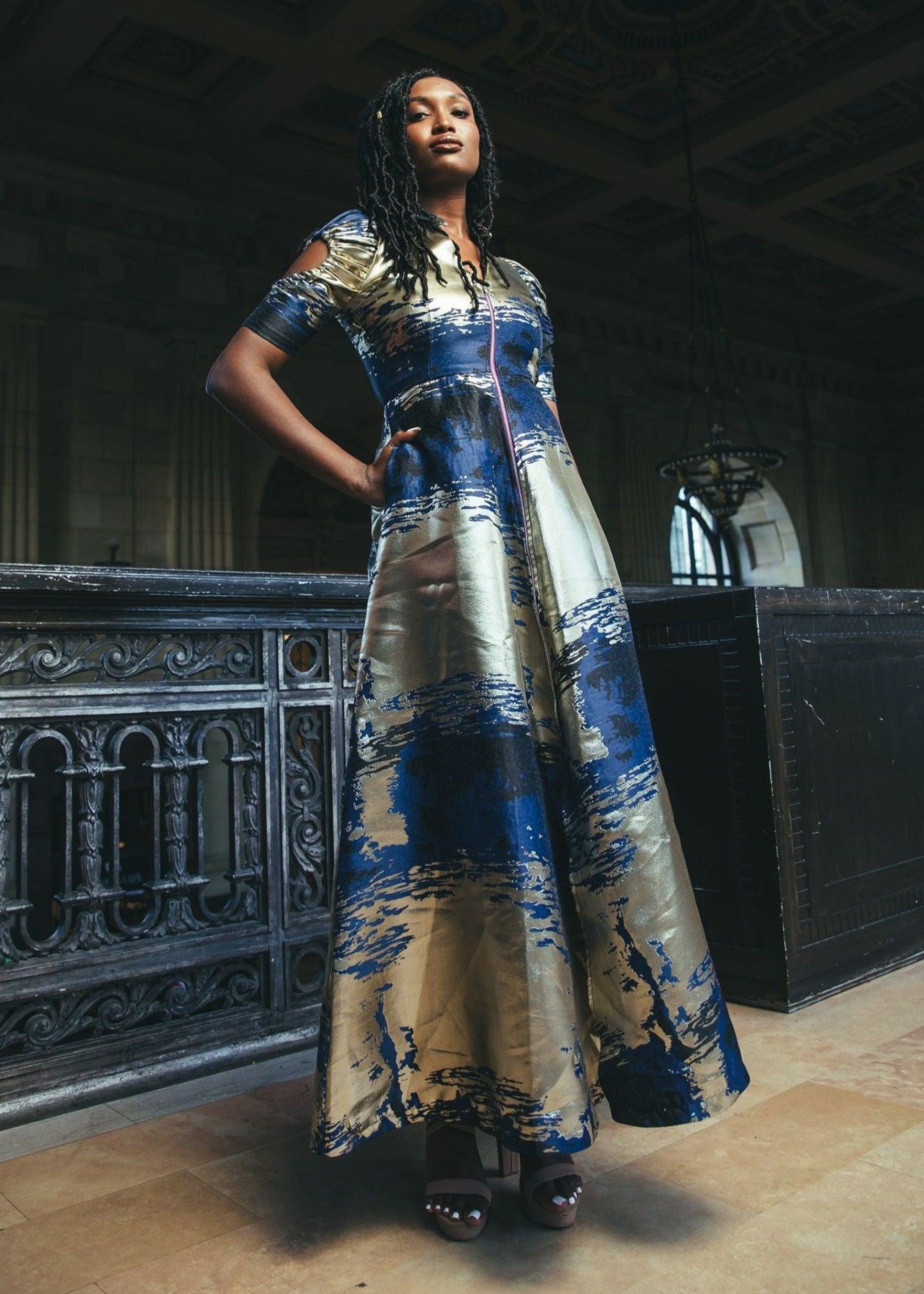
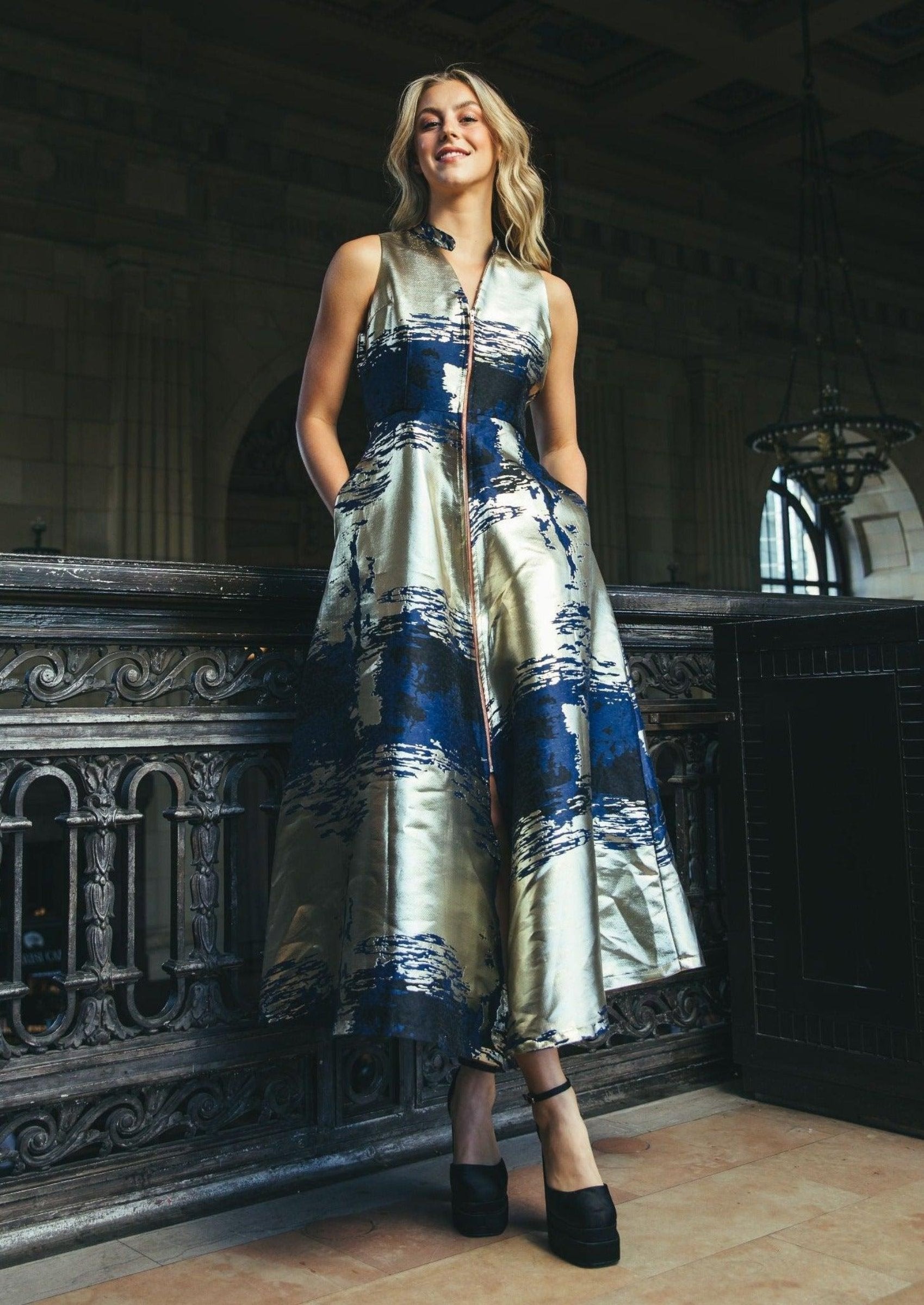
- Look at print alignment at seams. On patterned fabrics, a skilled maker matches the repeat at side seams and center fronts.
- Check the provenance documentation. Ethical brands that claim artisan production should be able to name the maker.
Stitching, Lining, and Seam Standards Worth Inspecting
Stitch density is a reliable proxy for garment quality. Higher stitch density means more thread contact per inch, which translates to stronger seams and longer garment life. On a couture-adjacent piece, stitch density at stress points like armholes and waistbands should be noticeably tighter than on decorative seams.
Lining quality is frequently where cost-cutting shows up first. A quality lining is cut to allow ease of movement, finished at the hem independently from the outer fabric, and tacked at seam points so it moves with the garment. According to the Textile Exchange's fiber and materials benchmark, premium natural fiber linings, including silk and cupro, outperform synthetic alternatives in both breathability and drape, which matters significantly for occasion-wear intended to be worn for hours.
How to Choose a Custom Dressmaker with a Genuine Quality Guarantee
The most reliable signal of a credible custom dressmaker is not their portfolio. It is their process documentation. Any maker who can produce a written commissioning protocol, a measurement guide, a stated turnaround timeline, and a defined fit guarantee policy before you pay a deposit is operating at a professional standard.
Ask these questions directly:
- What is your measurement protocol, and do you require a professional fitting?
- What is your stated tolerance for fit variance?
- At what point does a fit issue qualify for a remake rather than an alteration?
- Who performs the alterations, and where?
- What is your turnaround time for fit corrections?
- Can you provide documentation of your production process and material sourcing?
A maker who deflects or gives vague answers to any of these is signaling that the guarantee exists as marketing language, not operational policy.
Bespoke Artisan Dress Quality Guarantee: Sustainability and Material Sourcing
Sustainability is not a footnote in artisan dress quality: it is a quality indicator. Premium fabrics sourced from verified mills with documented labor standards behave differently from commodity fabrics. Natural fibers processed without harsh chemical shortcuts retain their structure across more wears and washes. Slow-bath dyeing processes produce color gradients that are non-replicable and more colorfast than rapid industrial dyeing because the fiber has more time to absorb the dye evenly.
Material sourcing transparency is also a verification tool for the customer. A brand that can tell you the fiber content, the mill of origin, and the dyeing process is a brand that has visibility into its own supply chain. The Fair Trade USA certification standards for apparel and textiles provide a useful independent benchmark for evaluating whether a brand's labor and sourcing claims are verified or self-reported.
Measurement Accuracy, Turnaround Times, and Delivery Expectations
Measurement accuracy is the single largest variable in whether a bespoke commission succeeds or fails. Self-measured garments carry more risk than professionally measured ones. The difference between a measurement taken with the tape pulled taut versus held with ease can be two to three centimeters, which is enough to change a fit from flattering to uncomfortable. Ethical brands either require professional measurements, provide detailed video guidance for self-measurement, or build a fitting step into the commissioning process.
A realistic turnaround for a bespoke occasion dress ranges from several weeks to a few months, depending on complexity and the maker's current schedule. For customers with a firm event date, the commissioning conversation should begin well in advance.
Maintenance and Longevity: Making Your Investment Last
A handcrafted occasion dress is not a single-use purchase. With the right care, a well-constructed artisan piece can be worn across multiple events and last for many years.
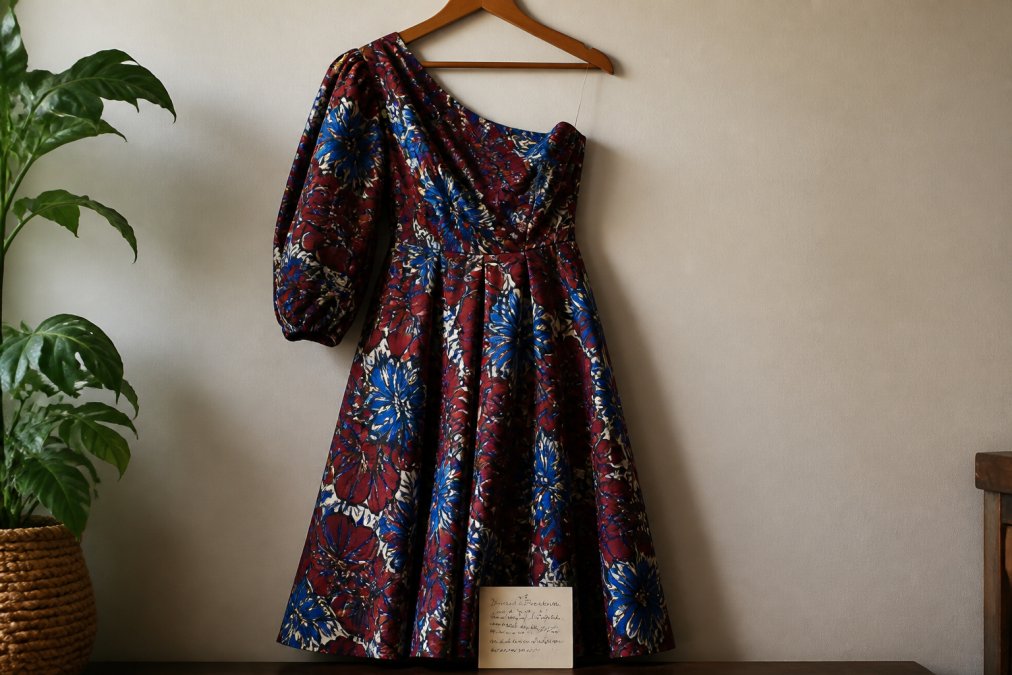
After each wear:
- Air the garment for several hours before storing to release body heat and moisture.
- Spot-clean any marks immediately rather than waiting for a full wash.
- Store on a padded hanger, never folded, to preserve the shape of the bodice and shoulders.
Washing and dry cleaning:
- Check the care label and follow it precisely. Many artisan fabrics with hand-applied dyes require cold hand-washing or specialist dry cleaning.
- Slow-bath dyed fabrics should be washed separately for the first few washes to prevent color transfer.
- Avoid machine washing structured garments; the agitation cycle stresses seams designed for body movement.
Long-term storage:
- Store in a breathable garment bag, not plastic, to prevent moisture buildup.
- Use cedar blocks rather than mothballs near natural fiber garments.
- Revisit the fit annually. A minor alteration done proactively is far easier than a structural correction done under time pressure.
The provenance card included with KAHINDO pieces records the fiber content, the artisan, and the labor hours, all of which are useful when consulting a specialist cleaner or tailor about care and alterations. As noted by The RealReal's annual luxury resale report, provenance and condition documentation are among the top factors influencing resale pricing for luxury garments.
Choosing occasion-wear at this level of investment means the quality guarantee is not a nice-to-have: it is the entire basis of trust. KAHINDO was built on exactly that accountability, with each garment handcrafted by female artisans in a Nairobi co-operative, documented with a provenance card naming the maker and the labor hours, and produced using fair-trade practices verified through the supply chain. For women planning weddings, galas, and milestone events who want a singular piece with a story behind it, explore the current collection at kahindo.com and find the piece that was made to last.
Frequently Asked Questions
What should be included in a bespoke dress quality guarantee?
A credible bespoke artisan dress quality guarantee should cover three areas: construction integrity (seam strength, lining finish, stitching consistency), fit assurance (a clear policy on alterations or remakes if the garment does not fit as measured), and material authenticity (confirmation that premium fabrics and dyes match what was commissioned). Brands that also provide provenance documentation, such as a card naming the artisan and recording labor hours, give buyers an additional layer of accountability that purely transactional guarantees do not.
What is the difference between a fit guarantee and a quality guarantee for artisan clothing?
A fit guarantee addresses whether the garment matches your body measurements and silhouette expectations, promising alterations or a remake if it does not. A quality guarantee covers the physical construction: fabric integrity, seam allowances, lining attachment, and stitching durability. Both matter for custom-made and bespoke pieces, but they are separate commitments. A dress can be beautifully constructed yet still require fit adjustments, and a well-fitted garment can still have finishing flaws. Ask any custom dressmaker to clarify both policies before commissioning.
Is bespoke worth it over made-to-measure for a special occasion dress?
For a singular occasion, bespoke typically offers a higher standard of craftsmanship and a more precise fit profile than made-to-measure, because each element of the garment is built around your specific measurements rather than adjusted from a base pattern. The trade-off is turnaround time and price. Made-to-measure is faster and costs less, while bespoke involves a commissioning process with fittings. For milestone events where the dress needs to be exactly right, the bespoke process generally justifies the additional investment.
How do I know if a custom dressmaker's quality guarantee is legally binding in the US?
In the United States, written guarantees on custom-made garments are enforceable as contracts under general contract law, provided the terms are clearly stated. The Federal Trade Commission's guidelines on warranties also apply to written guarantees on consumer goods. To protect yourself, request the guarantee in writing before placing an order, confirm exactly what remedies are offered (alteration, remake, or refund), and keep all correspondence. Vague verbal promises are difficult to enforce; a written policy with specific conditions is the standard you should insist on.
How long should a quality guarantee last for a handcrafted occasion dress?
There is no single legal requirement in the US governing the duration of a garment quality guarantee. However, a credible artisan dress quality guarantee should cover manufacturing defects, such as seam failure or lining separation, for at least the first several wears or a defined period after delivery. Fit-related guarantees are typically resolved before the garment ships or within a short window after receipt. Always ask for the specific timeframe in writing, and clarify whether the policy covers structural defects separately from fit adjustments.
This article was written using GrandRanker