



Article: Agaati vs Cultureville Style: 2026 Comparison Guide
Agaati vs Cultureville Style: 2026 Comparison Guide
Table of Contents
- Agaati vs Cultureville: The Quick Comparison
- Design Philosophy: Zero-Waste Craft vs Social-Impact Storytelling
- Fabric, Fit, and Sizing: What the Product Data Reveals
- Price Point Analysis: Cost Per Wear and Resale Value
- How KAHINDO Fits Into the Ethical Luxury Womenswear Conversation
- African-Inspired Occasionwear: Where Each Brand Lands
- KAHINDO Brand Review: The Third Option Worth Knowing
- Frequently Asked Questions
Last Updated: September 30, 2026
Agaati vs Cultureville: The Quick Comparison
Agaati vs Cultureville comes down to two different ideas about what ethical fashion should prioritize. Agaati leans into zero-waste construction and eco-artisanal luxury. Cultureville builds its identity around African-inspired design and measurable social impact. Both sit in the ethical luxury womenswear space, and both target women who want meaning behind a purchase. But the Agaati vs Cultureville style comparison reveals a real split: one brand sells craft as the product, the other sells a story you can wear. At KAHINDO, we design handcrafted occasionwear for weddings, galas, and evenings that matter, so we pay close attention to how these two approaches actually hold up on a hanger.
| Factor | Agaati | Cultureville |
|---|---|---|
| Core philosophy | Zero-waste, eco-artisanal luxury | Social impact through African-inspired design |
| Signature strength | Handcrafted, limited-run construction | Cultural storytelling and community focus |
| Design register | Modern, timeless, occasion-led | Bold, print-forward, everyday-to-event |
| Best for | Buyers who want craft-led restraint | Buyers who want visible cultural narrative |
Design Philosophy: Zero-Waste Craft vs Social-Impact Storytelling
Design philosophy is where these two brands diverge fastest. Agaati built its reputation on a zero-waste philosophy paired with eco-artisanal, modern, and timeless luxury occasion wear, according to Agaati brand profile and design approach. That framing puts the garment's construction front and center: less waste, slower production, fewer pieces.
Cultureville takes the opposite route to the same destination. Its focus is social impact through African-inspired fashion, with co-founder leadership shaping how the market receives it, as documented by Pan-African.net coverage of Cultureville. The result is a brand whose value sits as much in its community story as in the seams.
Here is what most comparisons miss: neither approach is automatically better. Zero-waste design tends to produce quieter, more architectural pieces. Social-impact storytelling tends to produce louder, more recognizable prints.
Fabric, Fit, and Sizing: What the Product Data Reveals
Fabric composition is the angle most Agaati vs Cultureville write-ups skip entirely, and it matters more than brand philosophy at the fitting stage. Neither brand publishes a full fiber breakdown on its homepage, so the practical move is to request composition details before ordering, especially for occasionwear, where drape and structure decide whether a silhouette works.
Here is the technical comparison the ranking articles avoid. Natural, low-stretch fabrics drape and photograph beautifully but forgive less in the fit, while blended fabrics with 2-5% elastane are more forgiving on the body and less crisp under event lighting.
Fit is the bigger risk. Online fashion orders were returned at a rate of 19.3% in 2025, compared to 15.8% across retail overall, according to ViaStyl fashion tech statistics. That gap is almost entirely a fit-and-expectation problem, not a quality problem, and it is worse in niche, small-batch labels because their size charts are often built from a single fit model rather than graded across a broad body range.
Sizing and fit inclusivity is the second gap competitors ignore. Before ordering, work through this checklist:
-
Confirm whether the brand lists garment measurements or only body measurements. Garment measurements are the only reliable number for a structured piece.
-
Check whether the size chart was updated for the current season, small labels often carry over last season's chart after a pattern change.
-
Ask for the stretch content if the fabric is a blend. Under 2% elastane behaves like a woven; over 5% behaves like a knit.
-
Request a fabric swatch for anything over a few hundred dollars. A swatch tells you weight, hand-feel, and whether the print reads as saturated or washed out in person.
-
Confirm the return window before the event, not after.
Price Point Analysis: Cost Per Wear and Resale Value
Price point analysis only becomes useful when you calculate cost per wear instead of sticker price. A garment worn once costs its full price per wear. A garment worn eight times costs one-eighth of that. This is why occasionwear pricing deserves more scrutiny than everyday clothing pricing, the sticker is high and the wear count is low, so the per-wear number swings wildly based on how many events you actually attend.
Run the math on a realistic event calendar. If you buy a $300 occasion dress and wear it to one wedding, that is $300 per wear. Wear it to a rehearsal dinner, the wedding, a second wedding, and a gala, and it drops to $75 per wear. Wear it six times across two seasons and it is $50 per wear. The garment did not change, only your wear count did. That is the entire case for buying a piece you can restyle rather than a one-event novelty.
Resale value is the second half of the equation, and it is where structured, recognizable pieces tend to hold up better. Second-hand fashion is projected to reach a volume of 218 billion USD by 2026, representing roughly 3x stronger market growth than the broader apparel sector, according to Wunderlabel fashion statistics. That growth means a well-made statement piece has a real secondary market, but not every piece resells equally.
What actually drives resale value in this category:
- Recognizability: a distinctive print or silhouette resells faster than a quiet, anonymous piece, because buyers can identify it in a listing photo.
- Condition: machine-washable cotton holds value.
- Seasonality: occasionwear resells best in the weeks before peak wedding and holiday season, not in January.
- Documentation: a provenance card, original tags, or a brand authentication detail raises the resale price and shortens time-to-sale.
The lifecycle angle most comparisons miss is that cost per wear and resale value compound in opposite directions.
How KAHINDO Fits Into the Ethical Luxury Womenswear Conversation
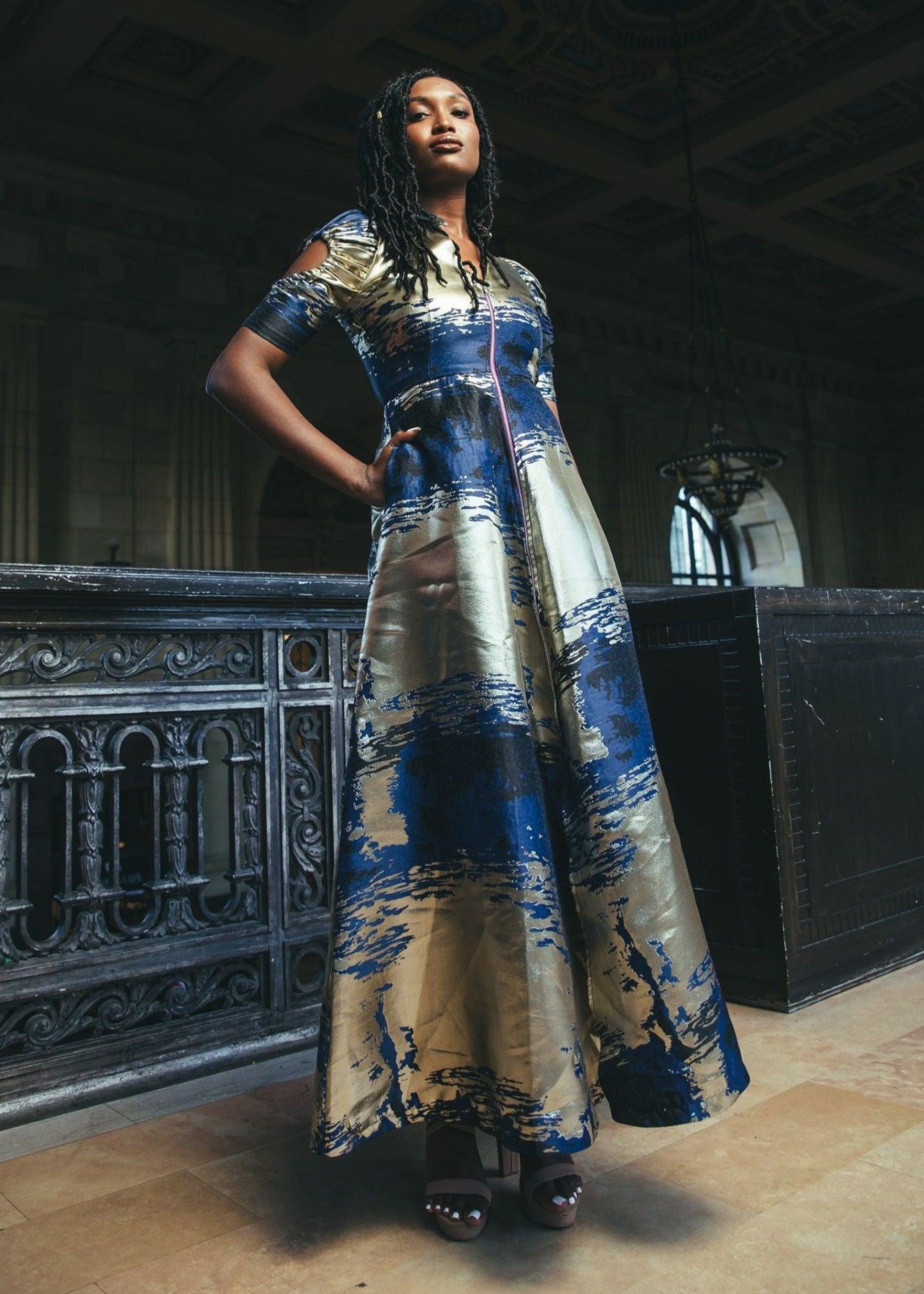
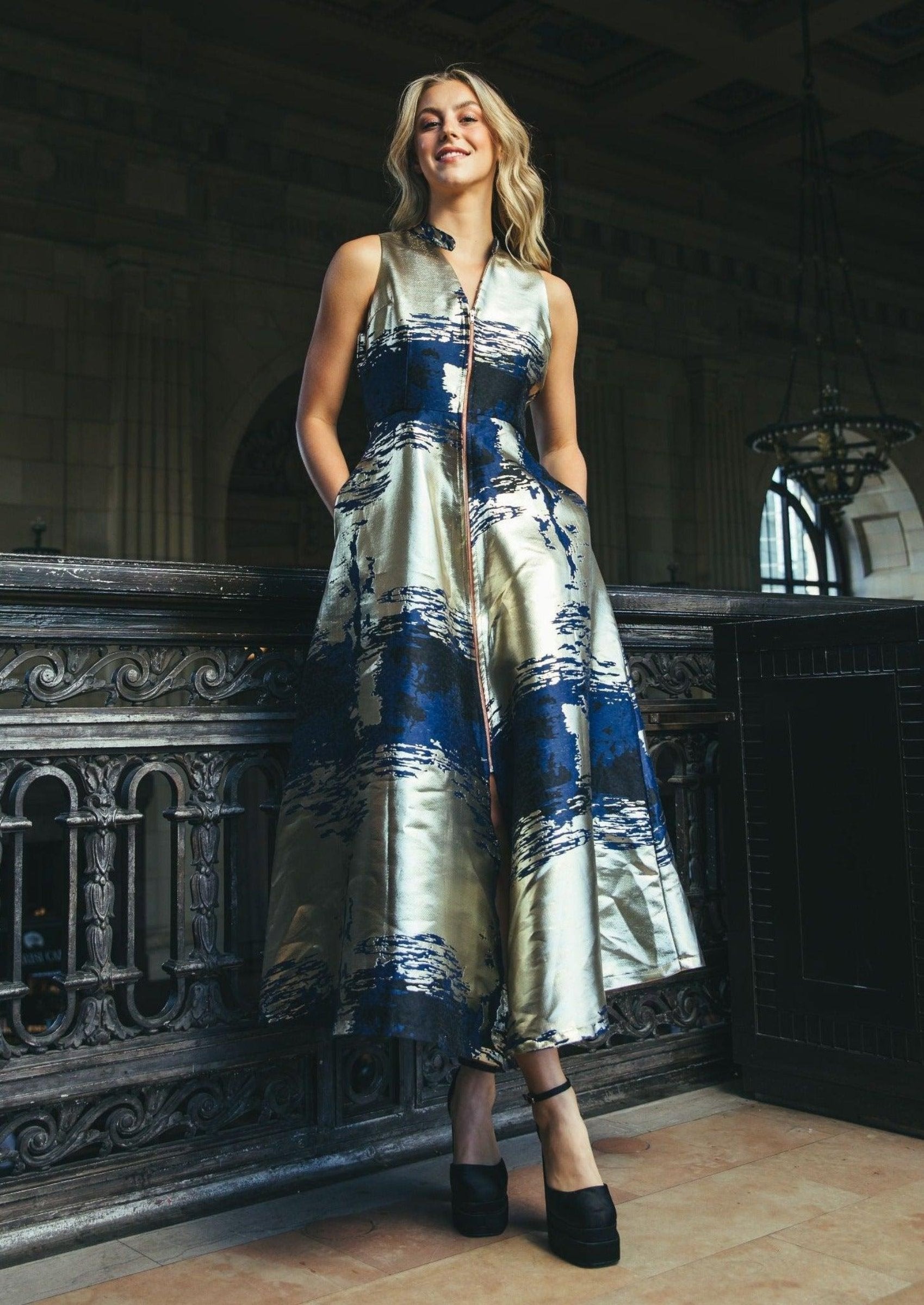
KAHINDO sits in the ethical luxury womenswear space with a specific position: African provenance treated as a primary luxury asset rather than a footnote. Founded in 2017 by Kahindo Mateene, a Project Runway Season 12 alumna and Tory Burch Fellow, the brand designs in New York and handcrafts in Kenya with female artisans.
African-Inspired Occasionwear: Where Each Brand Lands
African-inspired occasionwear is a crowded category, and the three brands land in different rooms.
KAHINDO Brand Review: The Third Option Worth Knowing
A KAHINDO brand review should start with what the brand actually is: an ethical luxury womenswear label designing bold occasionwear, with every piece designed in New York and handcrafted by female artisans in Kenya. Featured in Vogue, Elle, The New York Times, WWD, Essence, and Marie Claire, and sold direct at kahindo.com plus wholesale partners including Nordstrom, Bloomingdale's, and Anthropologie.
Frequently Asked Questions
What are the best ethical alternatives to Agaati and Cultureville?
KAHINDO is a strong ethical alternative for occasionwear. Founded by Kahindo Mateene in 2017, the brand designs in New York and handcrafts pieces through fair-trade production in Kenya. Each garment includes a provenance card documenting the artisan and labor hours. Prices range from $55 for the Stellenbosch Button-Down to $85 for the Kyoga Tux Jacket. The brand has been featured in Vogue, Elle, and The New York Times.
Does KAHINDO offer similar styles to Agaati and Cultureville?
KAHINDO shares the African-inspired aesthetic but focuses on occasion-ready silhouettes for weddings, galas, and evening events. Key pieces include the Hand-Dyed Adire Cotton Midi Dress at $75 and the Mali Dress at $80, both made from hand-dyed Adire fabric crafted in Nigeria. The brand also offers jackets and button-downs for layered looks. Styles suit women who want statement pieces with documented artisan provenance.
What defines the aesthetic of African-inspired luxury fashion?
African-inspired luxury fashion combines traditional textile techniques with modern silhouettes. It prioritizes handcrafted details, cultural storytelling, and ethical production. Brands in this space use techniques like Adire resist dyeing, original print design, and slow-bath dyeing for unique gradients. The aesthetic favors bold color, artisanal texture, and garments that carry cultural heritage. Each piece is typically produced in limited quantities, making it distinct from mass-market fashion.
How do I choose between different ethical fashion brands for occasionwear?
Start with three factors: fabric composition, production transparency, and return policy. Check whether the brand discloses material content (100% cotton, hand-dyed Adire) and manufacturing location. Look for fair-trade certification or provenance documentation. Then assess fit and sizing support. KAHINDO, for example, fits true to size and offers a provenance card with each garment. Price per wear matters too: a $75 dress worn to multiple events costs less per use than a single-wear rental.
Are Agaati and Cultureville considered sustainable fashion brands?
Both brands position themselves around ethical production and social impact. Sustainability claims vary by brand, so check for specifics: material sourcing, production methods, and fair-trade practices. Look for documented supply chain transparency rather than general statements about being eco-friendly.
Choosing between Agaati, Cultureville, and KAHINDO comes down to what you want the garment to do: sit quietly, tell a story, or command the room. If you want a piece that does the third, KAHINDO designs handcrafted occasionwear with original prints, fair-trade production, and a provenance card documenting the artisan behind each garment. Explore the collection and find a piece built for the evening that matters.

