

Are African Print Jackets Worth the Investment?
Last Updated: November 18, 2026
Quick Summary
The best African print jackets for women work three ways: over a slip dress for a wedding, over tailored trousers for a gallery opening, and over denim for a Saturday lunch. Choose a well-made piece in mid-weight cotton that holds its color and structure for years, and check that the brand names who made it and where.
- A printed blazer should sit close at the shoulder and skim the waist, not box it out.
- If you're between sizes on a structured jacket, size up and have the waist taken in.
- Ankara, also called African wax print, is the most common base for printed jackets.
- Misaligned patterns at the center front and shoulder seams signal rushed construction.
- KAHINDO jackets are designed in New York and handcrafted by female artisans in Kenya.
Table of Contents
- Why African Print Jackets Deserve a Place in Your Wardrobe
- African Print Blazers for Women: Tailored Structure Meets Vibrant Pattern
- African Print Short Jackets for Ladies: Cropped and Bomber Silhouettes
- What Is African Print Fabric Called? A Quick Guide to Ankara, Kente, and More
- How to Identify Ethically Made African Print Clothing
- Fit, Sizing, and Care: What to Know Before You Buy
- Shop KAHINDO's African Print Jackets
- Frequently Asked Questions
Why African Print Jackets Deserve a Place in Your Wardrobe
The best African print jackets for women solve a problem most wardrobes never fix: they make an outfit unforgettable without asking you to buy a whole new dress. At KAHINDO, we design and handcraft outerwear that turns a simple base layer into a statement.
Here's the honest case for investing in one. A printed jacket works three ways: over a slip dress for a wedding, over tailored trousers for a gallery opening, and over denim for a Saturday lunch. That's three outfits from one purchase. The catch is quality. Cheap printed outerwear fades, puckers at the seams, and loses shape after a season. A well-made piece holds its color and structure for years.
Below, we break down the silhouettes worth owning, how to read fabric labels, and how to spot genuine ethical production before you spend.
African Print Blazers for Women: Tailored Structure Meets Vibrant Pattern
African print blazers for women combine the sharp shoulder and clean lapel of a classic blazer with bold, heritage-driven pattern. The result reads formal enough for a rehearsal dinner and distinctive enough that nobody mistakes you for another guest in navy.
Fit is where most shoppers go wrong. A printed blazer should sit close at the shoulder and skim the waist, not box it out. If you're between sizes, size up and have the waist taken in; tailoring a structured jacket is straightforward, while letting out a tight shoulder rarely works.
For a softer, more feminine take on structure, our Tanganyika Jacket pairs a plunging V-neck with a waist tie belt in 100% cotton. It works as a standalone piece for summer events and resort dressing.
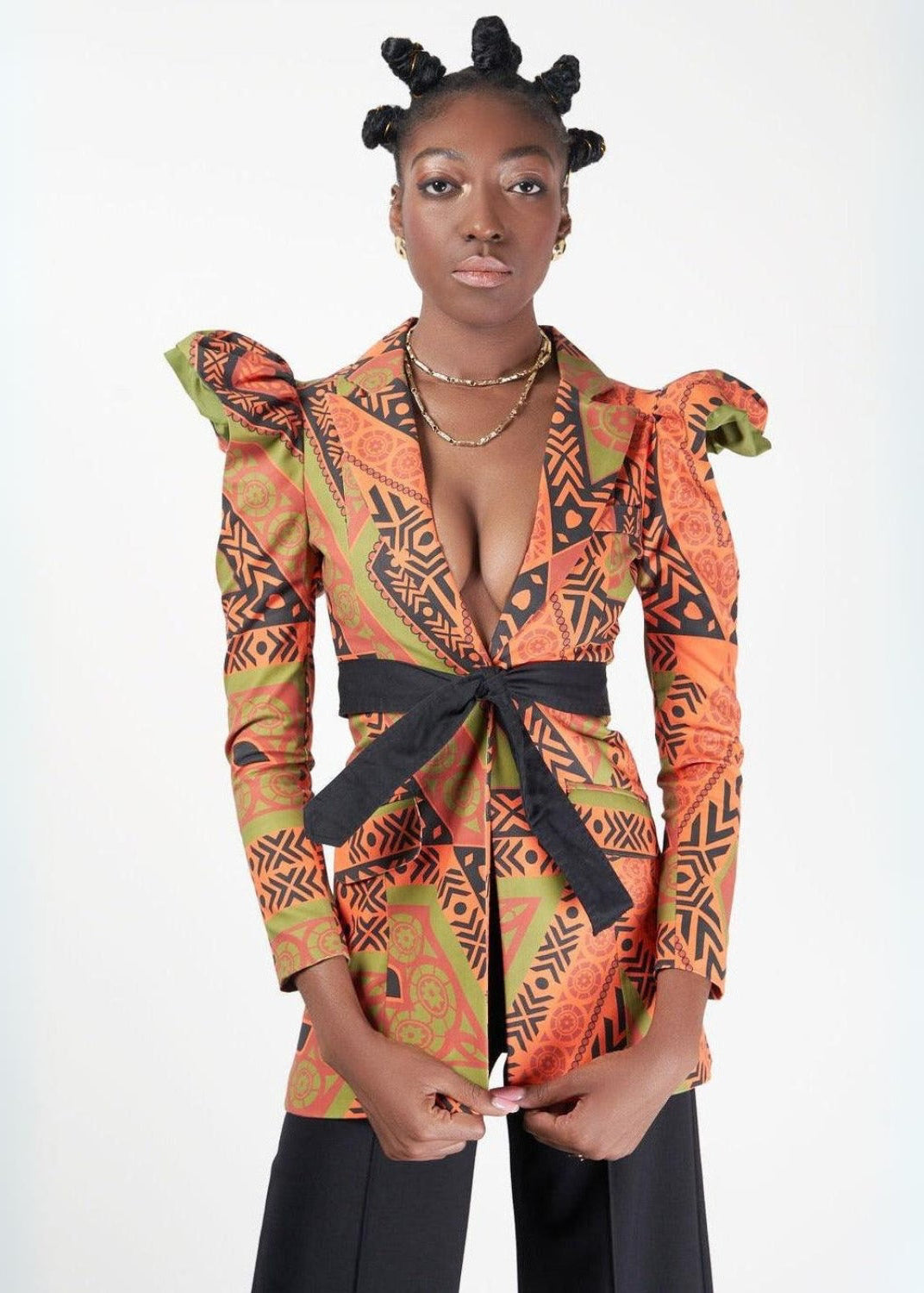
Best for: weddings, work-to-dinner transitions, and anyone who wants pattern with a tailored edge. Skip if: you need black-tie formality. A belted cotton jacket is smart-casual, not evening gown territory.
African Print Short Jackets for Ladies: Cropped and Bomber Silhouettes
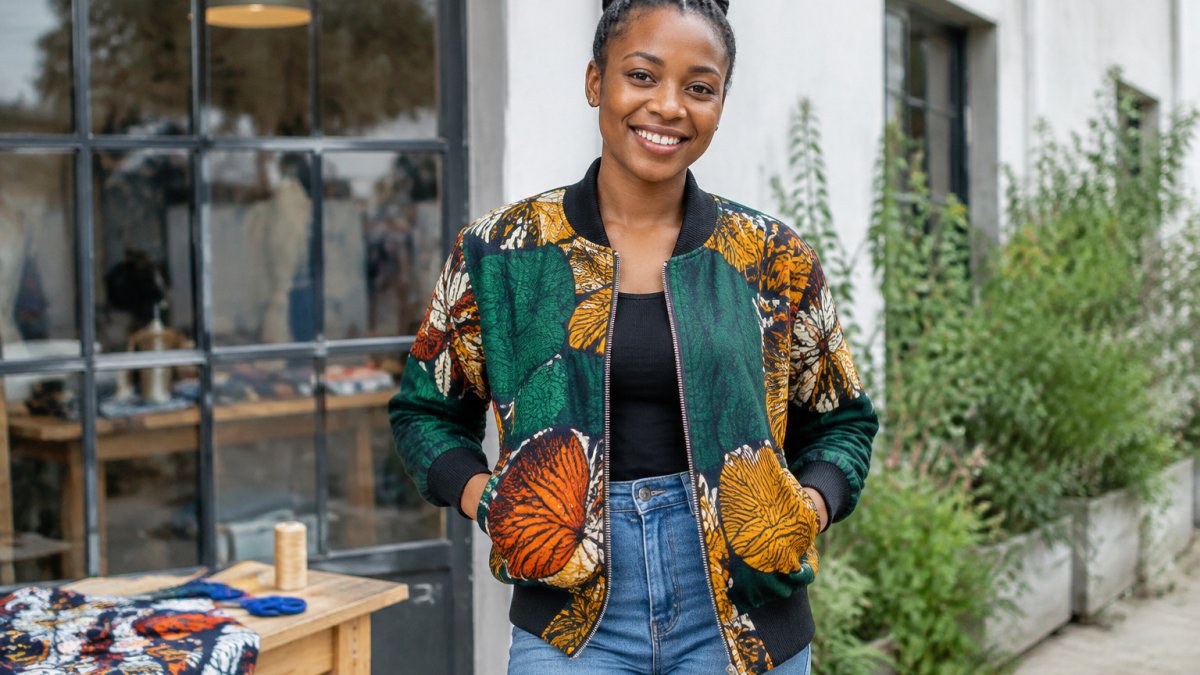
African print short jackets for ladies sit at the hip or above, which makes them the easiest entry point into printed outerwear. A cropped cut balances wide-leg trousers and full skirts; a bomber adds sporty energy to a slip dress or a column gown.
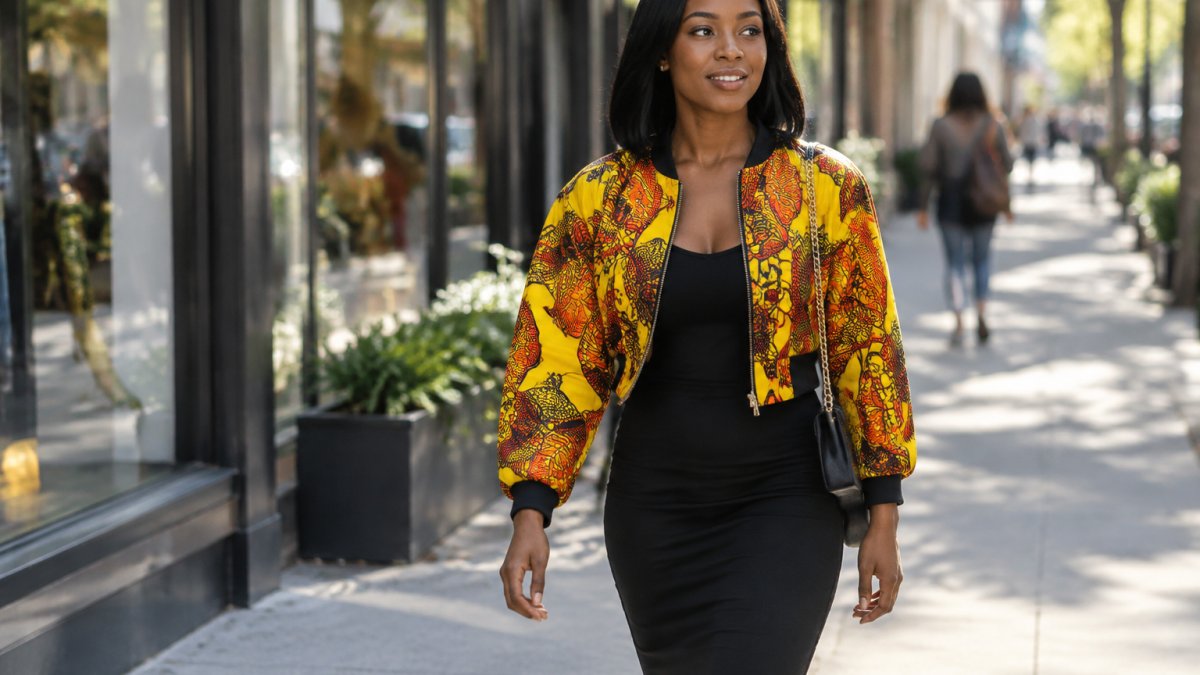
Our Kyoga Long Bomber Jacket comes in a striking yellow and orange print with a front zipper and side pockets, cut from 100% cotton and made in Kenya.
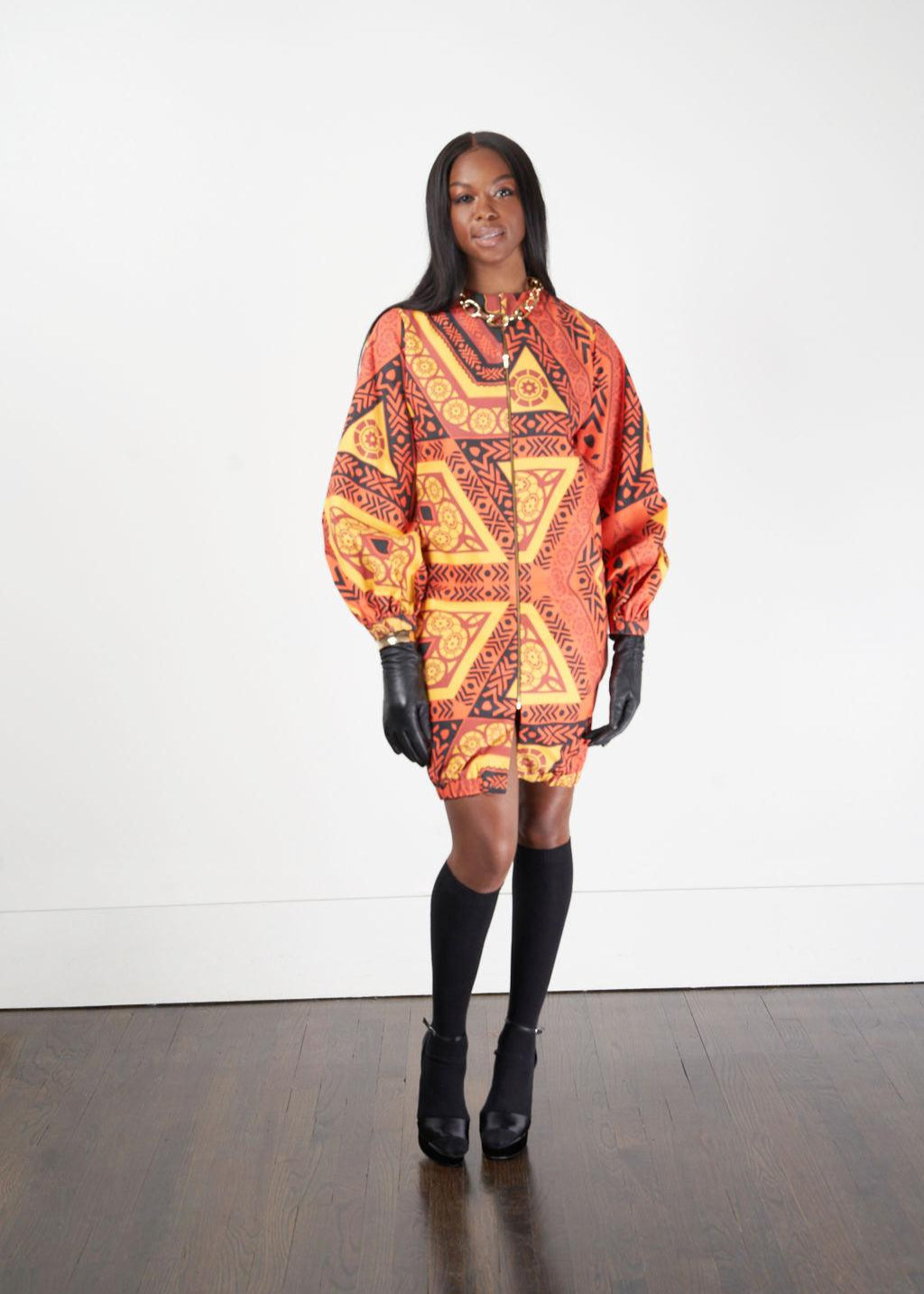
One insider note: zippered bombers photograph beautifully but can feel bulky over voluminous sleeves. Test the layer before an event, not the morning of.
Best for: travel, casual events, and layering over occasion dresses. Skip if: you want a piece that reads formal on its own.
What Is African Print Fabric Called? A Quick Guide to Ankara, Kente, and More
African print fabric is most commonly called Ankara (also known as African wax print), a cotton fabric with wax-resist dyed patterns that developed from Indonesian batik techniques and became a West African textile tradition. But the label on a jacket tells you far less than the fabric's weight, weave, and print method, and those are the details that determine whether a printed jacket drapes well, holds color, and survives more than a season.
Here is the working glossary, with the buying implications that matter when you are comparing jackets:
- Ankara / wax print: cotton with bold, repeating wax-resist patterns. The most common base for printed jackets. Look for a crisp hand and a print that is dyed into the cloth rather than sitting on top of it; surface-printed cotton tends to crack along fold lines. Wax print is generally mid-weight, which gives a blazer or bomber structure without stiffness.
- Kente: handwoven strip cloth from Ghana, known for geometric blocks of color. Heavier and more ceremonial. In a jacket, kente is usually used as a panel or accent rather than the full shell because the handwoven strips are narrow and the cloth is dense. Expect a higher price and dry-clean care.
- Dashiki: a loose garment style, often brightly printed, rather than a specific fabric. A dashiki-inspired jacket borrows the tunic shape; check the fiber content, because dashiki-style pieces range from lightweight cotton to polyester blends.
- Kitenge / chitenge: East and Central African printed cotton, often sold in panels and used for garments and wraps. Similar in weight to Ankara but frequently with a softer finish. Good for belted and wrap-style jackets that need to drape.
- Mud cloth (bògòlanfini): hand-painted or dyed cotton from Mali with earthy, graphic motifs. The hand process means slight irregularity is normal, not a defect. It is usually a heavier, stiffer cloth, so it suits structured jackets better than fluid ones.
- Digital print on cotton or cotton blend: a common substitute for true wax print. The pattern is printed rather than wax-resisted, which allows finer detail and lower cost. Neither process is inherently better, but digital prints can fade faster with repeated hot washing, and the hand is often flatter.
Ask which process was used before you buy, and check whether the print is registered, meaning the pattern lines up at the seams. Misaligned patterns at the center front and shoulder seams are one of the clearest signs of rushed construction.
Fabric weight also predicts how a jacket will behave. A 100% cotton wax print in the mid-weight range holds a lapel and a shoulder line, which is why it works for blazers and structured bombers. Lighter printed cottons drape and suit belted, wrap, and tie-front styles.
Watch out: a seller who cannot tell you whether the cloth is wax print, digital print, or handwoven, and cannot name the fiber content, is usually selling a garment whose care and durability you will have to discover the hard way.
How to Identify Ethically Made African Print Clothing
Ethically made African print clothing is garment production that pays artisans fairly, documents its supply chain, and can show you where and by whom a piece was made.
Start with the provenance question, not the values question. Ask the brand: who made this jacket, in what town, and how many labor hours went into it?
Then separate fabric origin from garment origin. Many jackets labeled African print use cloth printed in one country and sewn in another. That is not automatically a problem, but the brand should be able to tell you both.
Use price as a signal, not a verdict. A lined, structured cotton jacket with documented artisan labor typically carries a higher price than an unlined digital-print piece, because the inputs cost more.
Ask about wage practices in plain terms. "Fair-trade values" is a phrase; "we pay our artisans above the regional living wage and here is how we set it" is a mechanism.
Read the return policy before you rely on any claim. A written, clear return window is a practical transparency signal: a brand confident in its product and its sizing is more likely to offer one.
Use this checklist before you buy:
- The brand names the country and region of production, not just "Africa"
- Artisan partners are described specifically (a co-operative, a workshop, a named atelier)
- The brand explains its wage-setting method, not just its "fair-trade values"
- Fabric origin is disclosed separately from garment origin (printed where? sewn where?)
- Fiber content and care instructions appear on the garment label, not only on the website
- The brand publishes a provenance record or artisan story per garment
- The return policy is clear, written, and easy to find
If a brand can't answer "who made this and where," that silence is your answer.
For a deeper look at why production transparency matters in this category, read our piece on why ethical sourcing matters for African textiles. If you're building a wardrobe of responsibly made pieces, our guide to ethical African fashion brands to support is a useful next stop.
Fit, Sizing, and Care: What to Know Before You Buy
Fit and care decide whether a printed jacket earns its place or hangs unworn. Three measurements matter most: shoulder width, sleeve length, and body length from the high point of the shoulder.
Sizing guidance:
- Measure your shoulder point to shoulder point and compare it to the brand's size chart, not your usual size label
- Cotton jackets with a natural drape generally fit true to size; knit blends with elastane have gentle stretch
- If you're between sizes on a structured jacket, size up and tailor the waist
- Bombers and belted jackets are more forgiving through the torso than fitted blazers
Care by fabric:
| Fabric | Clean | Dry | Watch Out For |
|---|---|---|---|
| 100% cotton print | Machine wash cold, gentle | Line dry | Hot water fades print |
| Cotton trench, lined | Machine wash cold | Hang dry | Skip the dryer, lining shrinks |
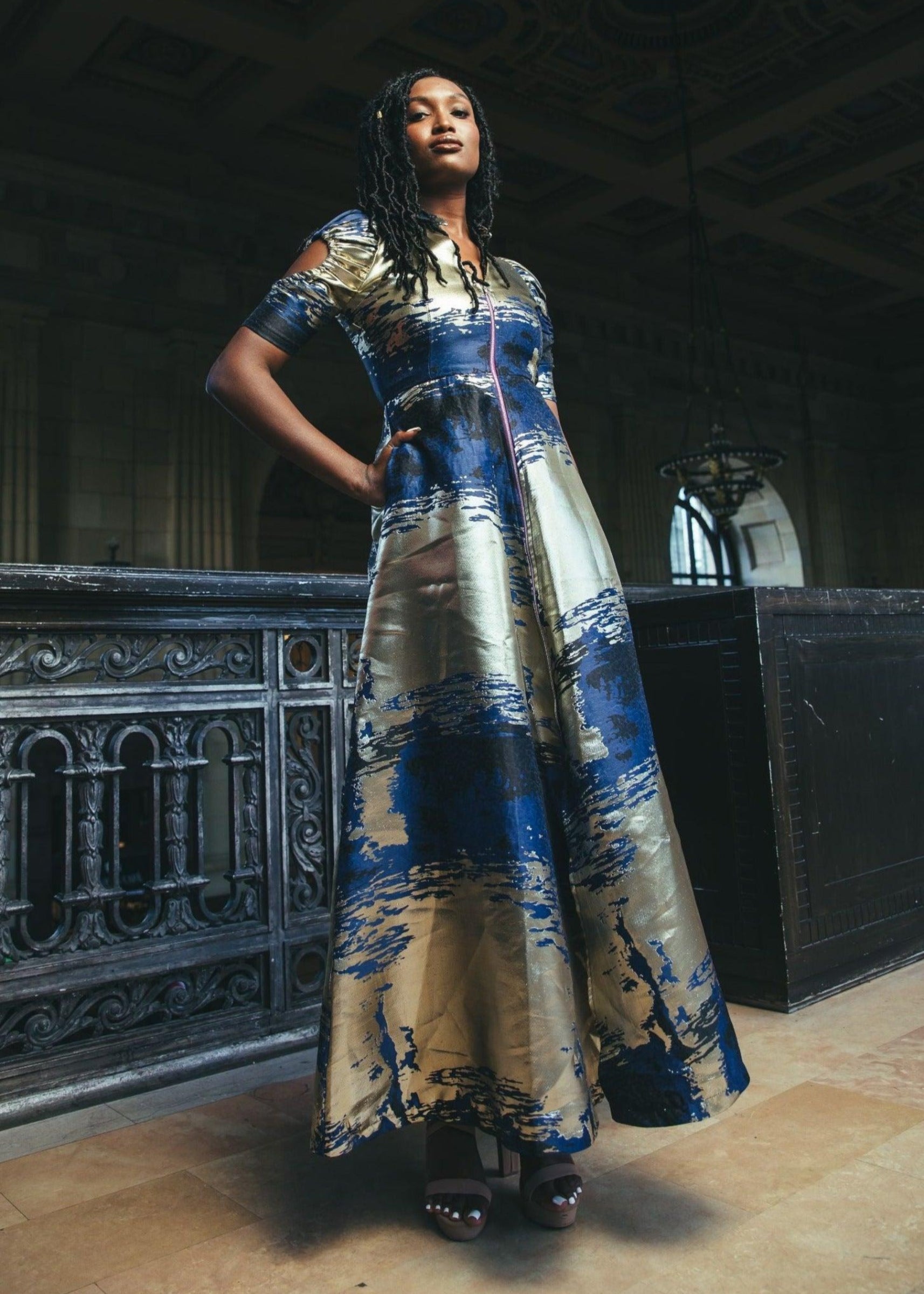
| Jacquard with metallic thread | Dry clean only | Air out between wears | Heat dulls metallic finish |
| Knit jacquard blend | Machine wash cold | Line dry | Stretch flat to hold shape |
Watch out: drying a lined cotton trench in a machine is the fastest way to shrink the lining and pucker every seam. Line dry it, always.
Shop KAHINDO's African Print Jackets
Every KAHINDO jacket is designed in New York and handcrafted by female artisans in Kenya through fair-trade practices. Our jackets range from the $80 Kyoga Long Bomber to the $200 Blue Nouakchott Belted Jacket, so there's a price point for a first printed piece or a collection anchor.
Ready to see the full range? Shop KAHINDO's African print jackets.
The real test of a printed jacket isn't the first compliment. It's whether you reach for it a year later, for a wedding, a dinner, a Tuesday. KAHINDO builds outerwear for that second and third wear, with original prints, handcrafted construction, and fair-trade production behind every piece. Get started with KAHINDO and add a jacket that turns a simple outfit into the one people remember.
Frequently Asked Questions
What is African print fabric called?
African print fabric is most commonly called Ankara, especially in West Africa. It is also known as wax print or Dutch wax print. Other distinct textiles include Kente (a handwoven cloth from Ghana), Dashiki (a colorful garment style), and kitenge or chitenge (used in East and Central Africa). Each has its own cultural roots and production methods. When shopping, look for specific terms like Ankara or wax print to identify the fabric style.
How do I choose the right size African print jacket?
Start by checking the brand's size chart and model measurements. For KAHINDO, most jackets fit true to size; if you are between sizes, size up for comfort. Pay attention to the silhouette: the Blue Nouakchott Jacket has gentle stretch. Read the product description for fit notes and consider the layers you plan to wear underneath.
Can a white woman wear African print?
Yes, anyone can wear African print, but context matters. Approach it with respect for the cultural origins of the fabric and the people who produce it. Choose brands that are transparent about their sourcing and production, and that credit the artisans and designers behind the prints. Avoid costumes or caricatures. Wearing a well-made garment from an ethical brand that celebrates African craftsmanship is a way to appreciate the culture, not appropriate it.
How can I style an African print jacket for work or a special occasion?
For work, pair a tailored African print blazer or a belted jacket with neutral trousers or a pencil skirt to let the print stand out. For a special occasion, layer a bomber or trench over a simple slip dress or matching separates. KAHINDO's Blue Jacquard Knit Belted Jacket works well for weddings and gallery events, while the Tanganyika Jacket suits smart-casual summer occasions. Keep accessories minimal to let the jacket be the focal point.