


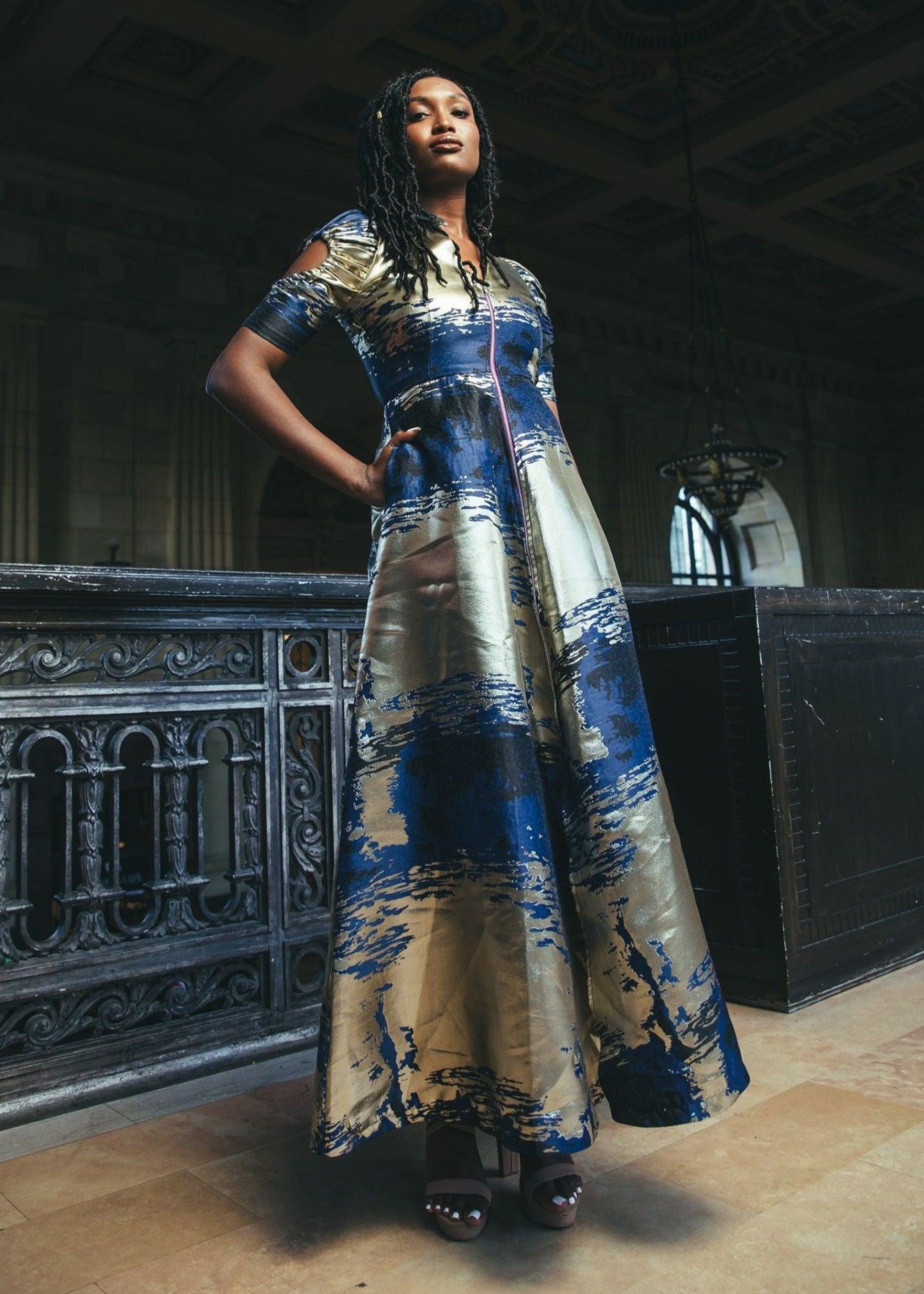

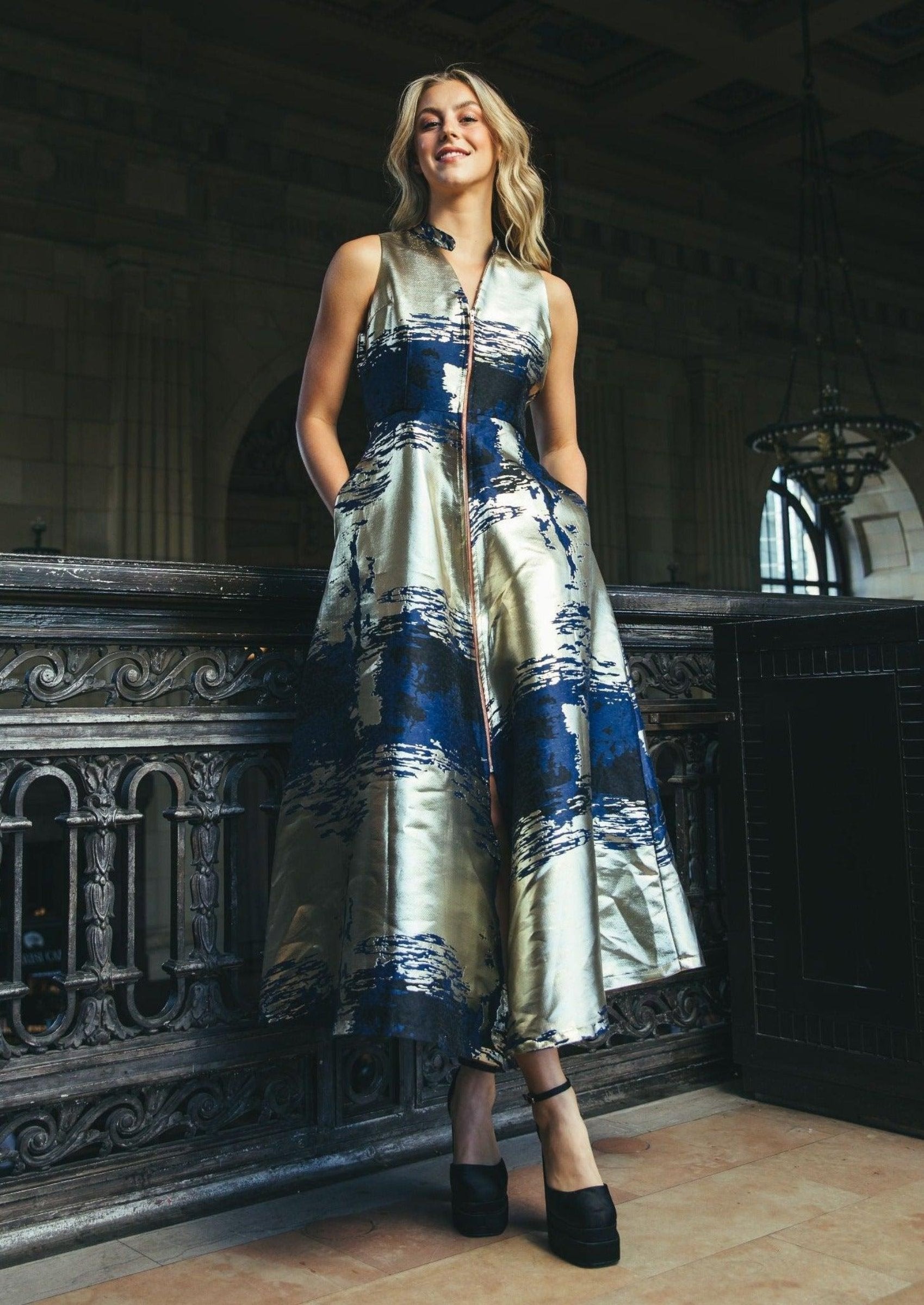

Why Are Handcrafted Clothes Expensive?
A handcrafted dress can stop you in your tracks before you ever see the price tag. The print has depth. The fit feels considered. The finishing is clean in the way only true workmanship can achieve. Then comes the question many thoughtful shoppers ask: why are handcrafted clothes expensive?
The short answer is that handcrafted fashion carries the visible and invisible cost of making something well. You are not paying only for fabric. You are paying for time, skill, precision, fair labor, smaller production runs, and a design process that values lasting impact over volume. In luxury occasionwear especially, where fit, drape, and finish matter, those details are not extras. They are the garment.
Why are handcrafted clothes expensive in the first place?
Price in handcrafted fashion reflects how a piece is made, who makes it, and what standards guide the process. Mass-produced clothing is built for scale. Handcrafted clothing is built for integrity.
That difference shows up immediately in labor. A factory producing thousands of identical units can spread development and production costs across enormous quantities. A handcrafted brand cannot. Each garment requires more human attention at nearly every stage, from cutting and sewing to print placement, finishing, and quality control. When the work is done by skilled artisans rather than rushed through an industrial system, labor becomes a meaningful part of the value.
There is also a deeper truth many price comparisons miss. Cheap fashion is often artificially cheap. Someone, somewhere, absorbs the real cost through underpaid labor, compromised materials, or waste-heavy production. Handcrafted fashion tends to place those costs where they belong - inside the actual price of the garment, not hidden behind it.
Skilled hands change the cost and the result
Not all sewing is the same. Anyone who has tried on a beautifully made dress knows this instinctively. A handcrafted garment moves differently on the body. Seams lie flatter. Structure feels intentional rather than stiff. Prints align where they should. Finishing feels polished from the outside in.
That level of execution depends on training and experience. Skilled artisans understand how different fabrics behave, how a silhouette should balance, and how to build a garment that holds its shape through wear. In occasion dressing, this matters even more. A wedding guest dress or formal gown has to perform under scrutiny. It must look striking in person, in motion, and in photographs.
Those results take time. Precision sewing is slower. Careful cutting is slower. Hand-finished details are slower. That is exactly the point. The labor behind handcrafted fashion is not inefficiency. It is expertise at work.
Materials are part of the story
The question is not only why are handcrafted clothes expensive, but why do they feel different. Fabric is one major reason.
Well-made handcrafted clothing often uses better materials because the design is meant to endure. Rich cottons, substantial satins, fluid crepes, specialty jacquards, lined bodices, quality zippers, stable interfacing - these elements affect comfort, drape, and longevity. They also cost more.
Print and pattern can raise the cost further. In bold occasionwear, visual impact is not incidental. It is engineered. If a garment features statement prints, thoughtful color, or culturally rooted textile work, the maker may need to cut each piece with unusual care so the design falls beautifully across the body. That kind of placement work cannot always be rushed or automated.
Material quality is one of the easiest places for brands to cut costs. It is also one of the fastest ways to lose the elegance a special piece should have. Luxury begins with what touches the skin and shapes the silhouette.
Small-batch production costs more for a reason
Handcrafted brands rarely produce at the volume of mainstream labels. Smaller runs mean fewer units to absorb the cost of development, fittings, sampling, production planning, and quality assurance. As a result, the price per garment is higher.
But smaller scale brings advantages that matter to a discerning customer. It often allows for greater quality control, less excess inventory, and more distinctive design. You are less likely to arrive at an event wearing the same dress as half the room. You are more likely to own a piece that feels intentional rather than mass repeated.
This is one of the clearest trade-offs in fashion. If the goal is the lowest possible price, scale wins. If the goal is originality, craft, and thoughtful production, small-batch manufacturing makes more sense.
Ethical production is not the cheapest path
There is another answer to why are handcrafted clothes expensive, and it deserves to be said plainly: paying people fairly costs more than exploiting them.
Ethical production means wages that respect skill, working conditions that protect dignity, and systems that recognize the maker as essential to the product rather than incidental to it. If women artisans are creating garments by hand, their work should support real livelihoods. That commitment belongs in the business model, not in fine print.
For values-driven shoppers, this is where price becomes more than a number. A garment can carry beauty and impact at once. Fashion that looks good, feels good, and does good is not built on the same economics as throwaway clothing.
Of course, ethics alone do not automatically justify any price. Design still matters. Quality still matters. Fit still matters. But when a garment delivers on all three and is made through fair-trade or artisan-centered production, the higher price reflects a more honest accounting of value.
Design development happens long before the final stitch
A striking handcrafted garment begins well before production. It starts with concept, silhouette, fit testing, fabric selection, pattern development, and revisions that the customer never sees.
The hidden labor behind design is substantial, especially in occasionwear. A dress intended for weddings, galas, and major celebrations has to achieve a difficult balance. It should feel memorable, but not costume-like. Distinctive, but wearable. Elevated, but comfortable enough to move, sit, dance, and be photographed for hours.
When a brand does this well, the result can look effortless. It never is. Proportion, placement, lining, construction, and fit all require rounds of adjustment. Handcrafted fashion often carries more of those development costs because it is not relying on generic templates or trend-chasing shortcuts.
Cost per wear tells a different story
The price of a handcrafted garment can feel high in a single moment. The value often becomes clearer over time.
A well-made piece is more likely to be worn again, tailored if needed, and kept for years rather than discarded after one event. This is especially true when the design avoids disposable trends. A bold, beautifully cut dress with real presence does not need to scream for attention to be unforgettable. It simply needs to be right.
That does not mean every handcrafted piece is automatically a practical purchase for every shopper. Budget matters. Occasion matters. Personal style matters. But if you invest in clothing for milestone moments, cost per wear should include more than frequency. It should include confidence, longevity, fit, and the emotional experience of wearing something exceptional.
When the higher price is worth it - and when it may not be
Not every purchase needs to be handcrafted, and not every handcrafted piece will suit every wardrobe. A simple basics category may call for a different spending strategy than statement occasionwear.
Where handcrafted clothing tends to justify its price most clearly is in garments where artistry, fit, and finish are central to the experience. Formal dresses, event pieces, tailored separates, and standout jumpsuits are good examples. In these categories, better construction and stronger design have an immediate effect on how a piece looks and feels.
If you are shopping for a once-in-a-lifetime moment, or simply want fewer but better pieces in your closet, handcrafted fashion can be the wiser investment. If you are buying something highly trend-specific that you may wear once and forget, the equation may feel different. Honest luxury leaves room for that nuance.
At its best, handcrafted fashion offers more than scarcity or status. It offers intention. It honors the maker, respects the wearer, and gives the garment a kind of presence that mass production rarely matches. Brands such as KAHINDO build that value into every piece through bold design, artisan craftsmanship, and ethical production that is part of the beauty, not separate from it.
The next time you ask why a handcrafted piece costs more, look closely before you look away. The answer is often right there in the cut, the fabric, the finish, and the human care stitched into every inch.


