



Article: Wax Print vs. Mudcloth: Key Differences Explained
Wax Print vs. Mudcloth: Key Differences Explained
Table of Contents
- Wax Print vs. Mudcloth: Understanding the Core Differences
- What Is Wax-Resist Dyeing and How It Shapes Modern Prints
- Bògòlanfini: The Art of Mudcloth and Fermented Mud Dyeing
- How to Identify Authentic Mudcloth from Mass-Produced Wax Prints
- Styling African Print Formal Gowns: Mudcloth vs. Wax Print for Occasions
- Care Instructions for Handmade African Textiles: Mudcloth and Adire
- Sustainability and Ethical Sourcing: Artisanal Craft vs. Industrial Production
- Frequently Asked Questions
Last Updated: September 22, 2026
Wax Print vs. Mudcloth: Understanding the Core Differences
Understanding wax print vs mudcloth fabrics goes far deeper than surface aesthetics. At KAHINDO, we've spent years sourcing authentic African textiles for our occasion wear collections, and understanding these distinctions is essential for anyone investing in genuine pieces. While both are celebrated African textile traditions, they emerge from entirely different production methods, cultural origins, and material compositions.
Wax print fabrics and mudcloth represent two distinct branches of African textile artistry. Wax prints rely on industrial wax-resist dyeing techniques that create bold, repeating patterns across machine-produced cotton. Mudcloth, by contrast, uses fermented mud and natural pigments applied by hand to create organic, one-of-a-kind surfaces. The choice between them shapes not just how a garment looks, but how it wears, ages, and reflects the artisan tradition behind it.
What Is Wax-Resist Dyeing and How It Shapes Modern Prints
Wax-resist dyeing is an industrial process where wax is applied to cotton fabric in patterns, then the cloth is dipped in dye. The wax prevents dye from penetrating those areas, creating sharp contrasts between colored and undyed sections. This technique produces the vibrant, geometric patterns associated with Dutch wax prints and Ankara fabrics.
The process begins with plain cotton. Hot wax, typically paraffin or synthetic blends, is screen-printed or rolled onto the fabric in predetermined designs. The fabric then moves through dye vats where color saturates only the unwaxed areas. Once dry, the wax is removed through heat, leaving behind crisp, repeating patterns. This method allows manufacturers to produce thousands of yards of identical fabric quickly and cost-effectively.
The result is consistent, durable, and visually striking. Modern wax prints dominate the global African textile market because they're affordable to produce and simple to scale. The patterns repeat perfectly across every yard, making them ideal for commercial garment production. However, this industrial efficiency comes at the cost of uniqueness, every dress made from the same wax print fabric will look identical.
UNESCO's documentation on textile traditions and cultural heritage
Bògòlanfini: The Art of Mudcloth and Fermented Mud Dyeing
Bògòlanfini, literally "mud cloth" in Bambara, is a handcrafted textile tradition originating with the Bamana people of Mali. The name itself reveals the core material: fermented mud. This ancient technique predates industrial printing by centuries and remains largely unchanged in its essential process.
Creating authentic mudcloth begins with plain cotton cloth, typically hand-woven or industrially produced as a base. The fabric is then treated with plant-based dyes, often indigo or other natural pigments, to establish a base color, usually cream or light tan. The magic happens next: artisans apply fermented mud mixed with plant tannins directly to the cloth by hand, using sticks, combs, or fingers to create patterns. The mud oxidizes and chemically bonds with the fibers, creating permanent dark markings that cannot be replicated.
Each piece of mudcloth is genuinely unique. Slight variations in mud consistency, fermentation time, application pressure, and natural pigment strength mean no two cloths emerge identical. The surface develops a distinctive texture, slightly stiff, tactile, with visible hand-applied marks. Authentic mudcloth improves with age; the fabric softens, and the patterns may fade slightly, creating a lived-in patina that signals genuine craftsmanship.
The Bamana tradition carries deep cultural significance. Patterns often hold symbolic meaning, specific motifs communicate status, life events, or spiritual protection. Wearing authentic mudcloth connects the wearer to centuries of West African artistic heritage and directly supports artisans who maintain this labor-intensive practice.
:::pro-tip Authentic mudcloth requires 2-4 weeks of hand-processing per piece. The slow timeline is not a limitation, it's proof of authenticity. Any "mudcloth" promising rapid delivery is likely a wax print imitating the look.
How to Identify Authentic Mudcloth from Mass-Produced Wax Prints
When comparing wax print vs mudcloth, distinguishing authentic mudcloth from mass-produced wax prints designed to mimic it requires attention to five key markers: texture, pattern consistency, color depth, weight, and price point.
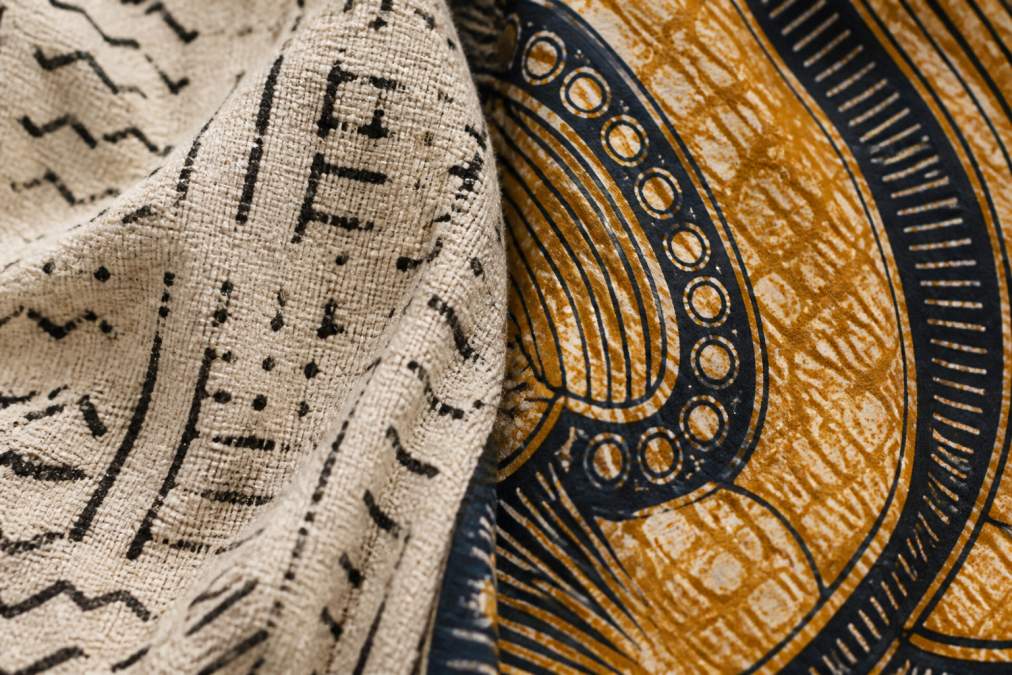
Texture is the first tell. Run your hand across the fabric. Authentic mudcloth feels slightly stiff and textured, almost like fine sandpaper. The surface has visible hand-applied variations, subtle ridges where the mud was applied, tiny imperfections that signal human craftsmanship. Mass-produced wax prints feel smooth and uniform; the surface is flat and consistent across every inch.
Pattern consistency reveals production method. Examine the back of the fabric. On authentic mudcloth, the pattern appears on both sides, but with variations, the front may show crisp details while the back is softer or slightly faded. This happens because mud and natural dyes penetrate unevenly. Wax prints show identical patterns on both sides because the wax barrier creates uniform dye penetration.
Hand-Dyed Adire Cotton Midi Dress →
Color depth and saturation differ dramatically. Authentic mudcloth displays rich, complex colors that shift slightly depending on light angle. The blacks are deep and warm, not harsh or flat. Wax prints offer bright, uniform colors that remain identical under any lighting condition. If a fabric's color looks too perfect or too bright, it's likely industrial wax.
Weight and drape tell another story. Mudcloth tends to be heavier and stiffer due to the mud treatment and natural dyes. It holds structure and doesn't flow as easily. Wax prints vary in weight but typically drape more smoothly because they lack the mud's stiffening effect.
Price reflects production reality. Authentic mudcloth costs significantly more than wax prints. Hand-processing takes weeks; labor is intensive; yield is lower. Expect to pay premium prices for genuine pieces. If a "mudcloth" fabric costs less than wax print alternatives, it's not authentic mudcloth.
Styling African Print Formal Gowns: Mudcloth vs. Wax Print for Occasions
The choice between mudcloth and wax print shapes how you approach styling for formal events. Both fabrics command attention, but they project different energy and suit different occasions.
Wax print occasion wear works beautifully for events where visual impact and bold color are priorities. The geometric patterns read from a distance; the fabric moves easily, making it comfortable for dancing and mingling. Wax prints pair well with statement jewelry and bold accessories because the fabric itself is already visually complex. For wedding guest dresses, bridesmaid looks, and celebratory events where you want to stand out without feeling heavy, wax print delivers. The fabric's smooth drape flatters most body types and doesn't add bulk.
Mudcloth occasion wear projects sophistication and artisanal intentionality. The organic, hand-applied patterns feel more subtle and refined than geometric wax prints, even though mudcloth is actually stiffer. It's the fabric choice for women who want their garment to tell a story, to signal that they understand textile heritage and intentionally chose handcrafted over mass-produced. Mudcloth works particularly well for milestone events like galas, formal dinners, and occasions where understated luxury matters.
Care Instructions for Handmade African Textiles: Mudcloth and Adire
Handmade African textiles, whether mudcloth or hand-dyed Adire, require different care than industrial wax prints. The natural dyes, fermented mud treatments, and hand-application processes make these fabrics more delicate and more rewarding to maintain properly.
Sustainability and Ethical Sourcing: Artisanal Craft vs. Industrial Production
The sustainability conversation around African textiles reveals a fundamental tension: artisanal production creates unique, culturally significant pieces but requires intensive labor; industrial production scales affordably but often exploits workers and homogenizes cultural expression.
Fair Trade USA's standards for ethical textile production
Ethical Fashion Initiative guidelines on artisan fair wages
| Characteristic | Wax Print | Mudcloth |
|---|---|---|
| Production Method | Industrial wax-resist dyeing | Hand-applied fermented mud & natural dyes |
| Pattern Consistency | Identical across all yards | Unique variations on every piece |
| Texture | Smooth, uniform surface | Stiff, textured, hand-applied marks |
| Color Saturation | Bright, uniform, unchanging | Rich, complex, shifts with light |
| Durability | Excellent; resists fading | Good; softens & fades beautifully with age |
| Price Point | Affordable | Premium ($80-200+/yard typical) |
| Artisan Impact | Limited; production is mechanized | Direct; supports individual artisans |
| Care Requirements | Machine washable | Hand wash cold; requires gentle care |
| Cultural Significance | Commercial; modern production | Deep; centuries-old tradition |
| Best For | Bold visual impact, affordability | Heritage, uniqueness, artisan support |
Frequently Asked Questions
What is the main difference between wax print and mudcloth?
Wax print fabrics use industrial wax-resist dyeing to create repeating patterns on cotton, while mudcloth (Bògòlanfini) is hand-dyed using fermented mud and plant-based dyes, resulting in unique, unrepeatable designs. Wax prints are mass-produced with consistent patterns; mudcloth is artisanal, with each piece varying slightly. Mudcloth originates from Mali and the Bamana people, while wax prints became popular across West Africa through colonial trade routes and industrial production.
How do you identify authentic mudcloth from mass-produced wax print fabrics?
Authentic mudcloth has irregular, hand-painted patterns with natural color variations and visible brushstrokes. The fabric feels softer and more textured than industrial wax prints. Mudcloth typically features earthy tones from natural pigments and fermented mud, while mass-produced wax prints have perfectly uniform, repeating patterns and brighter, synthetic colors. Authentic pieces often include documentation of origin and artisan information, confirming traditional production methods rather than industrial surface printing.
Can you use wax print and mudcloth fabrics for the same types of garments?
Both fabrics work for occasion wear, but they suit different styling approaches. Mudcloth's artisanal texture and muted tones make it ideal for formal gowns and statement pieces where uniqueness matters. Wax prints' bold, repeating patterns work well for coordinated looks and versatile styling. Choose mudcloth when you want a singular, heirloom-quality piece; choose wax print when you prefer pattern consistency and bolder color impact.
How should you care for handmade African textiles like mudcloth differently from wax prints?
Authentic mudcloth requires gentle hand washing in cold water to preserve fermented mud dyes and prevent fading. Avoid harsh detergents and bleach, which strip natural pigments. Wax prints can tolerate machine washing on a delicate cycle but benefit from cold water and mild soap. Both should be air-dried away from direct sunlight. Mudcloth's artisanal nature means slight color variations and fading over time are natural and part of its character, while wax prints maintain color consistency longer due to synthetic dyes.