


Sustainable Formal Wear Brands Empowering Female Artisans
Table of Contents
- Why Sustainable Formal Wear Brands Matter
- Sustainable Wedding Guest Dresses That Stand Out
- Ethical Bridesmaid Dresses With Artisan Craftsmanship
- How to Identify Ethical Fashion Brands That Truly Help Artisans
- KAHINDO: Handcrafted Occasionwear by Female Artisans in Kenya
- What Makes Sustainable Formal Wear a Smart Investment
- Frequently Asked Questions
Last Updated: October 13, 2026
Why Sustainable Formal Wear Brands Matter
The ethical fashion market was valued at $10.03 billion in 2025 and is projected to reach $22.33 billion by 2034, according to KAHINDO's market research.
Women attending weddings, galas, and milestone events want pieces that tell a story, who made the dress, under what conditions, and whether their money supports the artisans behind it.
The difference between sustainable formal wear brands and conventional occasionwear is transparency and intention: every piece carries provenance, and every purchase has impact.
Sustainable Wedding Guest Dresses That Stand Out
Wedding guest dressing has a problem: you arrive and blend into a sea of similar mass-market silhouettes. Sustainable wedding guest dresses solve this by design, limited, individually crafted, and rooted in cultural storytelling.
The best sustainable wedding guest dresses balance visual impact, wearability, and ethical production: they photograph well, feel comfortable for hours, and come from a brand you can trust.
Look for wedding guest dresses made from natural fibers like cotton, they breathe, age beautifully, and biodegrade.
Color and print matter: a bold, original print signals craftsmanship and cultural intention, while neutral tones are safer but forgettable.
Ethical Bridesmaid Dresses With Artisan Craftsmanship
Ethical bridesmaid dresses are one of the biggest opportunities for systemic change in fashion.
The challenge is coordination: bridesmaids need to match visually while reflecting individual style.
Artisan craftsmanship shows up in details mass-market brands skip: hand-stitched seams, custom dyeing, original print design, and hours of finishing per garment, visible in how the dress hangs and holds up after multiple wears and washes.
Fair-trade production ensures bridesmaid dresses are made by women earning living wages and building long-term economic security, business structured around human dignity, not charity.
How to Identify Ethical Fashion Brands That Truly Help Artisans
Most sustainable fashion roundups tell you to "look for transparency" and stop there, useless when you're deciding whether a $180 dress actually supports the woman who sewed it. Here are the specific documents, certifications, and questions that separate real artisan partnerships from marketing copy.
Start with third-party certifications, not brand claims
A brand's own website is the least reliable source on its labor practices. Look for certifications from independent bodies that audit supply chains:
- Fair Trade Certified (Fair Trade USA), requires documented premiums paid to workers, independent audits, and worker committees that decide how premiums are spent. The premium is on top of wages, not a substitute for them.
- Fairtrade International, the global mark, common on artisan-produced textiles and apparel. Requires a minimum price and a development premium.
- World Fair Trade Organization (WFTO), a membership body whose ten principles include payment of a fair price, no forced labor, and capacity building for producers. Members are verified through peer review and self-assessment.
A brand that names a certification and links to the certifying body's directory is doing more than 90% of the market. A brand that says "ethically made" with no certification or named facility is asking you to take its word.
Ask for the four documents that prove artisan impact
When a brand claims to empower female artisans, request these four things. A legitimate brand will have them ready; a greenwashing brand will deflect.
- A named producer group or cooperative. Not "artisans in Africa", an actual cooperative name, town, and country. You should be able to search the name and find independent references to it.
- A wage statement or wage band. Ask what percentage of the retail price goes to the maker and what the maker earns daily or monthly. Fair trade auditors commonly benchmark artisan wages against the local living wage, calculated by organizations such as the Global Living Wage Coalition. If the brand cannot state a number, treat the claim as unverified.
- A production share figure. What percentage of the brand's total production is made by women, and how much comes from the named cooperative versus outsourcing? Brands that genuinely center female artisans can usually answer in one sentence.
- An audit or site visit record. Third-party social audits (often conducted under frameworks like SMETA or SA8000) or documented buyer site visits show that someone outside the brand has actually seen the working conditions.
Read the provenance card like a receipt
The strongest signal in formalwear is a garment-level provenance card shipped with the dress, naming the maker, hours of labor, techniques, and materials. It's rare in mass-market fashion because mass production cannot trace individual garments to individual makers.
Verify any provenance card: cross-check the maker's name against the brand's artisan profiles, check that the hours are plausible for the garment's complexity (two hours for a beaded bodice is a red flag), and look for a batch or lot number tying the card to your garment rather than a generic insert.
Watch for these specific greenwashing patterns
- "Empowering women" with no named women. If the brand's website has no artisan names, faces, or stories, the empowerment claim is unverifiable.
- Recycled materials used to distract from labor. A dress made from recycled polyester can still be sewn in a sweatshop. Material sustainability and labor sustainability are separate claims; check both.
- "Handmade" used loosely. Handmade can mean hand-finished in a factory. Ask where the cutting, sewing, and finishing happen.
Compare disclosure across brands before you buy
Before buying, score two or three candidate brands on the same five questions: named cooperative, published wage data, percentage of production by women, third-party certification, and garment-level provenance. Most will fail at least two. The brand that answers all five is worth the premium.
KAHINDO: Handcrafted Occasionwear by Female Artisans in Kenya
KAHINDO represents what happens when a designer makes artisan empowerment the core business model, not a side initiative.
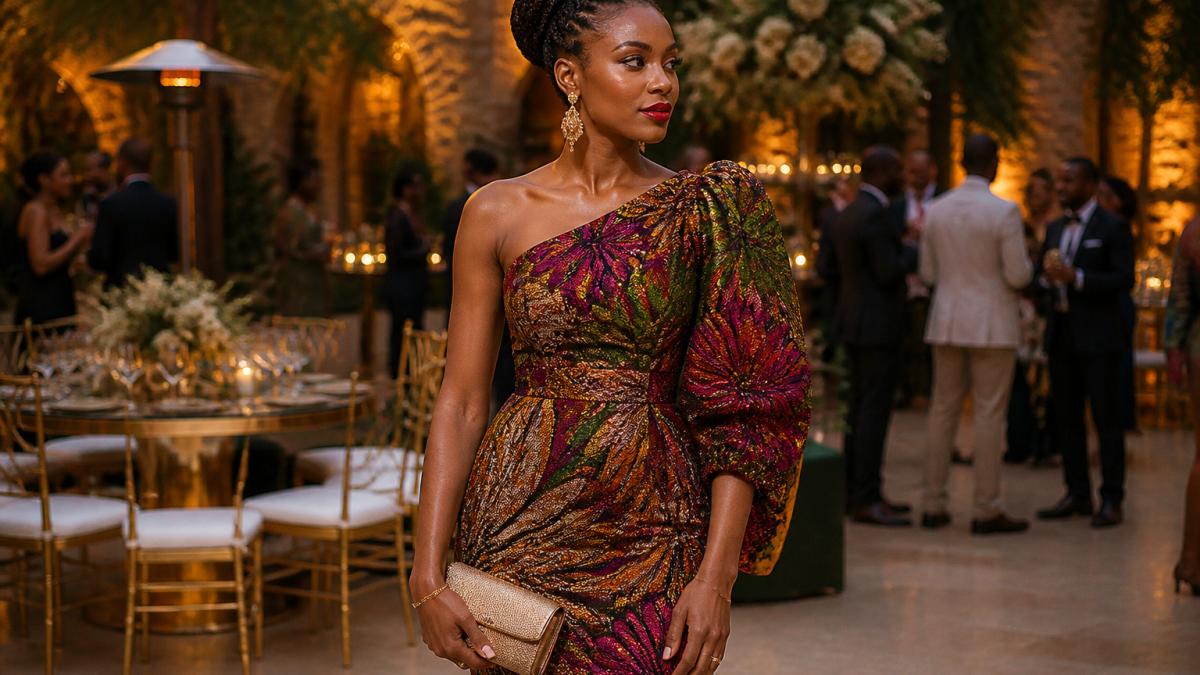
The brand's mission, "Fashion That Looks Good, Feels Good & Does Good", is operational reality: every KAHINDO dress includes a provenance card documenting the artisan, hours of production, and techniques used.
KAHINDO specializes in wedding guest dresses, bridesmaid dresses, mother-of-the-bride gowns, and eveningwear for women who refuse to blend in, using original prints rooted in Congolese textile traditions and modern silhouettes that work for real bodies at real events.
Statement Dresses for Weddings and Galas
KAHINDO's statement dresses solve the wedding guest problem directly, pieces you'll want to wear again, not disposable occasionwear.
The Diani Dress ($75.00) exemplifies this approach: 100% original printed cotton with an artisan-printed pattern unique to KAHINDO, in a relaxed silhouette that works from daytime to evening.

For bridesmaids or mother-of-the-bride roles, the Rukwa Dress ($60.00) offers drama without formality: 100% cotton with dramatic balloon sleeves that elevate a simple shape.
These aren't your typical bridesmaid dresses. They're pieces women actually want to own and wear beyond the wedding.
Artisan-Made Accessories With a Story
The Orange and Pearl Headband Fascinator ($128.00) and Blue and Orange Headband Fascinator ($128.00) are one-of-a-kind, made from upcycled fabric sourced directly from the KAHINDO collection.
Matching earrings, the Blue and Orange Earrings ($68.00) and Green and Orange Print Earrings ($68.00), let you coordinate your formal look while supporting artisans in two countries.
These aren't mass-produced costume jewelry. They're artisan craft with real impact.
What Makes Sustainable Formal Wear a Smart Investment
Most sustainable fashion articles wave at "cost per wear" and move on. Formalwear is where the math gets interesting: pieces are worn rarely but kept for years, and decisions, fit, fabric, care, resale potential, determine whether a $200 dress costs $200 per wear or $20.
Do the cost-per-wear math before you buy
Cost per wear equals purchase price plus alterations plus cleaning, divided by the number of wears. Run it honestly:
- A $60 fast-fashion cocktail dress worn once, dry-cleaned once ($15), and never worn again: $75 per wear.
- A $200 artisan-made dress worn to four events over five years, with two dry cleanings ($30 total) and one alteration ($25): $63.75 per wear, and it is still in your closet, still resellable.
- The same $200 dress worn eight times over a decade: $31.88 per wear, with resale value remaining.
The crossover point is usually the third or fourth wear. If you expect at least three formal events in the next two years, weddings, galas, milestone birthdays, work functions, the artisan piece wins on pure economics, before counting the ethical value.
Factor in alterations, because formalwear rarely fits off the rack
Formal garments are cut for sample-size bodies, not real ones. Budget for alterations at purchase:
- Hem: $15-$40 depending on fabric and lining.
- Take in or let out the waist or bodice: $25-$60.
- Strap or sleeve adjustment: $20-$50.
A well-constructed garment with generous seam allowances can be altered as your body changes. Fast-fashion formalwear often has narrow seam allowances and fused interfacing that cannot be let out, so it fits once and is disposable. Ask whether the brand leaves seam allowances for future alterations, artisan-made garments usually do.
Care for the piece so it survives to the next event
Formalwear care is where most people destroy their investment:
- Dry clean sparingly. Most dry cleaning uses perchloroethylene (perc), a solvent the EPA regulates as a hazardous air pollutant (the EPA). Look for "green" or professional wet-cleaning alternatives, and only clean when needed.
- Air and spot-clean between wears. Hang the garment in a ventilated space for 24 hours after wearing. Treat small stains immediately with a damp cloth and mild detergent.
- Store properly. Use a breathable cotton garment bag, not plastic, which traps moisture and can yellow natural fibers. Fold knits; hang wovens on padded hangers.
Resale and rental change the math further
Formalwear holds resale value better than everyday clothing because it's worn rarely and buyers expect near-new condition. Platforms worth knowing:
- Poshmark, Mercari, and eBay, broad marketplaces where branded formalwear sells, especially pieces with recognizable designer names.
- The RealReal and Vestiaire Collective, consignment and resale for higher-end and luxury formalwear; they authenticate and handle photography and shipping for a commission.
- Local consignment boutiques, often the best fit for artisan and independent-designer pieces that national platforms do not have category pages for.
A dress that resells for 40-60% of its purchase price after two wears effectively halves your cost per wear. Fast-fashion formalwear typically resells for near zero because the secondary market is flooded and quality doesn't hold.
Rental is the other lever. If you'll wear a formal piece only once, renting a high-quality garment beats buying a cheap one, a garment's environmental cost is dominated by production, so extending its life through rental or resale reduces impact per wear.
The intangible return
Beyond the ledger, artisan-made formalwear delivers what fast fashion cannot: a documented maker, a cultural lineage, and construction quality that survives a decade of events. You're not buying a dress for one wedding but a piece you'll lend to a friend, pass to a daughter, or resell to a woman who'll wear it to her own milestone, the part the cost-per-wear spreadsheet can't capture.
Frequently Asked Questions
What does it mean for a sustainable formal wear brand to empower female artisans?
A brand empowers female artisans through fair wages, worker ownership, transparent supply chains, and investment in their skills and livelihoods. KAHINDO works with a female artisan co-operative in Kenya, ensuring each garment includes a provenance card documenting the artisan and labor hours. This approach treats artisan empowerment as foundational to the brand, not a marketing add-on, giving women economic control and recognition for their craftsmanship.
How can I verify that a sustainable fashion brand actually supports its artisans ethically?
Look for transparent sourcing documentation, labor certifications, and direct artisan partnerships. Ethical brands should name their production locations, explain their wage practices, and allow traceability from garment to maker. KAHINDO provides a provenance card with every piece, naming the artisan and documenting labor hours. Ask brands for proof of fair wages, worker welfare programs, and whether artisans have a voice in business decisions, not just employment.
Are sustainable wedding guest dresses and ethical bridesmaid dresses more expensive than fast fashion?
Yes, but the value differs. Sustainable formal wear costs more because artisans earn fair wages, materials are responsibly sourced, and pieces are handcrafted with durability in mind. However, these pieces last years and carry cultural significance, making the cost-per-wear lower than renting or buying disposable occasionwear. You invest in quality that holds its shape, color, and meaning.
What sustainable formal wear brands make pieces suitable for black-tie events and galas?
KAHINDO specializes in bold, handcrafted occasionwear designed for weddings, galas, and milestone celebrations. The brand offers statement dresses, jumpsuits, and mother-of-the-bride gowns in vibrant African-inspired prints and timeless silhouettes. Each piece is designed in New York and handcrafted by female artisans in Kenya, combining luxury aesthetics with transparent, ethical production.
When you choose sustainable formal wear brands empowering female artisans, you're not making a sacrifice. You're making a statement about what luxury actually means. At KAHINDO, we believe luxury is bold, intentional, and rooted in real craftsmanship. Every piece tells a story of the woman who made it and the culture it honors. Shop our collection of handcrafted occasionwear and discover formal wear that looks good, feels good, and does good.