

Article: How to Identify Authentic Designer Clothing Online
How to Identify Authentic Designer Clothing Online
Last Updated: November 5, 2026
Quick Summary
To identify authentic designer clothing online, inspect the garment in a fixed order: fabric quality, stitching and seams, labels and care instructions, logos and hardware, then compare against verified authentic examples. Pair that photo review with seller checks, buyer protection, and a documented paper trail before you pay.
- Ask sellers for daylight close-ups of labels, seams, hardware, and any serial or date code.
- Run a reverse image search to spot stolen or reused listing photos.
- Free authenticator apps give a first-pass opinion, not proof of authenticity.
- Pay by credit card or platform checkout so you keep a dispute channel.
- Photograph the item and escalate to the platform if a suspected counterfeit arrives.
Table of Contents
- Why Online Authentication Requires a Different Approach
- How to Check if Designer Clothes Are Real: The Garment Inspection Workflow
- How to Identify Authentic Designer Clothing Online Free: Tools and Techniques
- Clothing Authenticator App Free Options: What They Can and Cannot Do
- How to Verify a Designer Clothing Seller Before You Pay
- Evaluating Listing Photos and Requesting Evidence
- Counterfeit Uncertainty and Buyer Protection
- Shopping KAHINDO with Confidence
- Frequently Asked Questions
Why Online Authentication Requires a Different Approach
You cannot touch the fabric through a screen. That single fact is why learning how to identify authentic designer clothing online demands a different method than in-person shopping.
The problem is confidence. A listing can look flawless and still be a replica. Most guides skip the part that matters: how to judge a seller and a listing before money leaves your account.
Below, we walk through a full inspection workflow, free tools, seller checks, and the buyer protections that actually protect you. For a companion read on trusting online luxury listings, see our guide to tips for buying luxury dresses online.
How to Check if Designer Clothes Are Real: The Garment Inspection Workflow
Real versus replica comes down to construction. Counterfeits copy the outside and cut corners on the inside. Use this order when you inspect photos or a piece in hand.
- Start with fabric and material quality. Ask for close-ups in natural light.
- Check stitching, seams, and construction. Look for even tension and clean finishes.
- Read the labels, tags, and care instructions. Fonts, placement, and fiber content tell a story.
- Examine logos, typography, hardware, and finishing. Small parts are the hardest to fake well.
- Compare against verified authentic examples. Use official product photos and trusted archives.
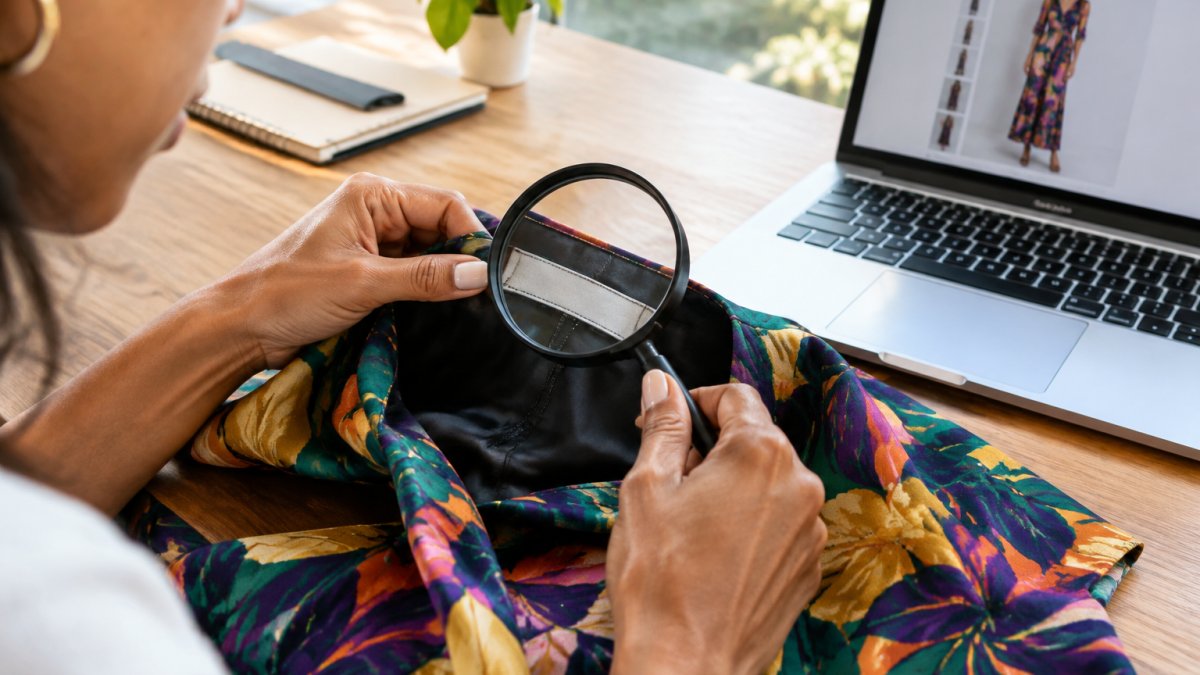
Fabric, Material Quality, and Hand-Feel Cues
Fabric is the first tell. Genuine luxury goods use dense, substantial material with a clean drape. Replicas often feel thin, stiff, or oddly shiny.
- Ask for a video of the fabric moving.
- Request a close-up of the weave in daylight.
- Check the fiber content on the care label against the seller's description.
A common mistake is trusting a photo taken under warm indoor light. It hides shine and thinness. Daylight shots reveal both.
Stitching, Seams, and Construction
Stitching separates careful work from fast copies. Real designer apparel has even stitch length, tight seams, and clean interior finishing.
- Look for puckering along seams.
- Check whether patterns line up at the seams.
- Ask for an inside-out photo of the hem and lining.
Crooked topstitching or loose threads on a "new" piece is a warning sign worth taking seriously.
Labels, Tags, and Care Instructions
Labels are where replicas slip. Brand-specific details like font weight, spacing, and tag placement are hard to copy exactly.
- Compare the label font to verified authentic examples.
- Check that the care label lists fiber content and origin clearly.
- Look for a serial number or date code where the brand uses one.
According to the Federal Trade Commission's guidance on textile labeling, garments sold in the U.S. must carry accurate fiber content and country-of-origin information. A missing or vague care label is a real warning sign, not a minor detail.
Logos, Typography, Hardware, and Finishing
Logos and hardware are the details counterfeiters rush. Real buttons have weight and clean engraving. Zippers move smoothly and carry the correct brand markings.
- Check letter spacing in the logo.
- Ask for a close-up of buttons, zippers, and clasps.
- Look for a hologram or security tag where the brand uses one.
Watch out: a perfect logo proves less than you think. Many replicas copy logos well and fail on stitching and hardware.
Work through the garment in this order when you inspect photos or a piece in hand.
| Step | What to check | What to look for |
|---|---|---|
| 1 | Fabric and material quality | Dense, substantial material with a clean drape |
| 2 | Stitching, seams, and construction | Even tension and clean finishes |
| 3 | Labels, tags, and care instructions | Fonts, placement, and fiber content |
| 4 | Logos, typography, hardware, and finishing | Small parts are the hardest to fake well |
| 5 | Verified authentic examples | Compare against official product photos and trusted archives |
How to Identify Authentic Designer Clothing Online Free: Tools and Techniques
Free verification is possible, but it has limits. You can do a lot with careful photo review and public resources before you spend a cent on a service.
- Use official brand archives. Compare silhouettes, prints, and label styles against the brand's own past collections.
- Search the style or date code. Many brands publish or archive identifiers you can cross-check.
- Upload images to a free visual search. Reverse image search can reveal stolen listing photos.
Free methods get you to "likely real" or "clearly fake." They rarely get you to certainty. That gap is where paid authentication services and apps come in.
Clothing Authenticator App Free Options: What They Can and Cannot Do
A free clothing authenticator app can flag obvious fakes and organize your photos, but it cannot replace expert review. Most free tiers give you a quick scan, not a determination.
What free apps do well:
- Compare logos and patterns against a database.
- Spot stolen or reused listing photos.
- Give you a fast first-pass opinion.
What they cannot do:
- Confirm authenticity with certainty.
- Judge fabric hand-feel or interior construction.
- Cover every brand or every era of a label.
Treat any app result as one data point. A confident app verdict is not proof. This is the false-confidence trap: a green checkmark makes buyers skip the seller checks that matter more.
How to Verify a Designer Clothing Seller Before You Pay
Seller credibility often matters more than the garment photos. A careful seller welcomes questions and provides proof of purchase. A risky one rushes you.
- Check purchase history and reviews, not just star ratings.
- Ask for proof of purchase, receipts, or original packaging.
- Review the return policy in writing before paying.
A seller who refuses close-up photos or pushes for a quick off-platform payment is telling you something. Believe it.
Evaluating Listing Photos and Requesting Evidence
Listing photos are the only evidence you have before money changes hands, so treat them like an inspection file rather than a gallery. Most buyers look at the front of the garment and stop. A careful buyer works through a fixed checklist and asks the seller to fill the gaps.
The photo checklist to request before buying
Ask for each of the following in a single message so the seller can batch them. A serious seller will send them within a day; a reluctant one will stall or send screenshots of screenshots.
- Labels and tags: a straight-on, in-focus shot of the brand label, the size tag, and the care/content label, all in daylight. Ask for the interior neck label and any side-seam label.
- Care and fiber content: a close-up where the fiber percentages and country-of-origin line are legible. If the seller cannot produce a legible care label, that is itself information.
- Seams and construction: inside-out shots of the shoulder seam, side seam, and hem. Ask specifically for the seam allowance and the lining attachment.
How to judge the photos you receive
A photo can be technically present and still useless. Check for these patterns:
- Lighting: daylight or neutral light shows true color and shine. Warm indoor light and heavy filters hide thinness, shine, and color variance.
- Focus and resolution: zoom in on the label and seam shots. If the image blurs exactly where the detail should be, ask for a re-shoot rather than guessing.
- Consistency: the background, garment, and lighting should match across shots. Mismatched backgrounds often mean photos were pulled from different sources.
Sample message to send a seller
A short, specific request gets a faster and more useful response than a vague "more pics?" message. Something like:
"Before I purchase, could you send daylight close-ups of the brand label, size tag, and care label; inside-out shots of the shoulder seam and hem; close-ups of the buttons and zipper pull; and any serial or date code? Also, please confirm any flaws and whether the item comes with a receipt or original packaging."
A seller who answers each point, sends clear images, and volunteers flaws is giving you a usable file. A seller who deflects, sends one blurry photo, or pushes you to decide quickly is telling you something about how the transaction will go.
Watch out: a complete set of beautiful photos still does not prove authenticity, it only proves the seller can produce images. Pair the photo file with the seller and payment checks below before you commit.
Counterfeit Uncertainty and Buyer Protection
Some pieces genuinely sit in a gray zone. Vintage garments lose labels, small labels change between seasons, and some brands have used multiple tag styles in the same year. Honest uncertainty is normal. The mistake is treating uncertainty as a reason to skip process, the right move is to price the risk in and build a paper trail before you pay.
Why one convincing detail is not proof
A correct-looking label, a serial number, or a clean logo each proves less than buyers assume. Counterfeiters have gotten good at copying the details that are easiest to photograph and hardest to verify from a screen. Authentication cues also vary by brand, collection, production year, and garment type, so a generic checklist is only a preliminary filter. Treat any single match as one data point, not a verdict, and be most skeptical when a listing leans hard on one impressive detail.
Payment methods and what they actually protect
- Credit cards: federal law limits your liability for unauthorized charges, and card networks generally let you dispute charges for goods that were not delivered or were not as described. Paying by credit card gives you a dispute channel that cash transfers and peer-to-peer apps do not.
- Platform checkout: marketplaces that process payment themselves usually add their own dispute and returns process on top of the card network. Read the platform's policy before you buy, not after.
- Peer-to-peer payment apps: many are designed for friends and family and offer little or no purchase protection. If a seller insists on one of these to avoid fees, that is a reason to slow down.
Document the transaction
Keep a simple file for every purchase:
- Screenshots of the listing, including the description and stated condition.
- Every message with the seller, including the photo requests and responses.
- The seller's authentication claims, in writing.
This file is what you rely on if the item arrives and something is wrong. Memory and chat history are not a substitute.
If the item arrives and you suspect it is counterfeit
- Stop wearing or altering it. Alterations can complicate a return.
- Photograph everything, the item, the packaging, the labels, and the flaws, before you contact the seller.
- Contact the seller in writing through the platform, state the concern, and request a return within the stated window.
- Escalate to the platform if the seller does not respond or refuses, and attach your documentation.
- Dispute the charge with your card issuer if the platform process does not resolve it, within the issuer's stated deadline.
- Report the listing to the platform and, where relevant, to the appropriate consumer protection authority.
For general consumer guidance on online purchases and refunds, the FTC's advice on online shopping and refunds explains your rights when a purchase goes wrong. Knowing the rules before you buy beats arguing after.
Watch out: return windows are often short and may start on delivery, check the window before you buy and inspect the item as soon as it arrives.
Shopping KAHINDO with Confidence
Buying direct from the maker means provenance can be documented. KAHINDO ships direct-to-consumer at kahindo.com.
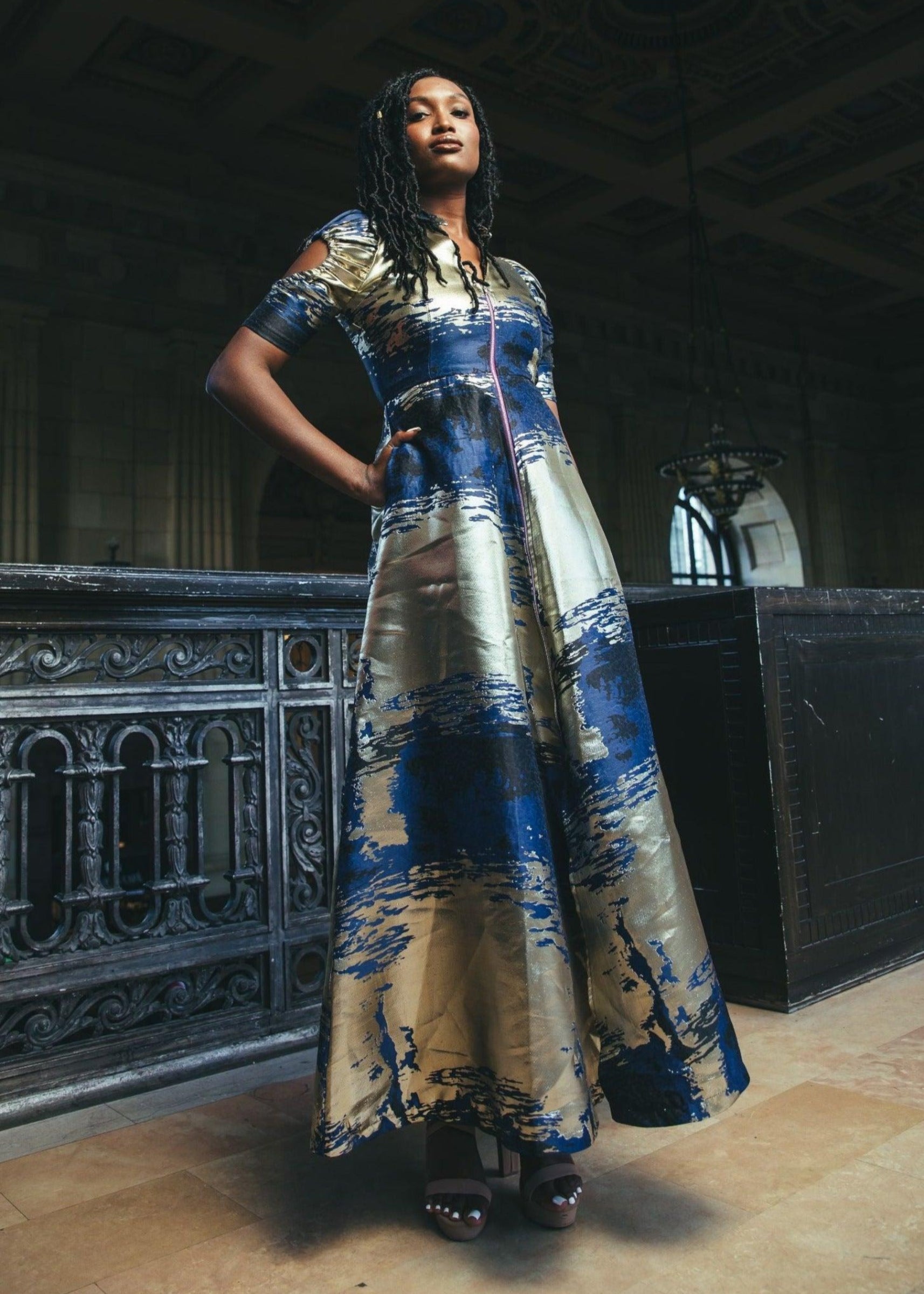
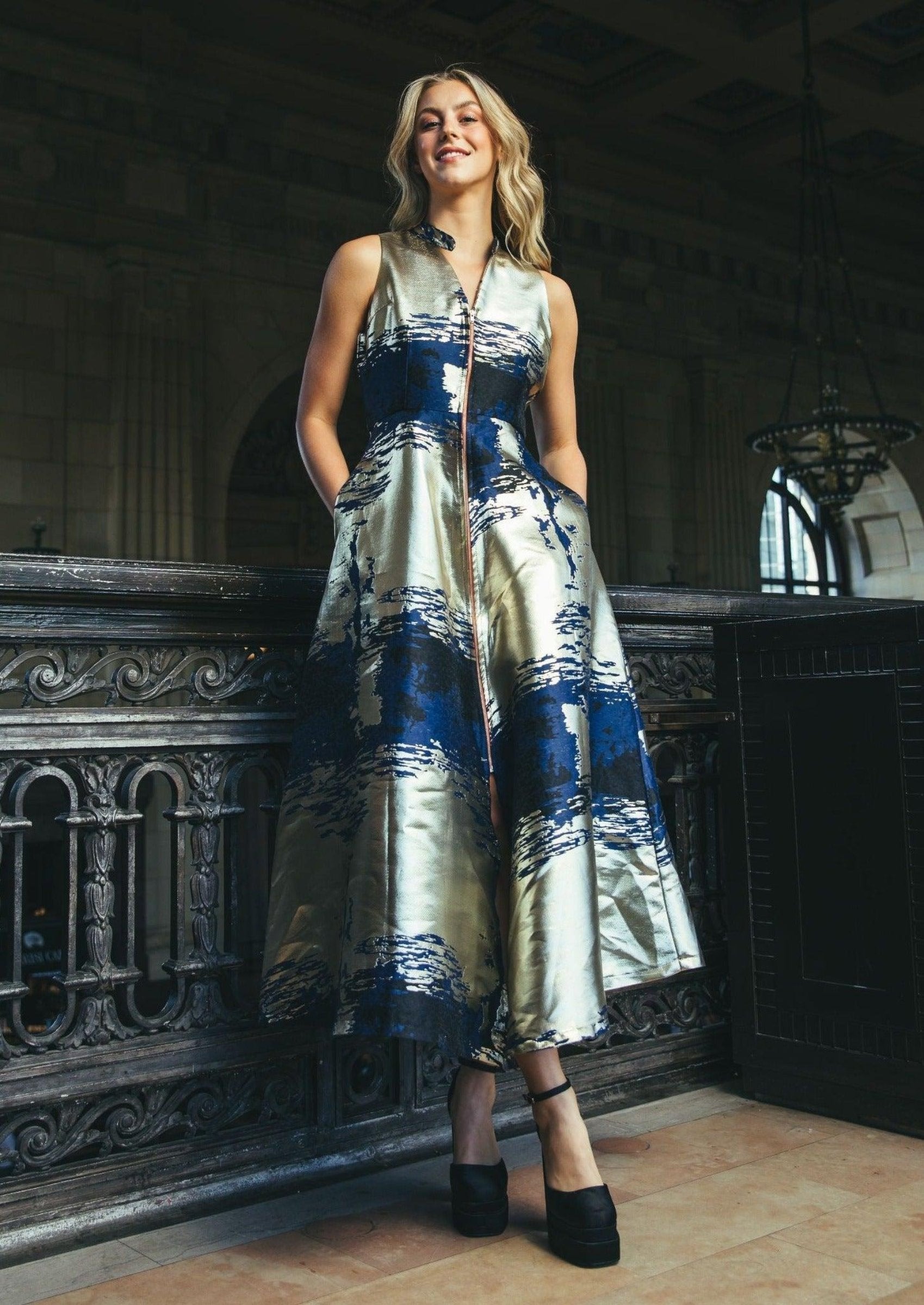
Every KAHINDO piece is designed in New York and handcrafted by female artisans in Kenya. Each garment includes a provenance card documenting the artisan and labor hours.
You can explore KAHINDO Picks for occasion-ready pieces, browse the Ciie X Kahindo collaboration, or give someone a KAHINDO gift card.

Frequently Asked Questions
How to check if designer clothes are real?
Start with a physical inspection of the garment's fabric weight and hand-feel, then check the stitching density and seam alignment. Examine the interior label for correct typography and care symbols, and compare hardware and logo details against verified authentic examples. For online purchases, request high-resolution photos of the label, zipper pulls, and interior seams before paying. Free authentication apps and community forums can flag obvious counterfeits, but expert review is the only reliable determination for high-value pieces.
Can you authenticate designer clothing for free?
You can do a preliminary check for free using clothing authenticator app free tools, reverse image searches, and brand-specific community forums where collectors compare labels and hardware. These methods catch obvious fakes but miss high-quality replicas. Free resources work best as a first filter: verify the seller's history, request detail photos, and cross-reference the garment's label style against the brand's known production years. For expensive pieces, pay for expert authentication rather than relying solely on free tools.
What photos should you request to verify designer clothing?
Ask for sharp, well-lit close-ups of the interior brand label, the care tag with fiber content, the zipper pull and any engraved hardware, the stitching along the hem and armhole, and the logo or print in full. Request a photo of the size tag and any serial number or date code. Also ask for a photo of the garment worn or on a hanger to judge silhouette and drape. Blurry or cropped photos are a warning sign that the seller is hiding construction details.
How to verify a designer clothing seller before purchasing?
Check the seller's purchase history and reviews on the platform, and look for a consistent inventory that matches their claimed sourcing. Ask directly for proof of purchase or provenance documentation, and confirm the return policy and payment method before paying. Use payment services that offer buyer protection rather than direct transfers. If a seller refuses to provide detail photos, pressures you to pay off-platform, or lists a price far below resale norms, treat those as red flags and walk away.
The real challenge is not spotting fakes. It is finding pieces you can trust without a detective's checklist. KAHINDO makes that easy with handcrafted construction, documented provenance, and fair-trade production you can trace. Get started with KAHINDO and shop occasionwear with a story you never have to second-guess.