

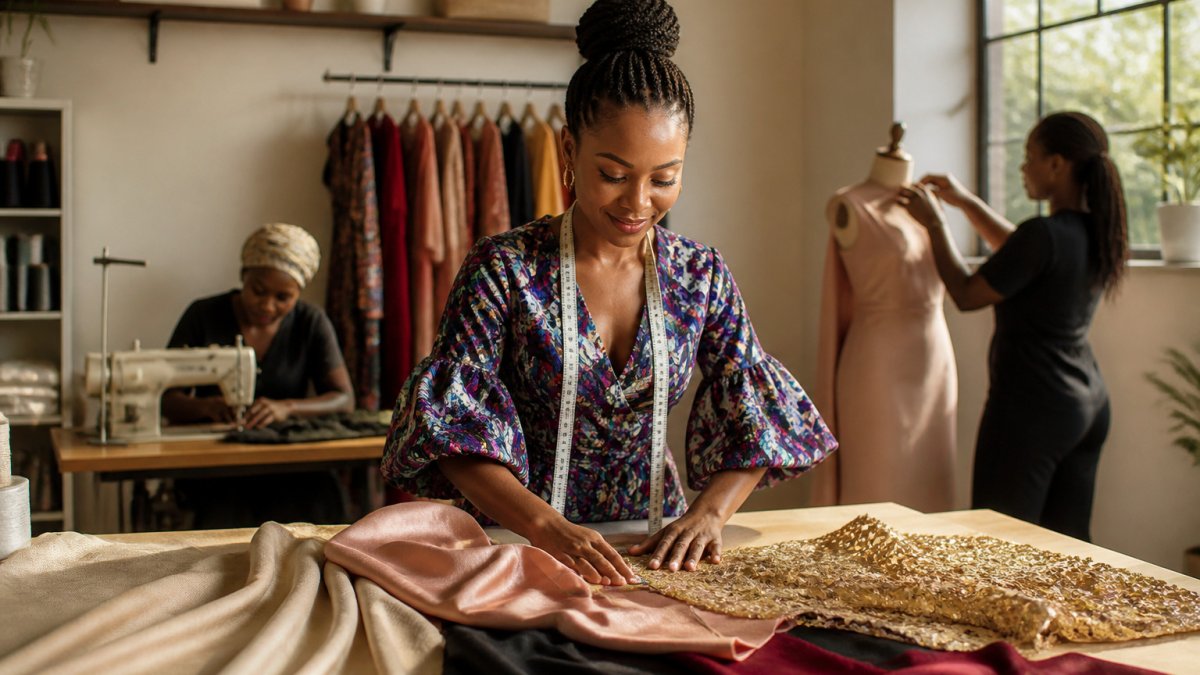
7 Best Fabrics for Custom Fit Dresses
Quick Summary
The best fabrics for custom fit dresses are medium-weight wovens between 150 and 250 gsm, such as crepe, ponte, jacquard, and mid-weight linen. This range has enough body to hold a fitted line while still allowing sitting, walking, and dancing. Lightweight fabrics need a stable lining, and heavy cloth needs a more careful toile stage.
- Medium-weight fabrics around 150-250 gsm suit most custom fit dresses.
- Lightweight chiffon and viscose follow every curve and often need a stable lining.
- Heavyweight wool suiting and brocade hold shape but show every fitting adjustment.
- Hold a yard of fabric and let it fall to predict how it will drape.
- Stretch a crosswise strip and release it to test whether the fit will survive a long day.
Table of Contents
- How Fabric Weight and Structure Shape a Custom Fit
- Best Fabrics for a Fitted Dress
- Best Fabrics for a Flowy Dress
- Top Fabric Picks for Custom Fit Dresses: Pros and Cons
- How to Choose Fabric for a Dress
- Calculating Fabric Yardage for a Custom Dress
- Booking Your Custom Fit Dress for an Upcoming Event
- Frequently Asked Questions
How Fabric Weight and Structure Shape a Custom Fit
Last Updated: October 29, 2026
Fabric weight decides more about a custom fit dresses order than most buyers expect. At KAHINDO, we build each piece around the balance between structure and movement, and that balance starts with the cloth itself. Weight is usually expressed in grams per square meter (gsm), and the number tells you how much body the cloth will bring to a fitted silhouette before a single seam is sewn.
A practical working guide:
- Lightweight (roughly 90-150 gsm): chiffon, georgette, voile, and lightweight viscose. These follow every curve, which is beautiful on a bias-cut slip dress but unforgiving on a tailored bodice, seams, darts, and undergarment lines can telegraph through. They also tend to stretch on the bias, so a custom fit depends heavily on a stable lining or interfacing at the waist and bust.
- Medium-weight (roughly 150-250 gsm): crepe, ponte, jacquard, and mid-weight linen. This is the sweet spot for most custom-fit dresses because the cloth has enough body to hold a line while still allowing the wearer to sit, walk, and dance. Darts and princess seams press crisp, and the fabric recovers well after a long event.
- Heavyweight (roughly 250-400+ gsm): wool suiting, heavy jacquard, and structured brocade. These suit gowns and sheath dresses that need to hold their shape on their own. The trade-off is that heavy cloth resists close fitting at the waist and armscye, every adjustment shows, so the toile stage matters more, not less.
Weight also changes how a dress drapes over the bust, waist, and hips. A lighter cloth follows every curve and can show seams or undergarments. A heavier cloth skims the body in a different way and tends to hold a fitted silhouette without clinging. Choosing the right weight is therefore a fit decision, not just a comfort decision.
Structure matters as much as weight. Woven fabrics with a firm hand keep darts, pleats, and princess seams crisp. Knits and stretch blends forgive small variations in measurement but can lose their outline over a long evening.
For a custom-fit garment, weight and structure also set the fitting sequence. A medium-weight woven can usually be fitted in a single muslin with minor tweaks. A lightweight fluid fabric often needs a stable underlining before the first fitting, because the cloth itself will not hold a pin. A heavyweight structured cloth may need two toiles, one to establish the pattern and a second in the actual fabric to confirm that the seams press and sit the way the final dress will.
Best Fabrics for a Fitted Dress
A fitted dress asks the fabric to hold a precise shape against the body. The best options for this style combine enough weight to structure the bodice with enough recovery to stay comfortable through a full day of wear. Jacquard and structured weaves work well here because they keep their lines when tailored tightly.
Best Fabrics for a Flowy Dress
Flowy dresses depend on drape, the way a fabric falls and moves. Lightweight fabrics with a fluid hand create soft movement, and a breathable fiber keeps the wearer comfortable in warm weather. Viscose is a common choice because it moves with the body and sits lightly on the skin.
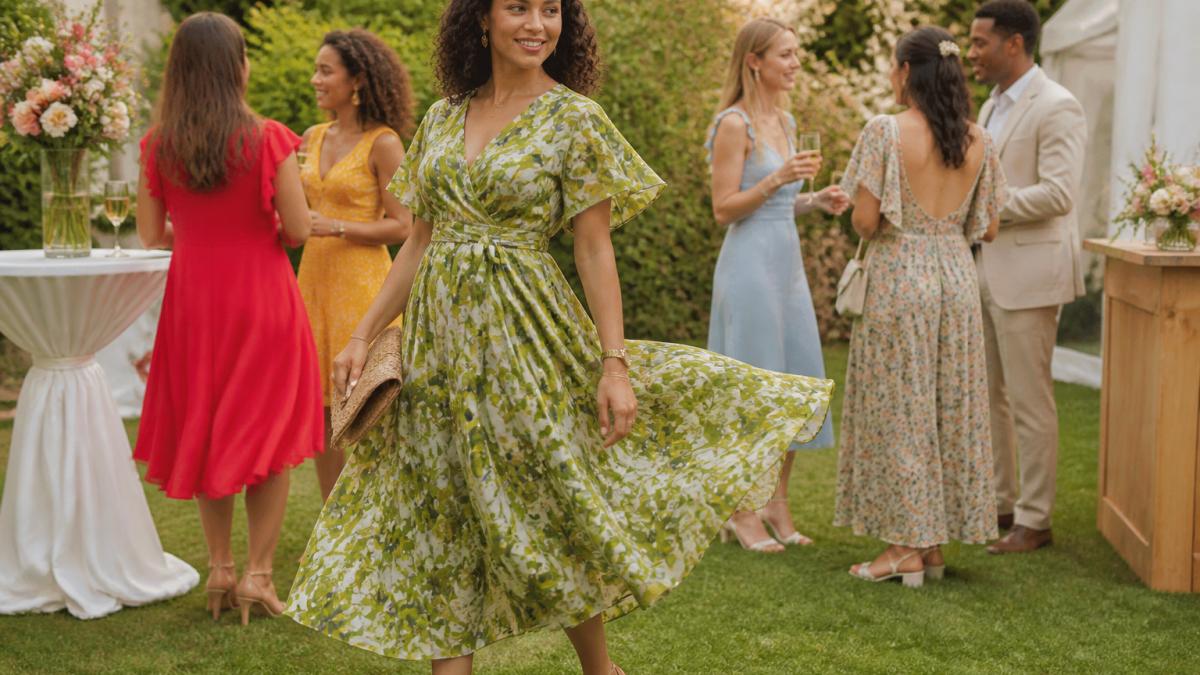
The 100% Viscose Midi Dress from our collection is built around this kind of movement. It is lightweight and fluid, with a silky drape that stays comfortable in warm conditions. Note that it is a sample sale item with limited stock.

Top Fabric Picks for Custom Fit Dresses: Pros and Cons
Each of the pieces below uses a different fabric approach. Compare them against the fit and occasion you have in mind.
100% Viscose Midi Dress
Pros: Lightweight, fluid drape that moves well in warm weather. Breathable against the skin. Suits summer events, travel, and resort dressing.
Cons: Not suited to formal or black-tie settings. Viscose drapes freely, so it offers less structure for a sharply fitted line.
Price: $65.00. Hand wash cold.
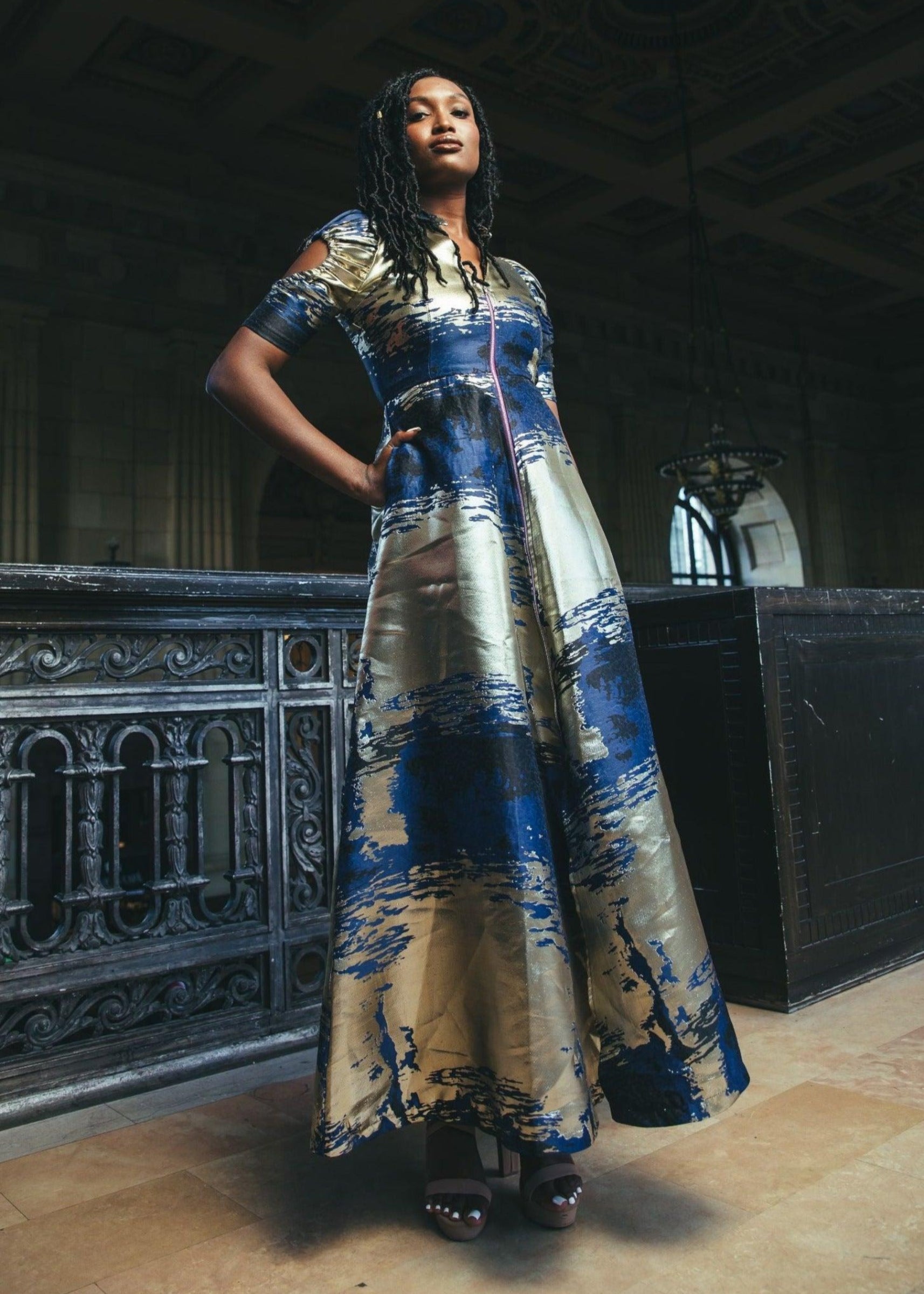
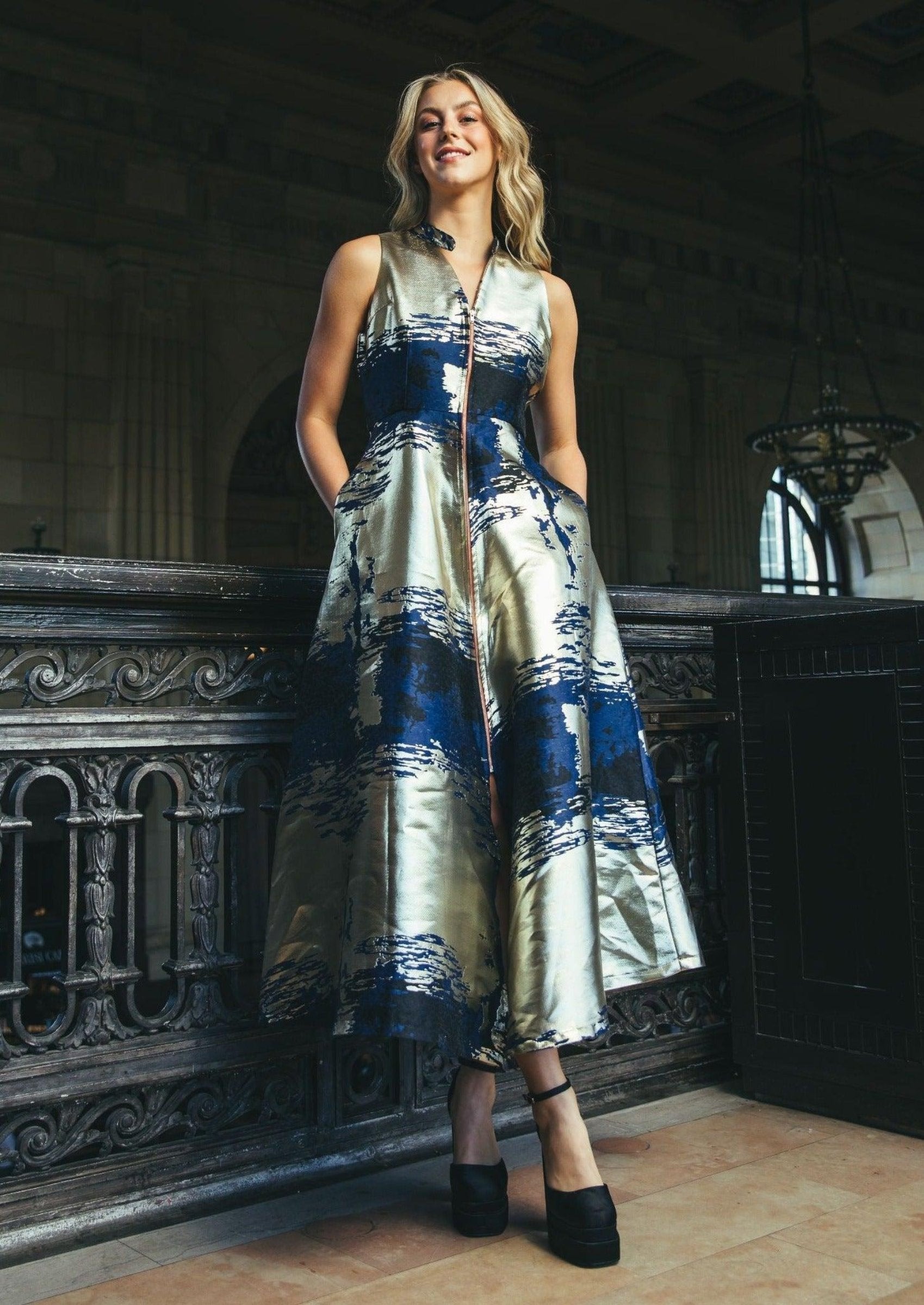
Burgundy Gold Metallic Jacquard Halter Pencil Dress
Pros: The metallic jacquard catches light and holds a clean pencil silhouette. Front pockets and back slits add ease of movement.
Cons: Dry clean only, which adds upkeep. The metallic weave is a statement fabric, so it suits weddings and galas rather than everyday wear.
Price: $75.00. Made from 86% polyester and 14% metallic thread.
How to Choose Fabric for a Dress
Start with the occasion, then the silhouette, then the care you are willing to give the garment. A gala gown and a summer midi need different answers to all three questions. But for a custom-fit dress, there is a fourth step most guides skip: testing the fabric against your pattern and your body before you cut.
A simple sequence helps:
- Define the silhouette. Fitted styles need structure. Flowy styles need drape. A sheath or pencil dress calls for a stable woven with a firm hand; a bias-cut slip calls for a fluid cloth with good recovery.
- Check the weight. Use the 150-250 gsm range for balanced structure and movement, and heavier cloth for gowns that must stand on their own. Match the weight to the season as well, a lightweight viscose reads as summer, a mid-weight crepe works year-round, and a heavy jacquard is an evening fabric.
- Test the fiber content. Labels should state the fiber makeup clearly.
- Plan the care. Dry clean only fabrics suit special occasions. Washable blends suit repeat wear. Factor care into the fit, too: a fabric that shrinks in the wash will change the fit after the first cleaning, so pre-wash or pre-shrink any washable cloth before you cut.
The tests to run before you cut
This is where a custom-fit dress separates itself from a ready-to-wear one. Three quick tests can catch the problems that ruin a fitted garment:
- The drape test. Hold a yard of the fabric over your hand and let it fall. If it collapses into soft folds, it will drape on the body; if it holds a stiff edge, it will stand away from the body. Compare that behavior to the silhouette you are sewing, a fabric that drapes beautifully on a slip dress will sag at the bust of a tailored bodice.
- The stretch recovery test. Cut a small strip on the crosswise grain, stretch it gently, and release. If it springs back to its original length, it will hold a fitted seam through a long event. If it stays stretched, the dress will grow at the waist and hip as the day goes on. This matters most for knits and stretch blends, where recovery, not stretch alone, determines whether a fitted silhouette survives hours of wear.
- The grainline and seam test. Sew a short seam on the lengthwise grain and press it. A stable woven presses flat and stays put; a shifty fabric ripples or stretches along the seam. On a custom-fit dress, that ripple is exactly what shows at the waist and bust after fitting.
Match the fabric to the pattern, not just the dress
A pattern's technical requirements, seam allowance, grainline arrows, and the recommended fabric list on the envelope, are the fastest guide to whether a cloth will work. A pattern drafted for stable wovens will not behave the same way in a stretch knit, even if the silhouette looks identical on the package. Before you buy, read the pattern's fabric recommendations and compare them to the swatch in your hand. If the pattern calls for a stable woven and you want a fluid fabric, plan to underline or interface the bodice so the fit still holds.
Sustainable and lower-impact options
Fiber choice is also an environmental choice. Conventional polyester is petroleum-based and sheds microfibers in the wash, while cellulosic fibers such as Tencel (lyocell) are produced in a closed-loop process that recovers most of the solvent.
The article's fabric choice steps translate into a quick reference for matching the fabric to the job.
| Step | What to check | Why it matters |
|---|---|---|
| Define the silhouette | Fitted needs structure, flowy needs drape | Matches fabric behavior to the cut |
| Check the weight | Roughly 150-250 gsm for balance | Balances structure with movement |
| Test the fiber content | Labels state fiber makeup clearly | Confirms care and performance |
| Plan the care | Dry clean or washable | Factors upkeep into the fit |
| Drape test | Hold a yard and let it fall | Predicts how it sits on the body |
| Stretch recovery test | Stretch a crosswise strip and release | Shows if the fit survives a long day |
| Grainline and seam test | Sew and press a short seam | Reveals shifting before cutting |
Calculating Fabric Yardage for a Custom Dress
Yardage depends on the dress length, the width of the cloth, and whether the pattern needs matching across seams. Measure your intended hem length, add allowance for the hem and seam finishes, and account for any print repeat. We recommend confirming the yardage with your pattern guide before you cut, since a small miscalculation on a patterned fabric can leave you short.
Booking Your Custom Fit Dress for an Upcoming Event
Custom fit works best when you plan ahead. Before you book, confirm your measurements, choose a fabric that suits the occasion, and check the care instructions so the dress stays in good shape through the event. If you are still deciding on the right outfit style for a special evening, our guide on how to choose the right African print jumpsuit for galas walks through the key considerations.
Frequently Asked Questions
What fabric should I use to make a dress?
For a custom fit dress, choose a fabric whose weight and structure match the silhouette. Medium-weight fabrics between 150 and 250 gsm balance structure and movement, which suits most dresses. Heavier fabrics above 250 gsm hold a structured, tailored shape better, while lightweight viscose or rayon blends drape fluidly for flowing styles. Check the fiber content label before you buy, and test a swatch for drape and opacity.
Is 90% cotton 10% elastane good for a fitted dress?
Yes, a cotton and elastane blend is well suited to a fitted dress. The cotton gives the fabric breathability and a crisp hand feel, while the elastane adds stretch recovery so the dress follows the body without bagging. A small percentage of elastane is usually enough for comfort through a seated evening. Look for a blend that recovers its shape after wear, since that determines how well the fit holds over a long event.
How much fabric do I need to make a custom dress?
Yardage depends on the dress length, the width of the fabric bolt, and whether the pattern needs a directional print that must be matched at seams. A knee-length dress generally requires roughly two to three yards of 45-inch fabric, while a floor-length gown can need four yards or more. Always add extra for pattern matching and a seam allowance, and confirm the exact figure against your pattern's yardage chart before cutting.
What are the softest fabrics for dresses?
Viscose, rayon, Tencel, and fine cotton lawn are among the softest options for dresses. Viscose and rayon offer a silky, fluid hand and a breathable feel that suits warm-weather events. Cotton lawn is crisp yet gentle against the skin. Natural fibers like these generally feel softer than polyester, which can feel stiffer and trap heat, though blends can soften the difference.
Best for: Women planning weddings, galas, and milestone events who want a singular, occasion-ready piece.